Matera is a city in the Italian region of Basilicata, known for its structures built within rock formations, whether originally using natural caves that were later expanded or structures directly carved into the soft limestone. This area is known as "Sassi di Matera" or "Stones of Matera." I came here during a couple of weeks I spent travelling through southern Italy in September 2024. The backbone of this trip was the Apulia region, but Matera is very close and significant enough that I absolutely wanted to visit and, of course, I did not regret it at all.
Here is a map showing where I went during this trip:
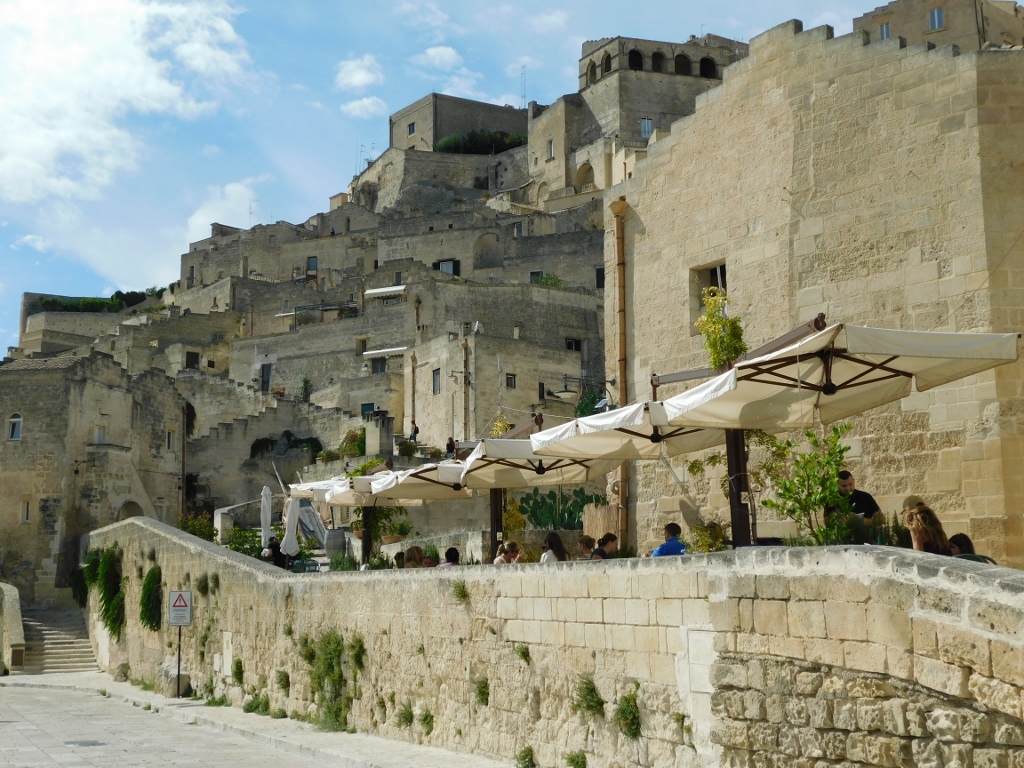
On the day I dedicated entirely to walking through Matera and its neighbourhoods filled with these rock structures, I eventually reached a fairly flat main street in a part of the city called Sasso Barisano. At one point, I took a coffee break at a lovely bar and then I continued on.
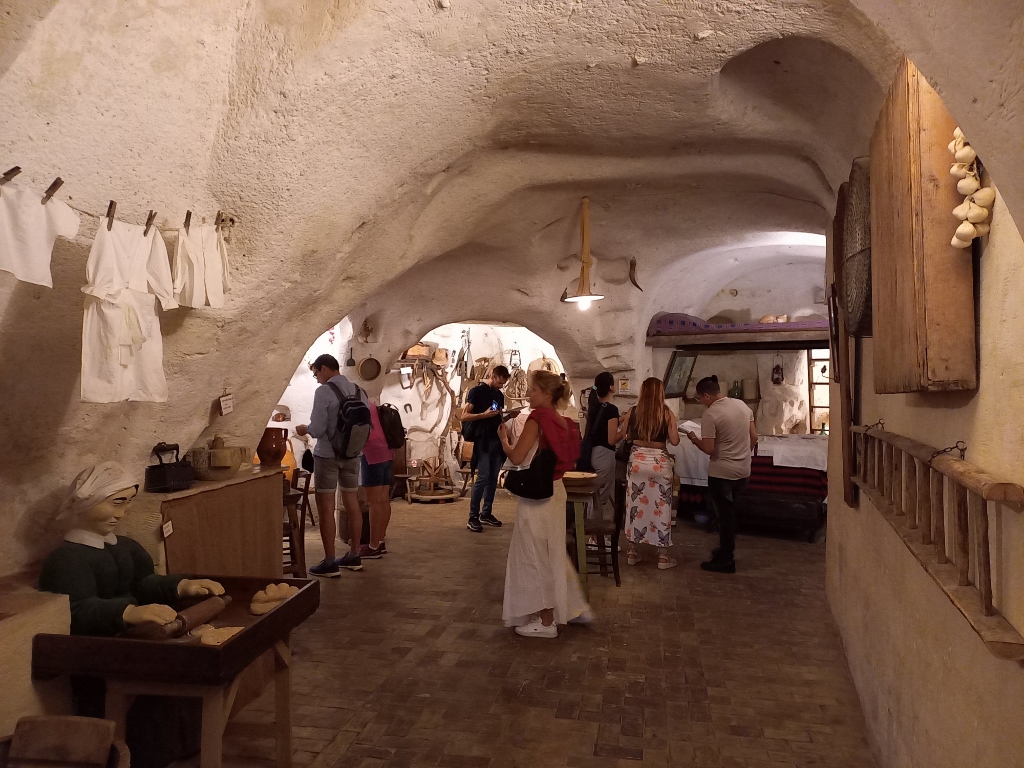
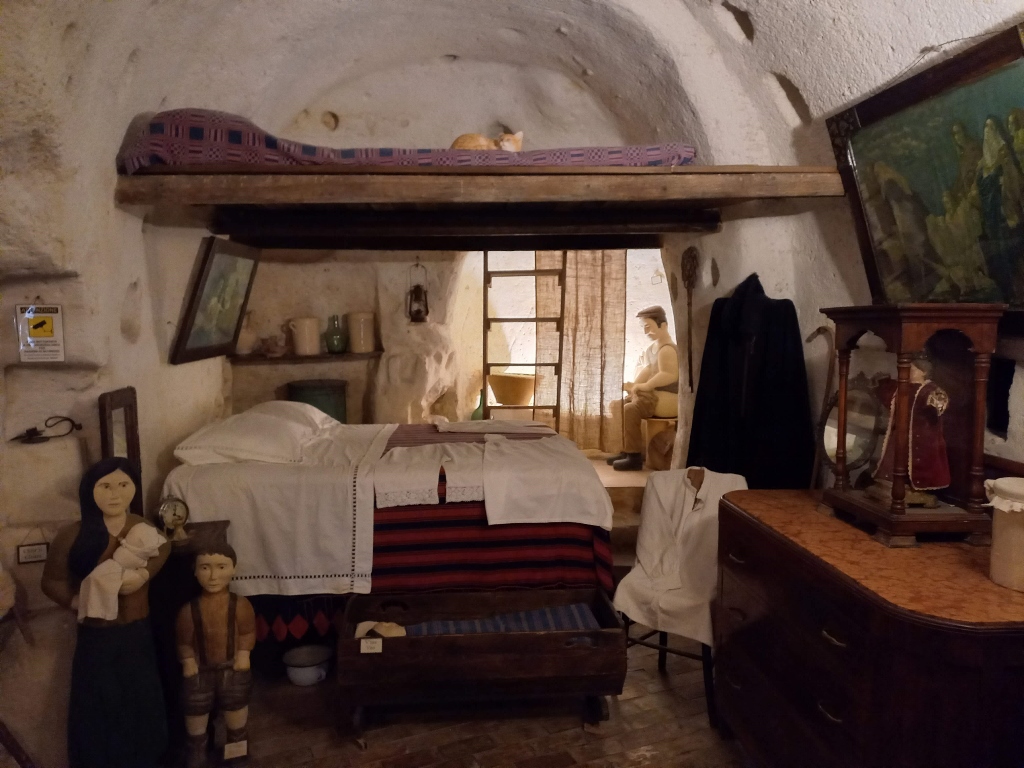
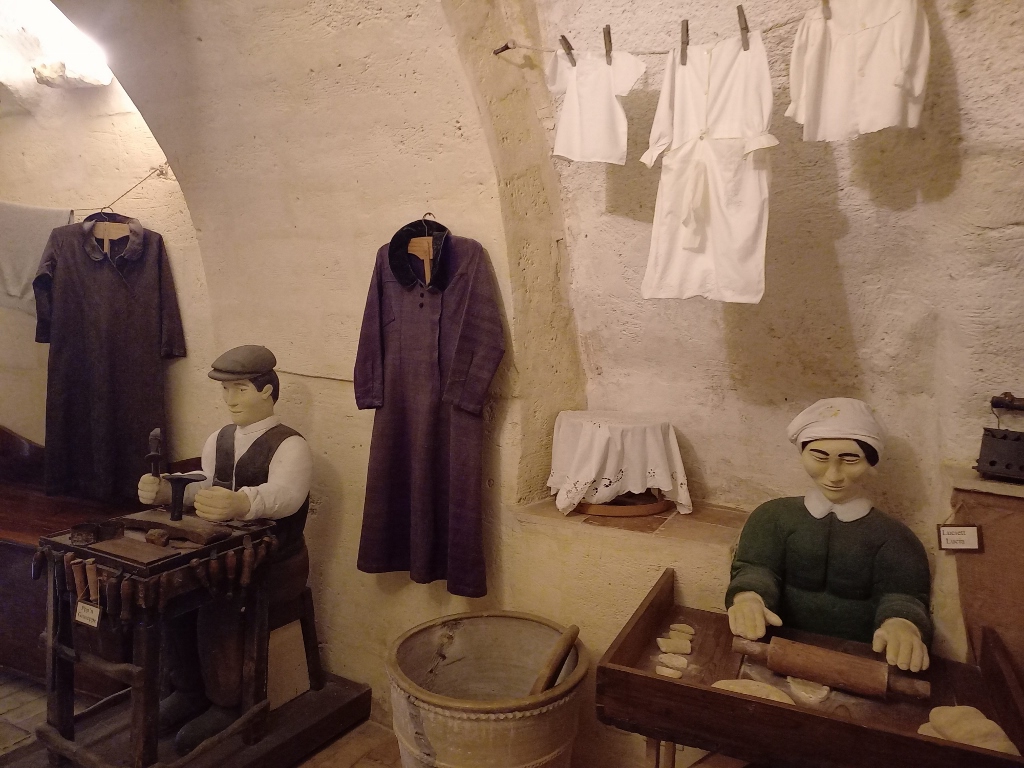
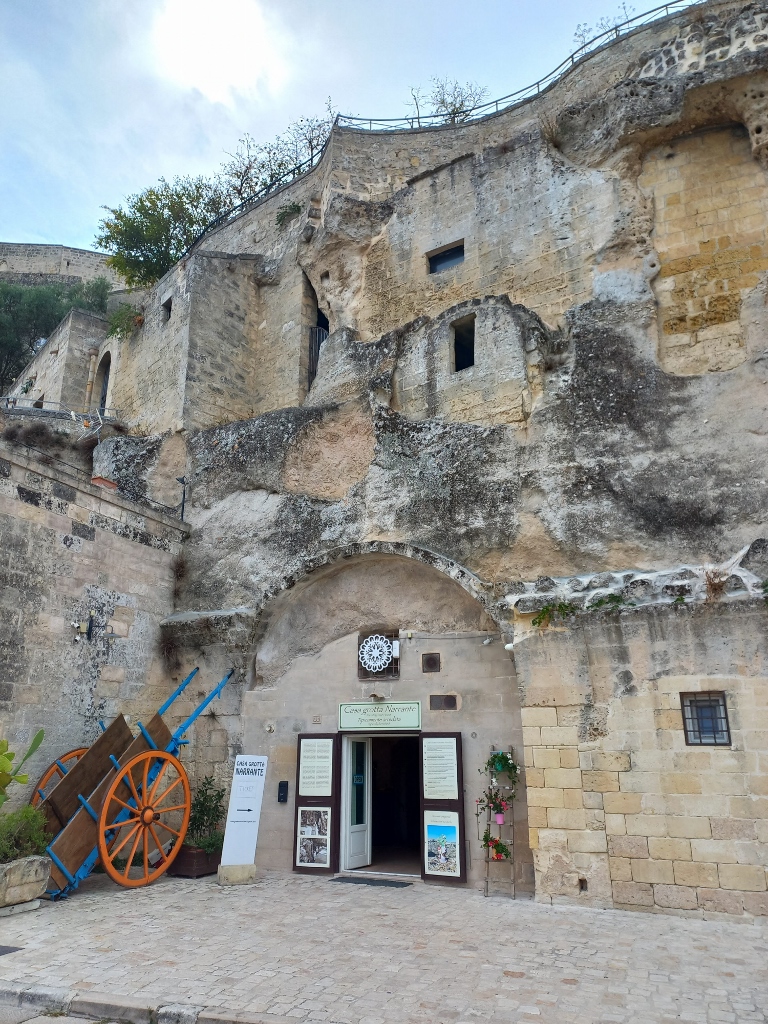
Very soon, I came across a place where you can enter (for an entrance fee) to see what these residential structures used to look like or how they were used. I mean, they are probably still alike today, but they are no longer used in the same way.
 Matera, a detail
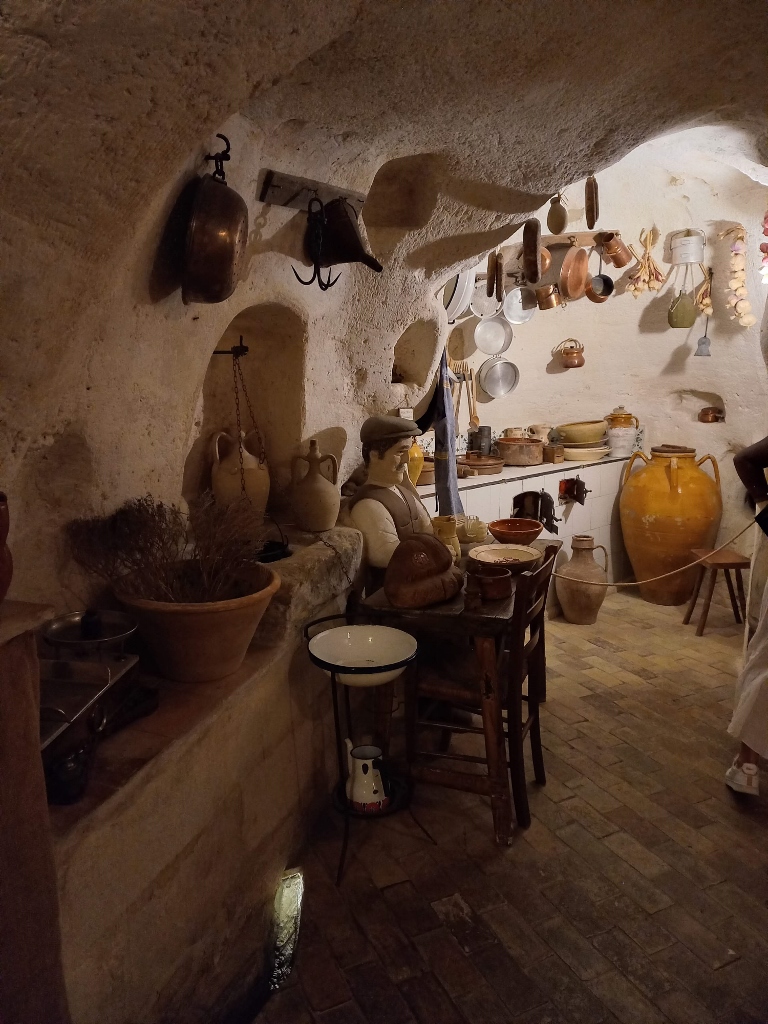
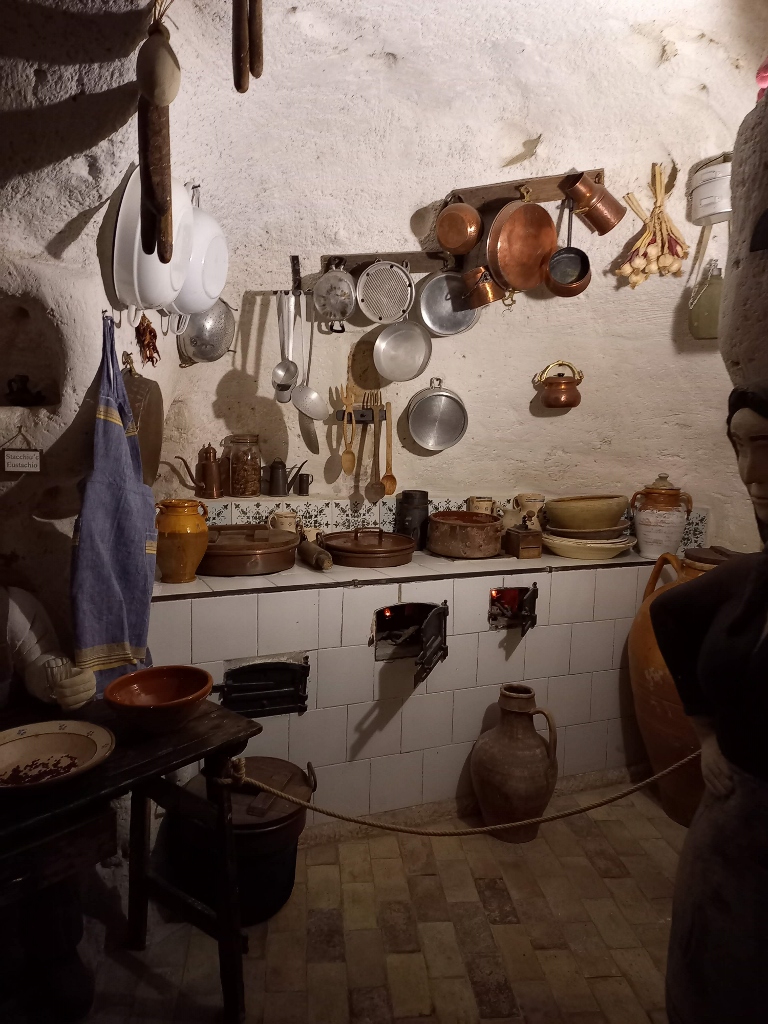
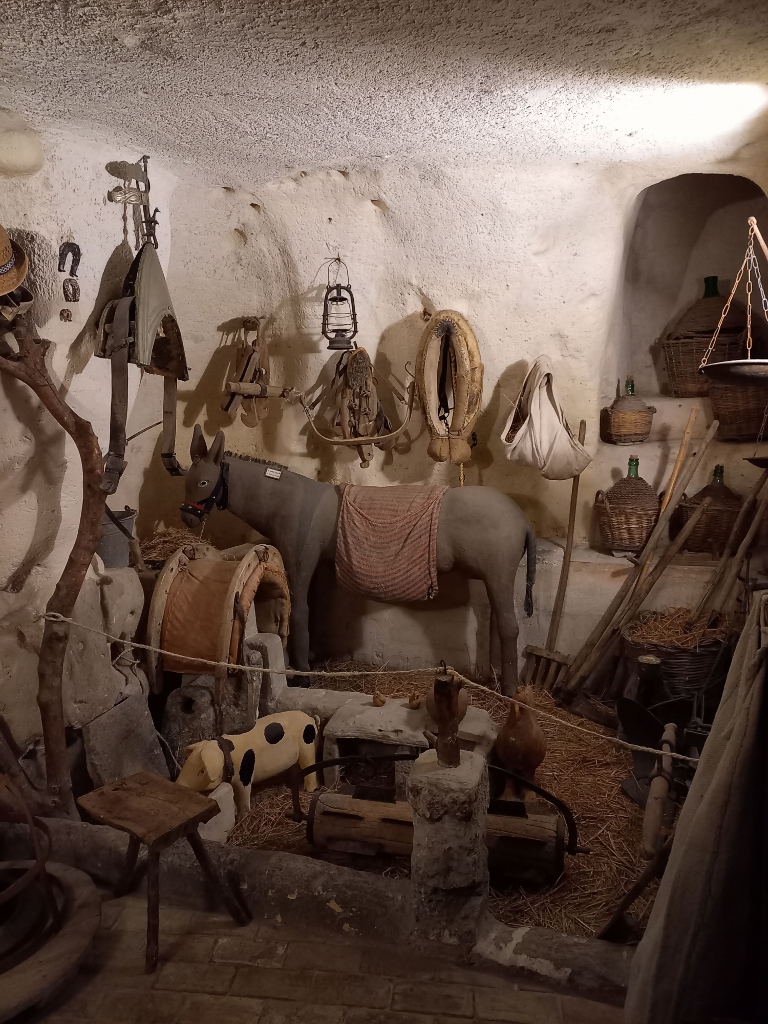
This house is furnished with old furniture and figures to illustrate as authentically as possible how people used to live in these spaces. This used to include various parts of the household and human activities, as well as the space where domestic animals were kept. This is how it all functioned until the mid-20th century when the population was displaced in order to secure the dwellings. A few decades later, the residents started to return, but this coincided with the development of tourism, so I suppose that was the main driving force.
 Matera, a detail
 Matera, a detail
 Matera, a detail
 Matera, a detail
 Matera, a detail
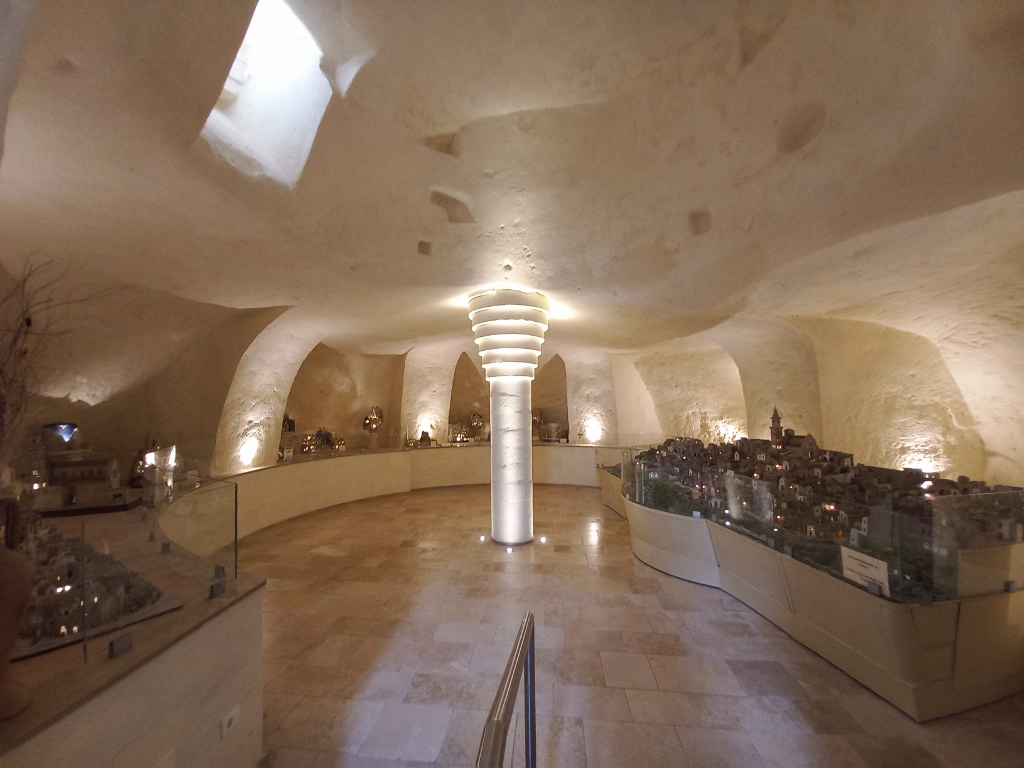
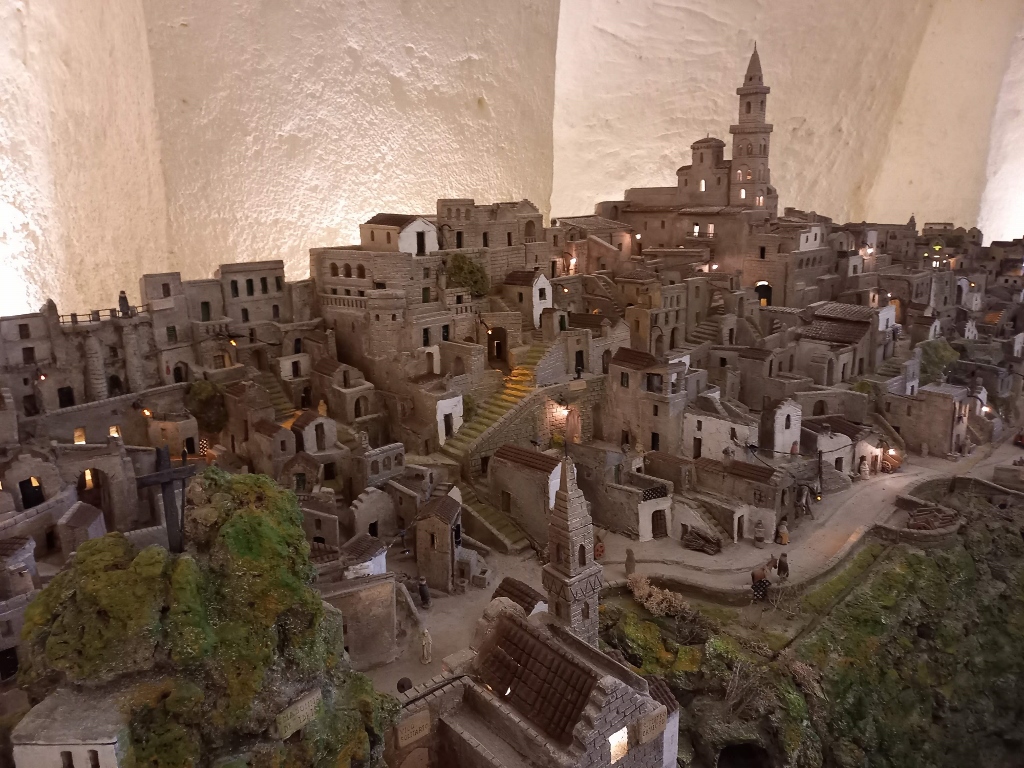
Across from this house, there is another one with a souvenir shop, but you can also see models of different parts of Matera there. I must admit that I was more interested in the space itself than in the other details.
 Matera, a detail
 Matera, a detail
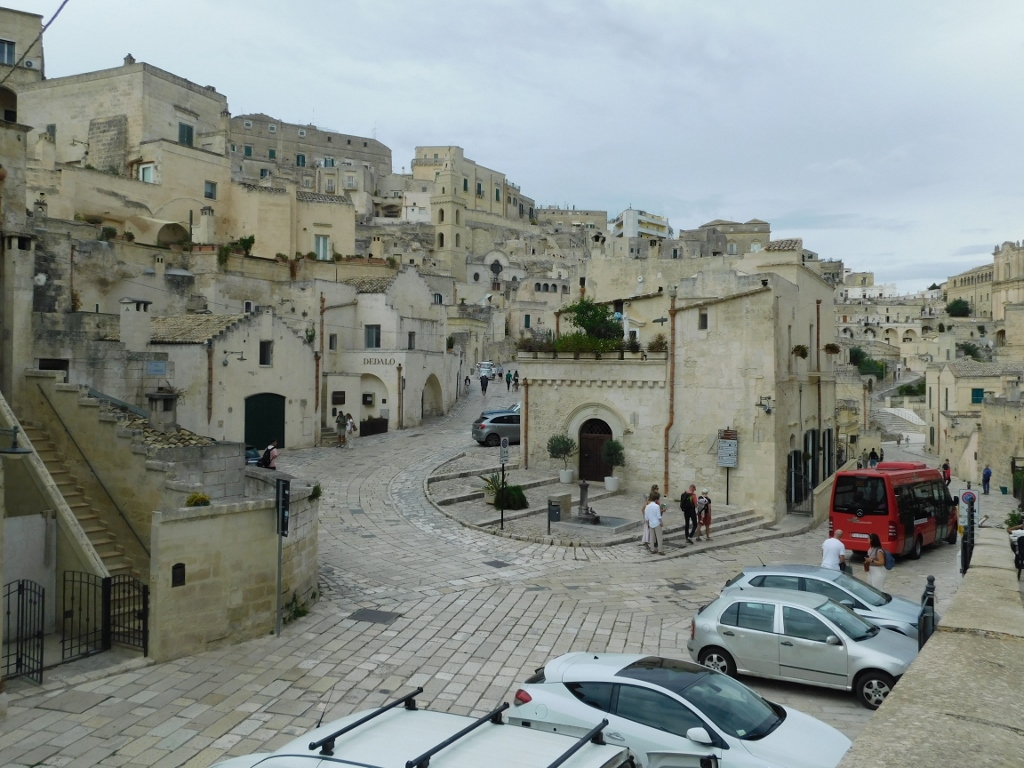
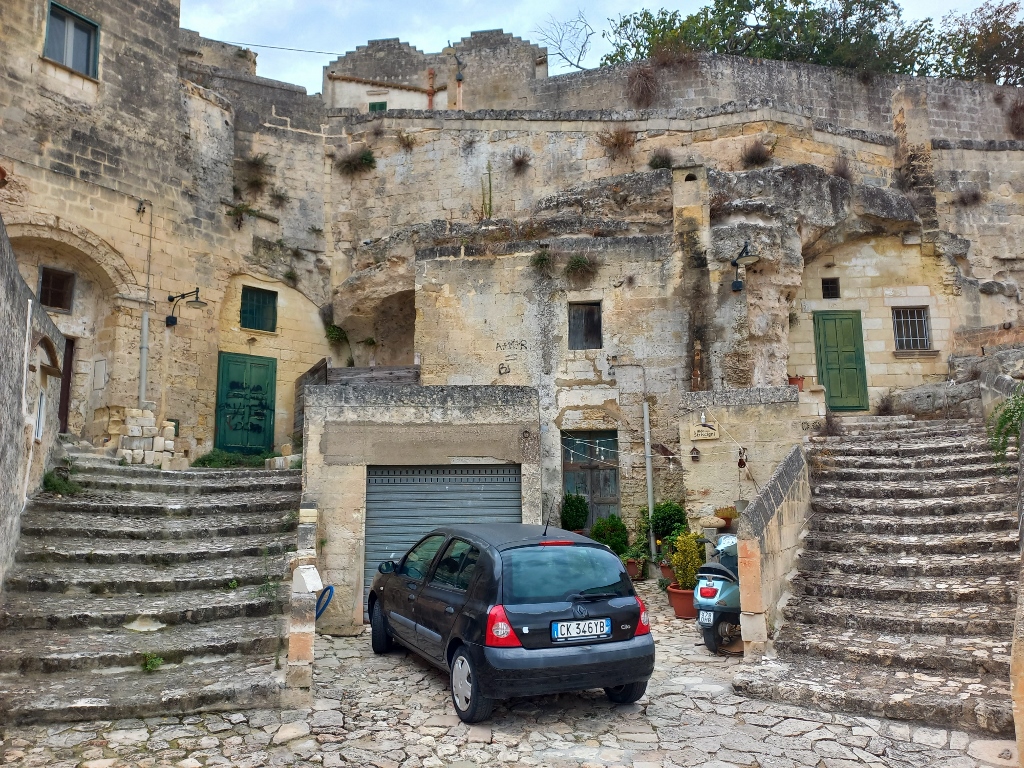
A few dozen metres further, you come to an intersection and here the visitor must decide which direction to take. However, the next photo is interesting because it shows that cars (mostly smaller models) can also come here, while the city transportation operates in the form of minibuses. What I also noticed is that various hotels and guesthouses in the historic part of Matera offer transportation because it's not always easy to reach them, especially if visitors have larger pieces of luggage.
 Matera, a detail
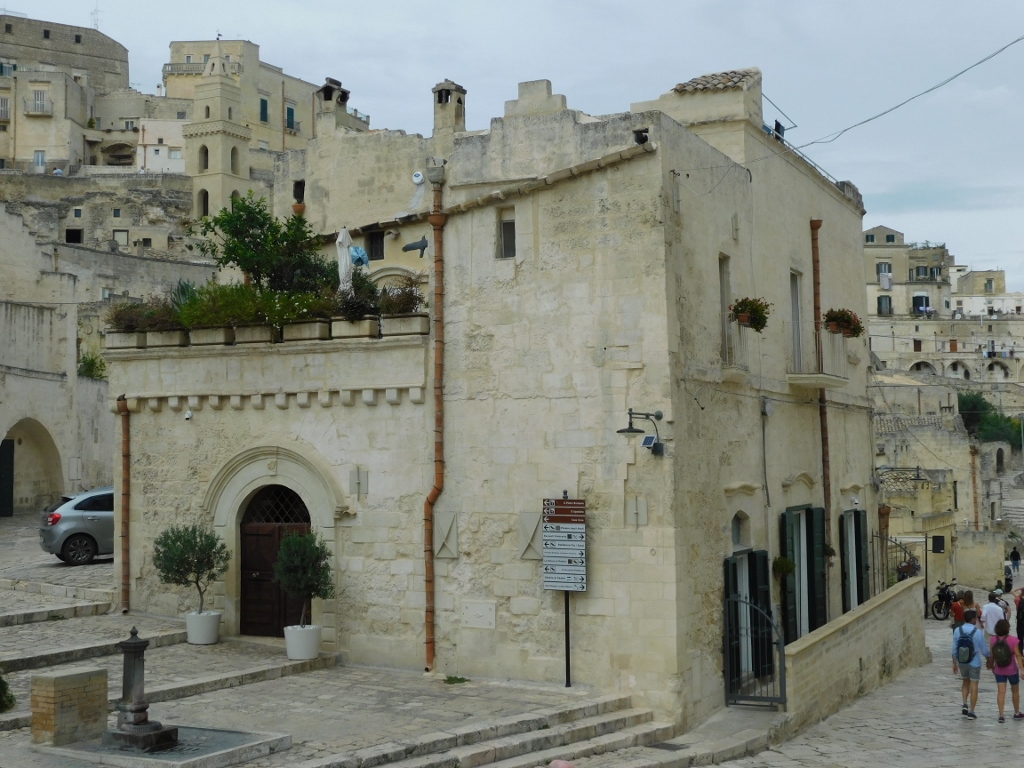
At this intersection, you can see another interesting feature – a public drinking fountain. I can report that the water is perfectly potable and does not cause any problems.
 Matera, a detail
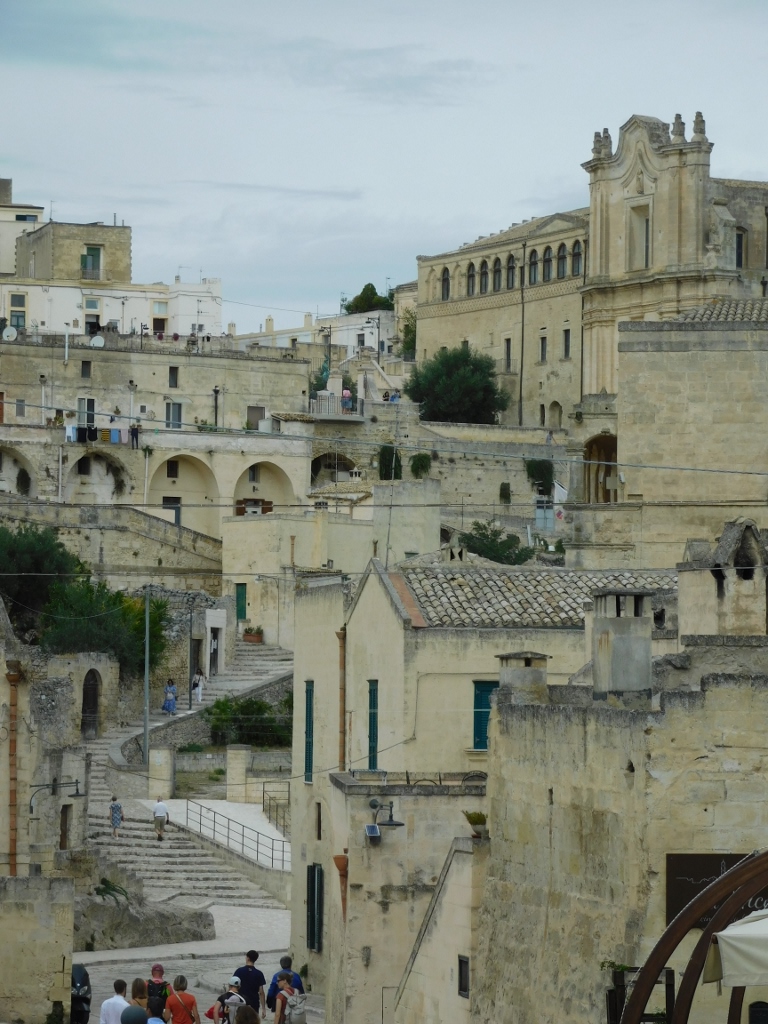
At the intersection, I decided to go left, but I also took a shot of the right-hand direction, which I planned to reach later on by taking a detour.
 Matera, a detail
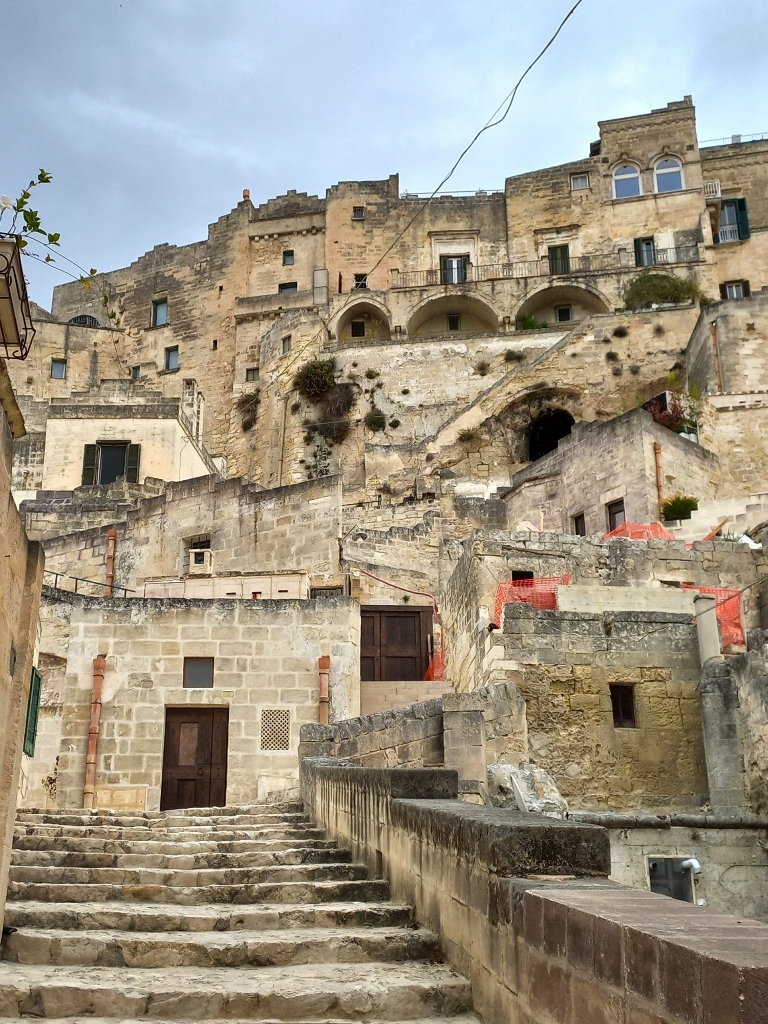
I also took a moment to look around and capture some interesting details, and then I started walking up the street that leads gently uphill.
 Matera, a detail
There are picturesque details everywhere in the old part of Matera.
 Matera, a detail
Although most of the buildings are old, you can see that there are also some houses that are quite new, though they are definitely less interesting compared to the older structures.
 Matera, a detail
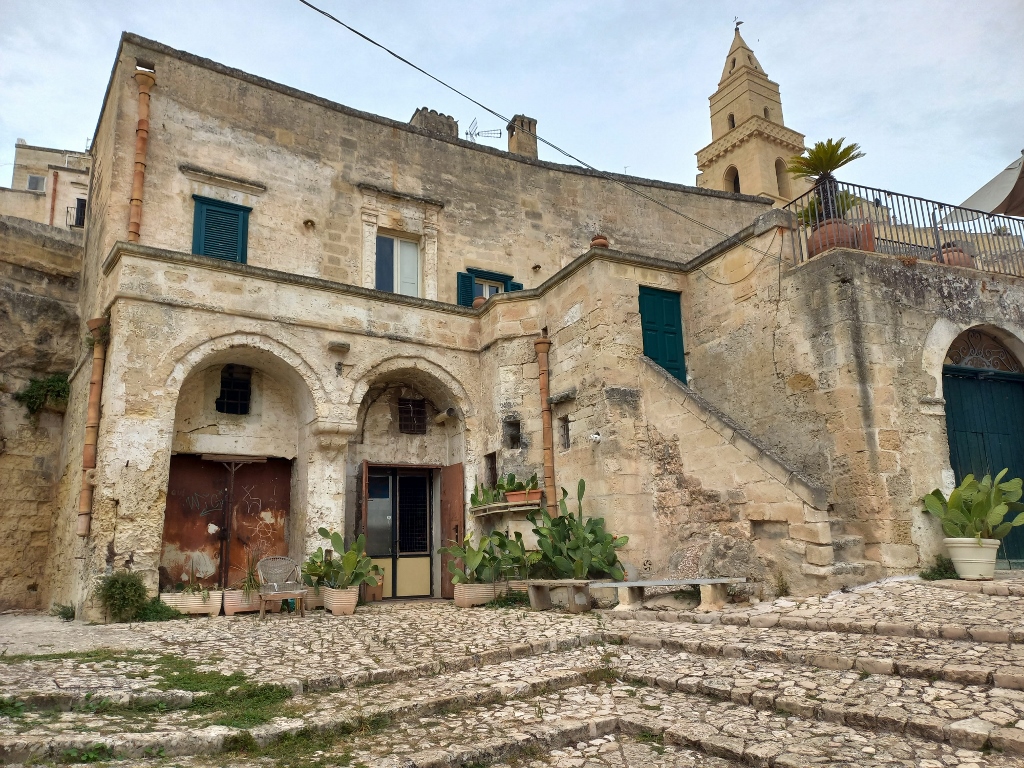
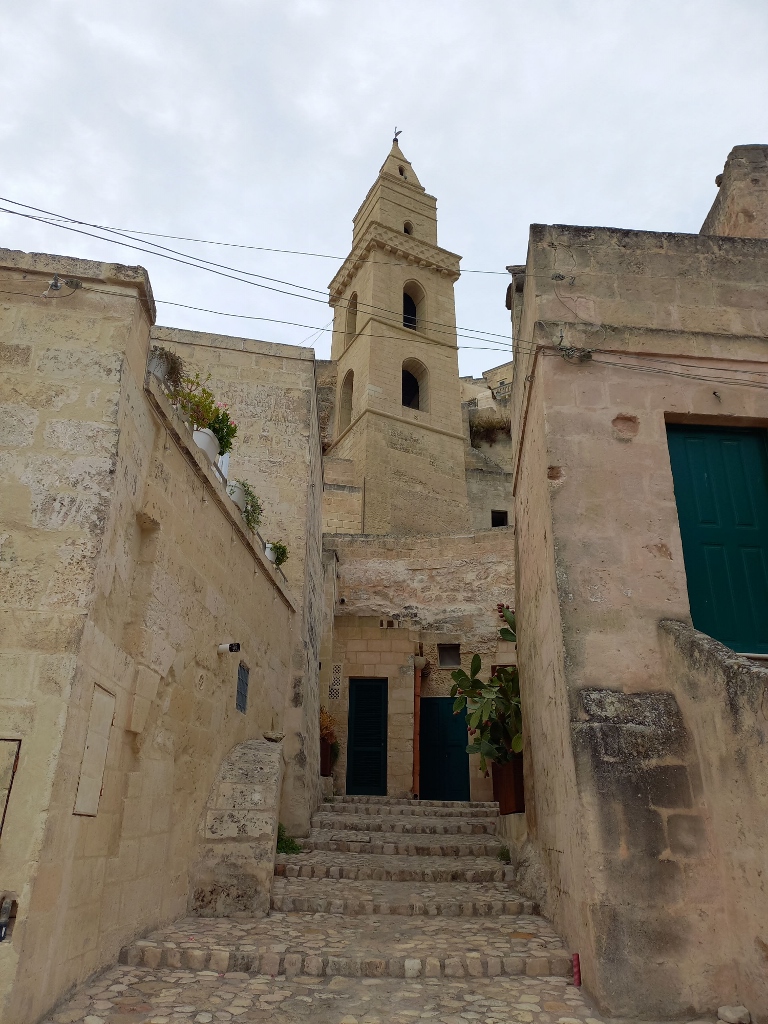
From the street I was walking along, I spotted the top of the bell tower of the Church of San Pietro Barisano, which was built into the rock. However, since I already planned to visit another church of this type, I decided not to climb here, but rather just take a few photos. Despite the relatively good condition of my back, I still had to be careful and measured. Additionally, in order to thoroughly explore Matera, it's necessary to stay at least two days, and three would probably be ideal. I didn’t have that much time.
 Matera, a detail
 Matera, a detail
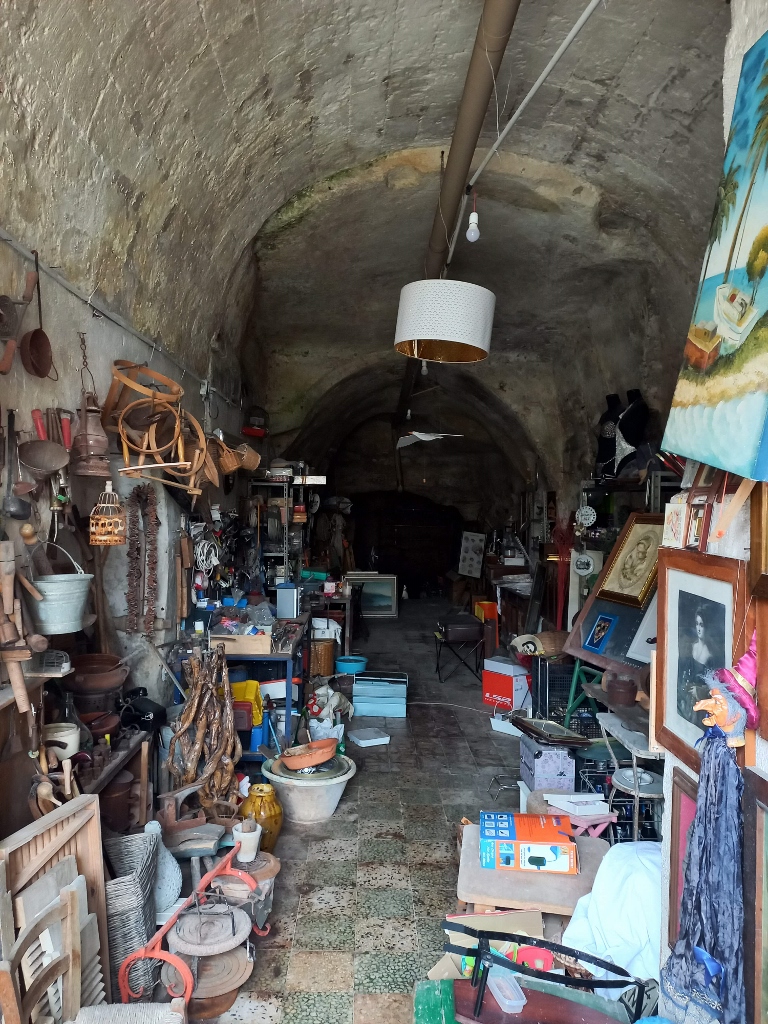
But, I took the opportunity to peek through some open doors into a space that looked like an art storage area.
 Matera, a detail
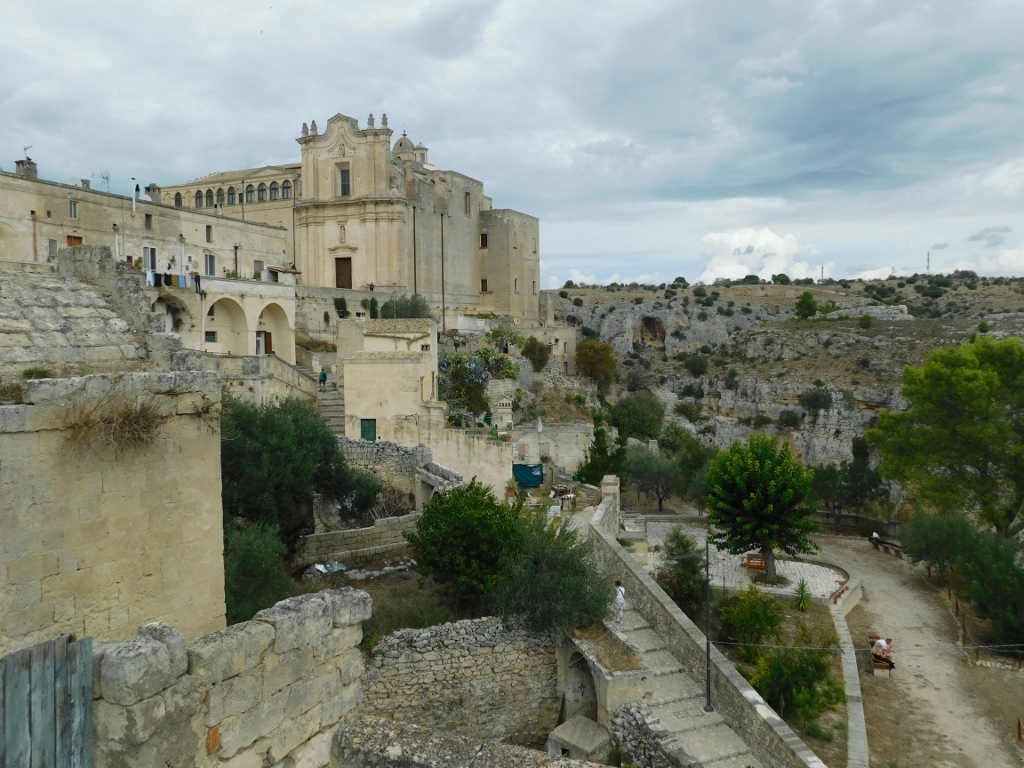
Soon, I reached an extension of the street that offered a very beautiful view of the surroundings.
 Matera
On the left-hand side, you can see Sant’Agostino complex that includes the church and the monastery. For the reasons mentioned earlier, it was enough for me to just take a photo of it from where I was standing. On the other hand, if someone has the time, from what I’ve read, it's worth going there because the square in front of the church is considered one of the best spots in the city for a great view.
 Matera, a detail
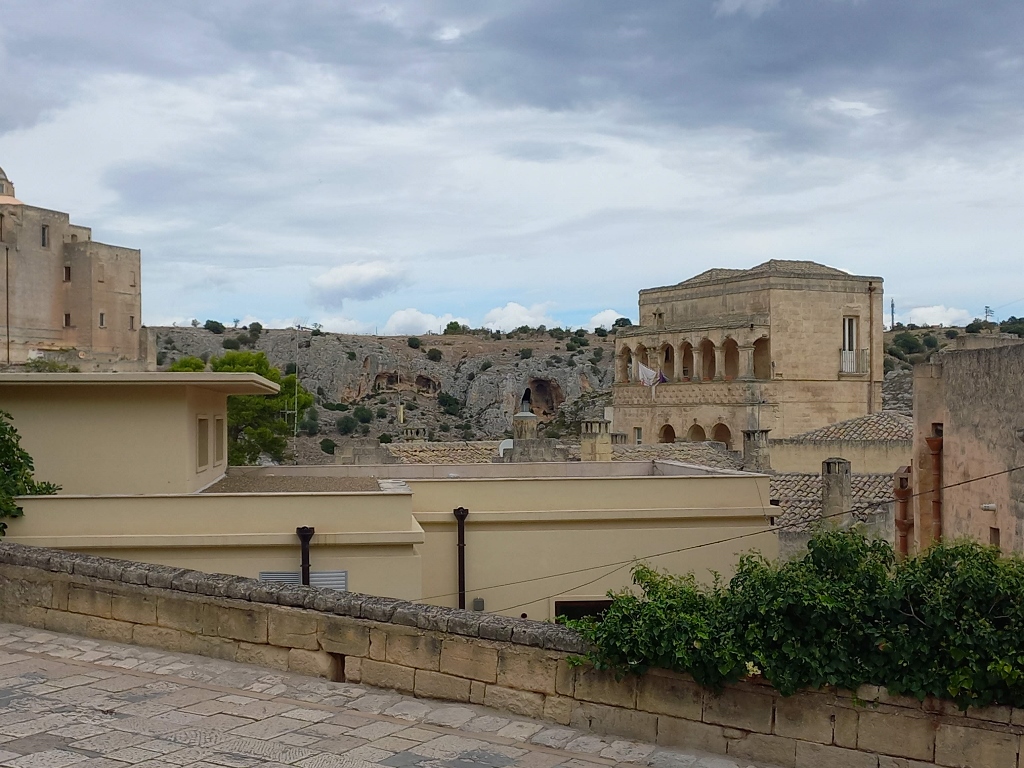
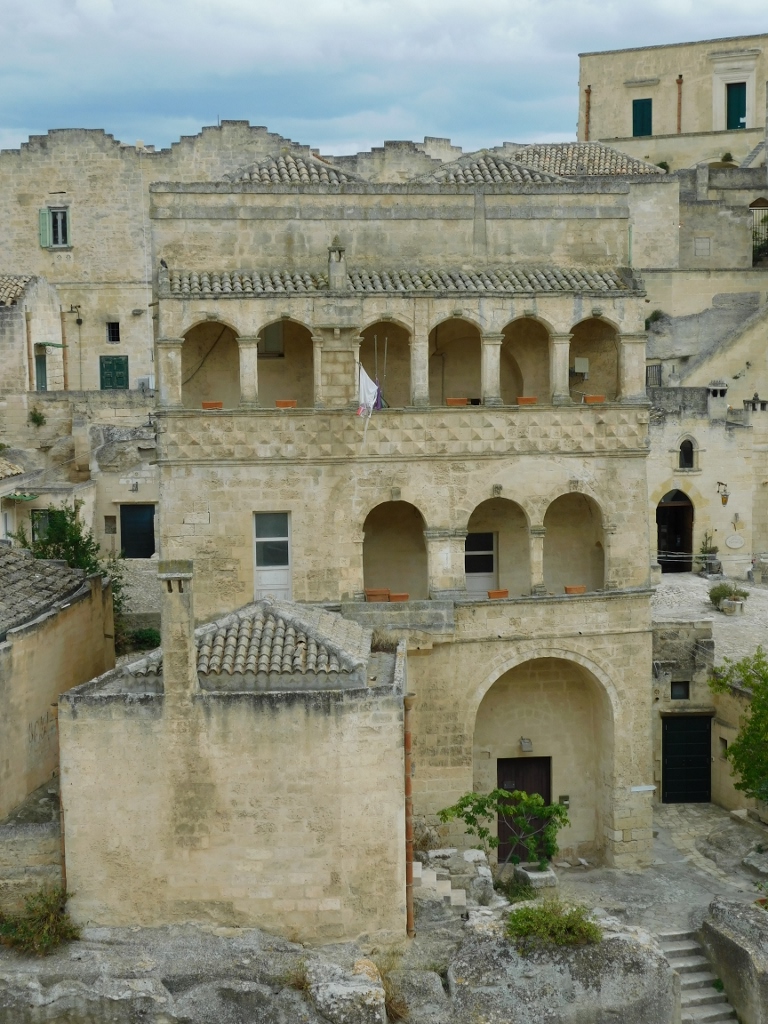
I was content even with that extension beside the street I used in order to climb to a certain height, as I had a good view from there as well. For example, you can easily spot a building that stands alone and seems unrelated to the caves, but it still has an interesting appearance.
 Matera, a detail
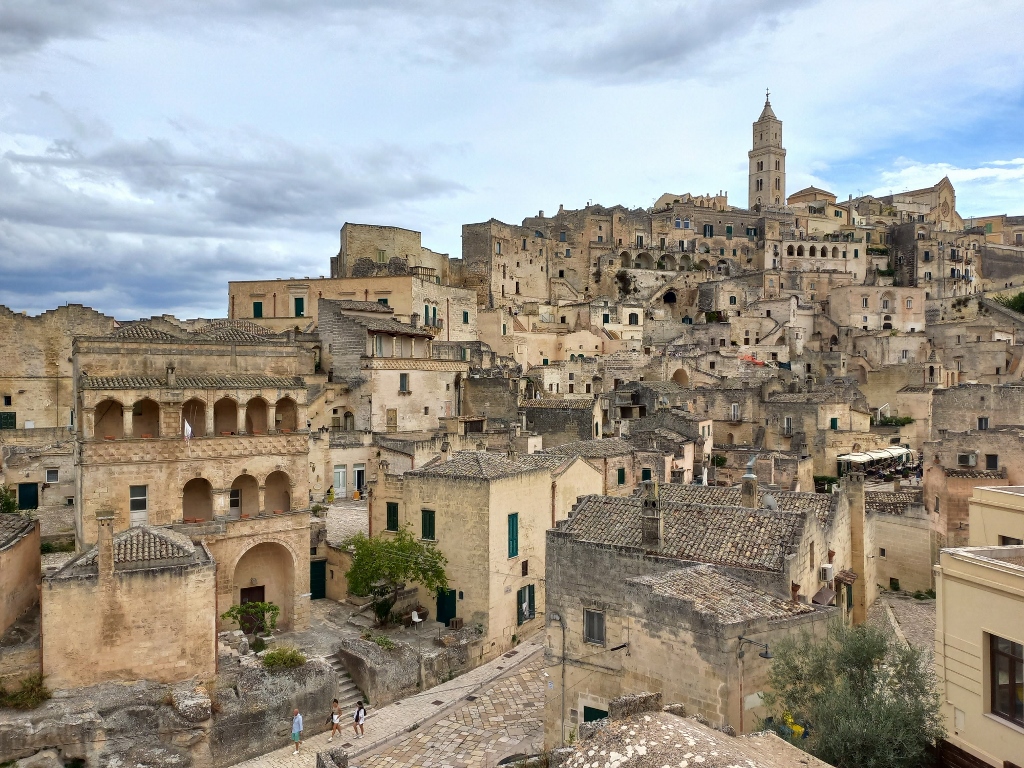
From there, I also saw the Cività district, where the cathedral stands out, particularly its bell tower at the top of the hill.
 Matera, a detail
My plan now was to descend to the level of the street that separated these two hilltops (with the Sant’Antonio monastic complex and the Cività district), as I wanted to go around the hill where the Cività district is located. In addition to the church I wanted to visit there, walking along this street also allowed me to get a very good view of the Gravina river gorge.
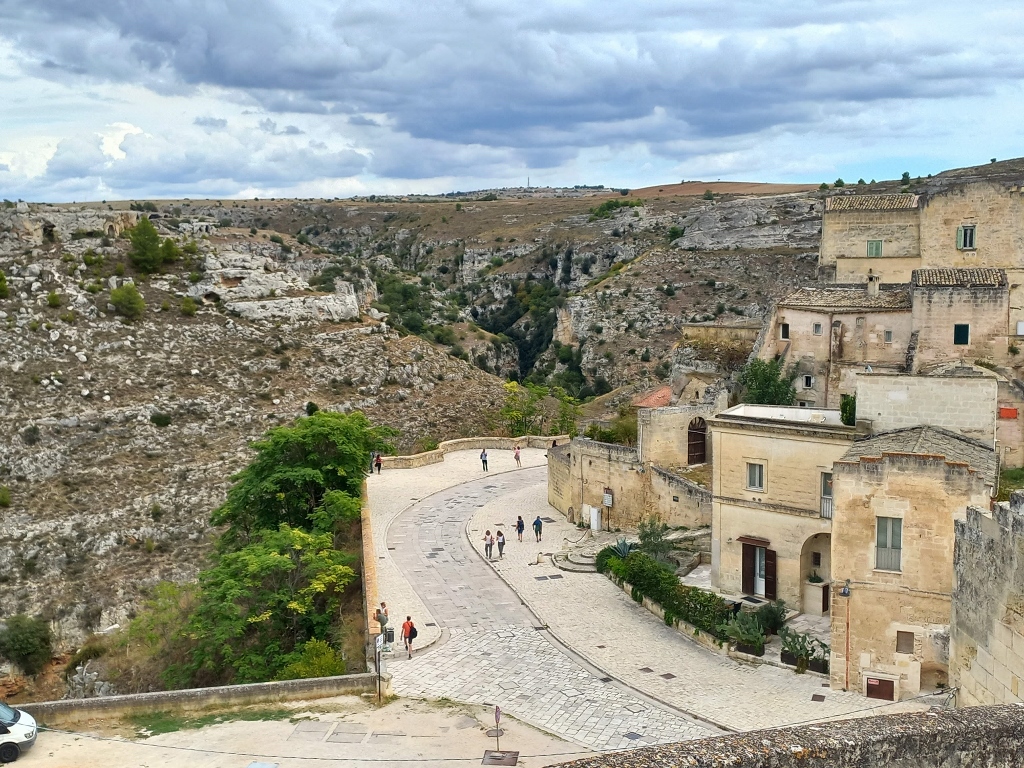 Matera, a detail
Once I reached this street, I looked back once more and took a shot of a part of the city, as well as the Sant’Antonio monastic complex.
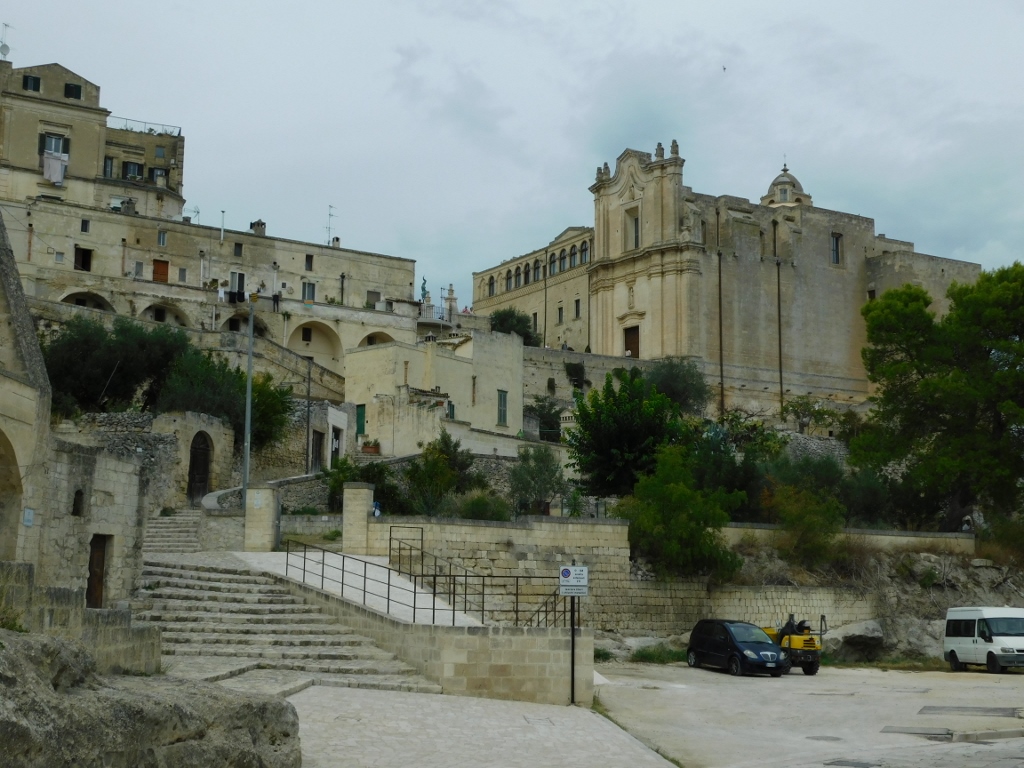 Matera, a detail
Interestingly, the Sant’Antonio monastic complex is built right at the top of the Gravina river gorge. This is most clearly seen from the terrace that serves as a viewpoint, located beside the street I was walking on now.
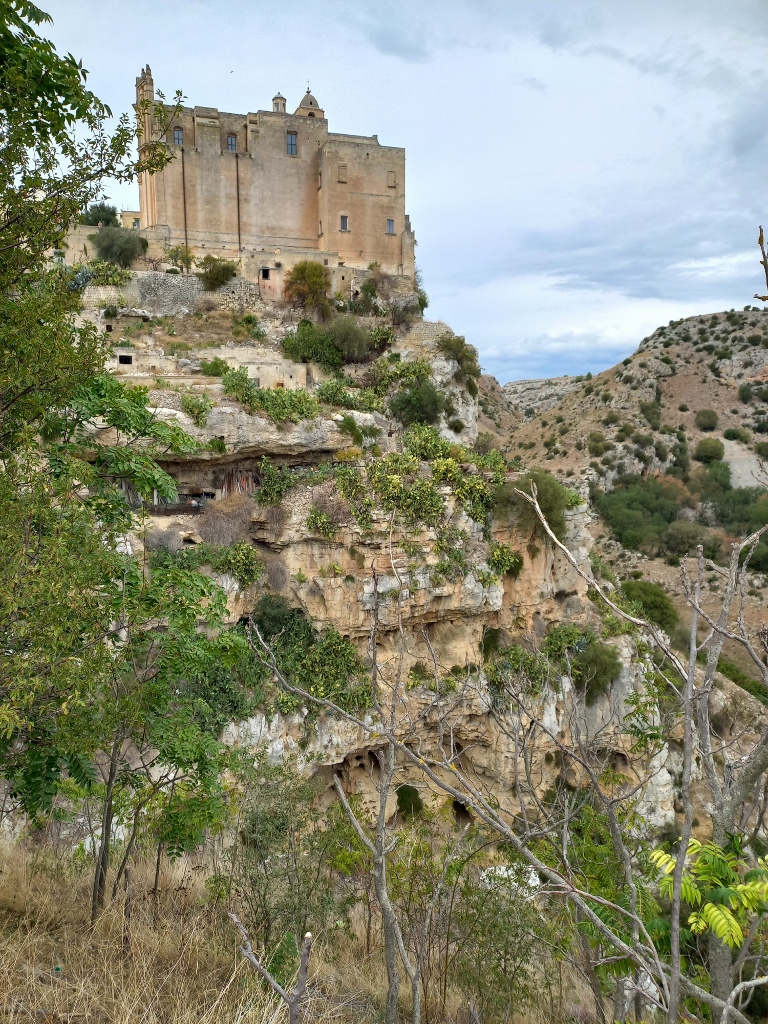 Matera, a detail
However, from there, you can also see how people use natural caves and canopies in order to dwell there or store their belongings.
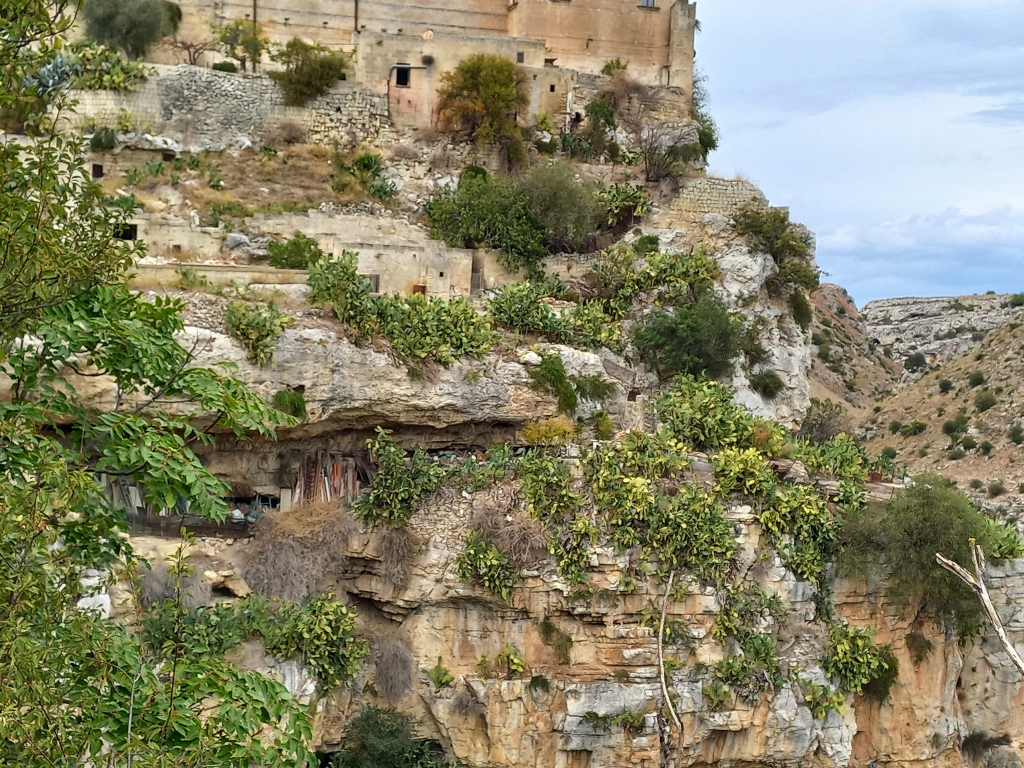 Matera, a detail
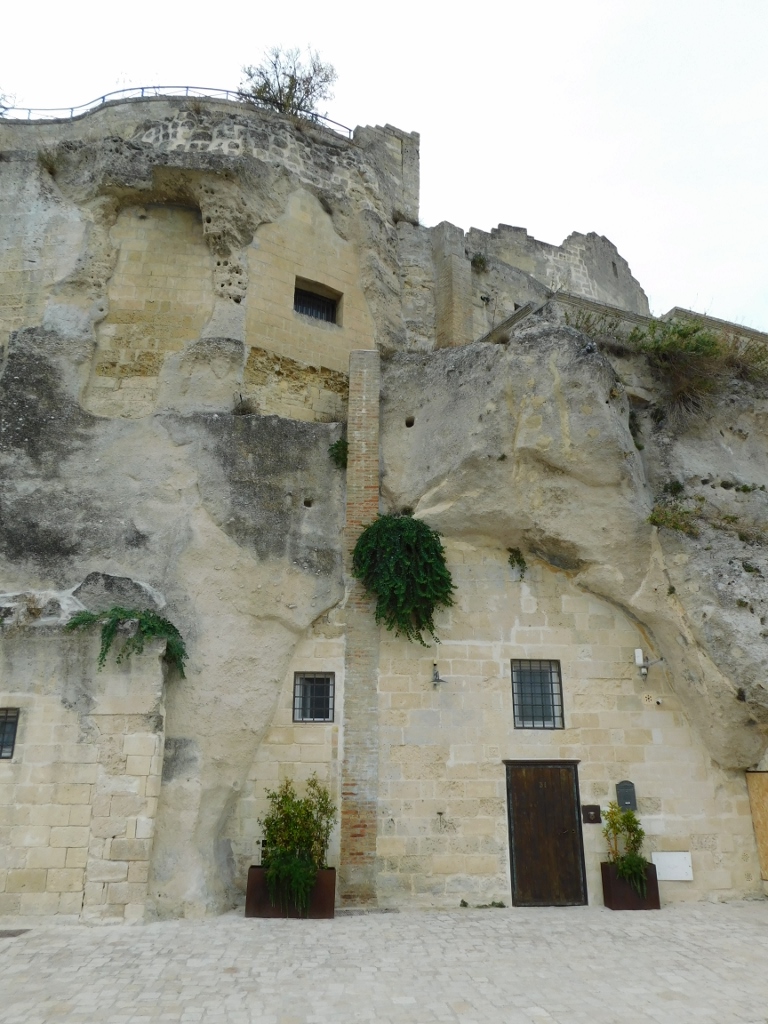
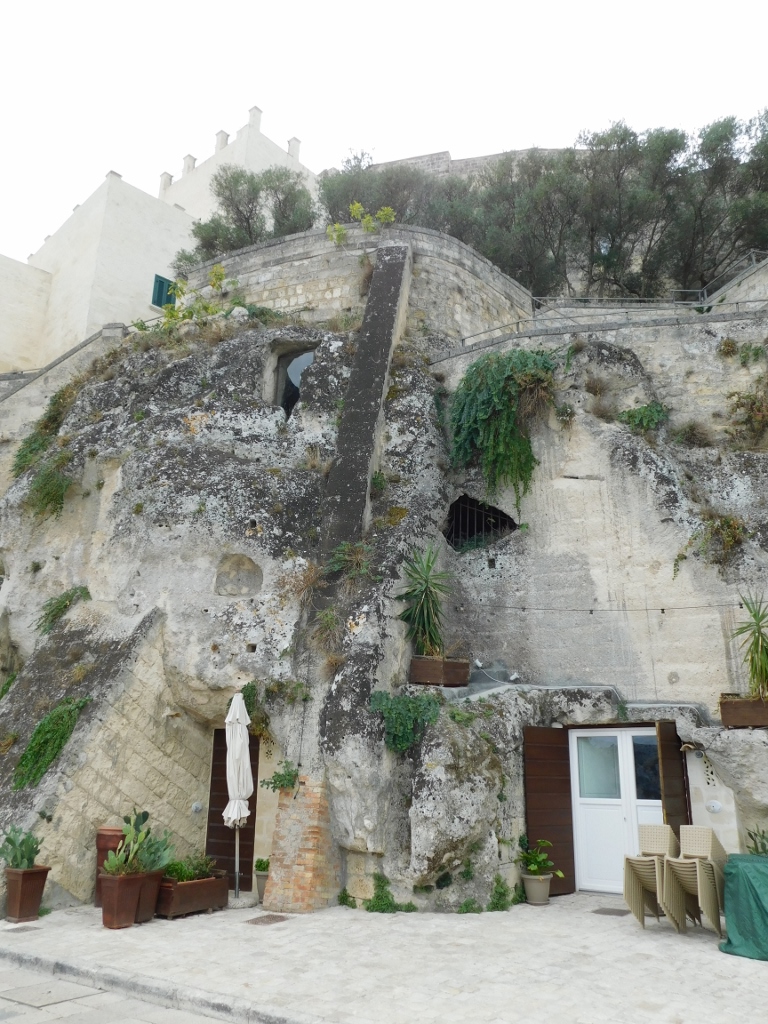
The way these natural "holes" in the rocks are used and bricked up to create living spaces is even more visible on the other side of the street.
 Matera, a detail
 Matera, a detail
 Matera, a detail
A little further, I came across another terrace beside the street that serves as a viewpoint, so I took the opportunity to capture a photo of the Gravina river gorge, where the river makes a large bend.
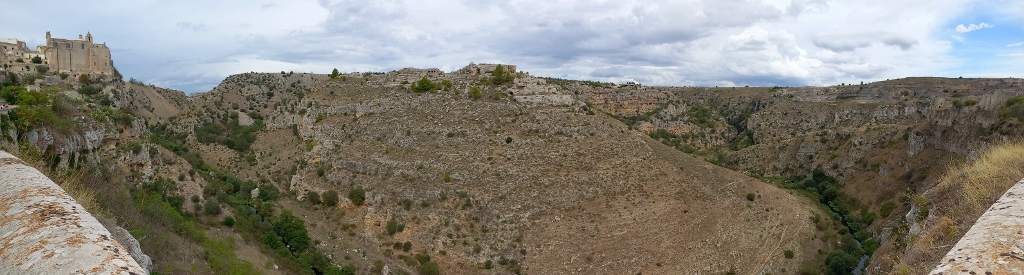 The Gravina river gorge
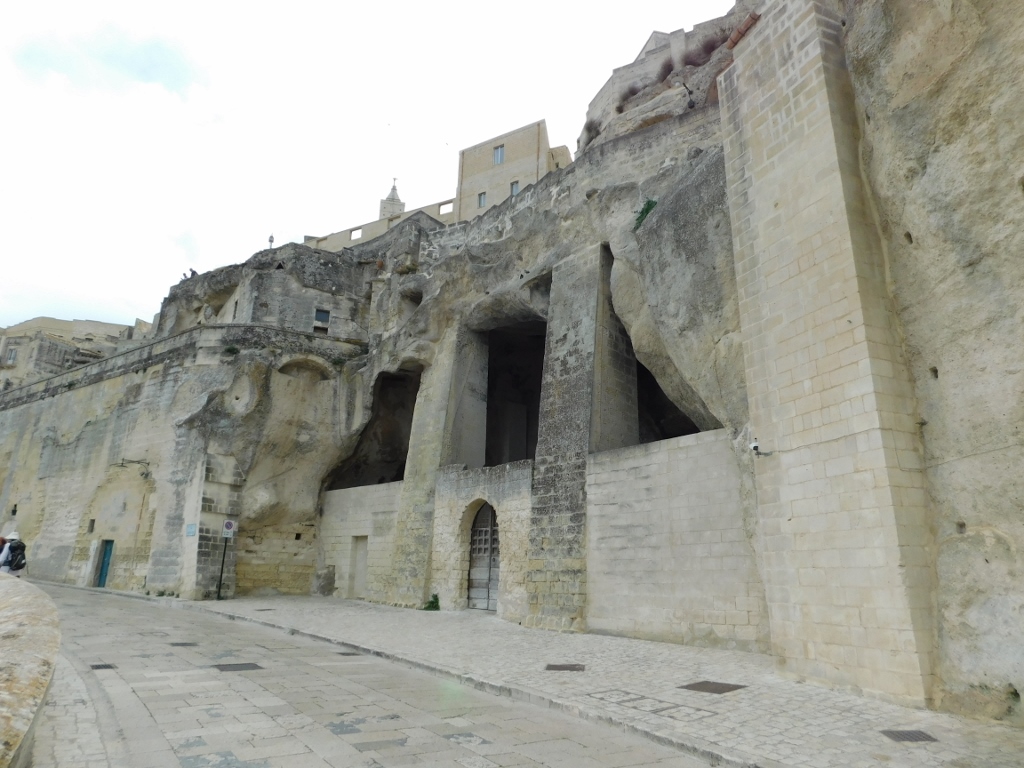
On the other side of the street, I finally reached the church I wanted to visit. In fact, there are two churches here that are connected.
 Matera, a detail
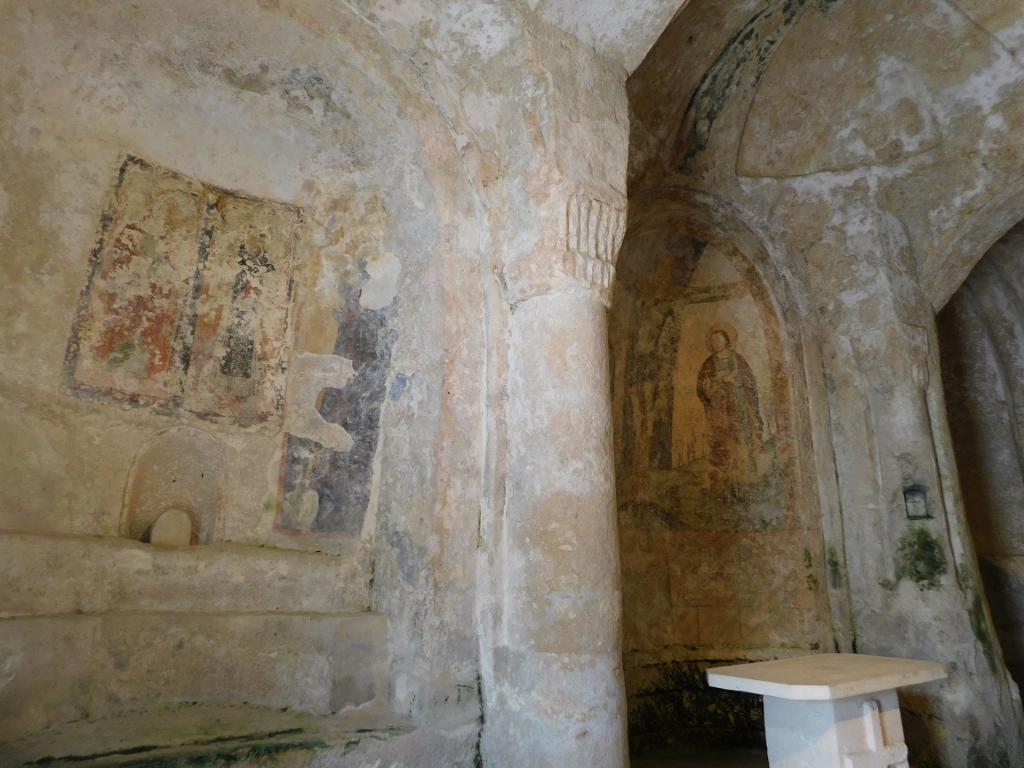
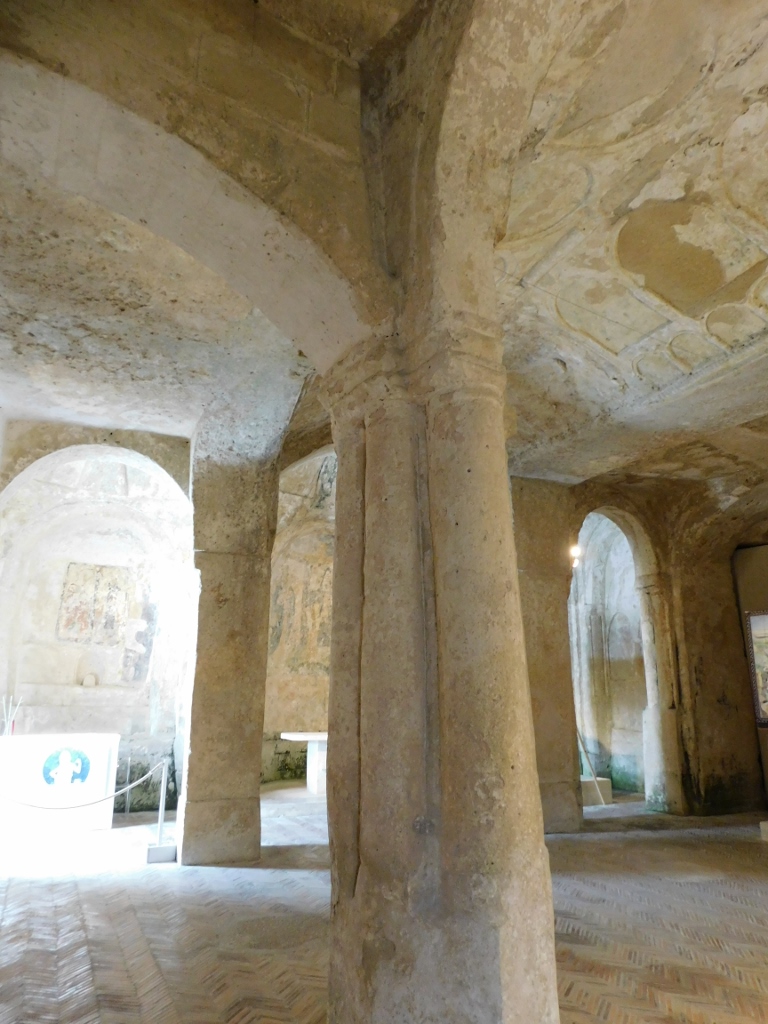
First, you enter the Church of the Madonna delle Virtù, which, according to some sources, dates back to the 12th century. Like all the churches carved into the rock, this one wasn't "built," but was entirely sculpted into the stone and then decorated.
 Matera, a detail
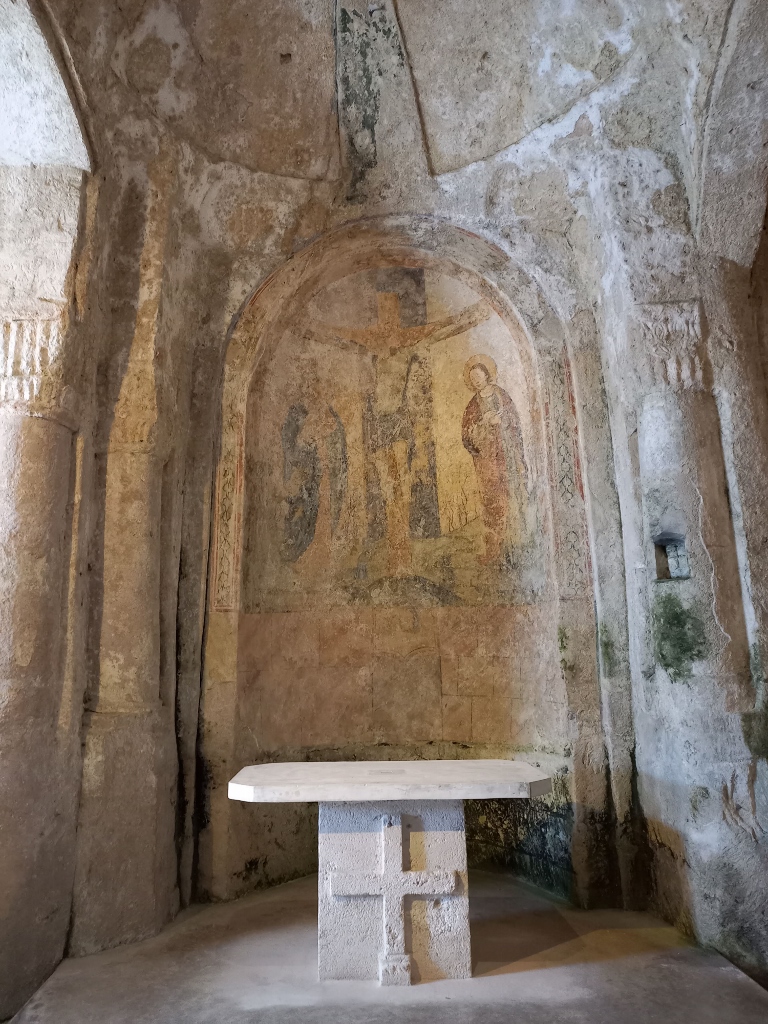
In the central apse, there is a fresco of the Crucifixion with the Virgin Mary and St. John the Evangelist, which was likely painted in the 16th century.
 Matera, a detail
 Matera, a detail
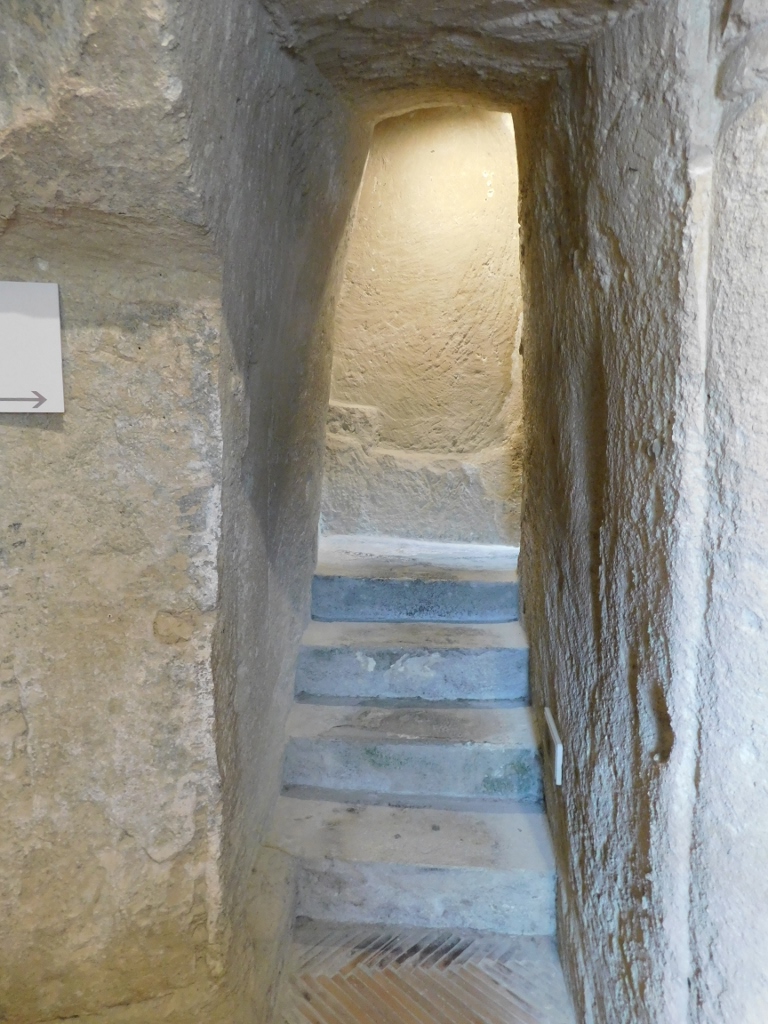
Through a passage, you continue towards the monastery, the second church, and the cave dwellings.
 Matera, a detail
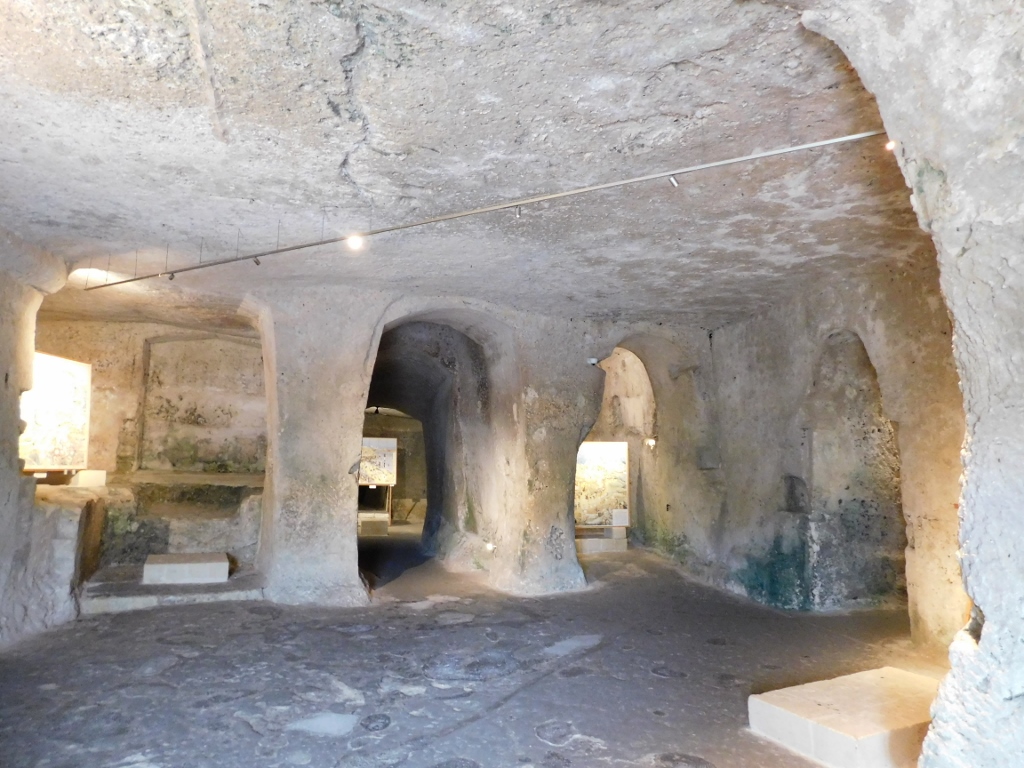
First, I entered the area of the monastery.
 Matera, a detail
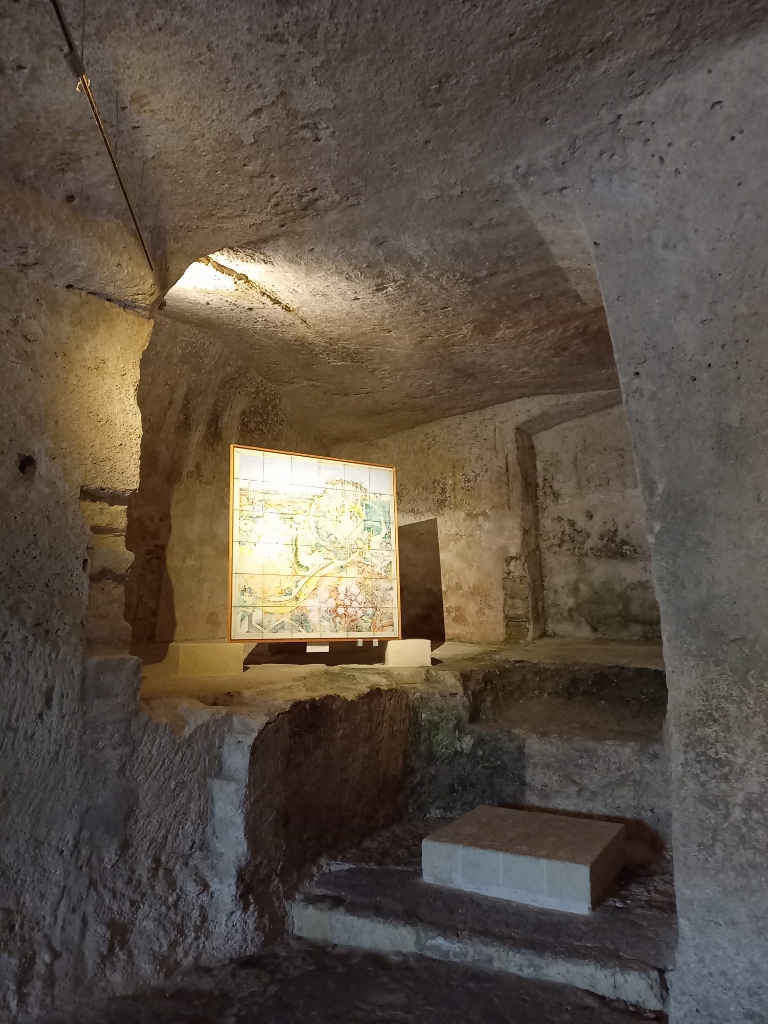
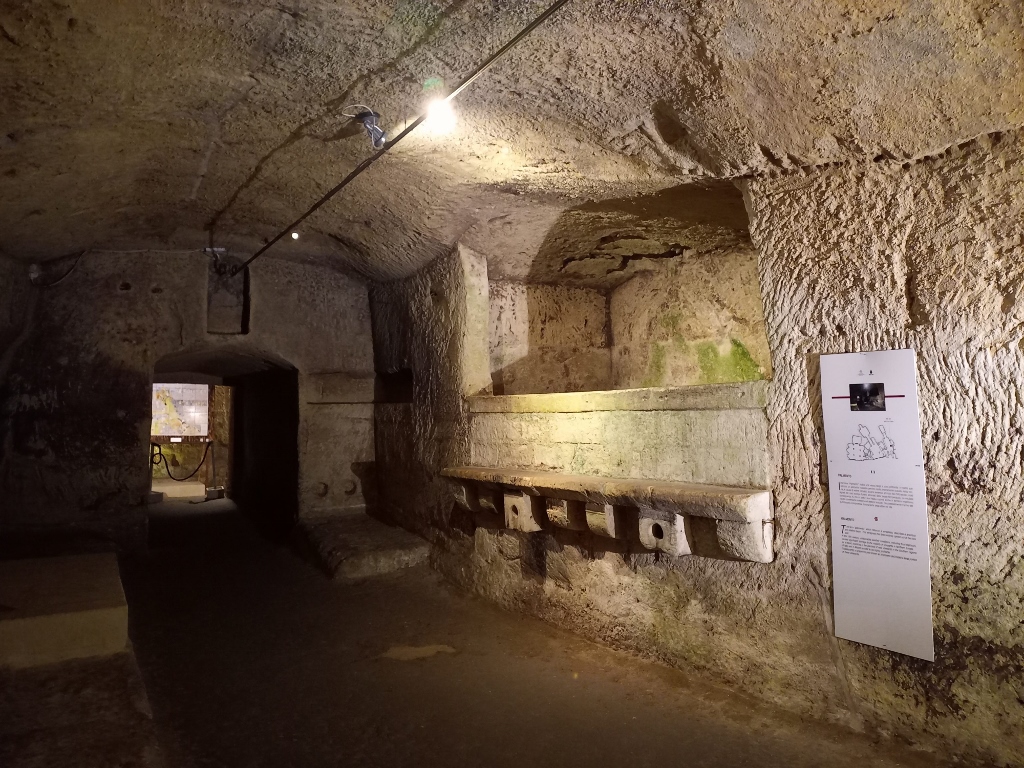
The project of carving the monastery into the rock began in the 12th century and this was made possible by the fact that the limestone in the entire region is easy to work with. The original idea was actually for it to be a church, but in the 13th century, the space was transformed and it became home to nuns.
 Matera, a detail
 Matera, a detail
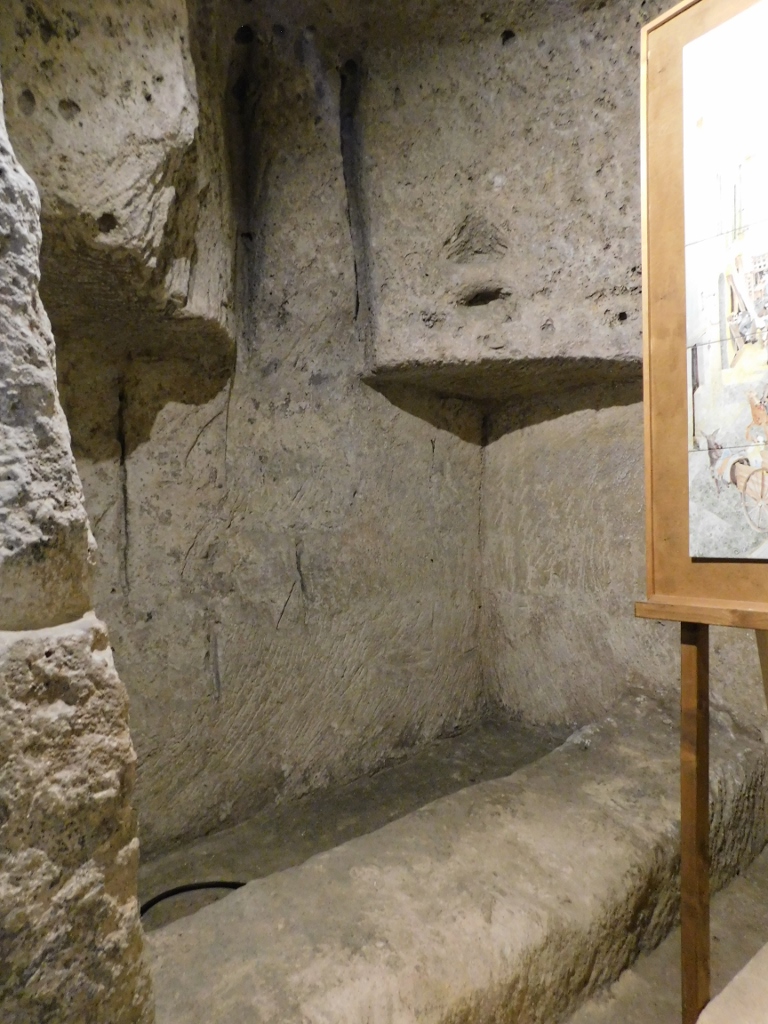
Over time, the space was eventually transformed into a wine cellar, which can be inferred from the wine press in the shape of a basin (in the centre of the next image).
 Matera, a detail
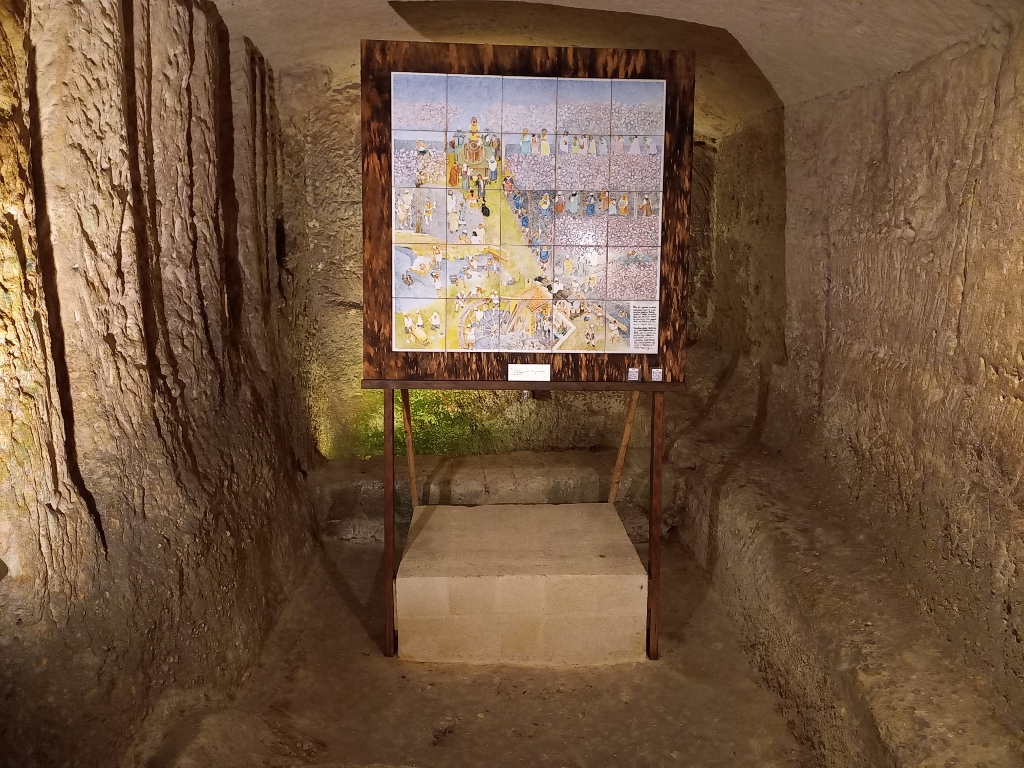
Today, both in the previously seen church and here in the monastery, you can see displayed images made from majolica tiles. On the one hand, they depict various narrative scenes from the mythical history of Matera, and on the other, I assume, they advertise the local production of majolica items.
 Matera, a detail
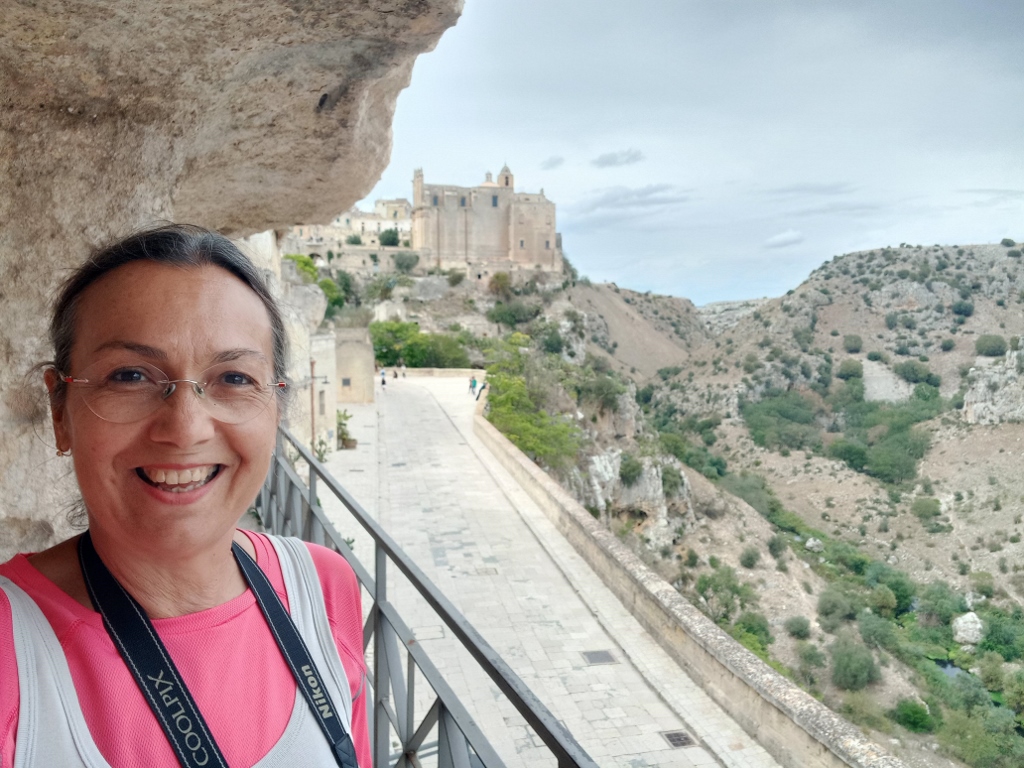
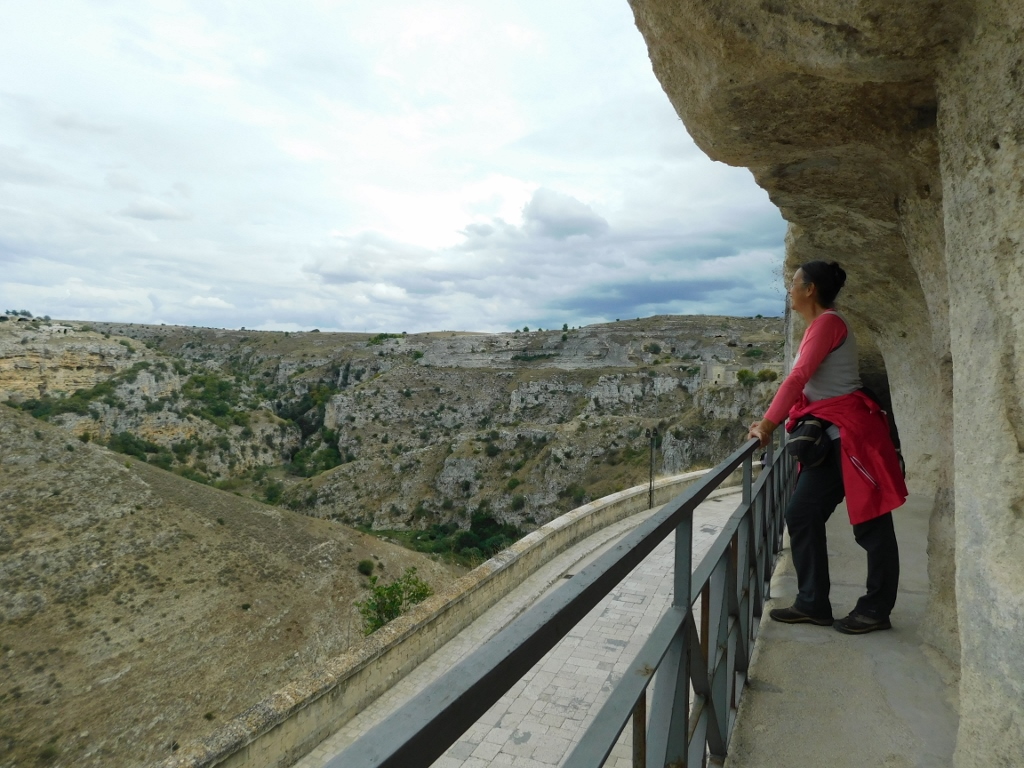
Now I continued towards the second church in the entire complex and in order to get there, I first reached an open passage on the upper floor. There, I got inspired to have some fun with photography – taking pictures of myself, but you can also see what everything looks from that angle.
 Selfie in Matera
 Me in Matera
Of course, I also took pictures of the surroundings, which truly look wonderful from this spot.
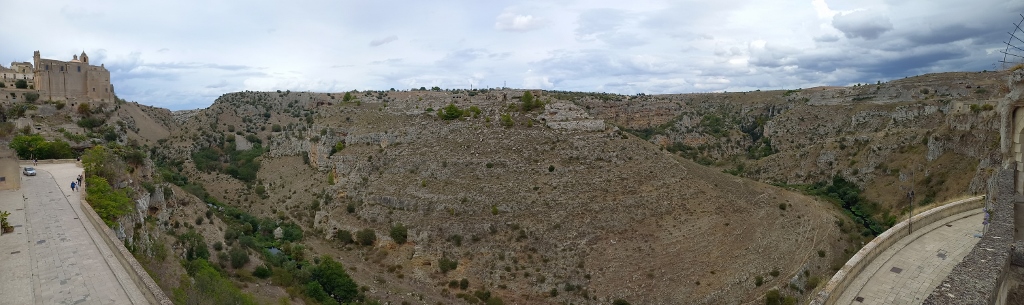 The Gravina river gorge
Some motifs do repeat in my photos, but I was genuinely thrilled and I usually express my delight during travels through photography.
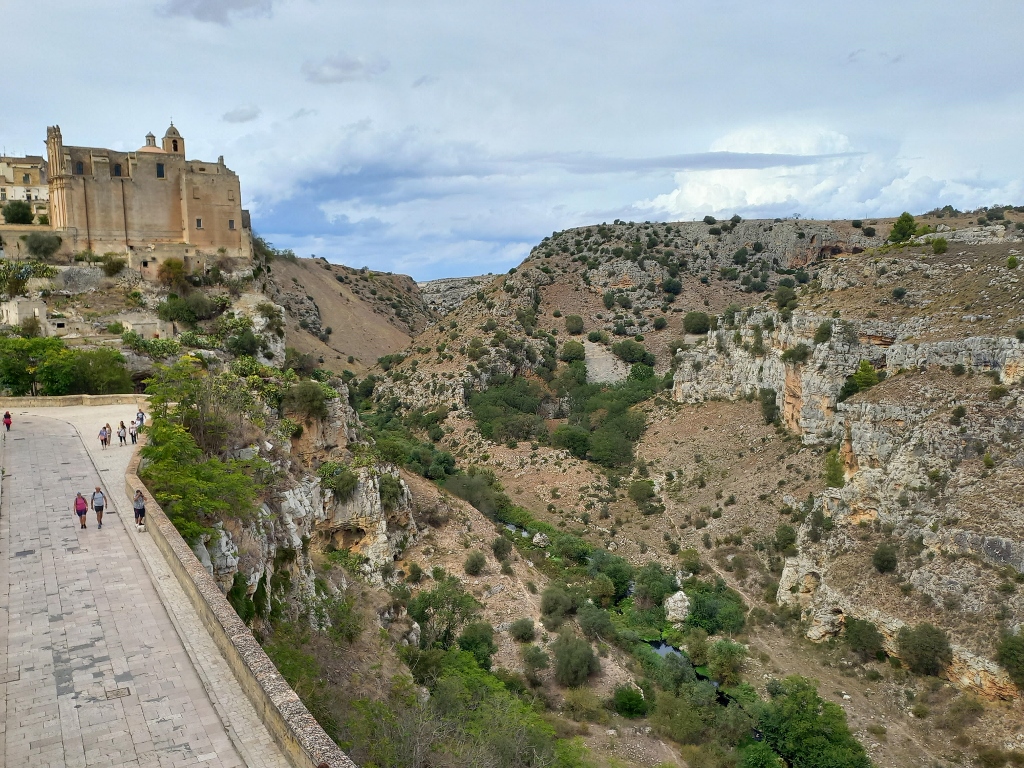 Matera, a detail
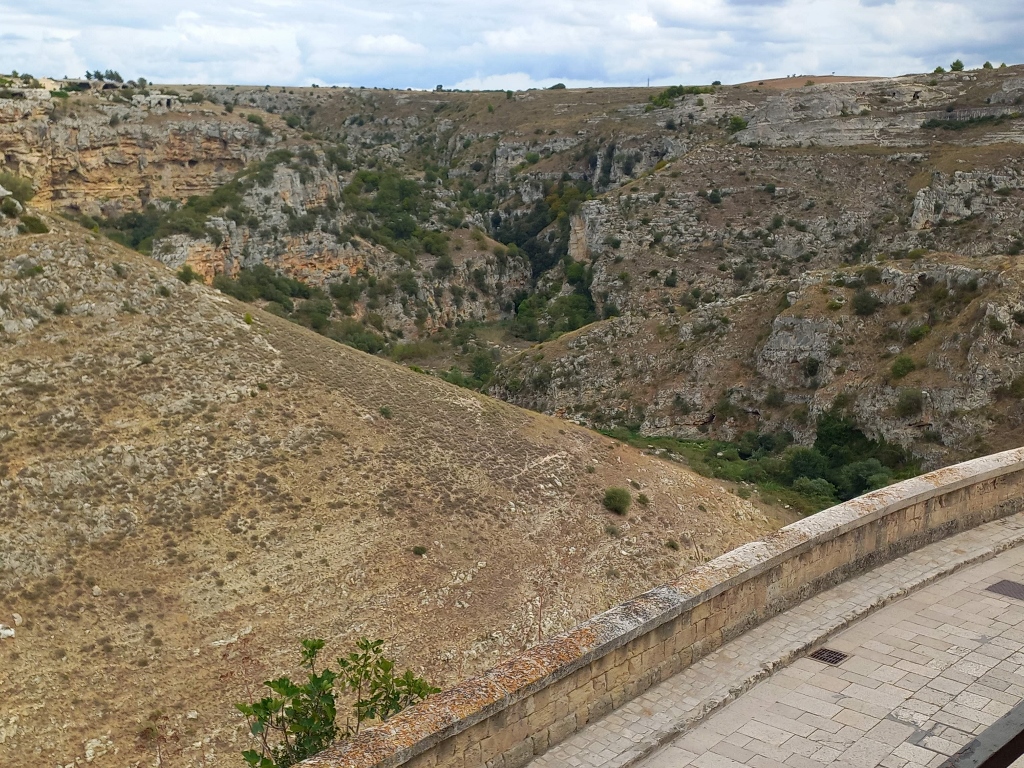 The Gravina river gorge
On the other side of the gorge, you can see both natural caves and structures made by people. I will talk a bit more about the gorge and the surroundings of Matera later. For now, here's just one photo.
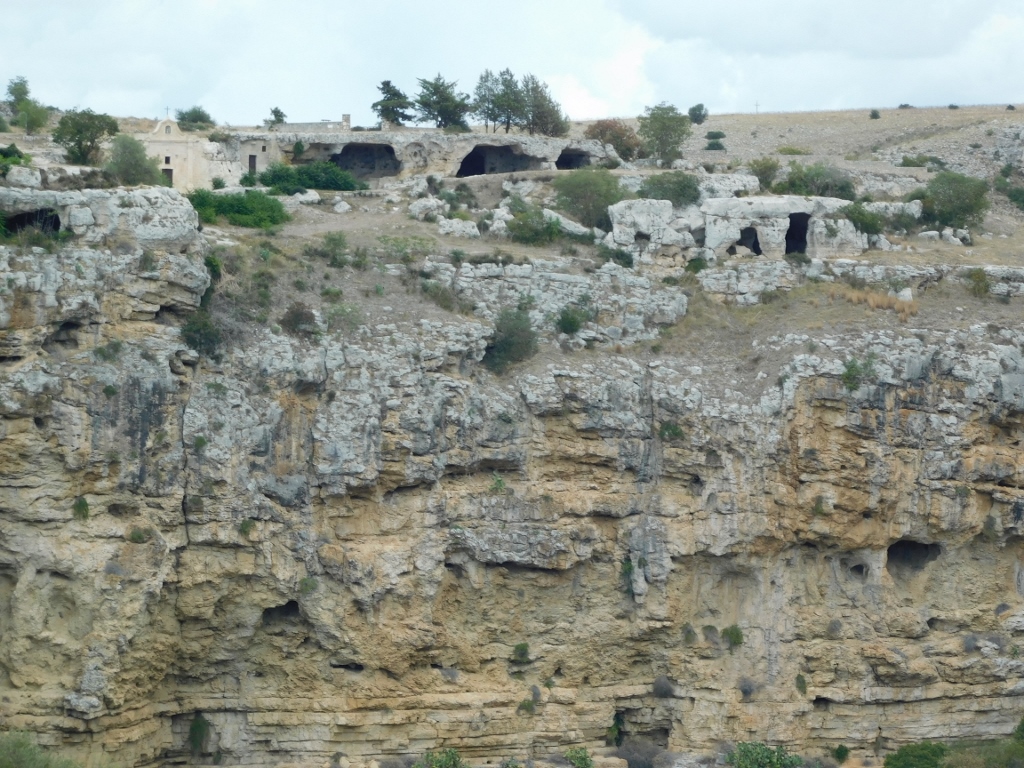 The Gravina river gorge, a detail
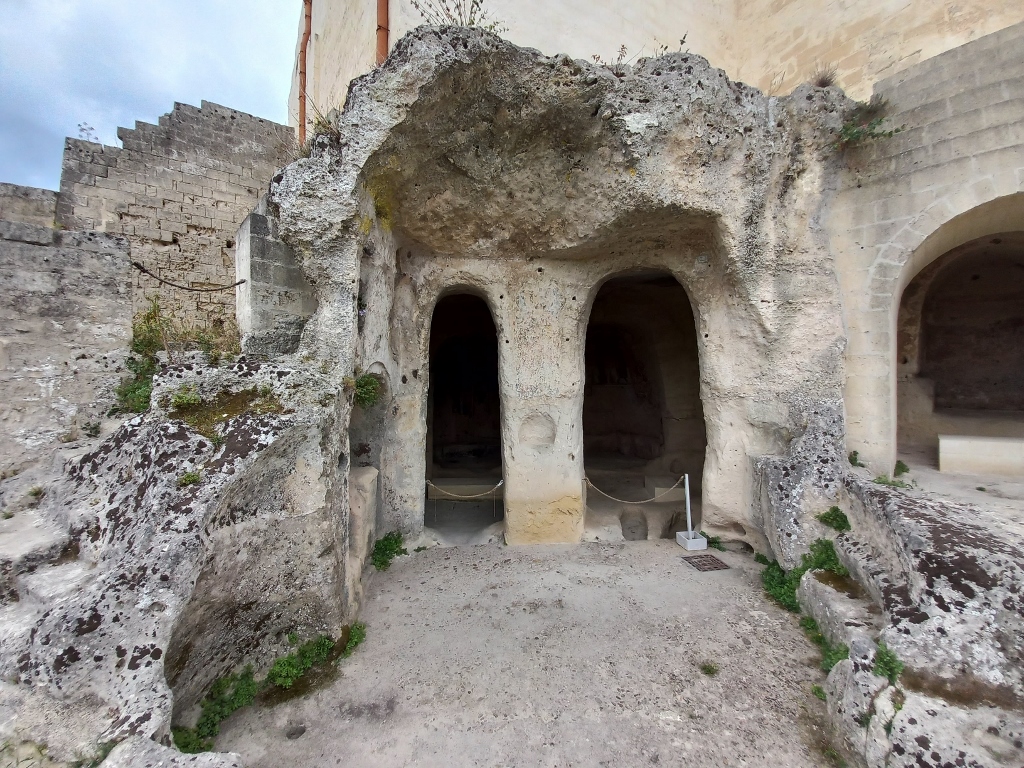
Then I went to visit the Church of San Nicola dei Greci, which is also carved into the rock, but this was done in the 10th century.
 Matera, a detail
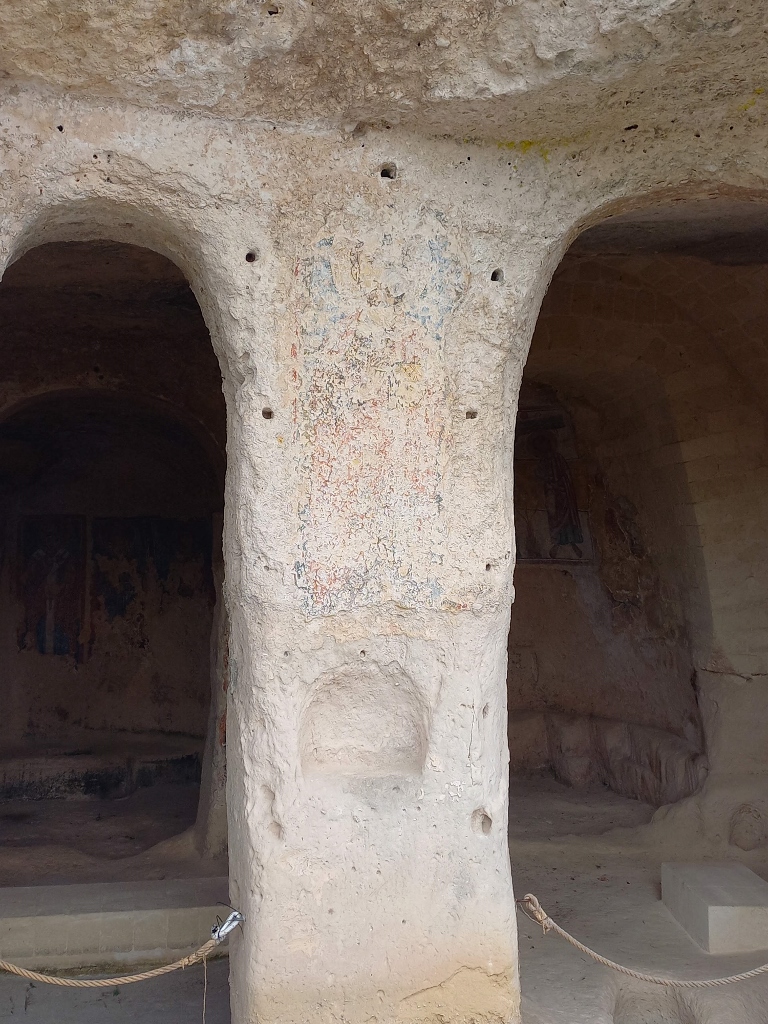
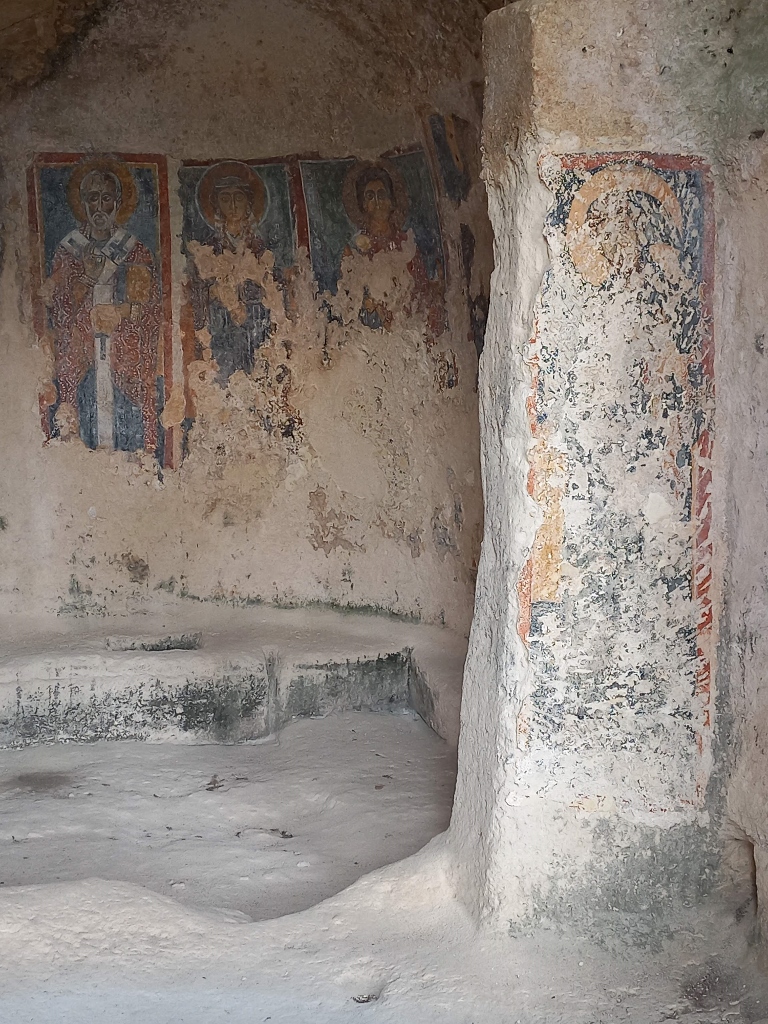
As it can be inferred from the name, this is a church with Eastern Christian influences, as well as an orientation typical of Greek Orthodox churches. It consists of a nave and an altar apse, with these two parts separated by a column. However, what is particularly interesting here is that the roof above the nave collapsed around the year 1700 and it is now an entirely open space (shown in the previous image).
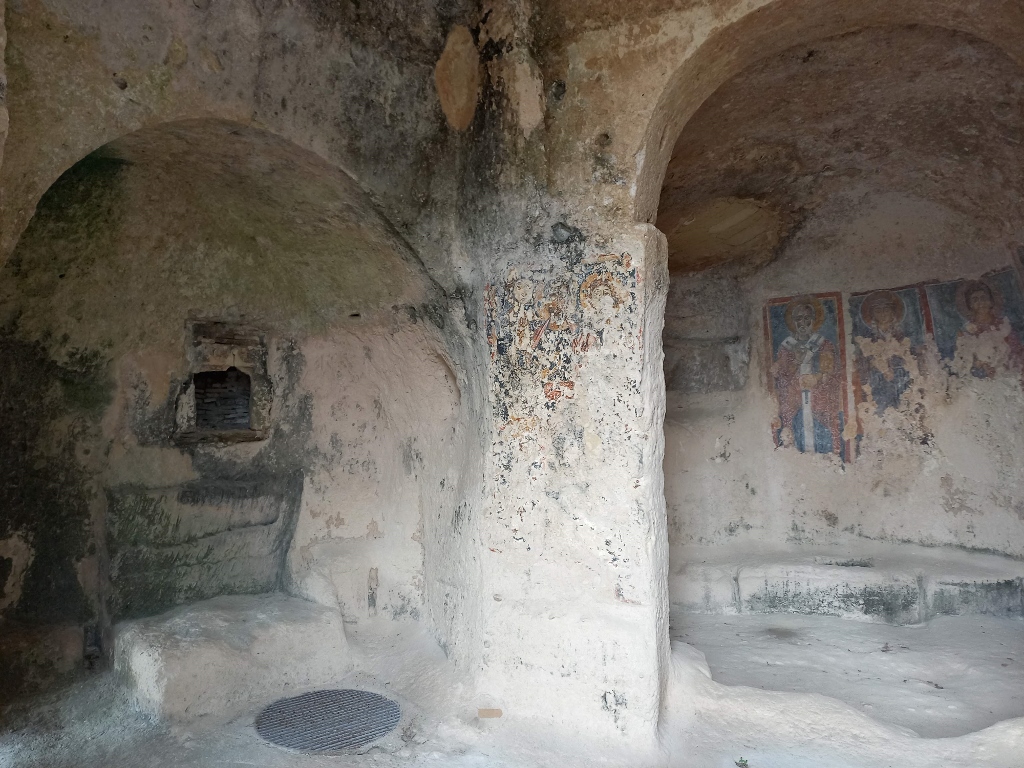
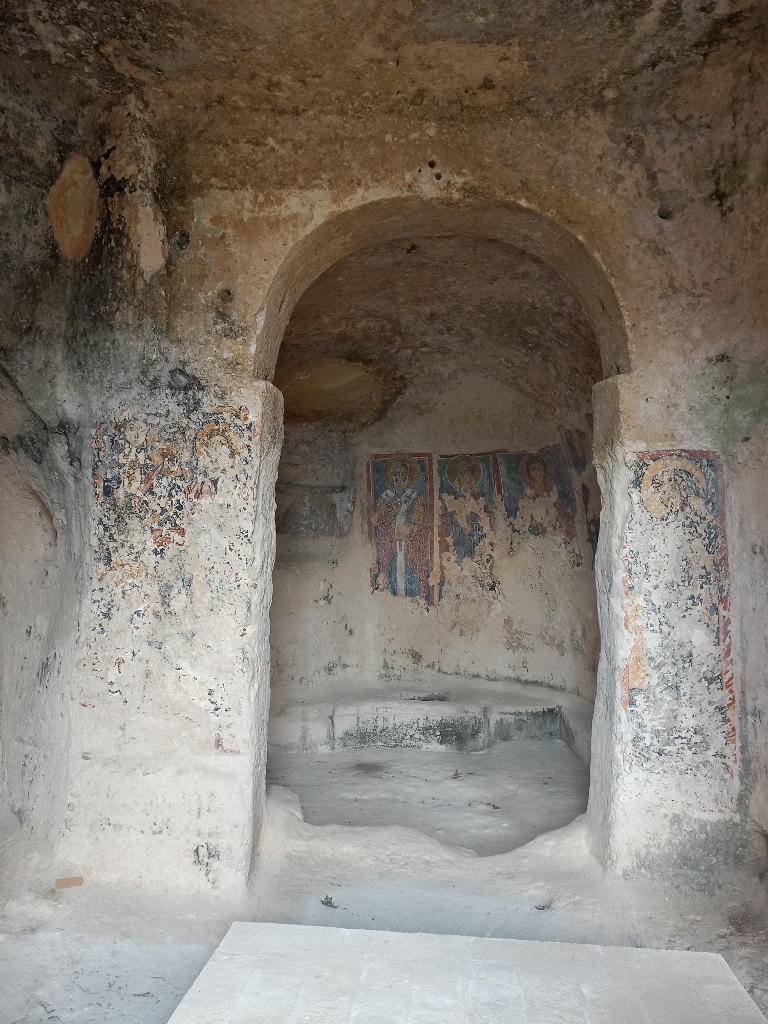
Nevertheless, even on the column itself, and even more so in the altar space, you can see remnants of beautiful frescoes.
 Matera, a detail
 Matera, a detail
 Matera, a detail
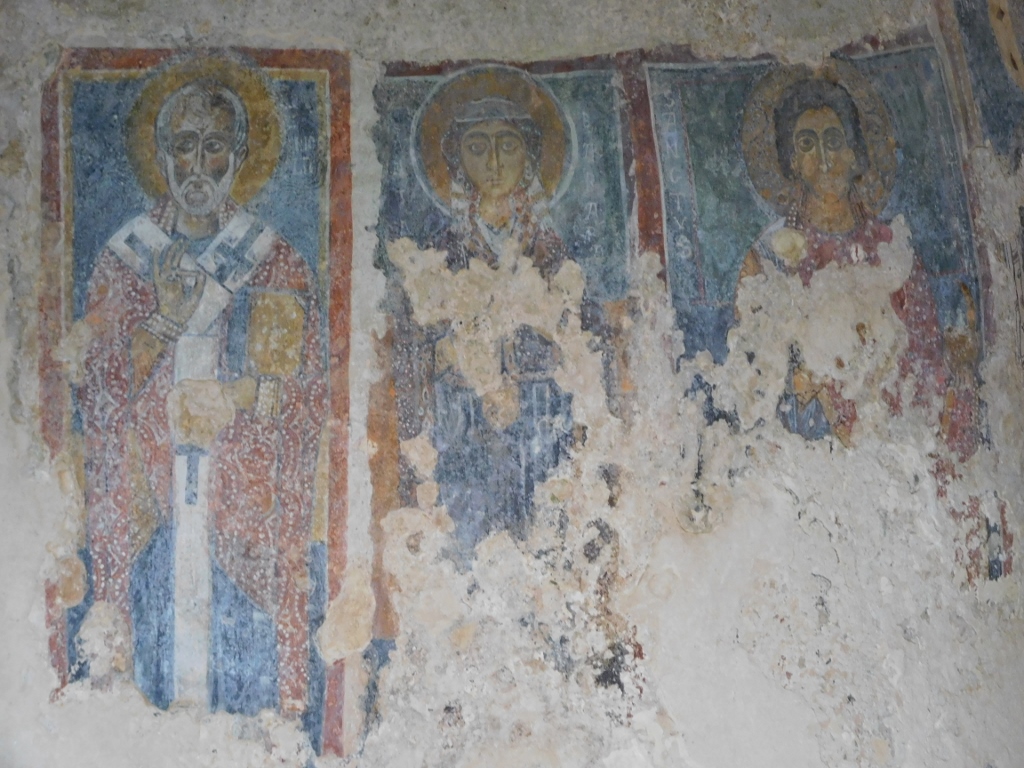
In one segment, you can see a very beautiful triptych depicting St. Nicholas, St. Barbara and St. Pantaleon from the 12th-13th century. The frescoes are done in accordance with the Byzantine tradition.
 Matera, a detail
 Matera, a detail
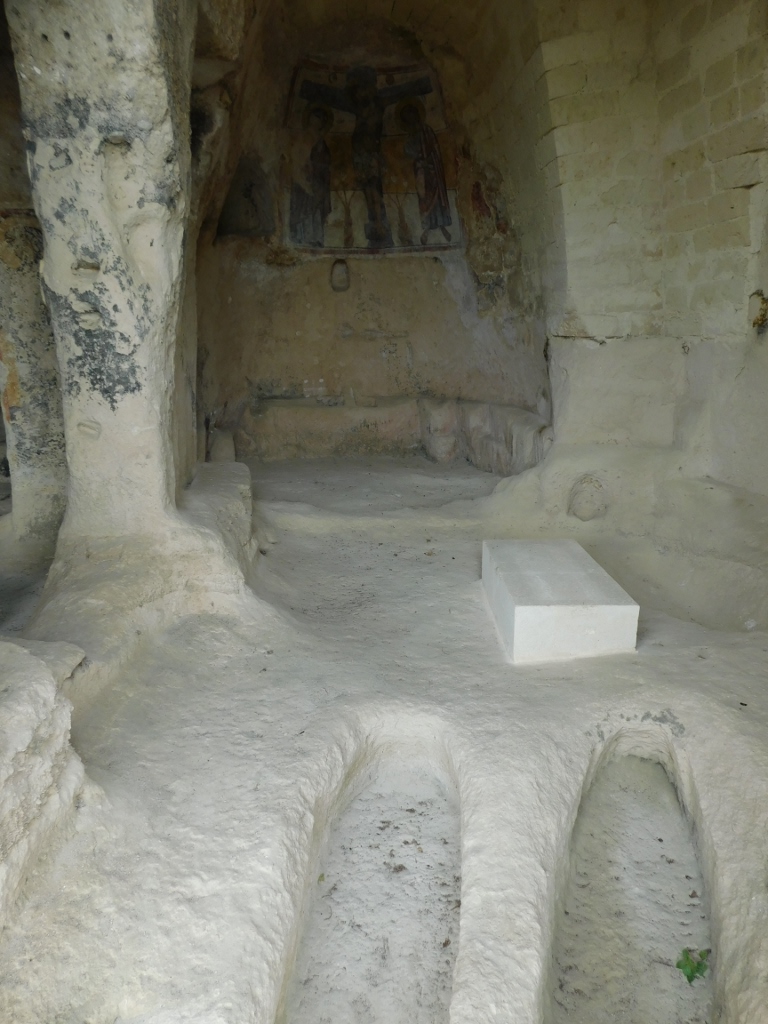
In the adjacent area, you can also see two burial sites, as this rupestrian church was used in the Middle Ages as a burial place.
 Matera, a detail
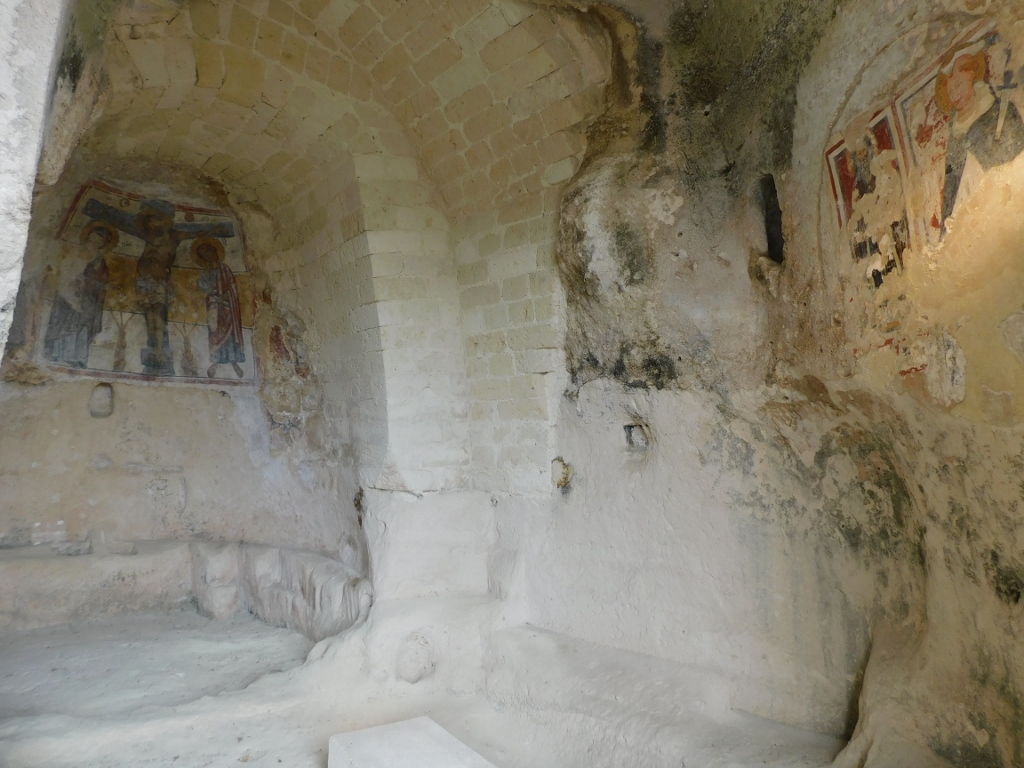
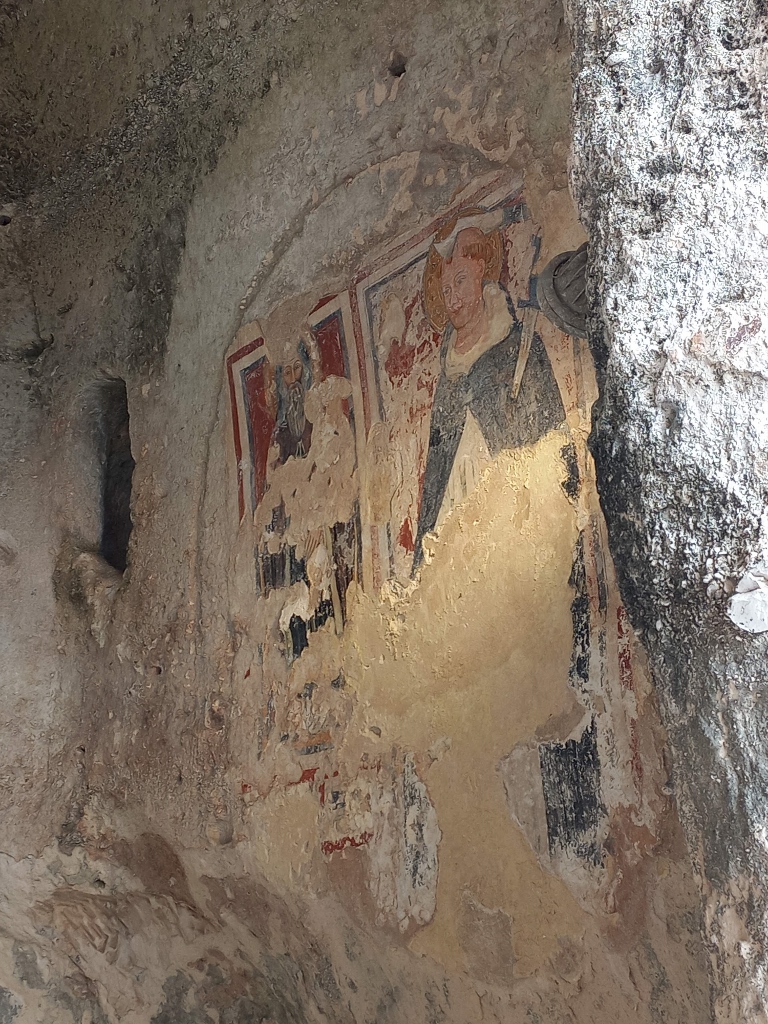
But even here, there are remains of some very lovely frescoes.
 Matera, a detail
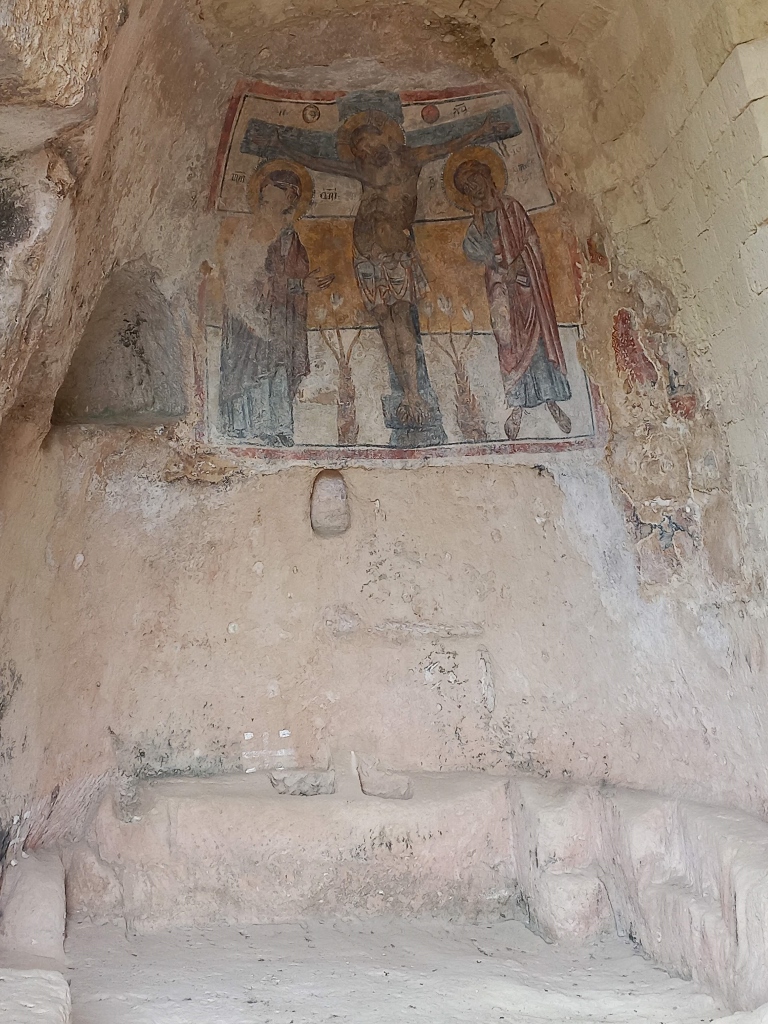
What stands out in particular is an exceptionally beautiful depiction of the Crucifixion from the 14th century.
 Matera, a detail
 Matera, a detail
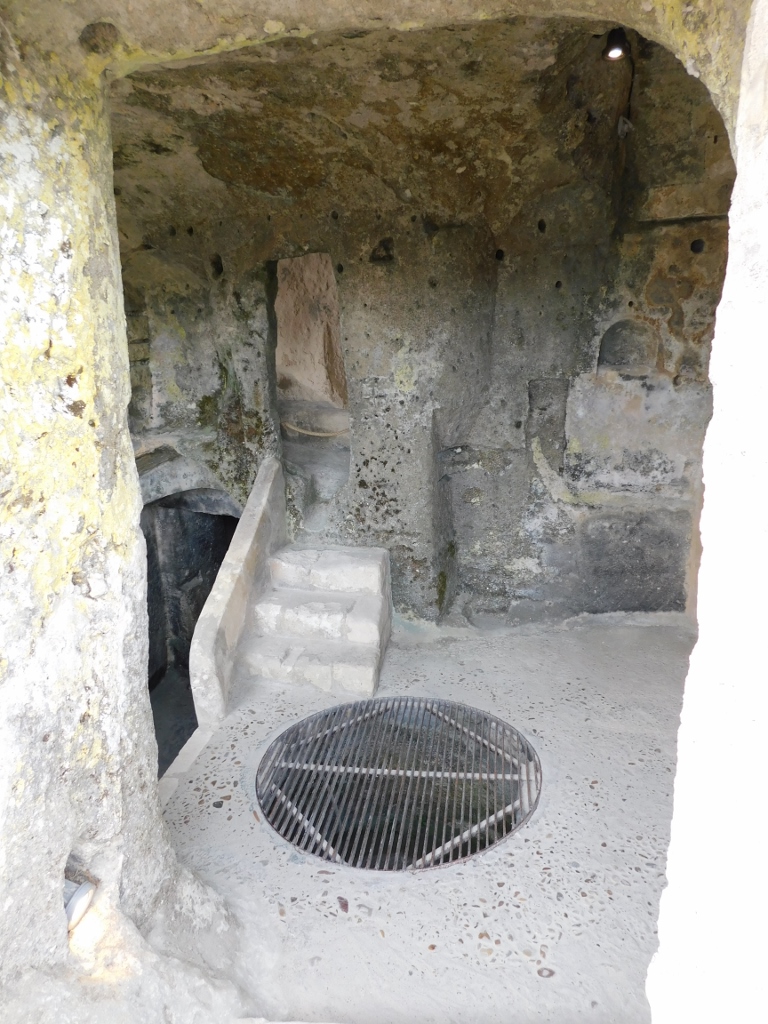
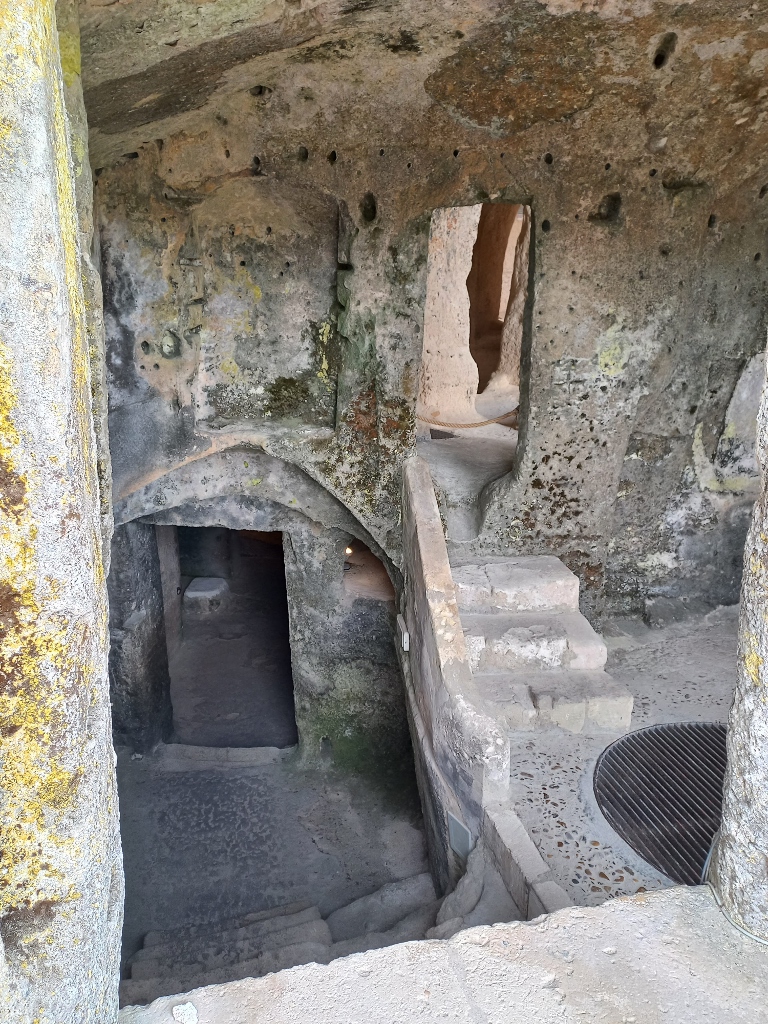
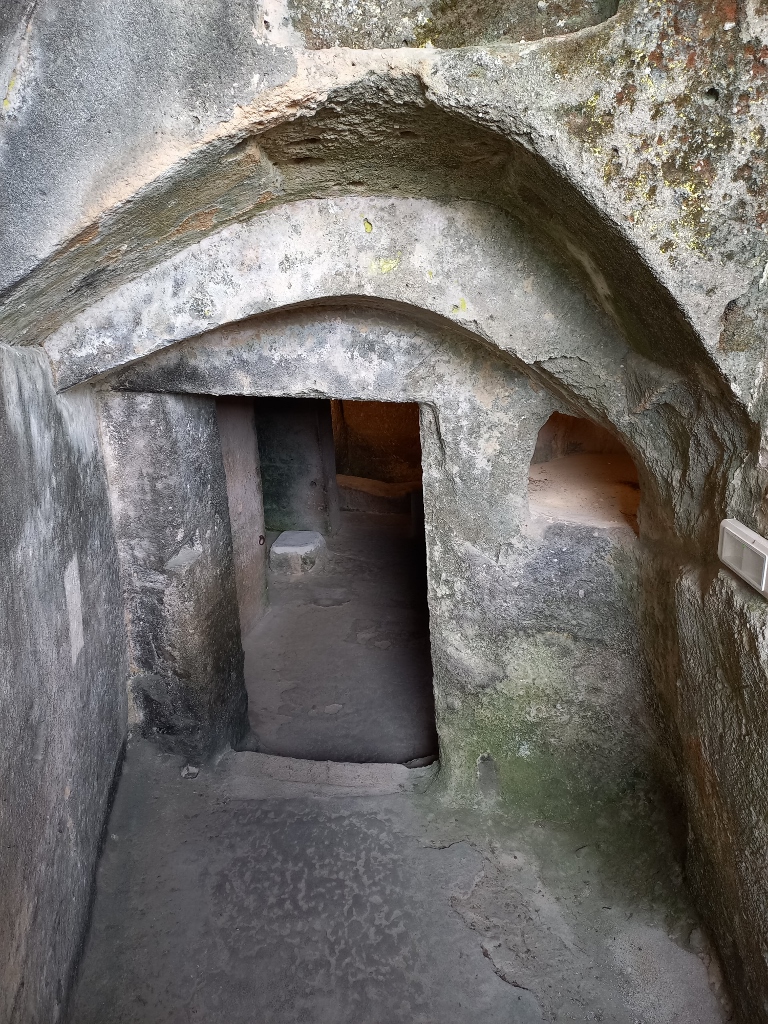
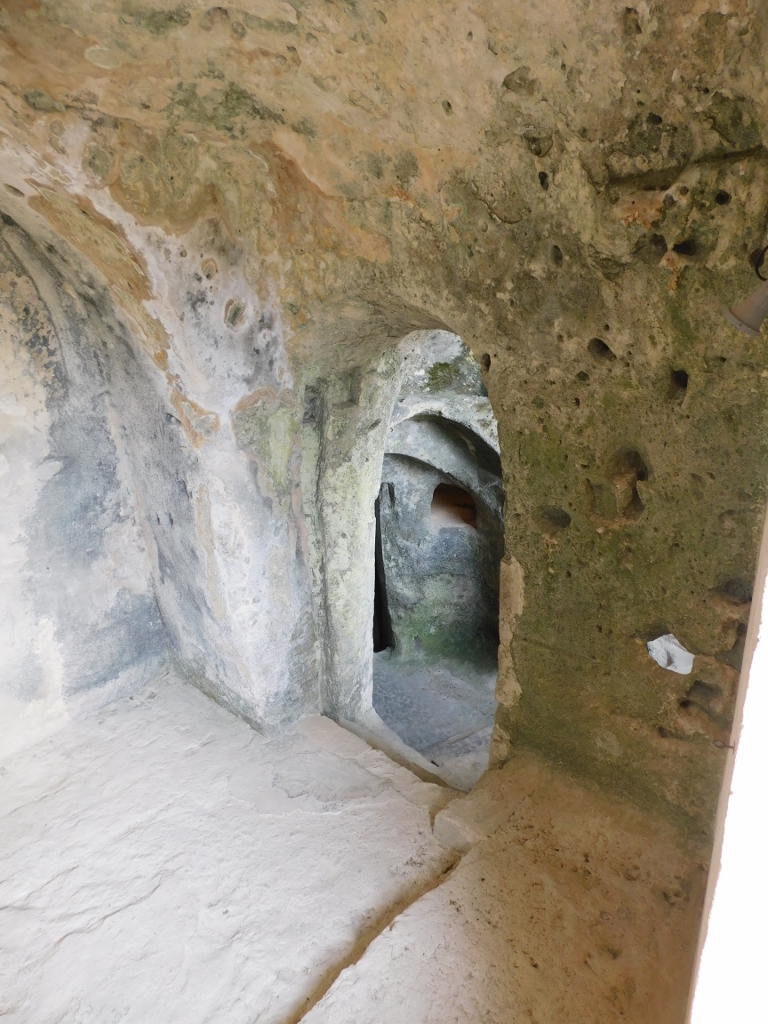
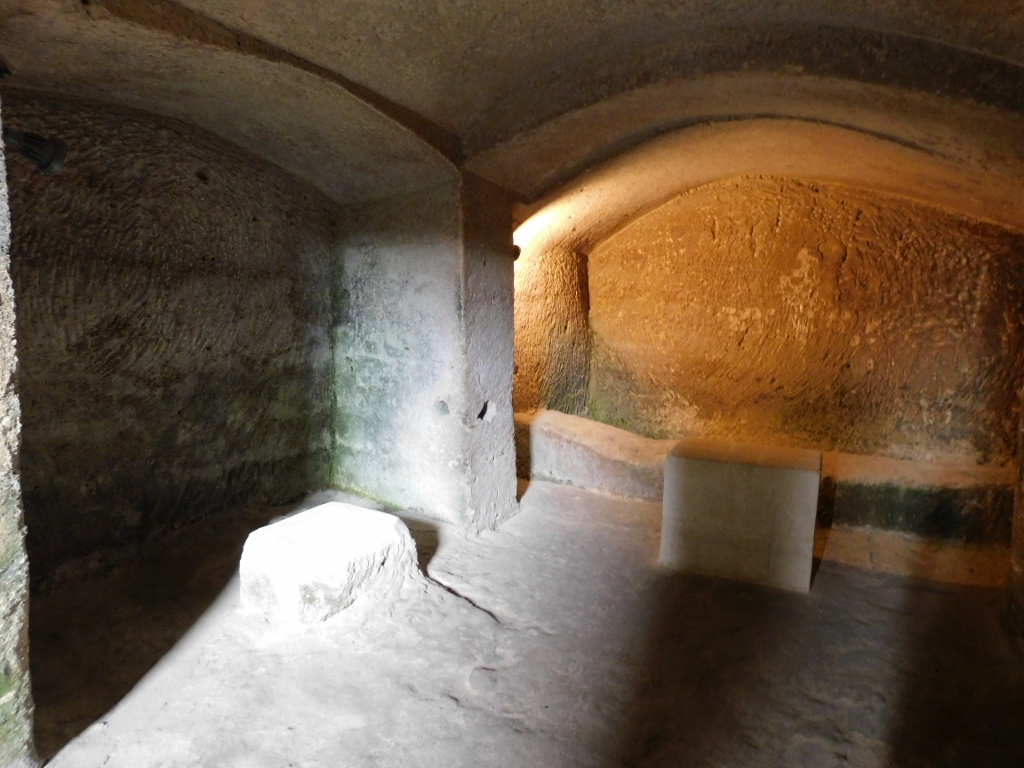
Within this complex I was exploring, there is also a small garden with olive trees, while several burial sites are located there as well. However, I found it more interesting to explore some of the cave dwellings.
 Matera, a detail
 Matera, a detail
 Matera, a detail
 Matera, a detail
 Matera, a detail
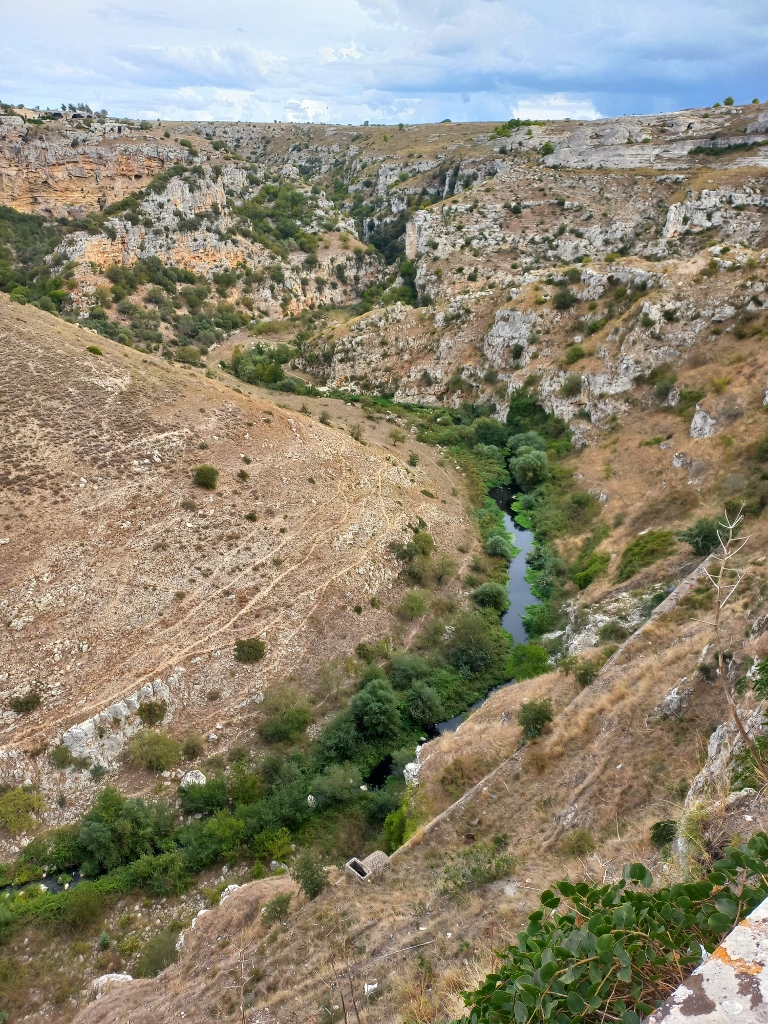
When I returned to the street, I took a photo of the gorge from an angle that clearly shows the river flowing through it and then I continued on with my walk.
 The Gravina river gorge
Not for long though, since I arrived at another spot from where there was a nice view of the Gravina river gorge.
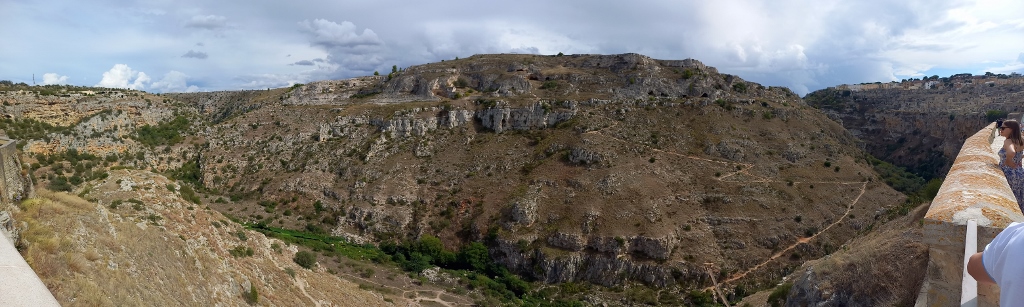 The Gravina river gorge
Now I paid more attention to the opposite side of the gorge. Here, you can clearly see some of the bare rock faces, all of which belong to the plateau called Murgia (or Murge), characterised by exposed peaks and deep gorges. Some researchers believe that people began settling in the natural caves of this area as early as 12,000 years ago.
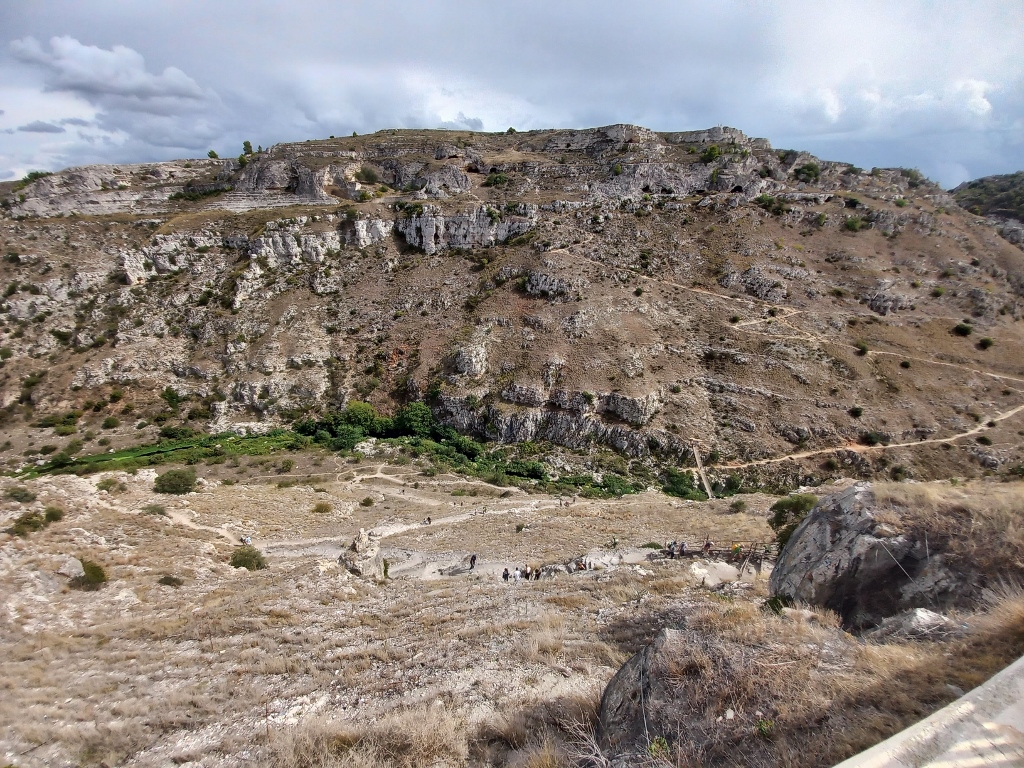 The Gravina river gorge
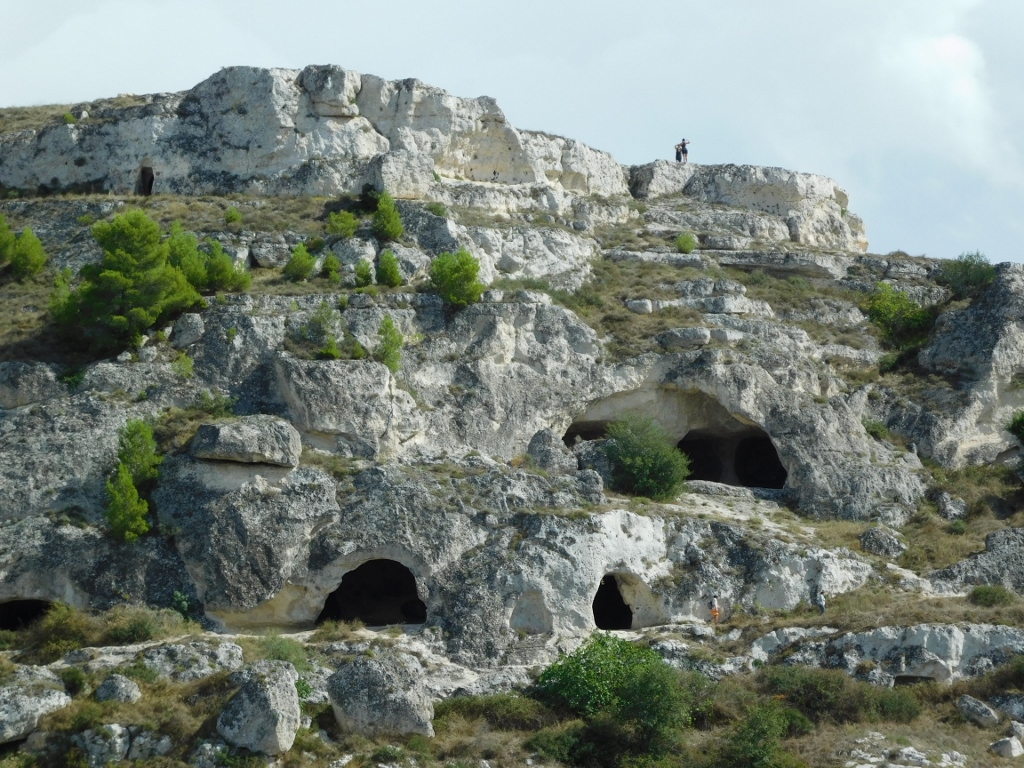 The Gravina river gorge
Today, visitors are encouraged to drive (if they have a car) to the other side of the gorge, and it’s also possible to go there on foot. Not only are there trails, but a bridge has also been built over the Gravina river. When I passed through here, there were relatively many people heading out for this walk. As for me, that will have to wait for another time.
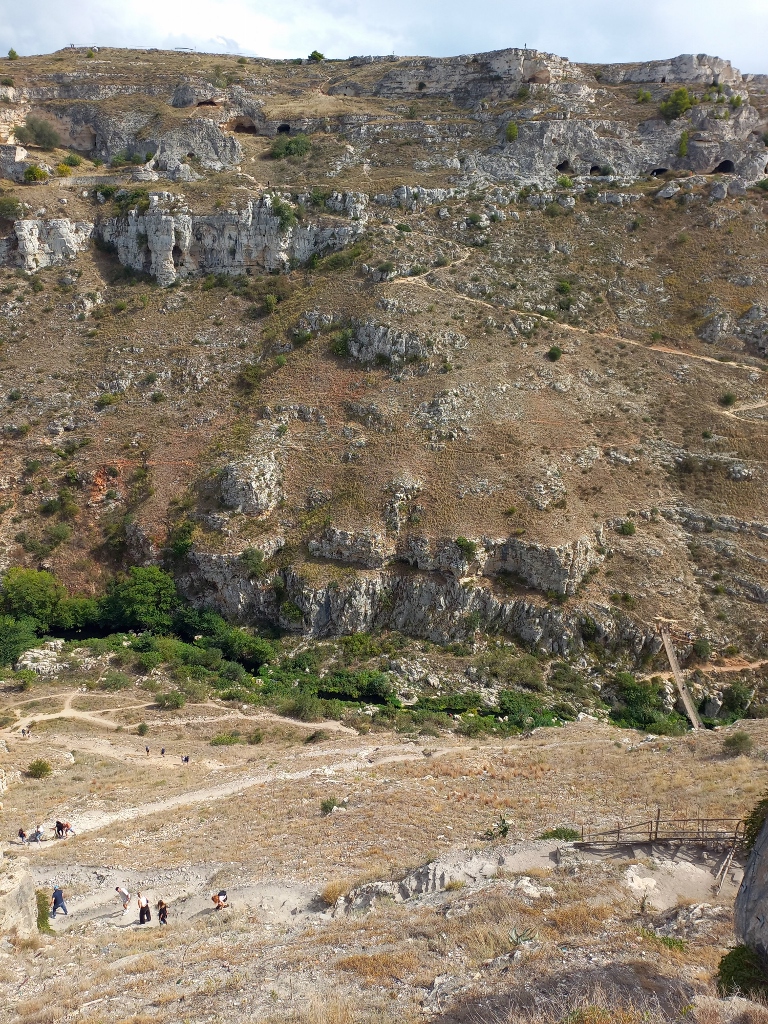 The Gravina river gorge
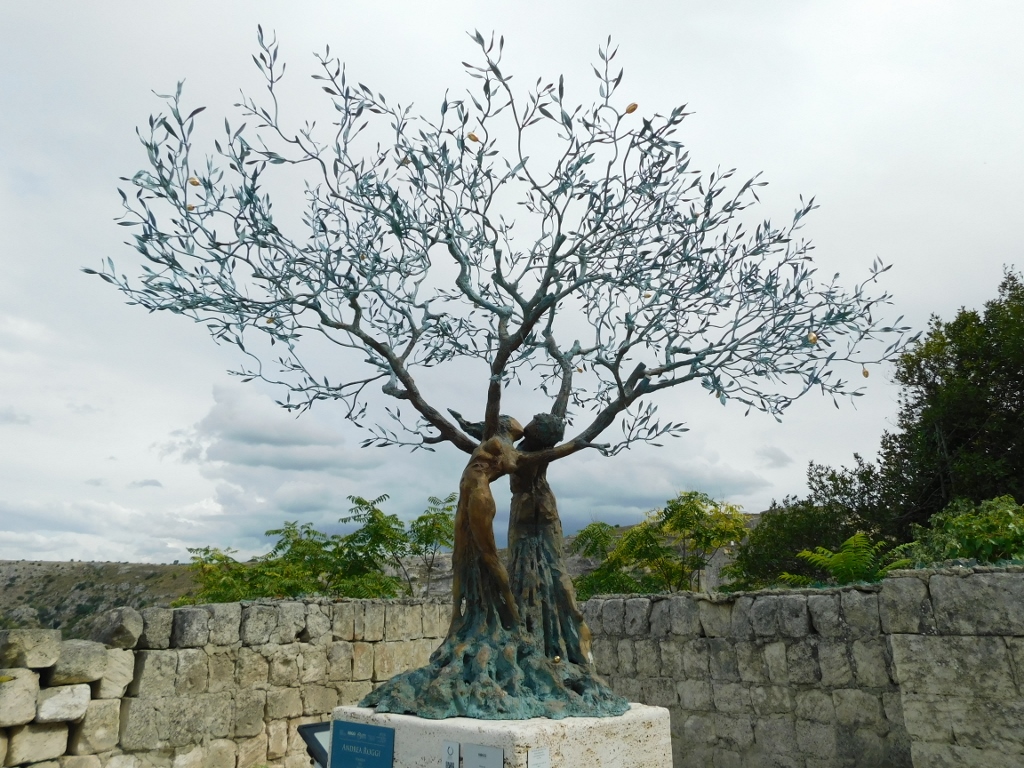
While walking on the flat ground, I spotted a modern sculpture here and was quite pleased with my own current achievement.
 Matera, a detail
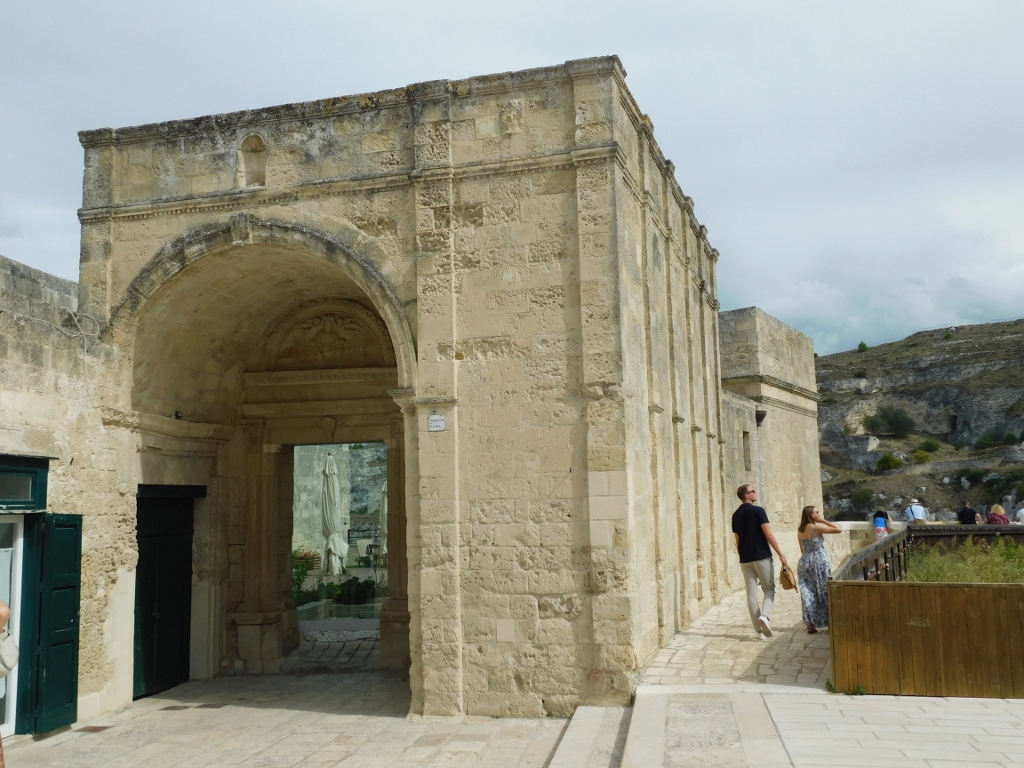
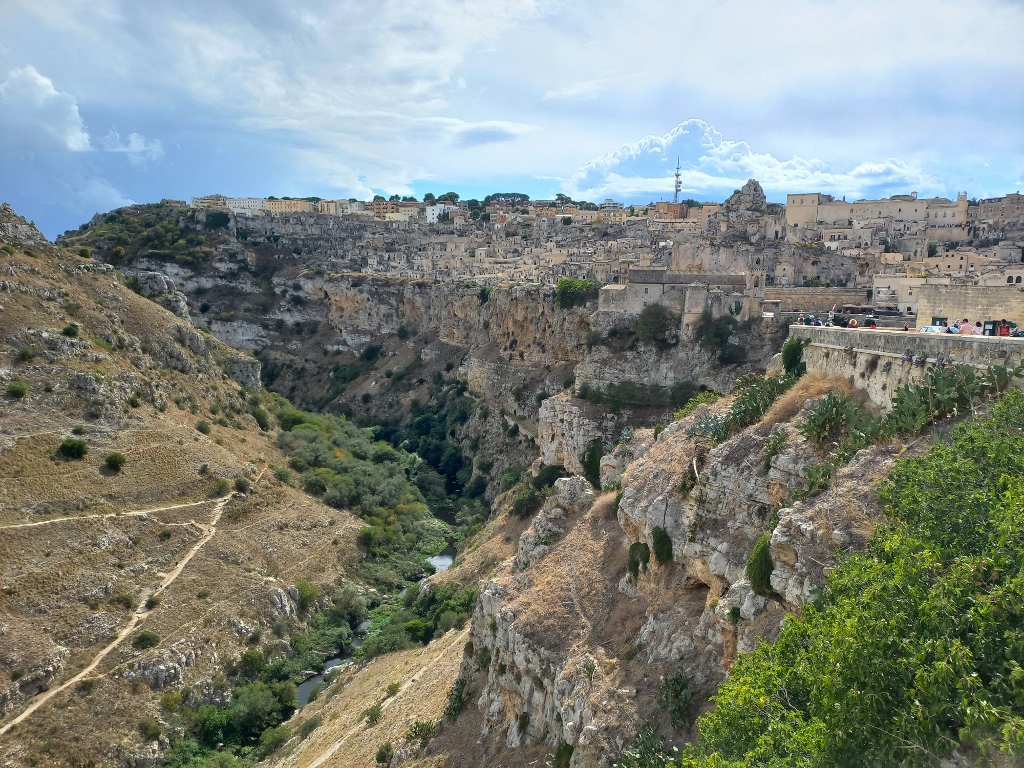
Soon, my path took me past the remains of a former monastery and then I arrived at another great viewpoint.
 Matera, a detail
 Matera, a detail
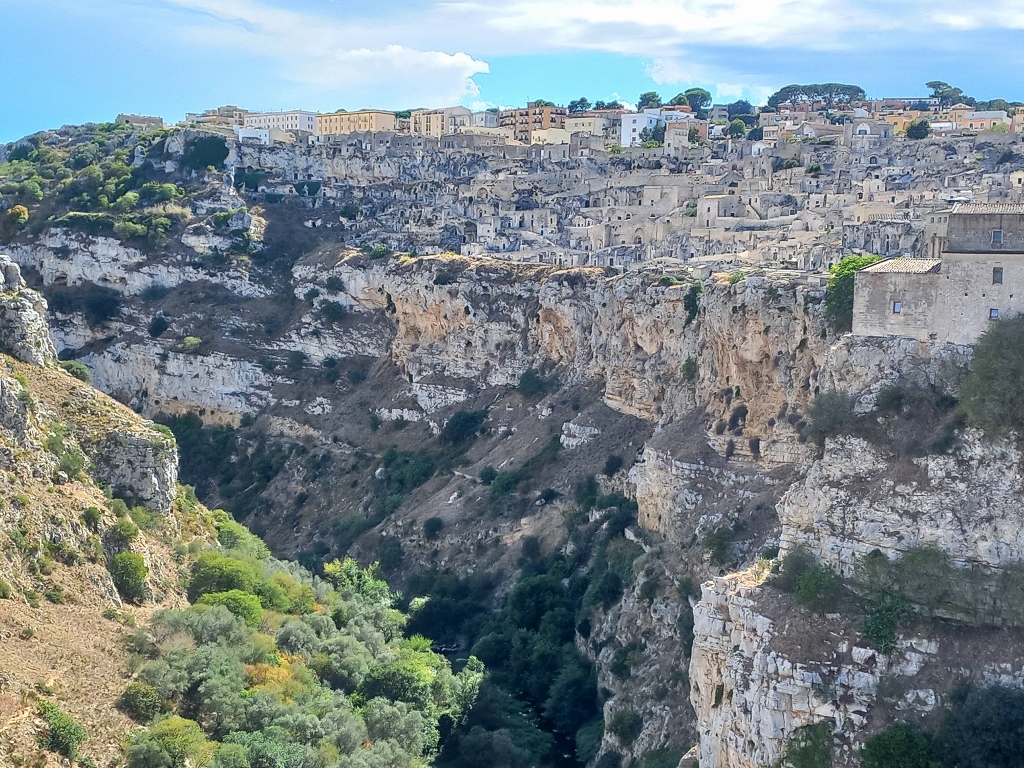
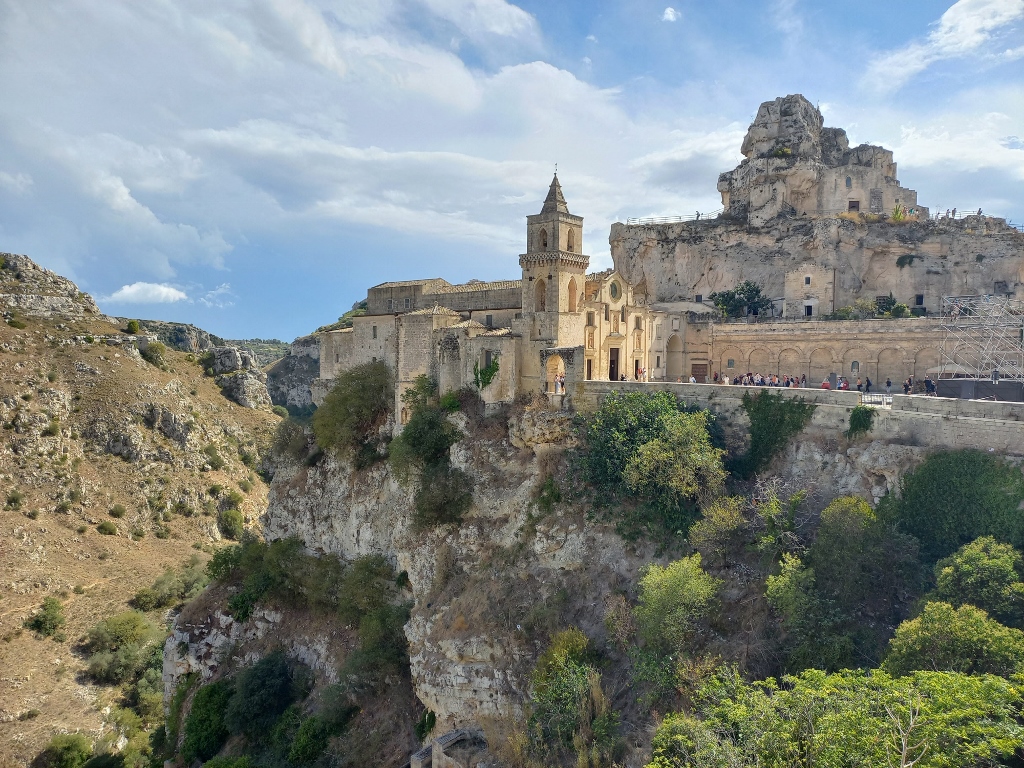
From here, you can get a very good view of the Sasso Caveoso district, which is also part of the cultural heritage "Sassi di Matera" or "Stones of Matera." In the next photo, you can clearly see how modern buildings are located at the top of the hill, while the old structures are on the slope of the gorge.
 Matera, a detail
Amazed by the beauty of the landscape, I mostly focused on photographing the gorge and the interesting details that can be seen along and around it. In contrast, on the other side of the street, there are numerous houses scattered along the slope of the part of the city called Cività.
 Matera, a detail
Although the cathedral is located at the top of the hill that forms the Cività district, which I had intended to visit, I decided to postpone that for now and continued along the same street towards another church.
 Matera, a detail
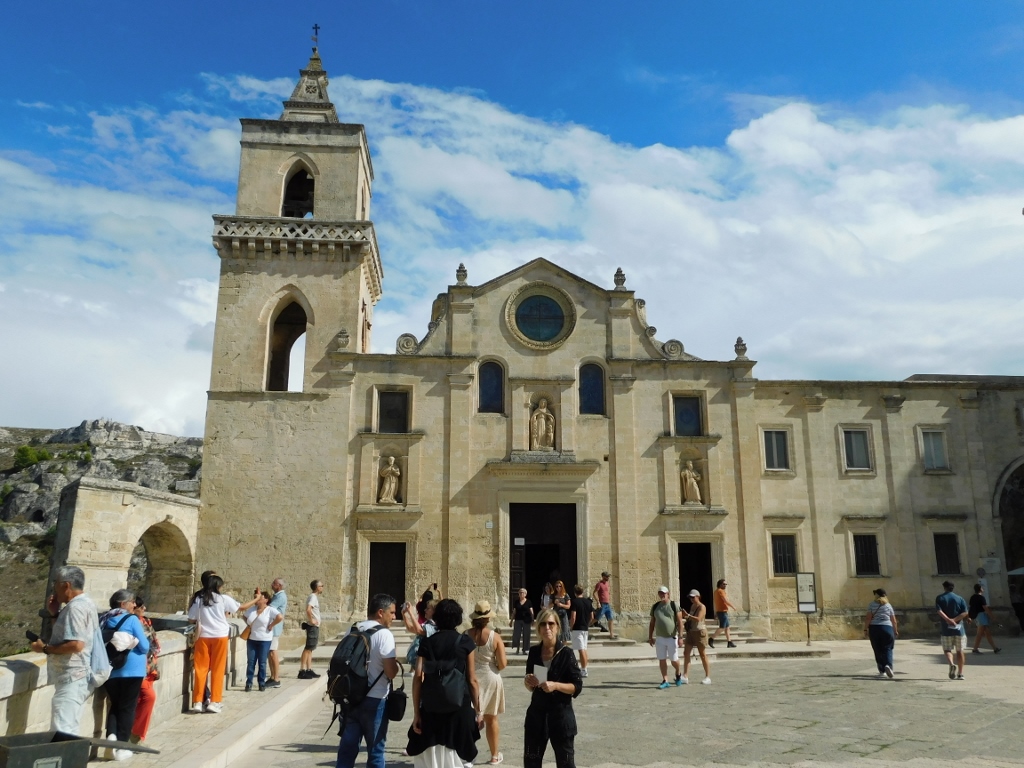
The church in question is the Church of San Pietro Caveoso and, as the name suggests, I was here already in the area of the Sasso Caveoso district.
The Church of San Pietro Caveoso was originally built at the end of the 13th and beginning of the 14th century. However, over time, various changes were made to it (until the first half of the 20th century), including modifications and expansions of its foundation, as well as a baroque façade and bell tower constructed at the end of the 17th century. The church was reconsecrated in 1706.
 Matera, a detail
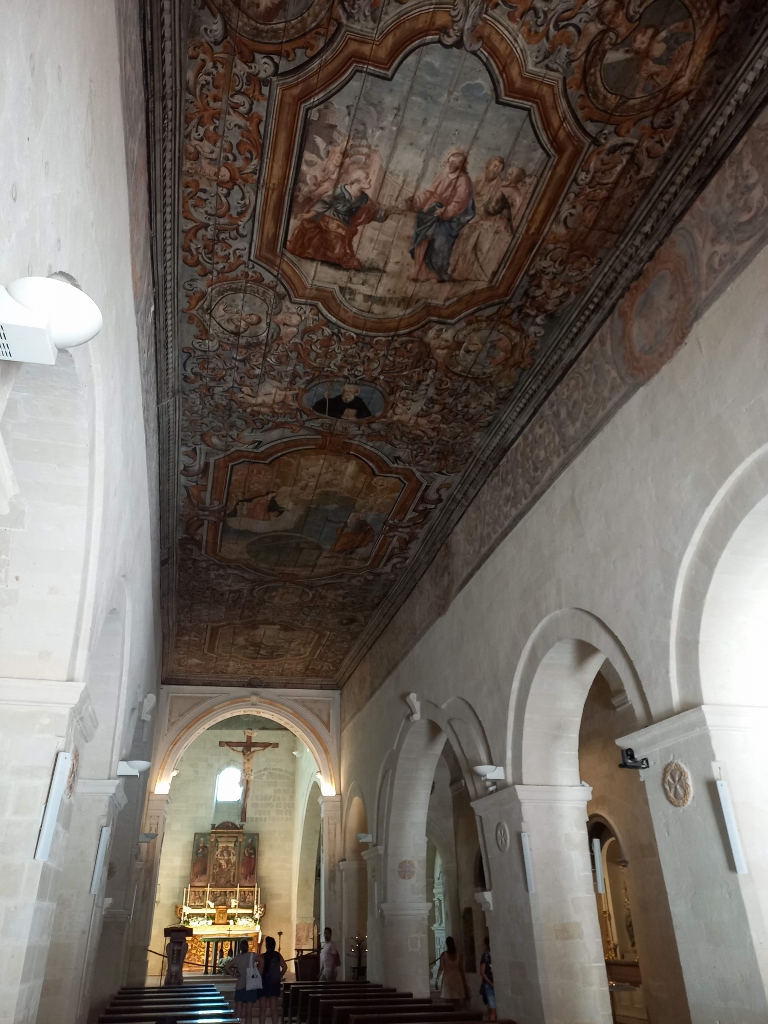
A wooden ceiling was also done in the church in the second half of the 18th century.
 Matera, a detail
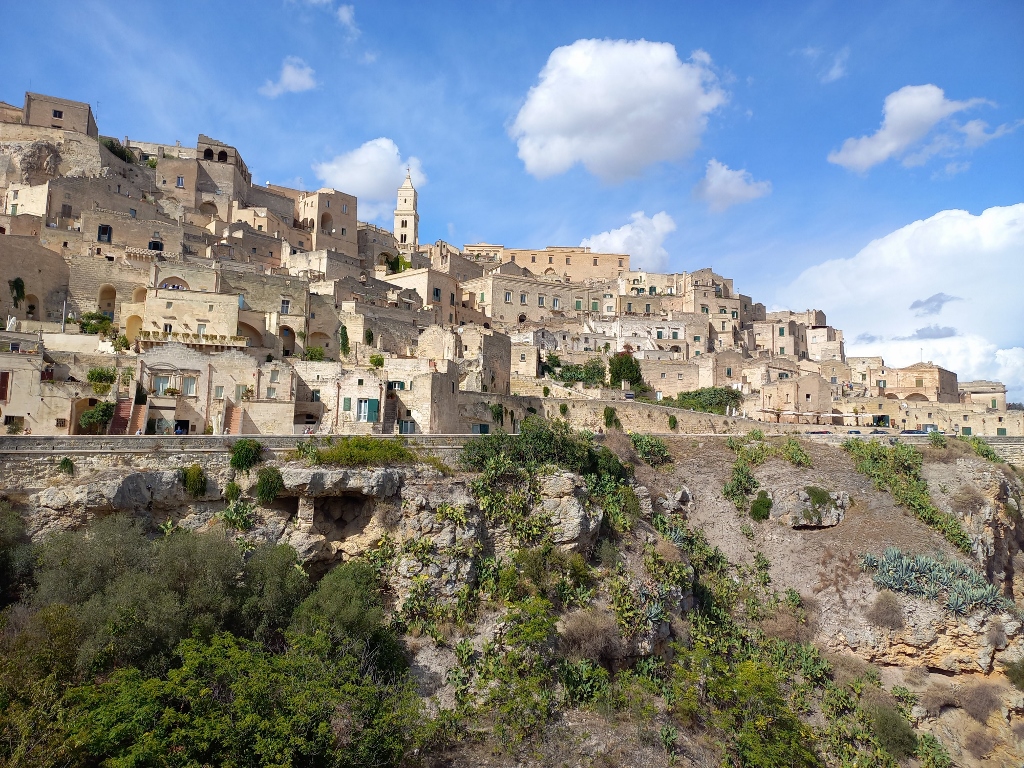
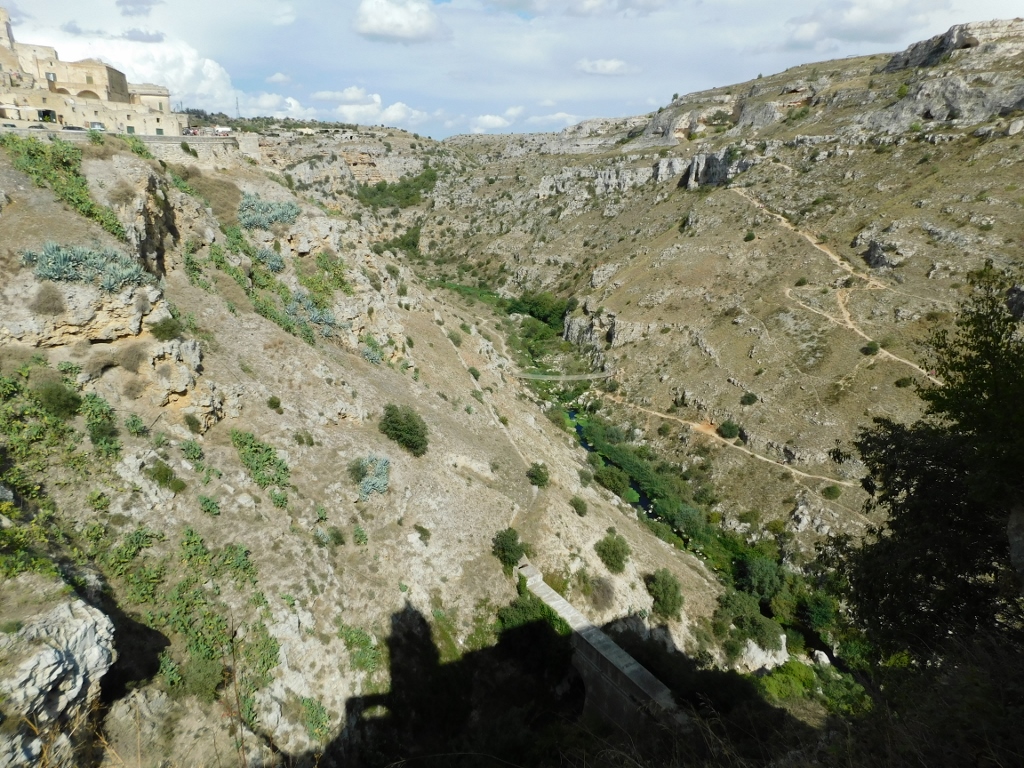
From the terrace in front of the church, there is a wonderful view of both the Cività district and the Gravina river gorge.
 Matera, a detail
 Matera, a detail