After a short afternoon rest in the flat I had rented during my brief stay in Bari, I set out for another walk, but I also realised that I was a bit hungry. Not too much, but enough to want to eat something and feel satisfied afterwards.
On this occasion, I decided to combine "the pleasant and the useful" – I went to the promenade by the sea (Lungomare Nazario Sauro), which is often mentioned as an interesting place to visit.
However, I first went to eat at a place that was recommended to me. My impression was that, like in many other cities around the world, street food in Bari has gained popularity in recent years and with that, its quality, creativity and variety have improved. One of the specialties offered here was an octopus sandwich. As soon as the food arrived, I realised I was actually quite hungry, so without any hesitation, I ate it all right away. It was excellent!
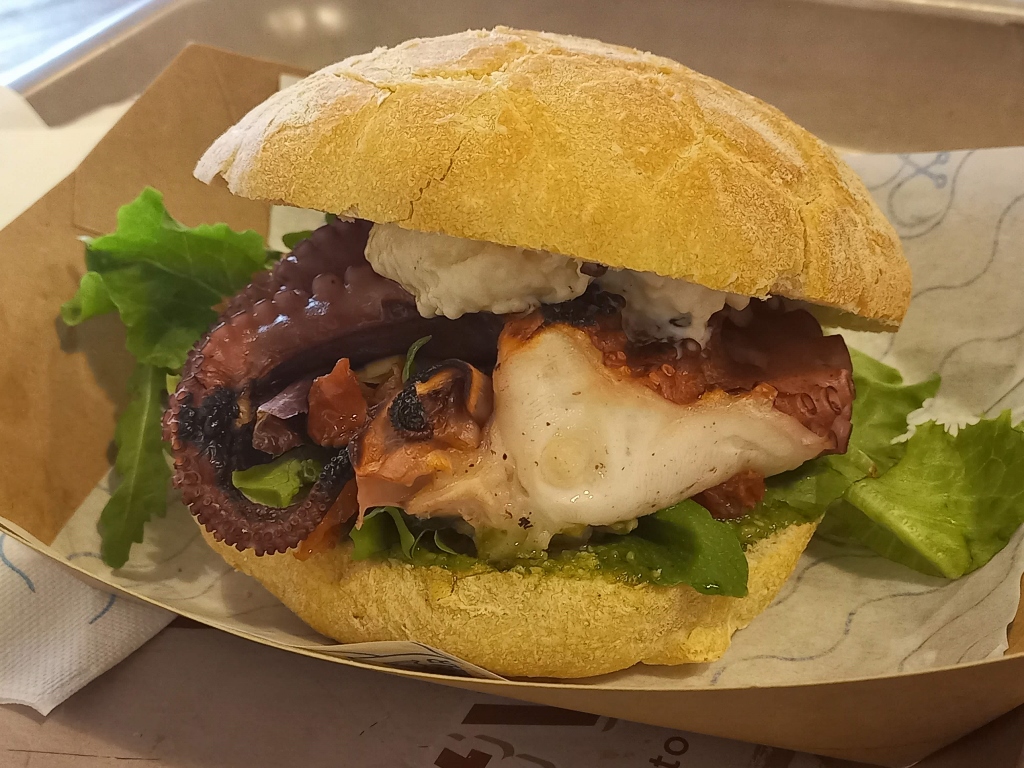 Late lunch in Bari
As for the promenade by the sea, well... its main advantage is that it’s by the sea and quite wide, so walking there is definitely pleasant.
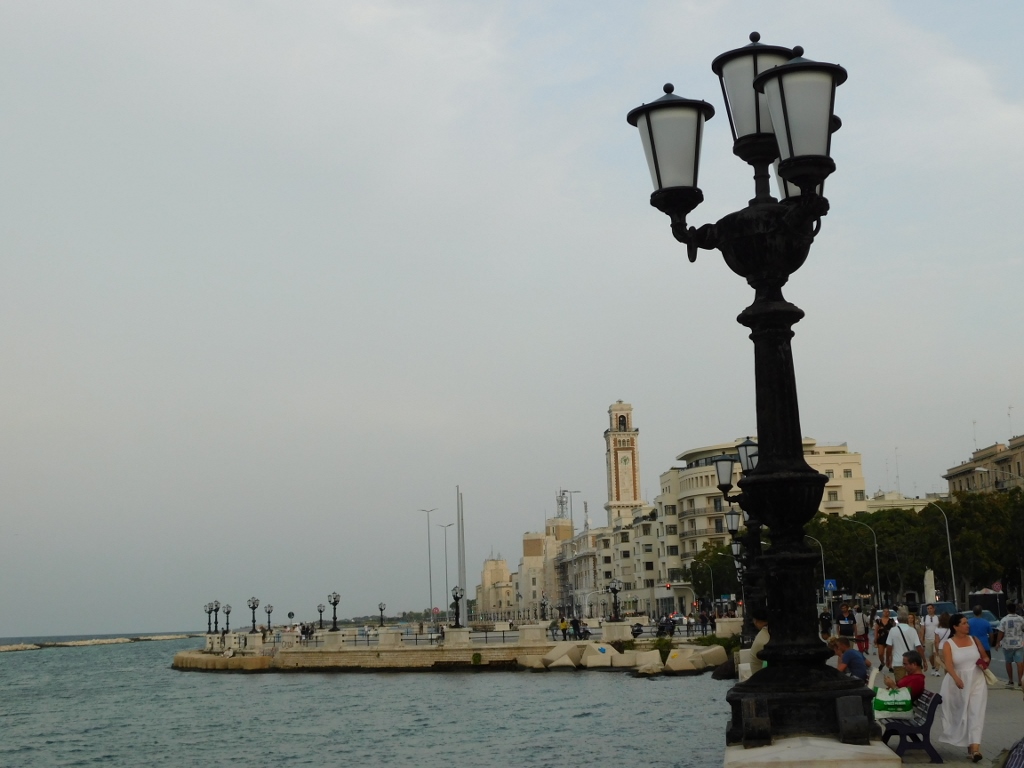 Bari, a detail
On the other side of the street, you can see very beautiful "palaces," as well as numerous cafés and restaurants, so a walk by the sea can be both enjoyable and inspiring in many ways.
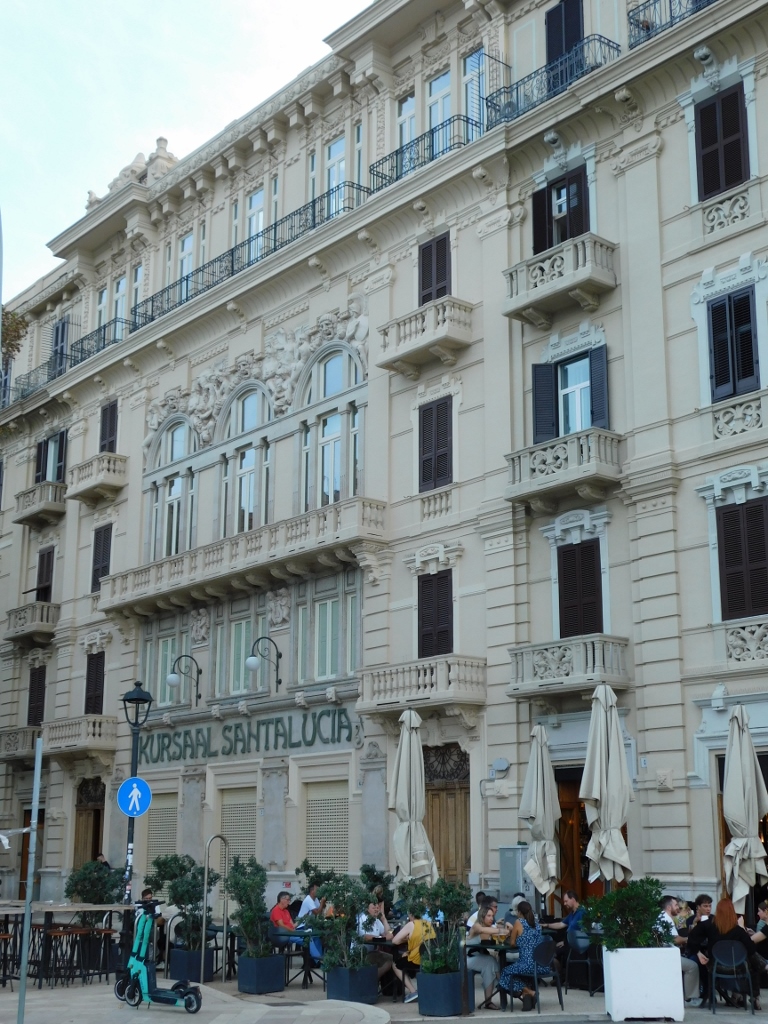 Bari, a detail
Although I only had a "sandwich," it was more than enough for me and now I was just strolling leisurely along the sea towards the old town of Bari, which is simply called Bari Vecchia.
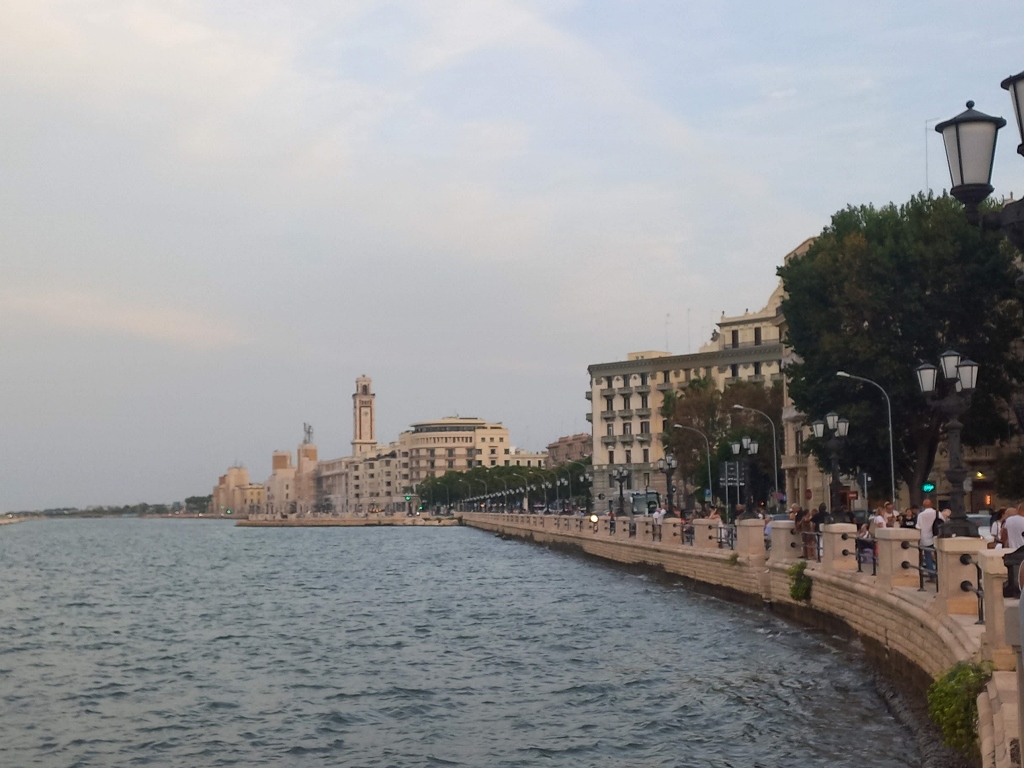 Bari, a detail
By the time I reached one of the main squares in the old part of the city, Piazza Mercantile, and had a nice, cold and large beer, the evening was already slowly starting to fall. I didn't take a photo of the beer on purpose, because it wasn't local, but once I had settled into the café, I was too lazy to get up for such a detail. So, a little later, I took a photo of the square and then went back into the streets of the old town.
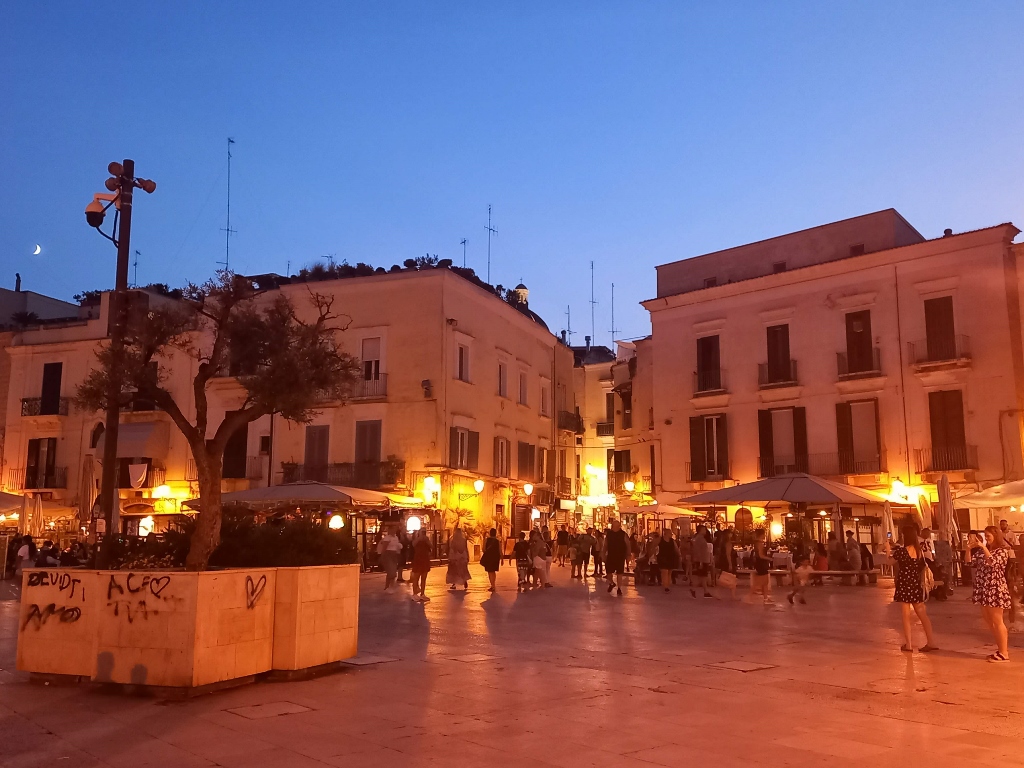 Bari, a detail
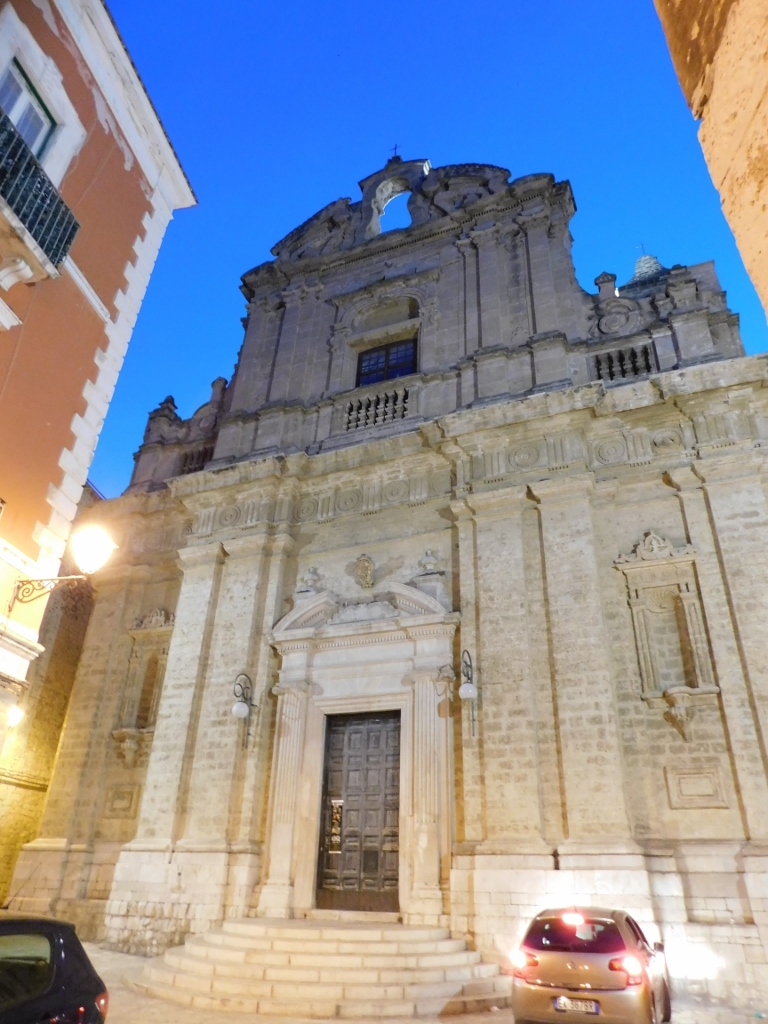 Bari, a detail
However, although it was still a bit early, my short afternoon rest hadn’t been enough to make up for the little sleep I had the night before, so I decided to head slowly back to the rented flat. For that, I mostly used one of the central streets that is mainly pedestrian (Via Sparano). Its primarily commercial nature doesn't diminish the beauty of the buildings and details.
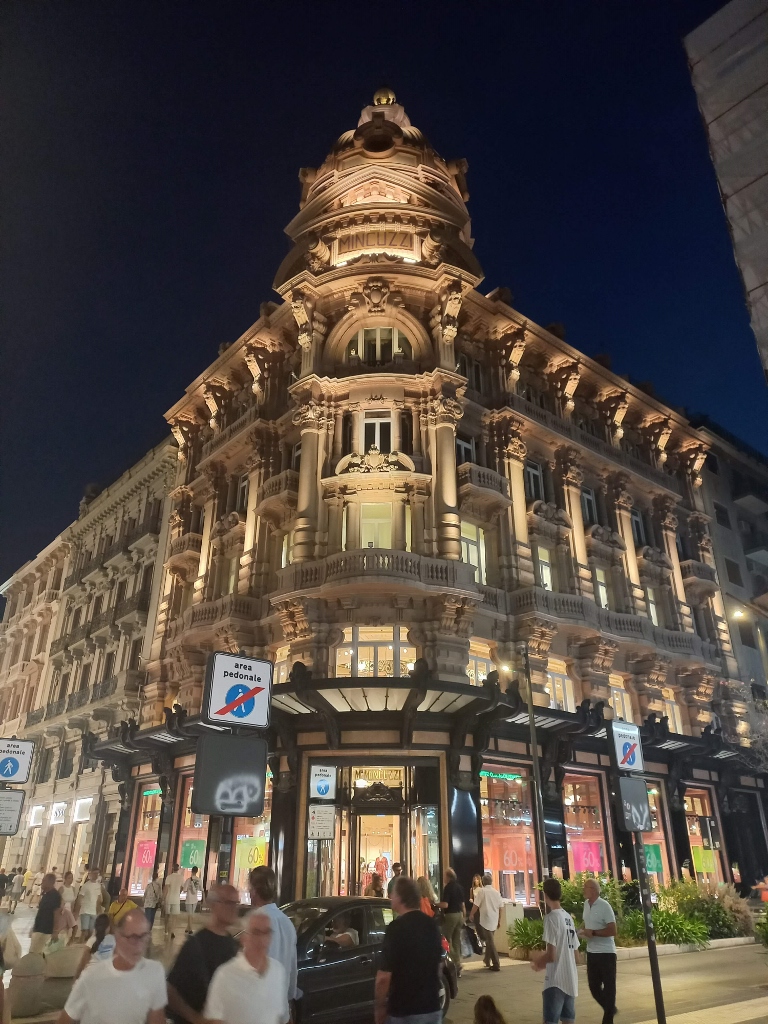 Bari, a detail
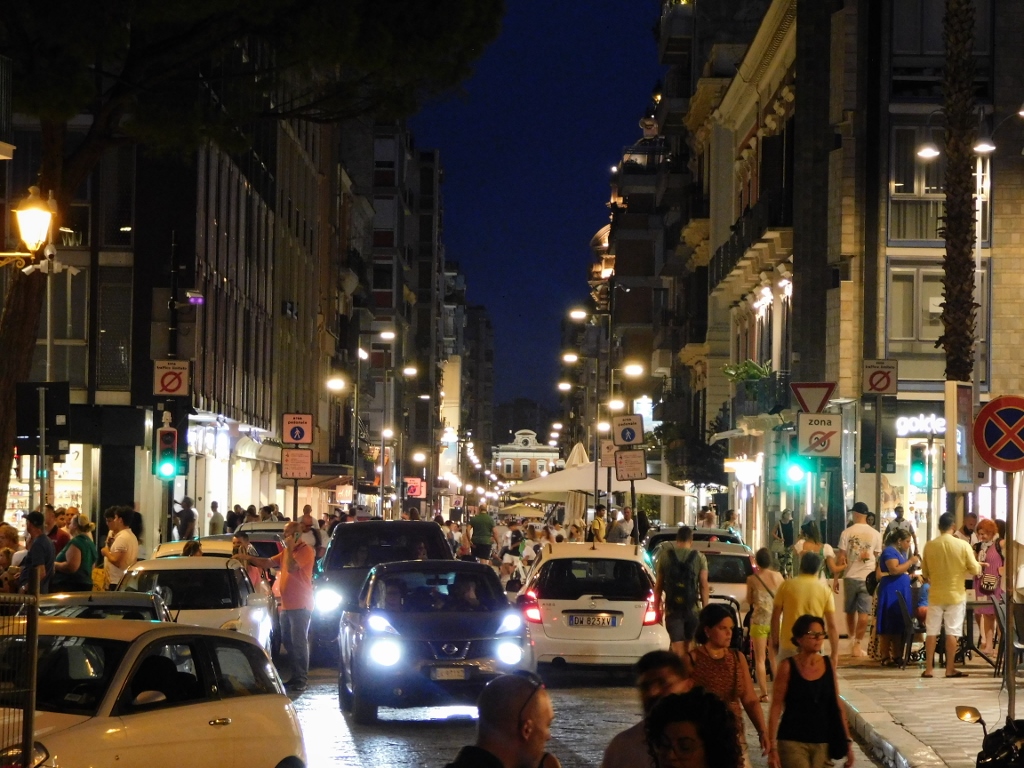 Bari, a detail
The next day, I decided to be "lazy" in the morning. I had no reason to rush, and that would practically remain the case throughout this entire trip. I came to Apulia for two weeks, primarily considering that I would be travelling from place to place mostly by public transport, which takes more time. Two weeks might have even been too much for my version of sightseeing. On the other hand, I have no problem killing time in Italy – besides the beautiful sights, whether it's nature or human settlements, there’s always a pastry shop, a café or a restaurant nearby. And after all, where better to practice the true Italian philosophy of life than here – Dolce far niente!!! Literally translated: "It’s sweet to do nothing."
In fact, that morning, my little portable computer was causing me some trouble, so I got tangled up in that. In the end, I gave up and finally set out for a walk. I went back to the old town and aimlessly wandered through the charming streets and squares, full of picturesque details.
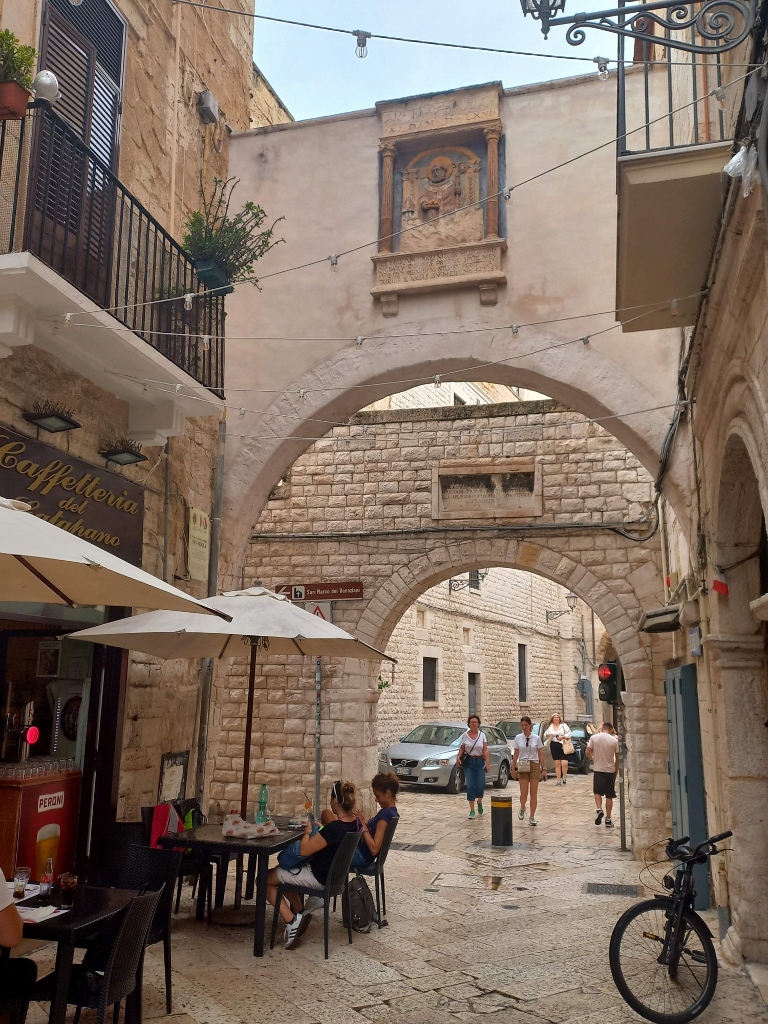 Bari, a detail
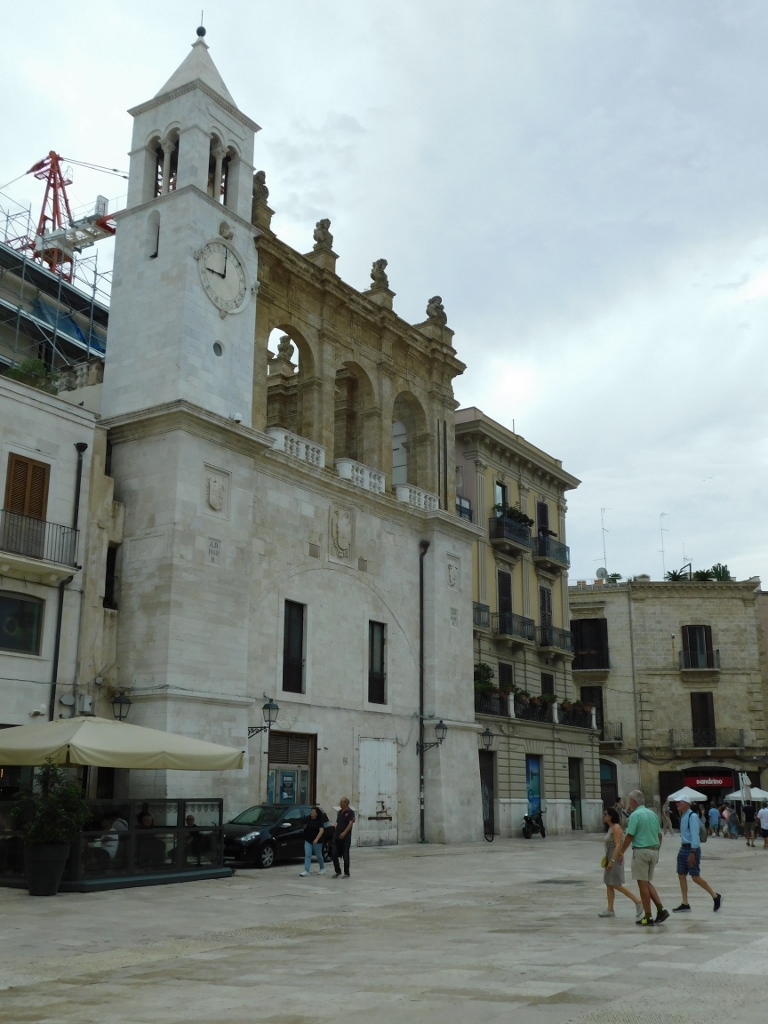 Bari, a detail
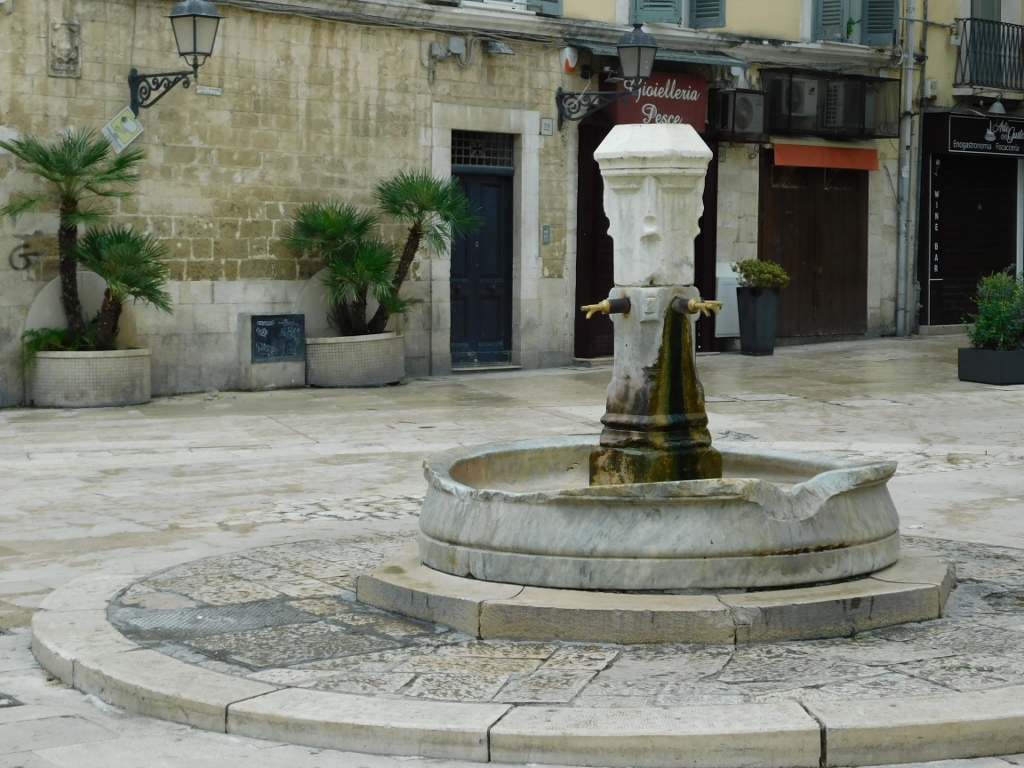 Bari, a detail
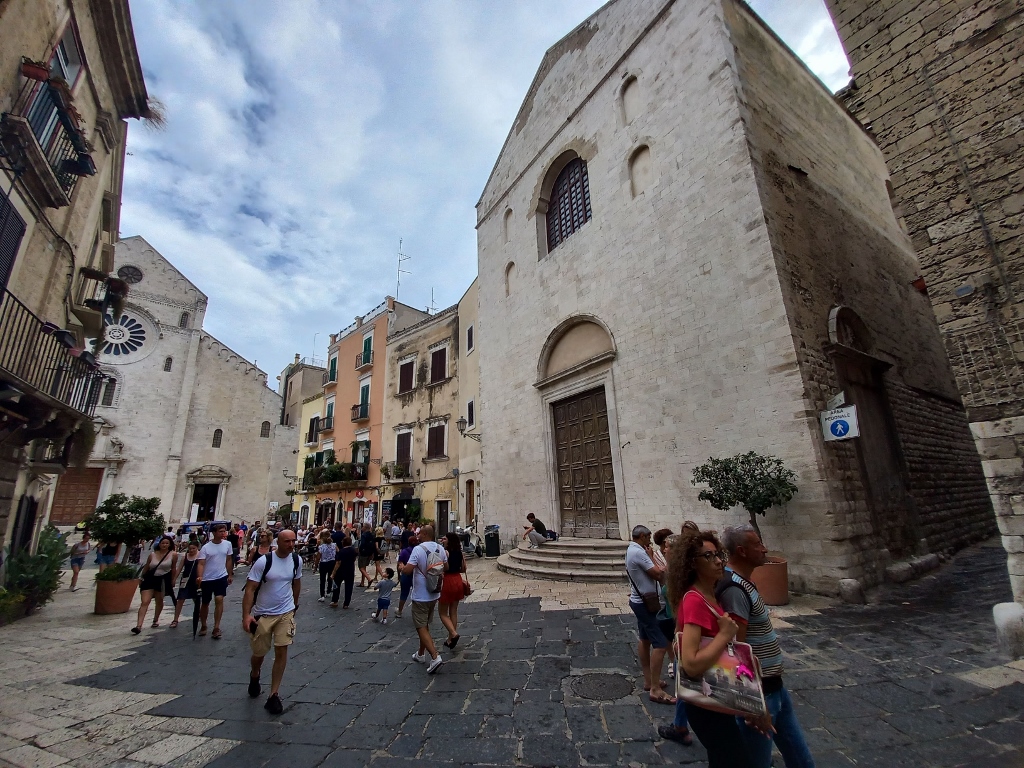 Bari, a detail
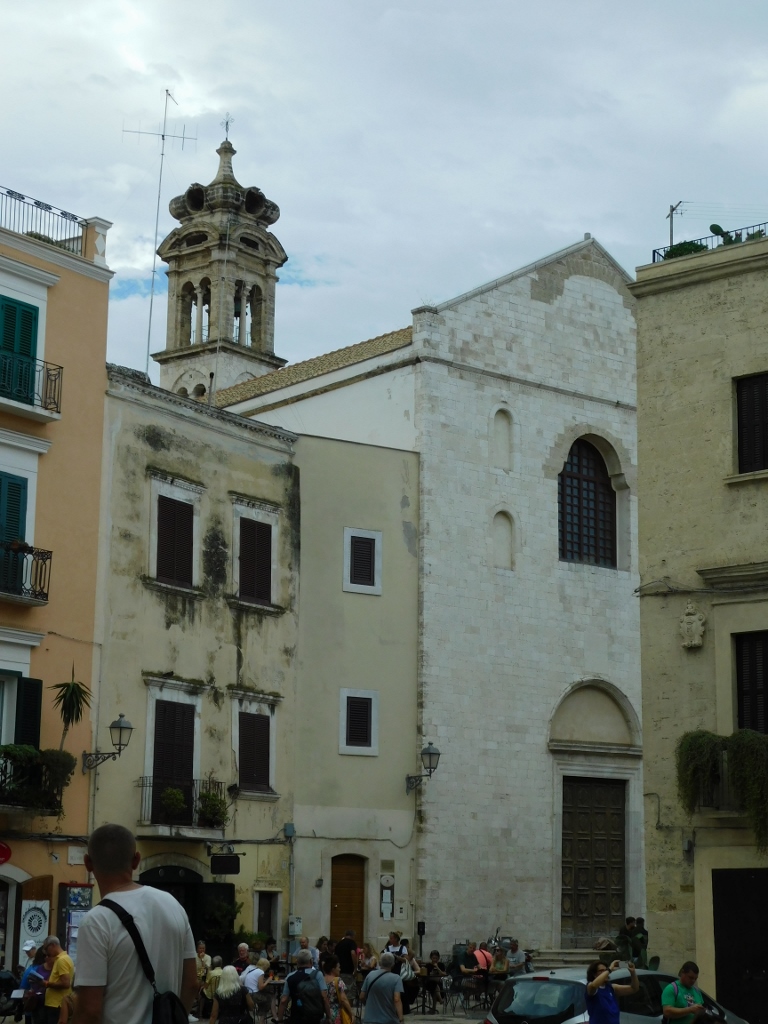 Bari, a detail
And then, I went to a place to get lunch for myself. It’s a famous spot that makes and sells an Apulian specialty to go – Focaccia Barese (Bari-style focaccia). However, first, I had to wait in a long line.
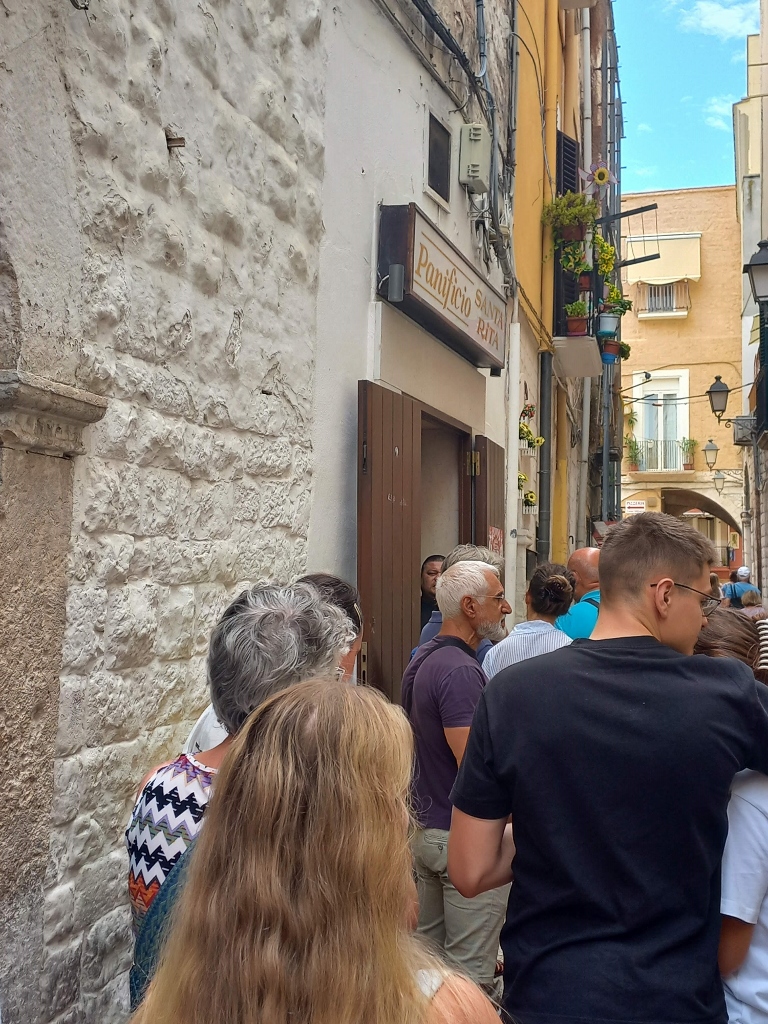 Bari, a detail
When it was my turn, I had to be quick to take a photo of what was happening. The people working there are very efficient and there's no time to waste because there are more interested customers waiting outside. They packed my focaccia nicely, which I planned to eat in the flat before heading out for a short trip.
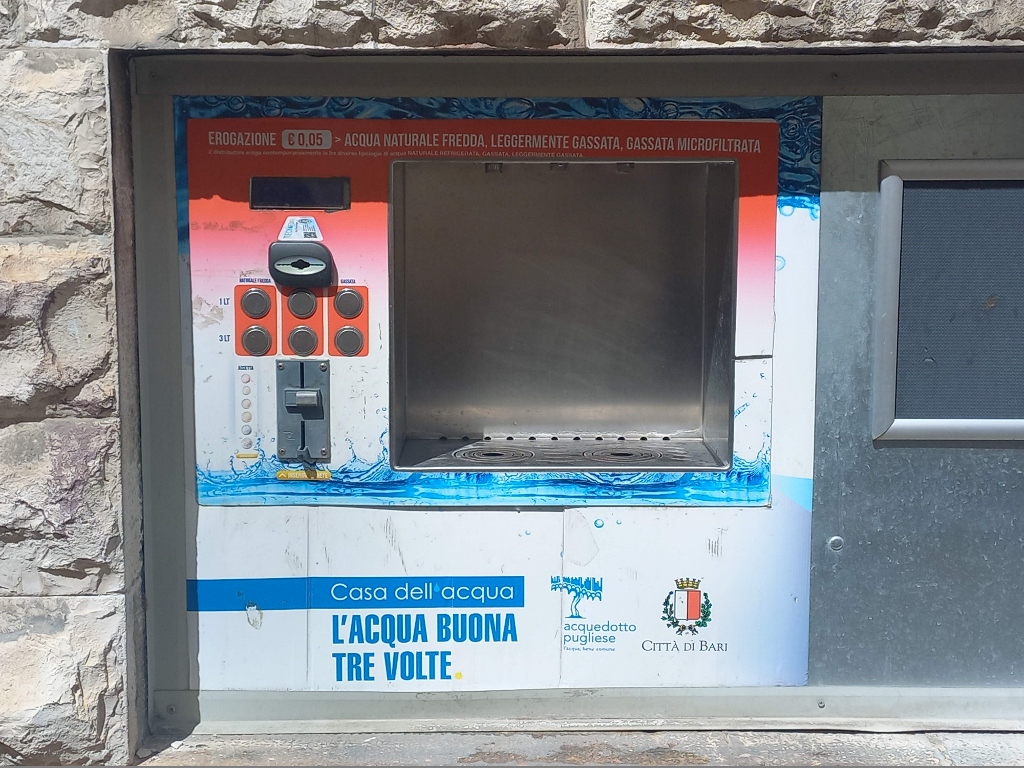
On my way back to the flat, I had to stop at a place to take a photo of something I had noticed the day before. Near the entrance to the old town, there is a "machine" where you can buy water by bringing your own container. There are three types of water available: cold still, lightly sparkling and microfiltered sparkling water, and you can choose either 1 l or 3 l. I think it's a really nice idea.
 Bari, a detail
Then, I returned to the flat and had the focaccia for lunch. It was really excellent. Enough to make me want to try making it myself when I got back home. Here’s the result and the recipe:
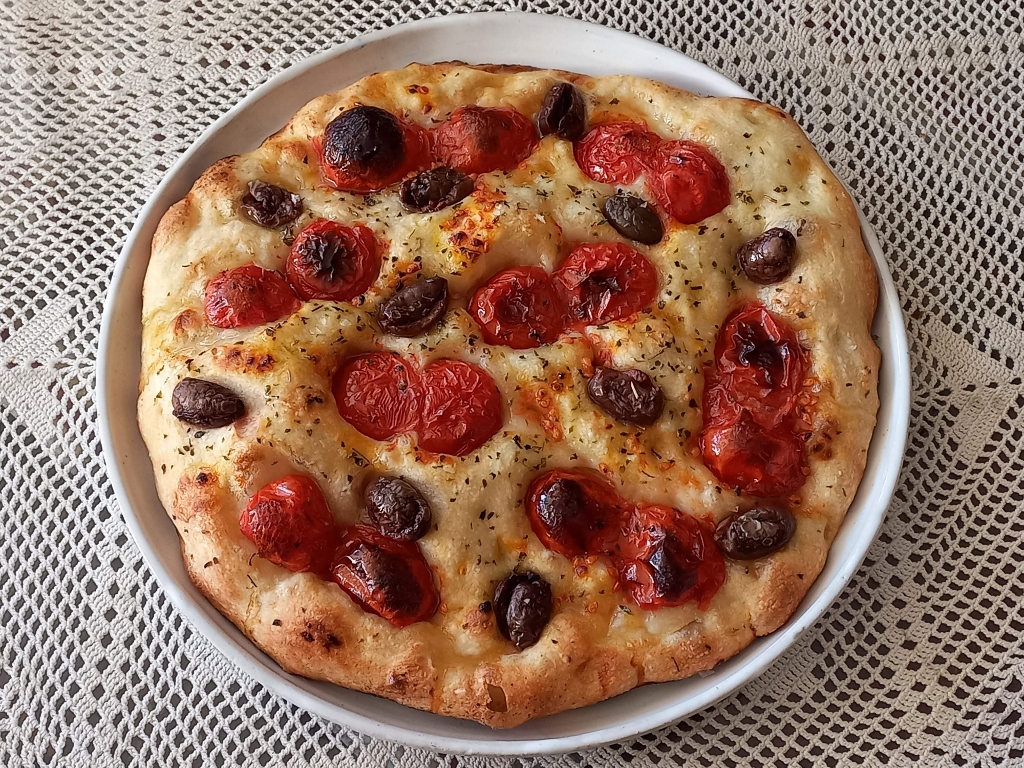 Focaccia Barese done in my way
FOCACCIA BARESE
- 500 g flour for pizza
- 1 medium sized potato
- 300 ml tepid water
- 20 g fresh yeast
- a pinch of sugar
- 1 tsp of salt
- 20 ml olive oil
- 350 g fresh tomato (cherry tomato is the best in this case)
- olives (without pits)
- olive oil
- oregano
First, the potato needs to be boiled in its skin. Once it is well cooked, peel it and mash it finely. Dissolve the fresh yeast in a little lukewarm water, adding sugar to activate the yeast. Combine the mashed potatoes with flour, yeast and salt, and add the rest of the water. Also, add olive oil. The dough will be very sticky, but it should be kneaded for about 10 minutes.
Let the dough rise for 1-2 hours, then knead it again for about 10 minutes. It will still be quite sticky, but a little less. Then, place it in an oiled bowl, cover it and leave it for at least 12 hours. In other words, the dough should be prepared the evening before making the focaccia and the bowl should be placed in the fridge.
The next day, place the dough in an oiled baking tray, then use oiled fingers to stretch it across the tray, also making indentations in the dough. Arrange halved tomatoes and olives on top. Sprinkle with oregano, a little salt, and drizzle with olive oil. Let it rise for half an hour, then bake in a preheated oven (250°C).
After the lovely lunch in Bari, I went on a "trip." I actually went to the town of Polignano a Mare. It’s about a half-hour train ride south from Bari.
Polignano a Mare is considered one of the many charming small towns along the Apulian coast of the Adriatic Sea. It is especially famous for its limestone cliffs that rise about 20 m high and stretch along this part of the coastline, with the town built above these cliffs. Due to the constant movement of the sea and waves, caves have been carved into the cliffs over time, adding to the picturesque nature of the place.
I first went to a lookout by the sea in order to get a better view of what was going on, but when I arrived, everything was surrounded by a temporary high wire construction fence because some kind of work was being done. In fact, at that moment, there was no one around, but it was clear that something was being built or repaired there. I found a convenient spot where I could slip my phone through the fence and just as I was about to take some pictures, a local guide appeared with a couple of tourists. He simply moved part of the fence so they could walk to the stone wall that exists above the sea. I asked if I could pass through briefly to take photos as well and he agreed. Everything went smoothly and quickly. Here are the pictures (they turned out much better than if I had taken them through the construction fence):
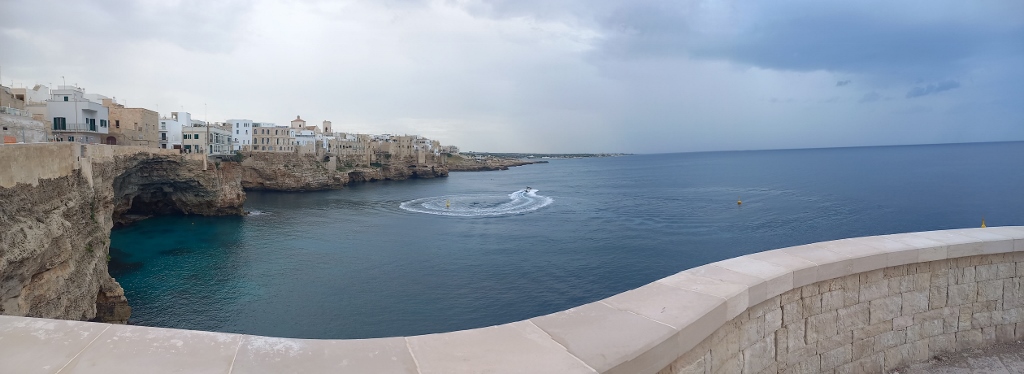 Polignano a Mare
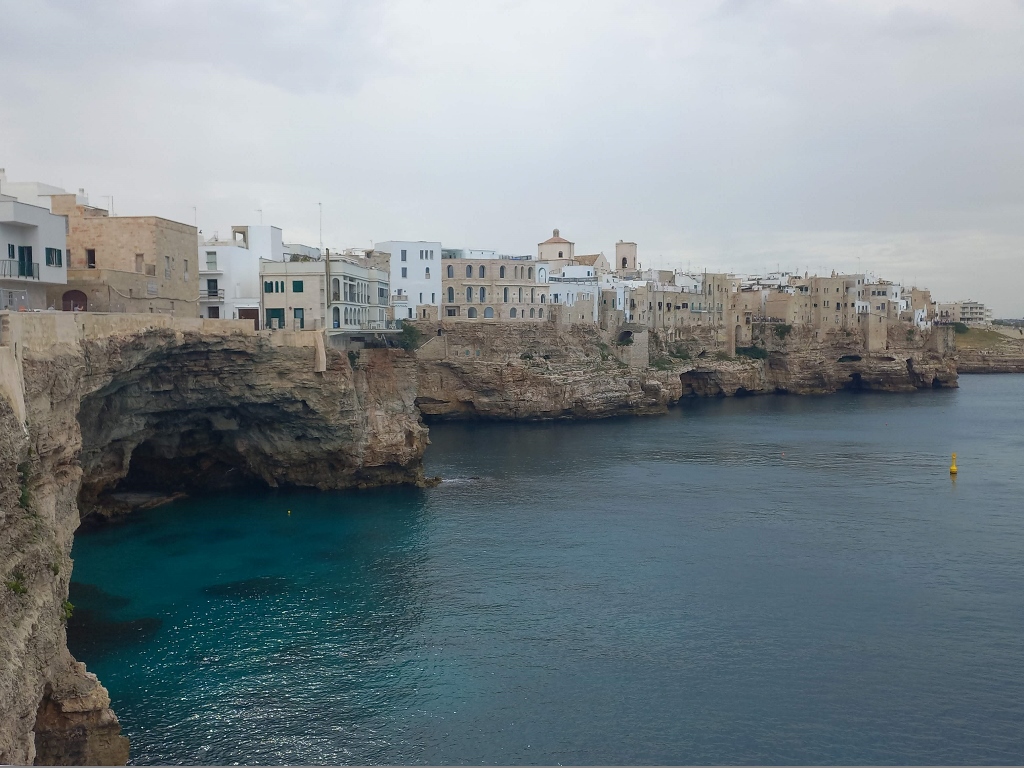 Polignano a Mare
In the photo above, on the left-hand side, you can see the famous Grotta Ardito delle Caldaie cave, and here’s a closer shot of it. You can better notice the beautiful colours of the sea at this spot.
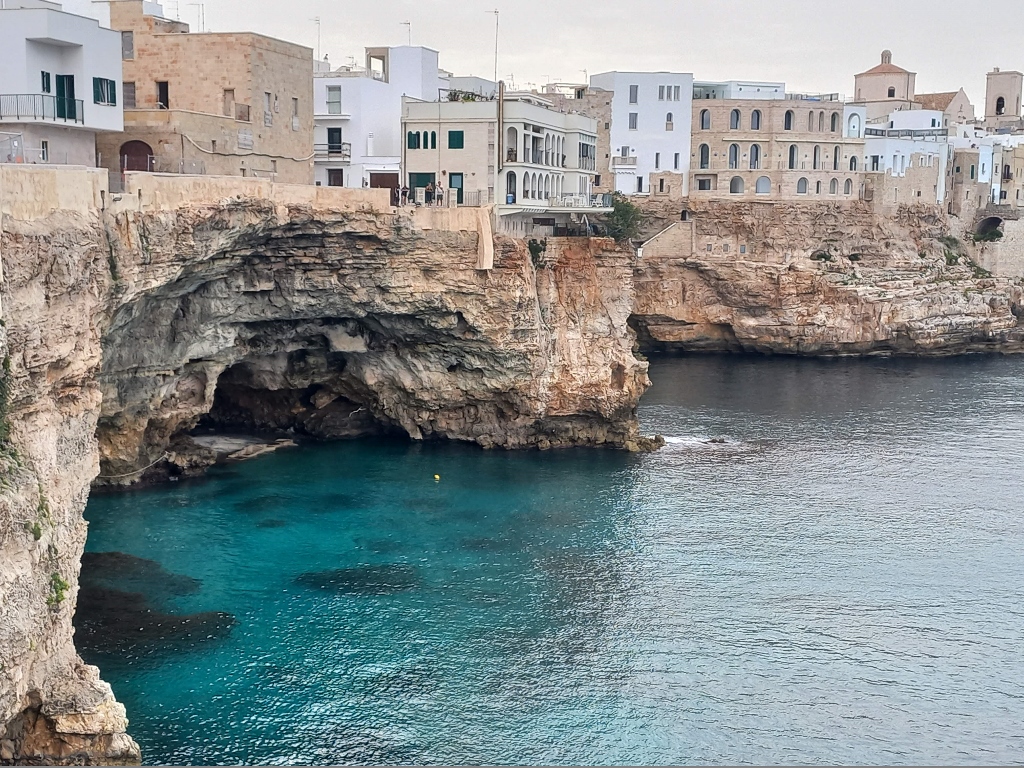 Polignano a Mare
I thanked the guide and then I started walking down the street that runs along the coast.
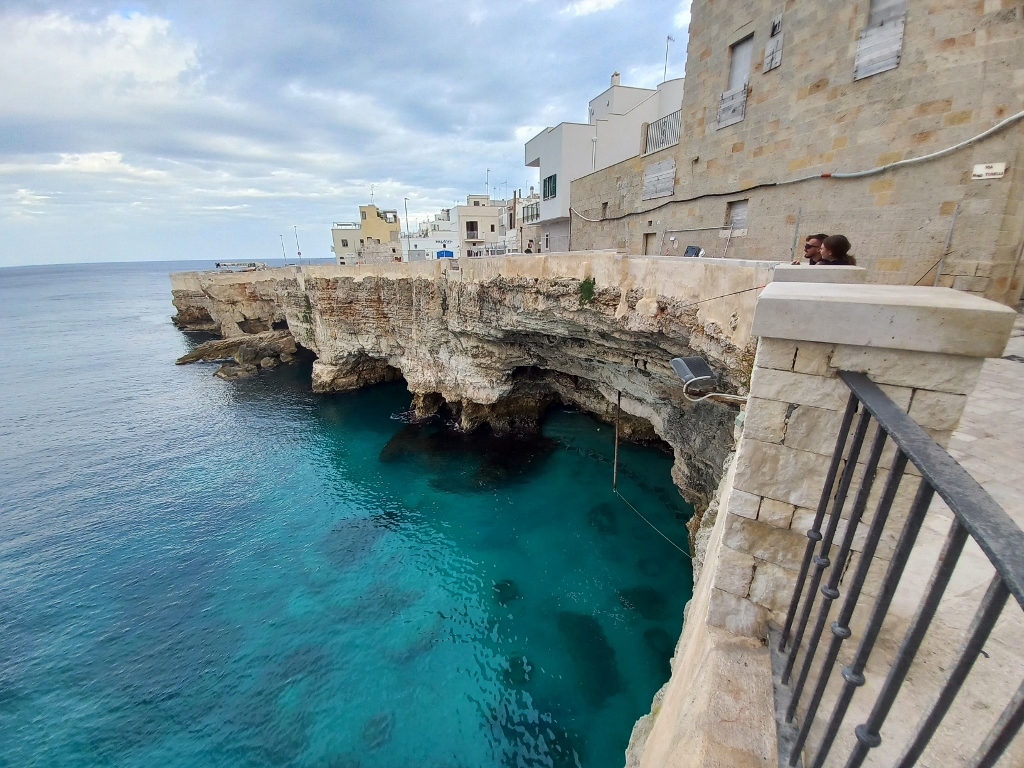 Polignano a Mare
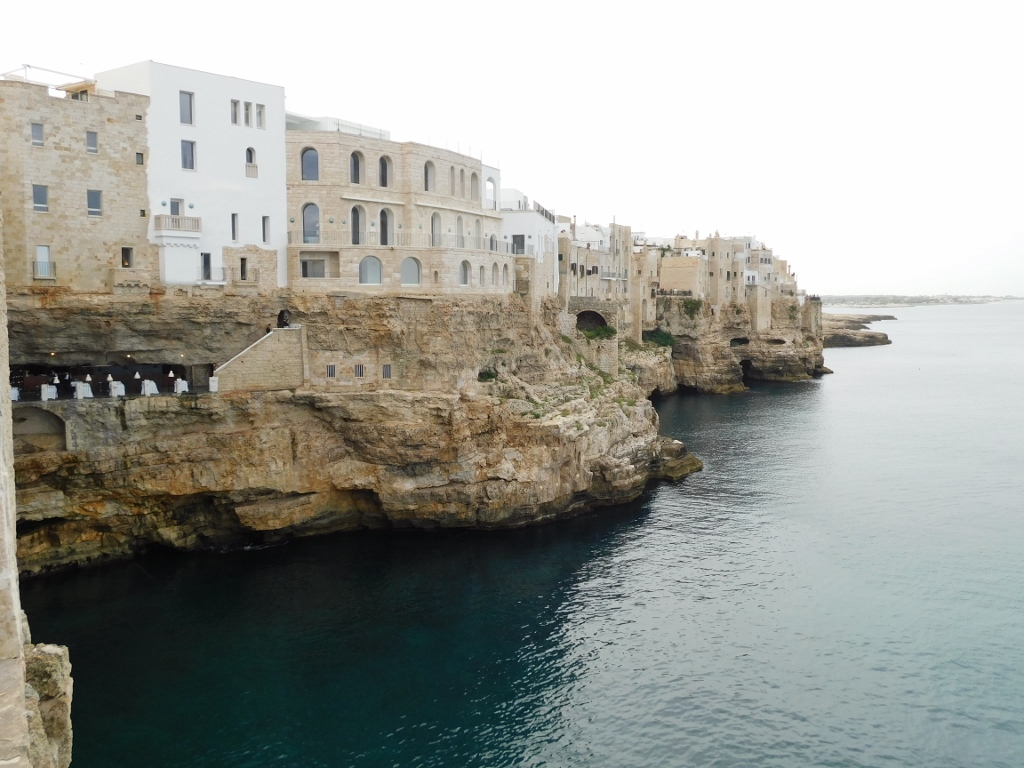
Then, I wandered into the town, heading west towards the historical centre of Polignano a Mare (Centro Storico Polignano a Mare) along a street that runs straight, but essentially follows the coastline. From this street, shorter alleys regularly lead to viewpoints where you can once again enjoy the beauty of this coastline.
 Polignano a Mare
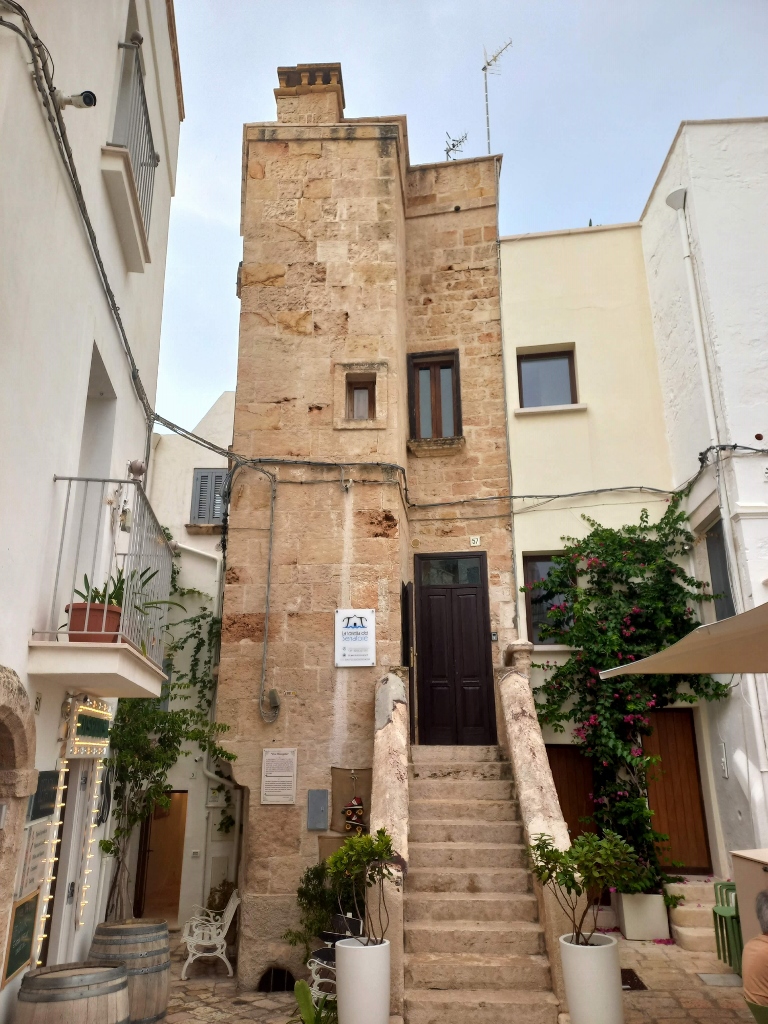
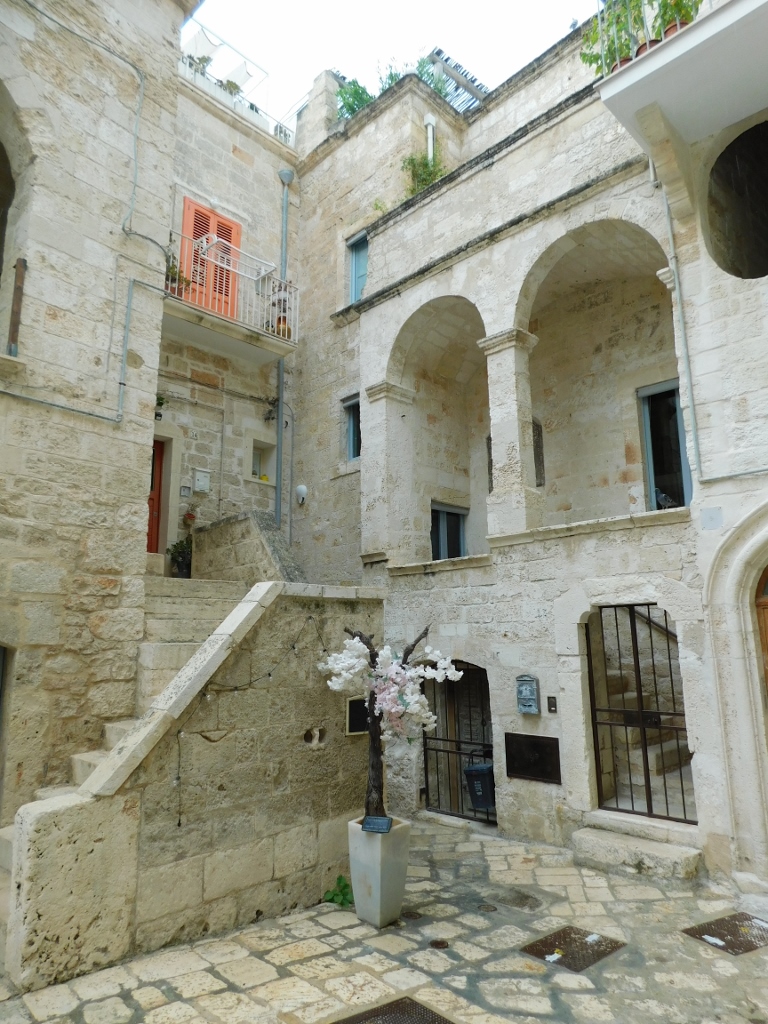
But, the houses you can see here are no less interesting and charming. On the contrary.
 Polignano a Mare
 Polignano a Mare
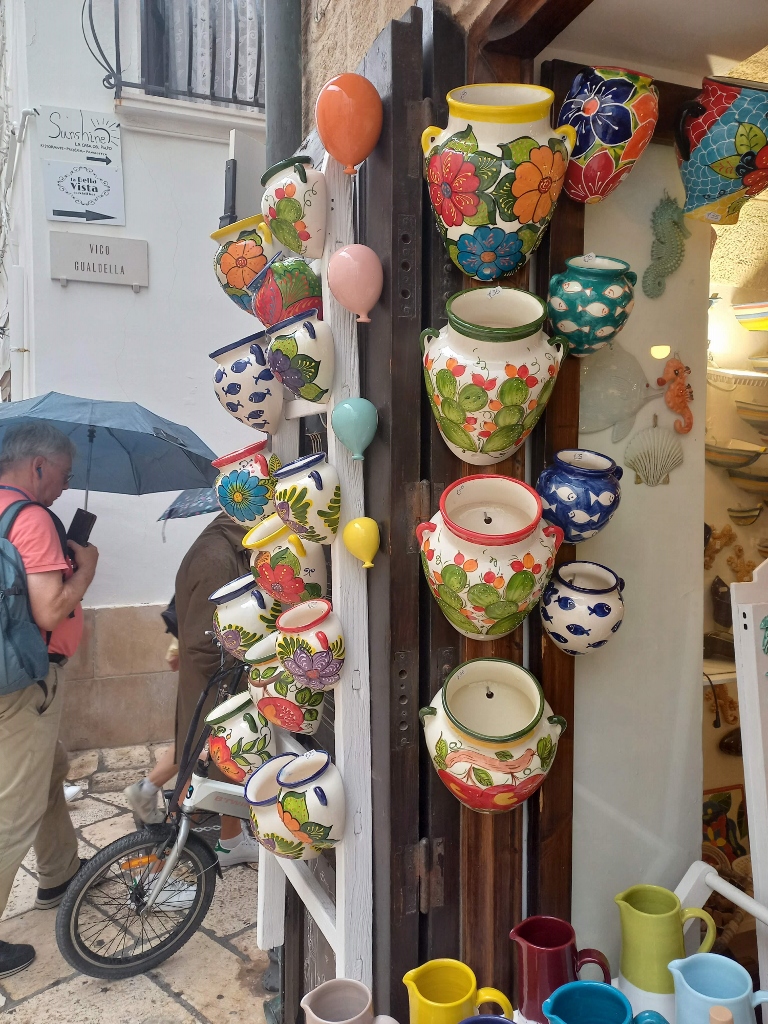
In the meantime, it started to rain. Sometimes lightly and sparsely, and at other times a bit more heavily. I hadn’t brought an umbrella with me, so I had to be careful when taking photos with both my phone and camera in order to make sure they didn’t get too wet.
 Polignano a Mare
The rain briefly stopped just as I reached Piazza San Benedetto. As it can be seen in the next photo, the temperature was quite pleasant (judging by the clothes of the people), after all, it was the first half of September.
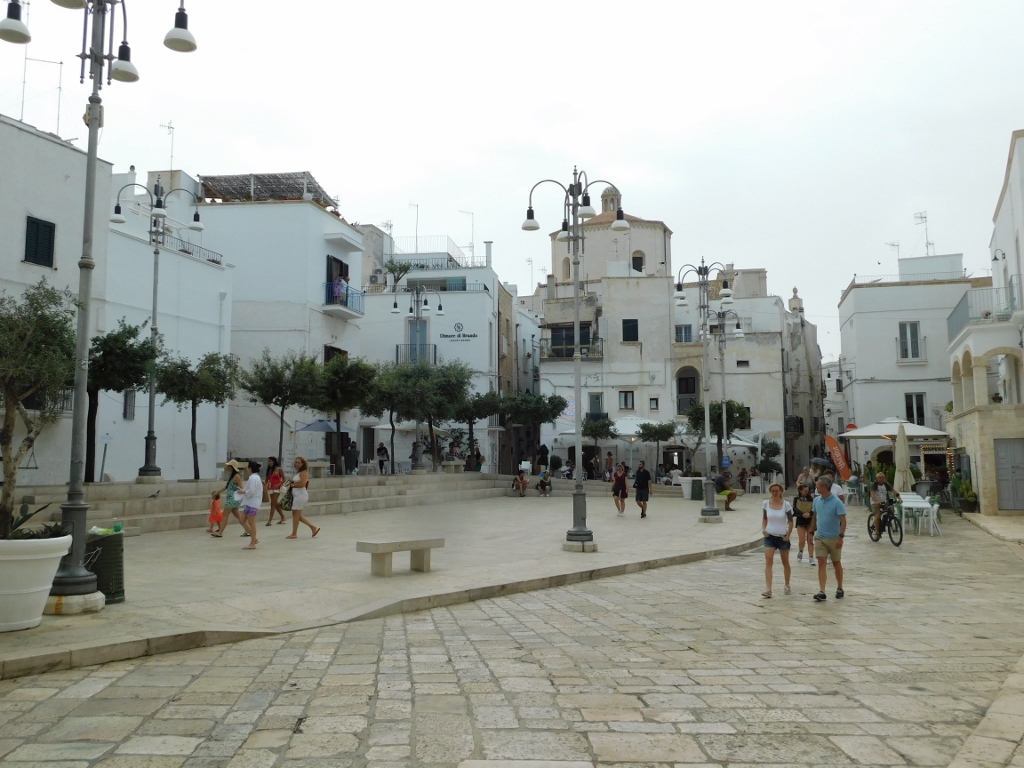 Polignano a Mare
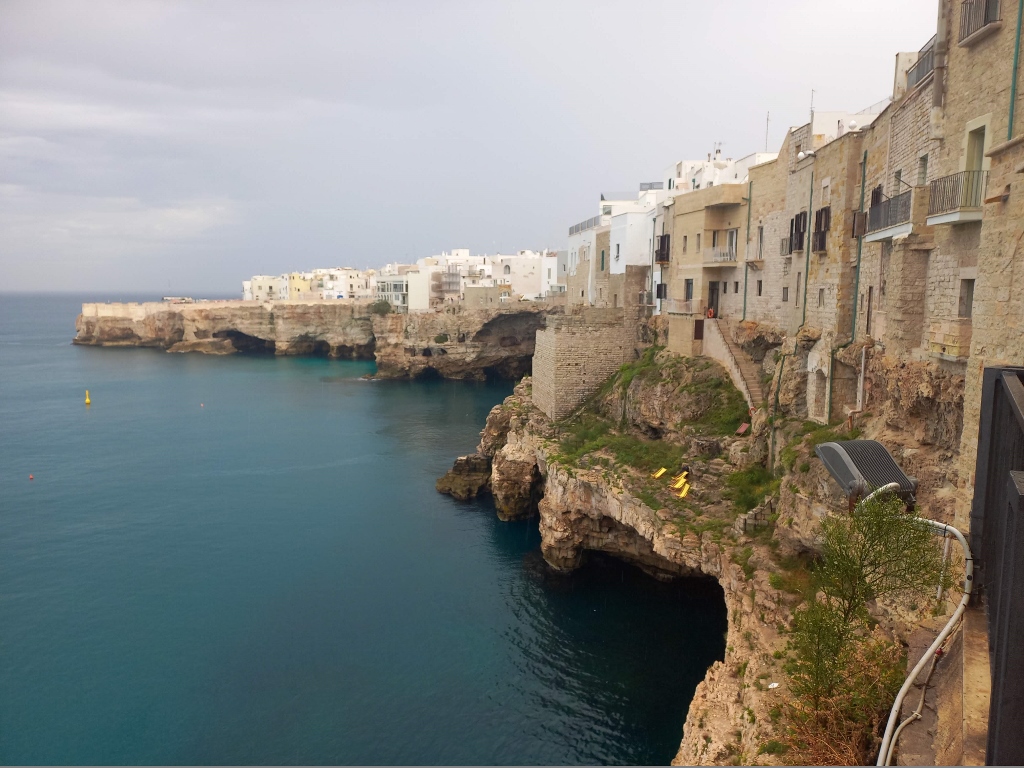 Polignano a Mare
And then, it started to rain a bit harder again. I wasn't the only one without an umbrella, but it didn’t bother me too much, except when it came to taking photos. Some people, however, decided to hide for a while and wait for the rain to pass.
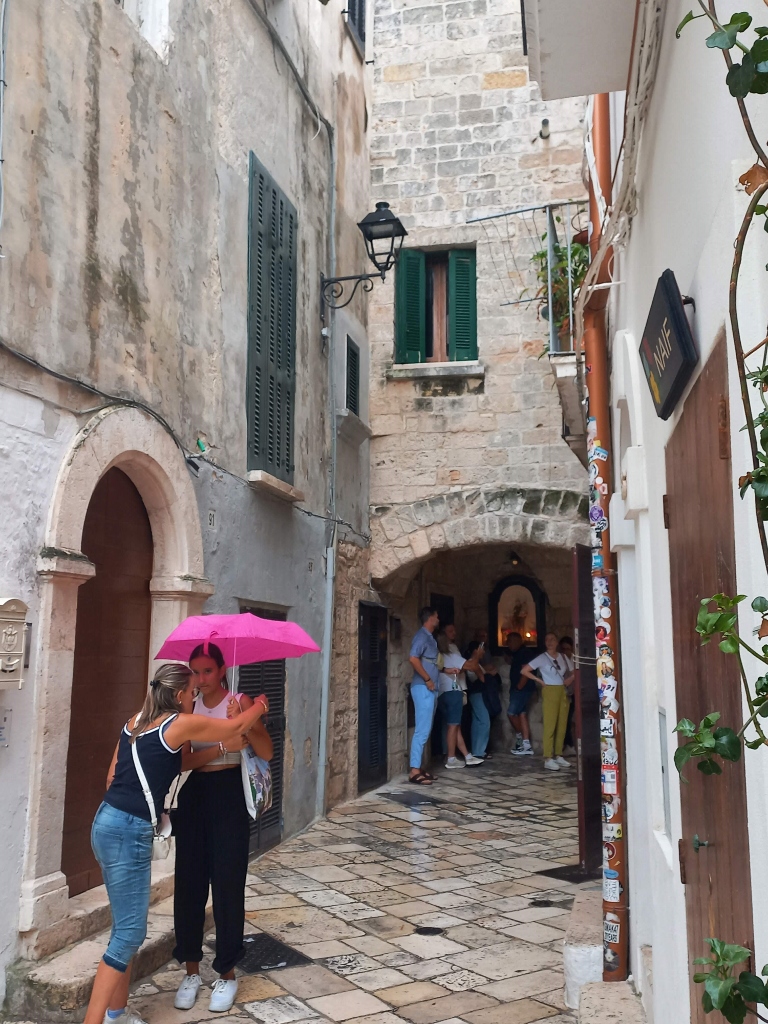 Polignano a Mare
The only thing I had to be careful about was walking slowly in order to avoid slipping on the wet, polished stone slabs that cover the streets, but that didn’t stop me from noticing interesting and picturesque details.
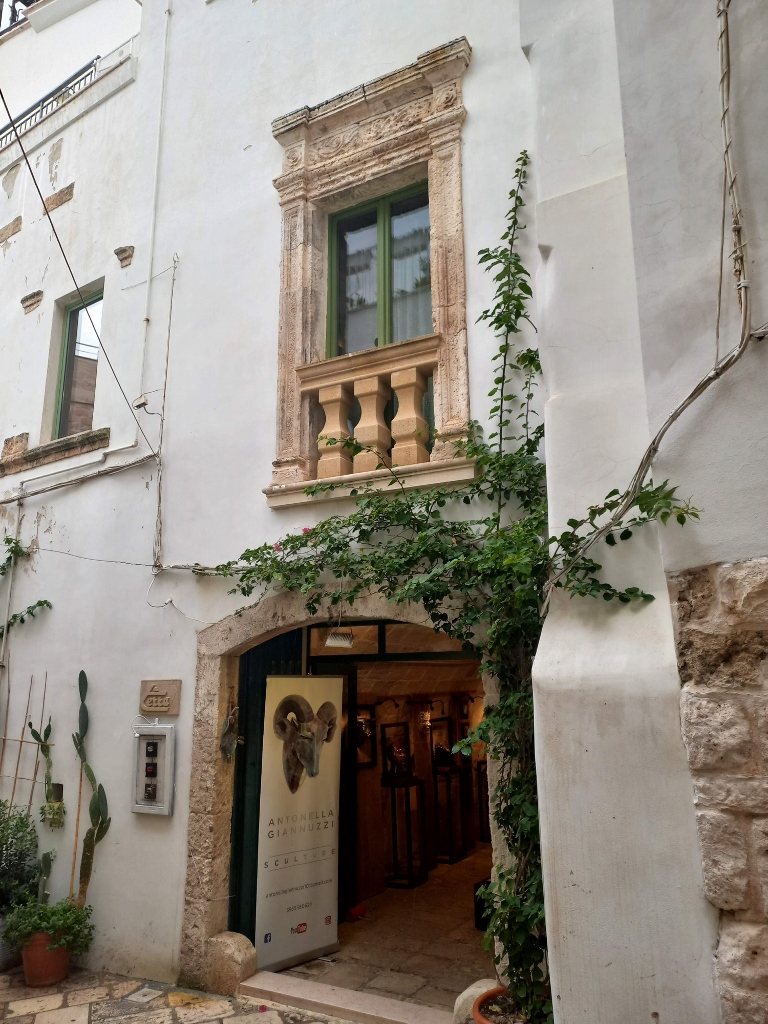 Polignano a Mare
And then I reached a viewpoint at the far northern tip, from where I could see the cliffs on which the town is built to the east, as well as the rocky coastline to the west of the town centre.
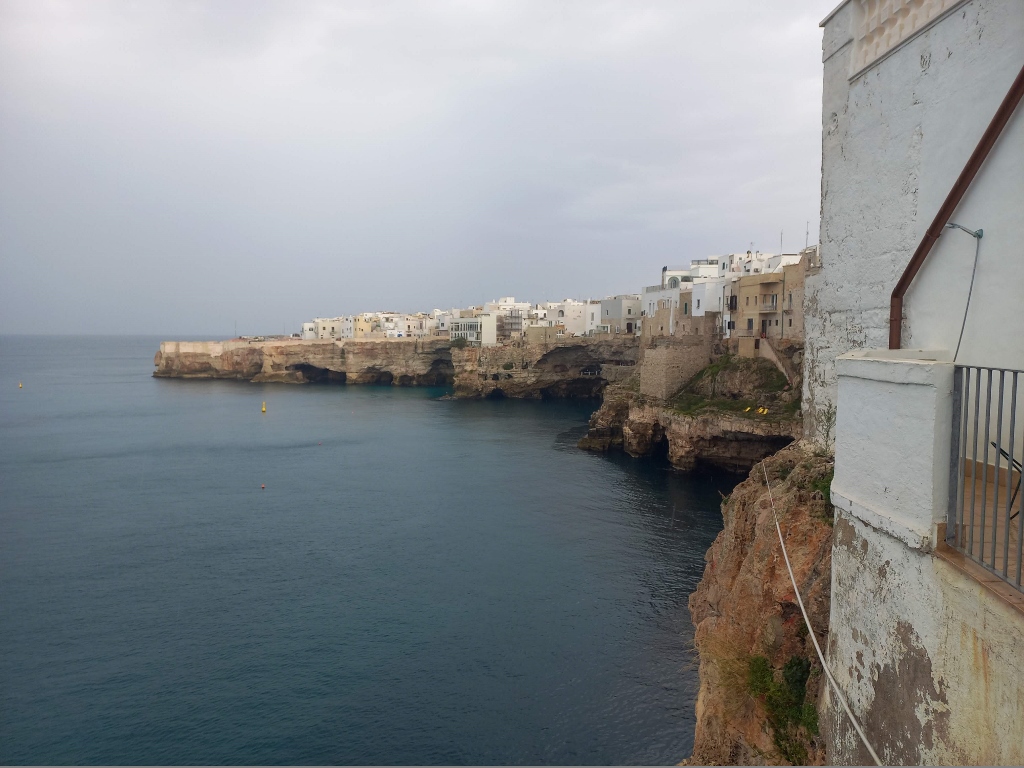 Polignano a Mare
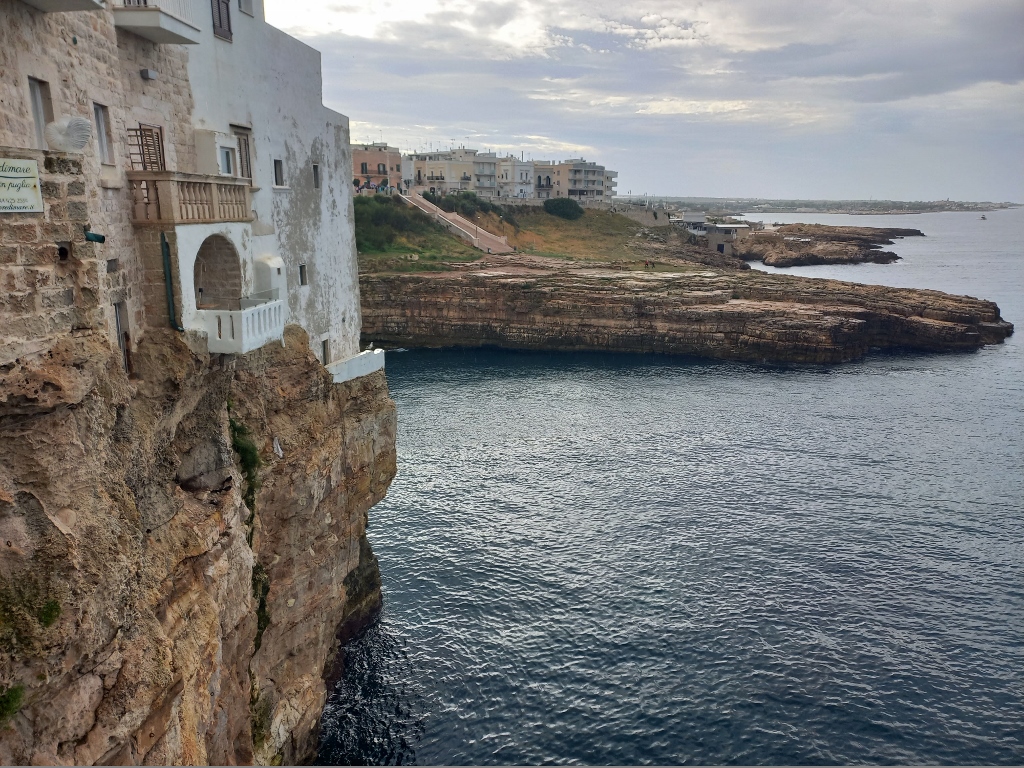 Polignano a Mare
After a short break for photography, I once again wandered into the picturesque streets, but only for a little while. I had to head to a viewpoint on the western side of the historical centre in Polignano a Mare.
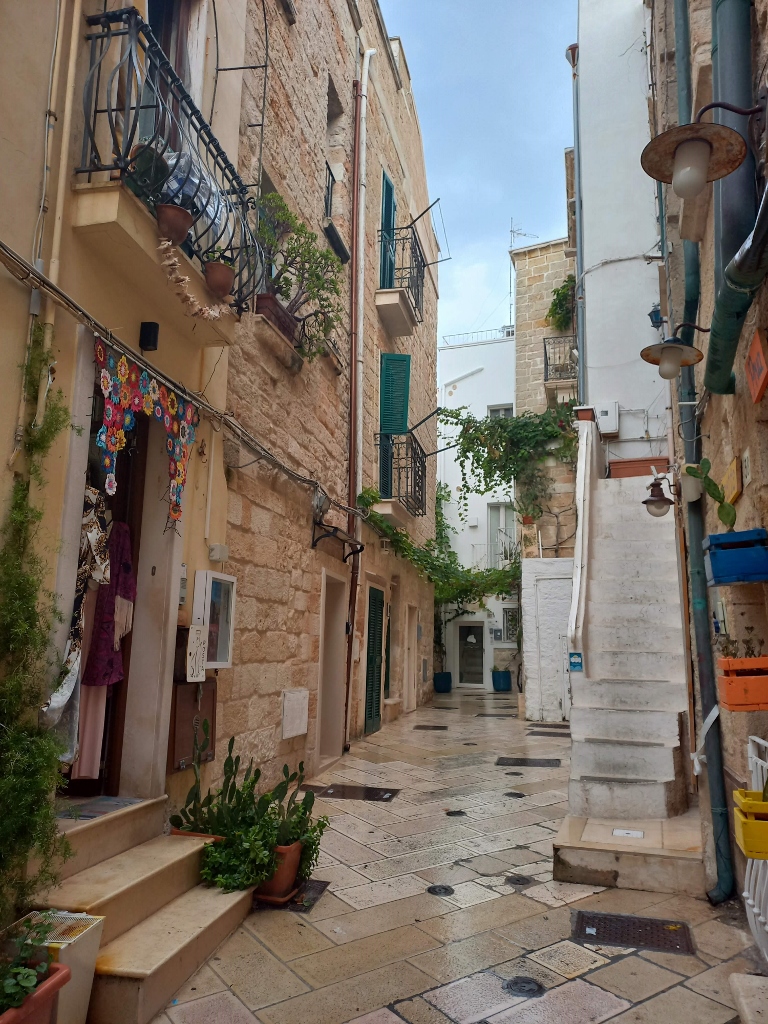 Polignano a Mare
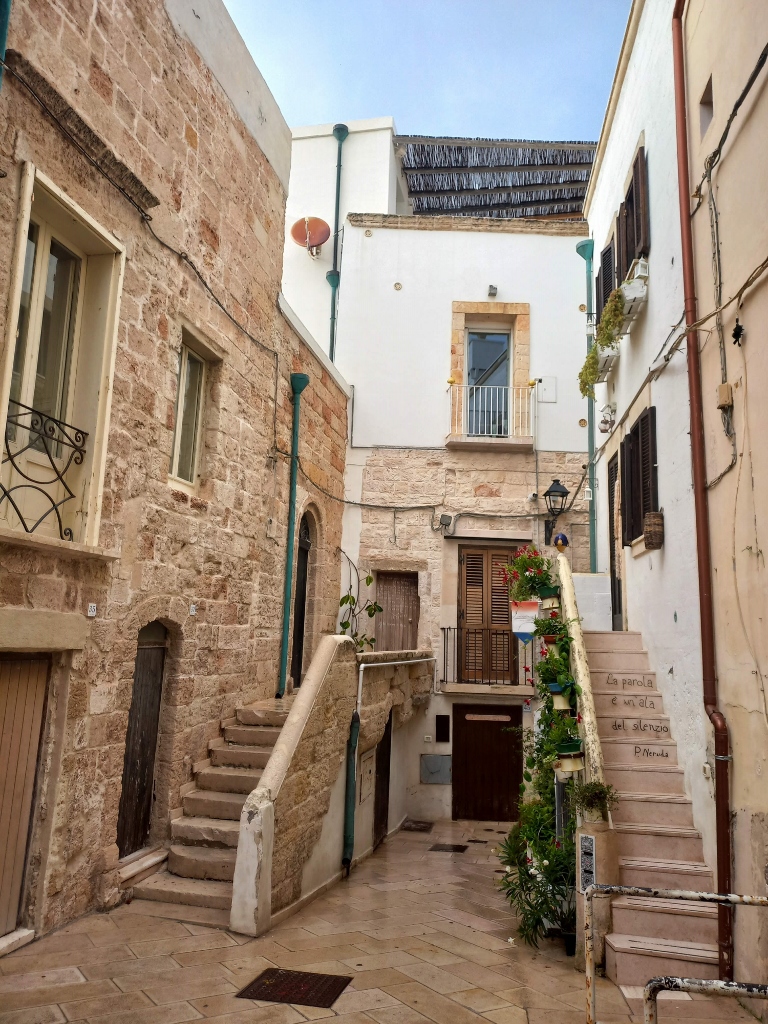 Polignano a Mare
On the western side of the town's historical centre, there is a fenced terrace that offers a beautiful view of a small pebble beach nestled between the rocky cliffs, known as Lama Monachile.
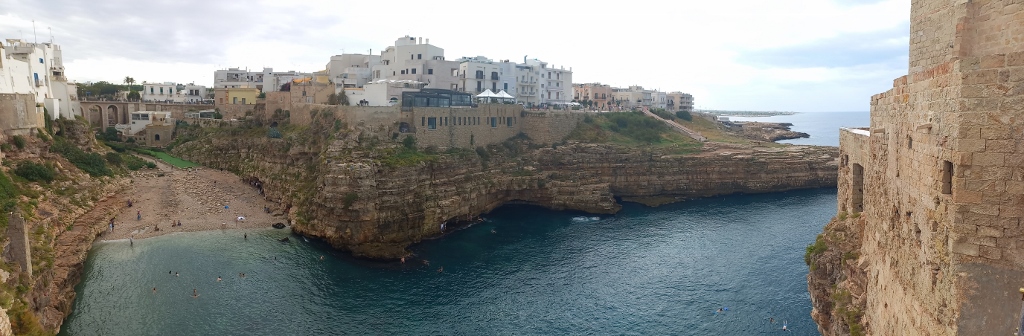 Polignano a Mare, view at Lama Monachile beach
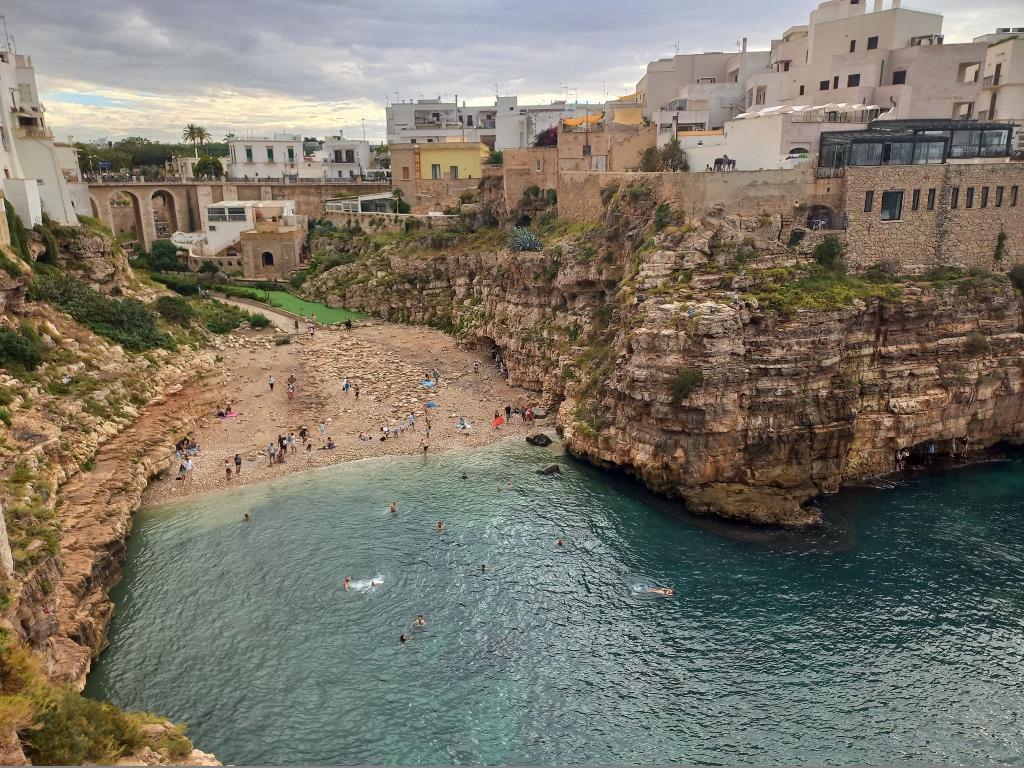 Polignano a Mare, view at Lama Monachile beach
While I was standing here and taking photos, a few people were jumping into the water from the rock to the west of the beach. In the next picture, you can see a woman in the middle of her "leap."
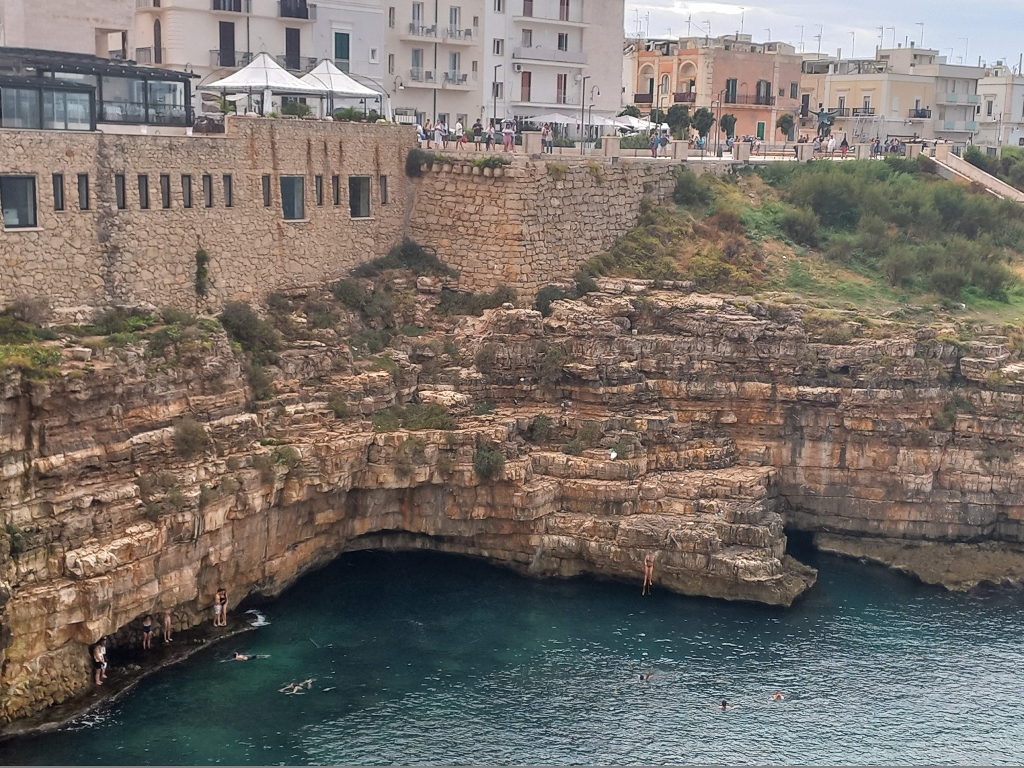 Polignano a Mare
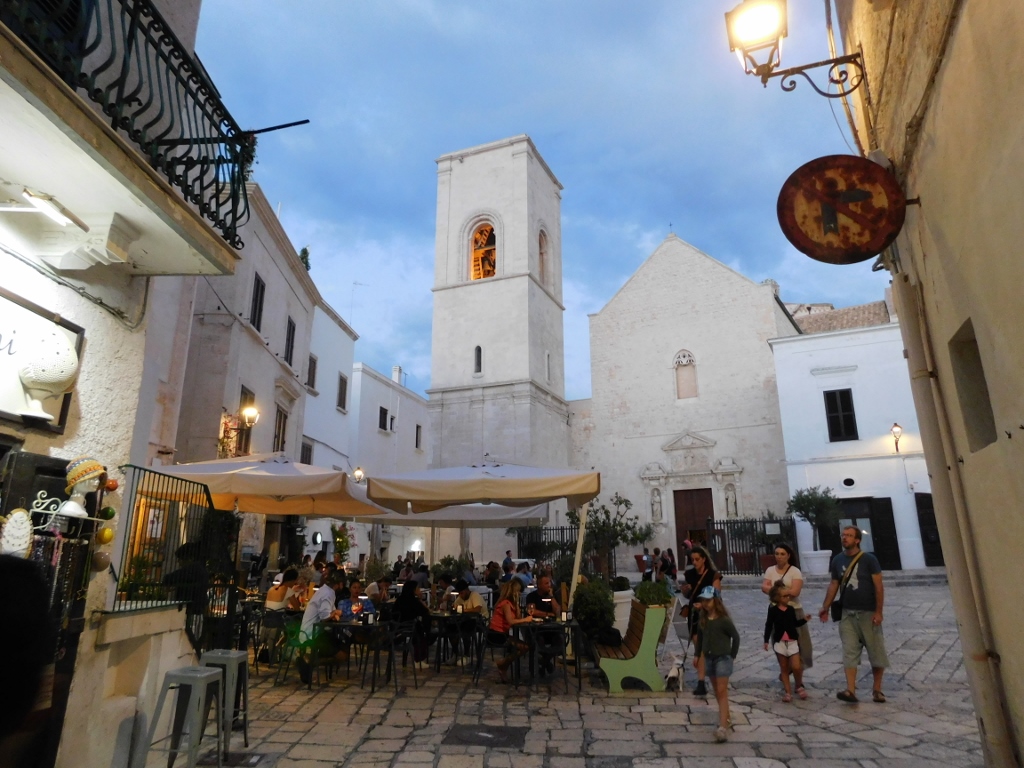
After this, I went to Piazza Vittorio Emanuele II, where I sat down and had a coffee. From the place where I was relaxing, I had a nice view of the Church of Saint Mary of the Assumption (Chiesa Madre Santa Maria Assunta), but there were preparations going on for a funeral, i.e., for the mass before the burial, so I decided to return later to visit the church.
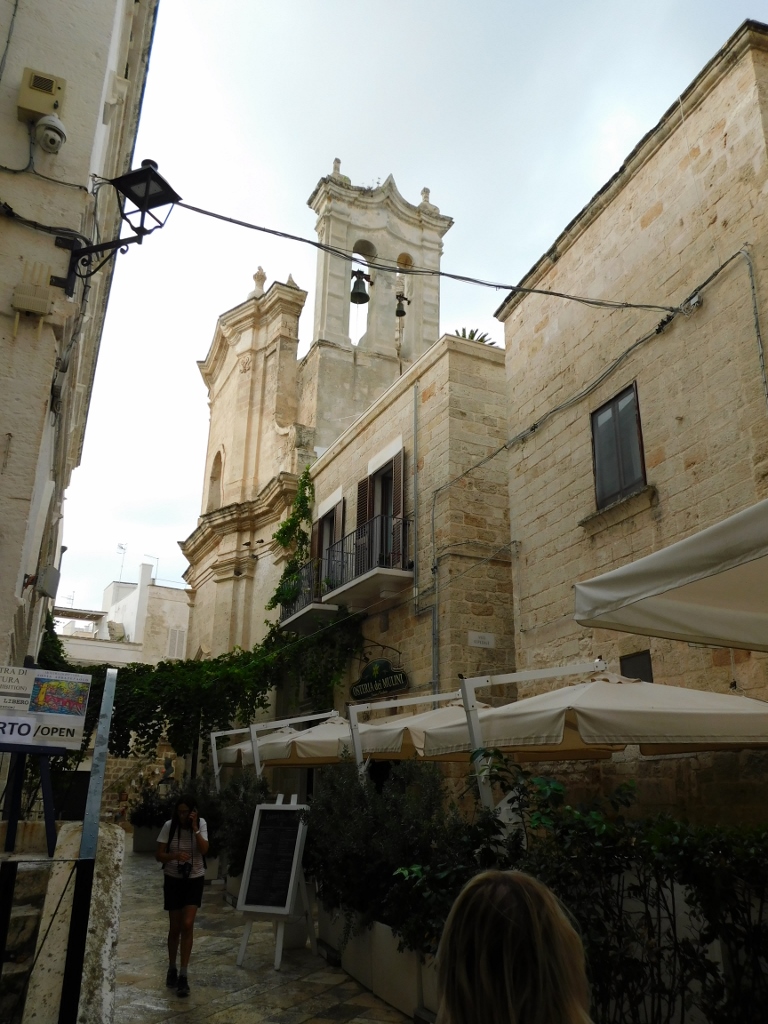
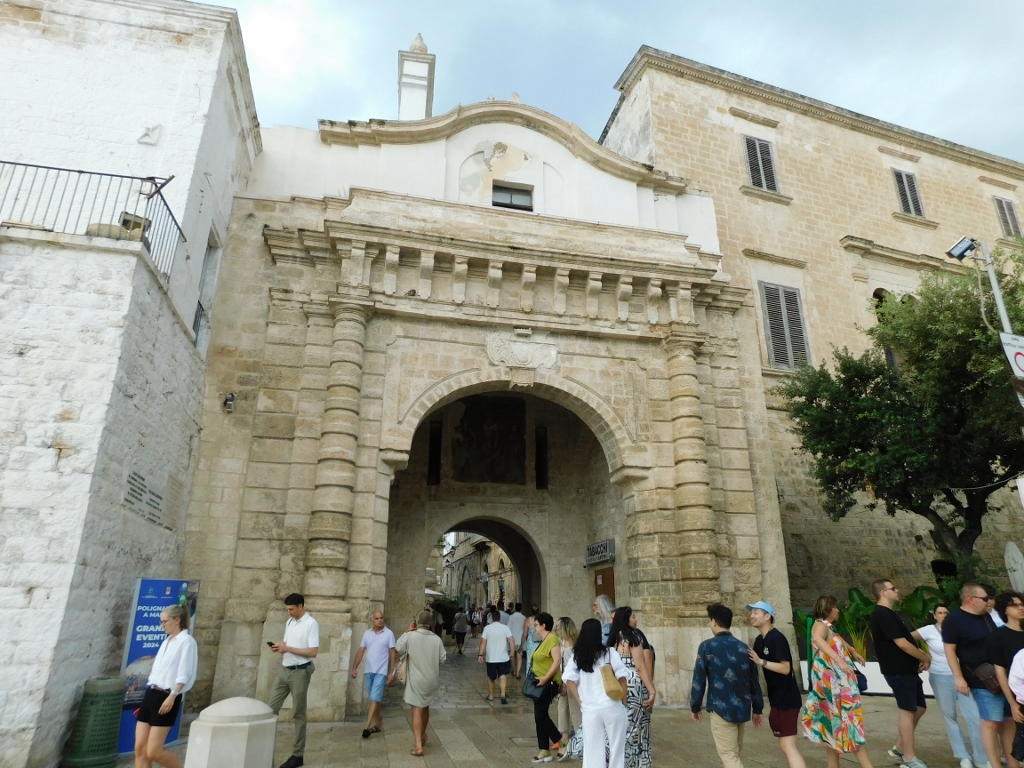
For now, I headed towards the exit from the historical centre of Polignano a Mare, while near the Old Gate (Porta Vecchia), I took a few photos of some interesting details.
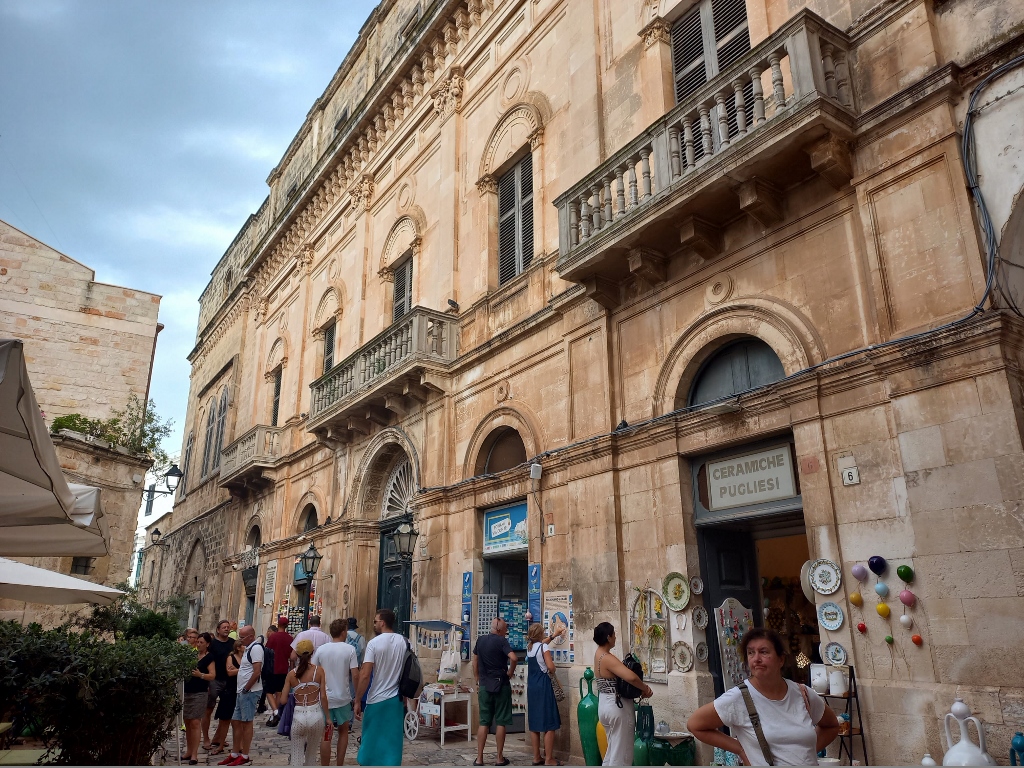 Polignano a Mare
 Polignano a Mare
 Polignano a Mare
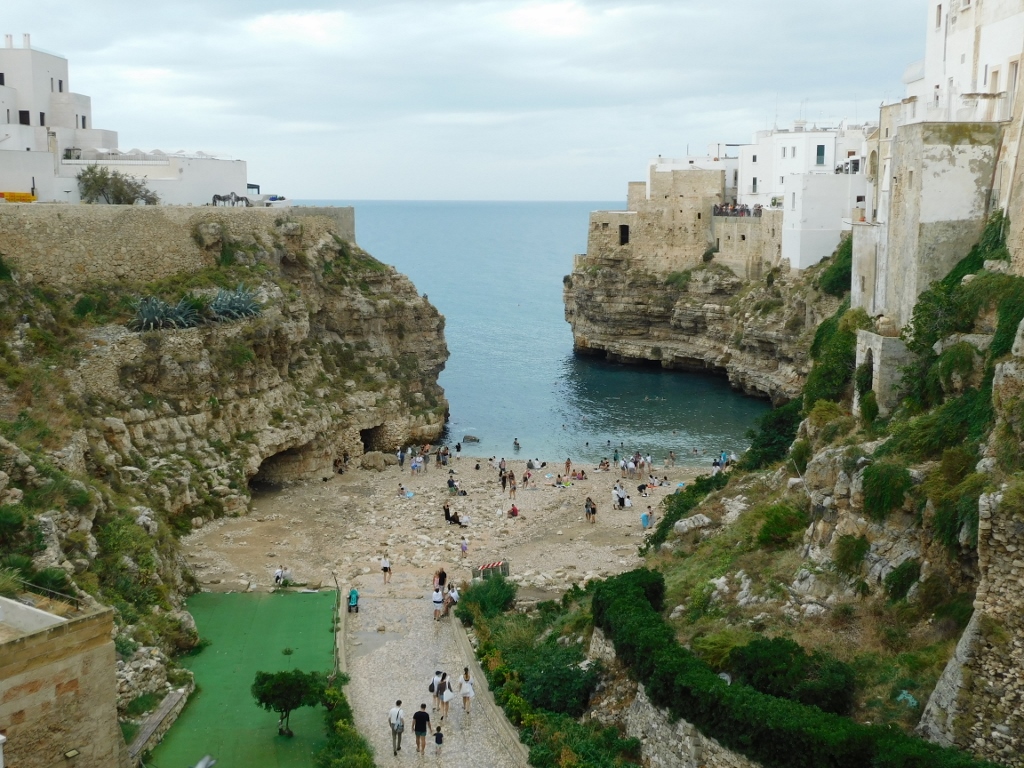
From there, I started to walk along the street leading west and from the bridge that crosses the gorge at the end of which there is a beach, I was able to see everything from a different angle. If you look closely at the next photo, you can see the terrace-viewpoint in the upper right-hand corner, from where I previously took pictures of Lama Monachile beach.
 Polignano a Mare
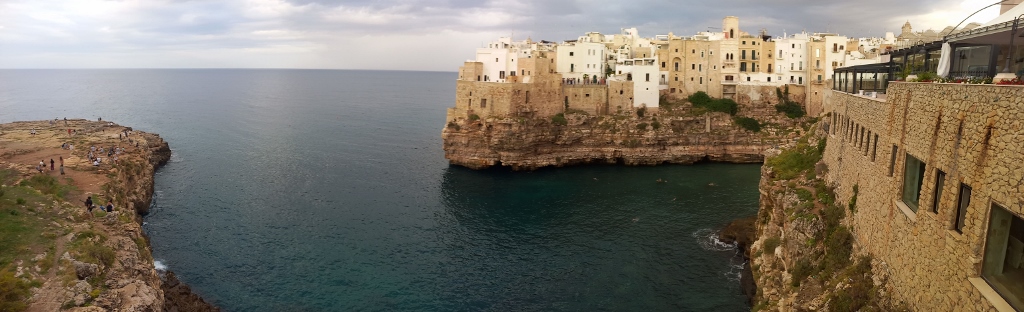
Now, I went to a spacious square that continues from Largo Gelso and from there, I first headed to a spot where you can get a nice view of the historic centre of the town, perfect for observing and taking photos.
 Polignano a Mare
Although the previous picture also shows the terrace with the great viewpoint, here it is again, a little closer. It definitely has to be a must-see spot for every visitor to this charming town.
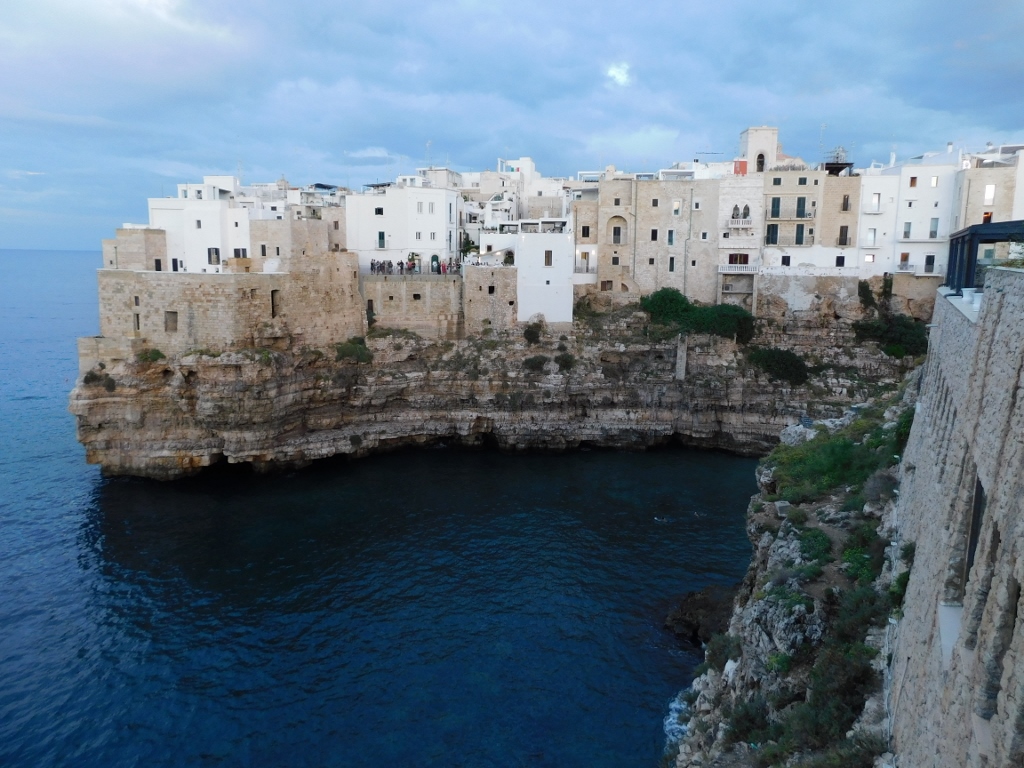 Polignano a Mare
From here, I also took a photo of a part of the rocky coastline and decided to head down there.
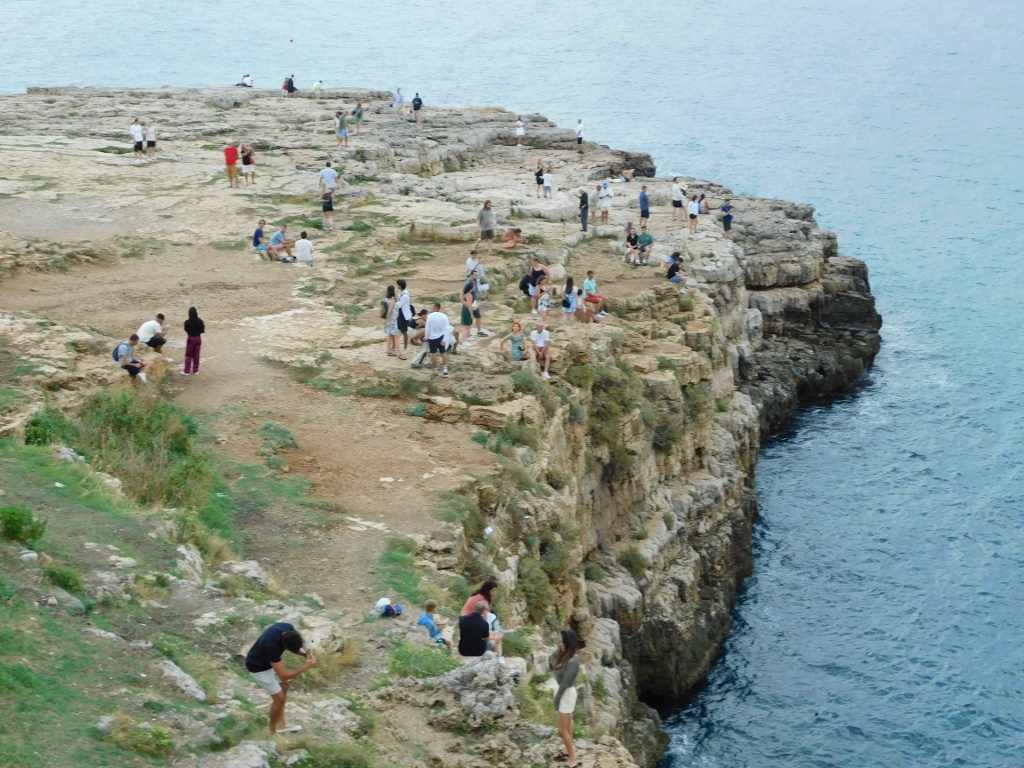 Polignano a Mare
Meanwhile, the rain had completely stopped and while I was here capturing what seemed interesting to me, the clouds parted slightly and the sun’s rays broke through, creating a very dramatic scene for a moment.
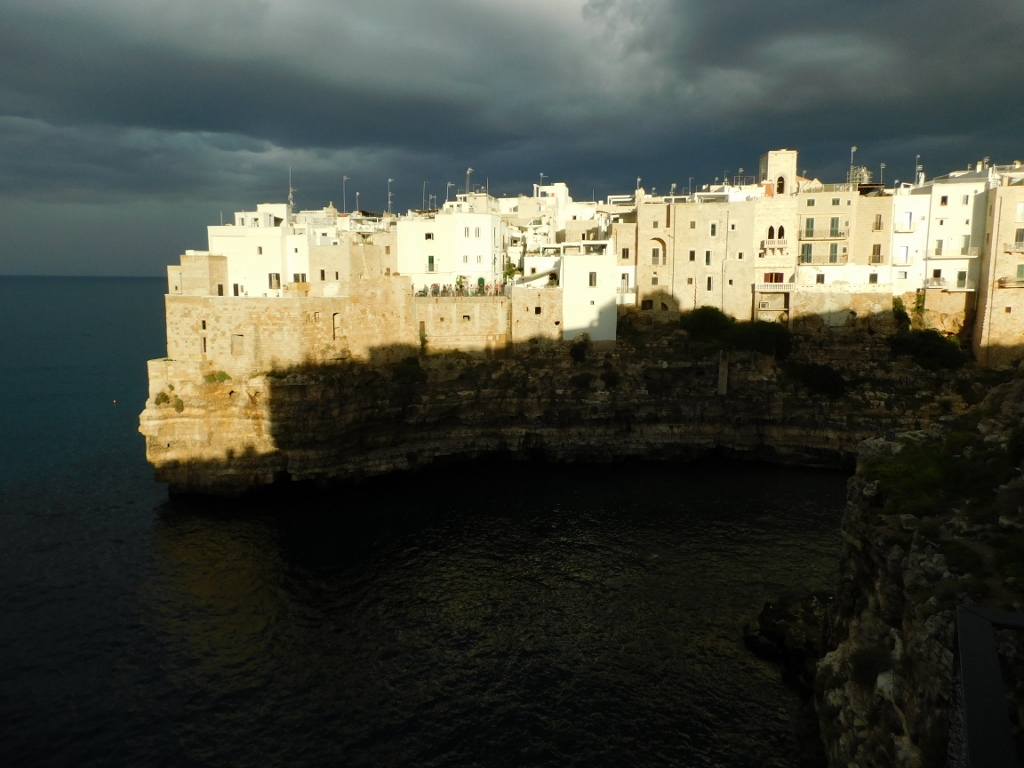 Polignano a Mare
On this plateau, there is also a monument to the famous Italian singer Domenico Modugno, who was born right here in Polignano a Mare.
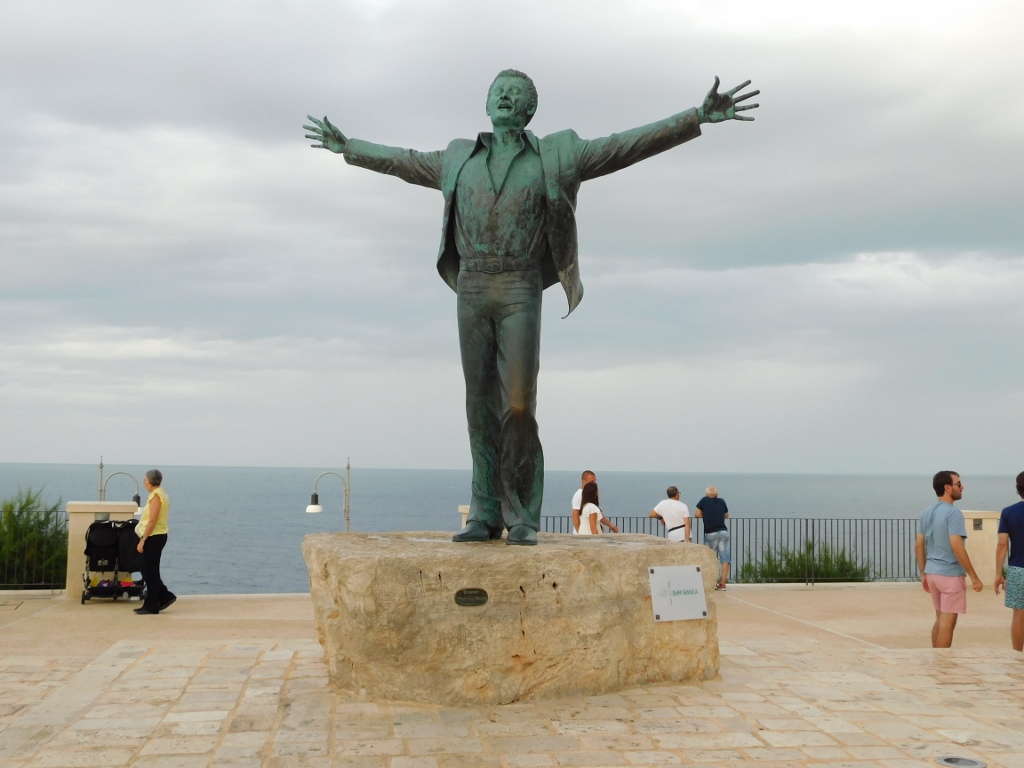 Monument to Domenico Modugno
Perhaps his name doesn’t sound familiar to everyone, but his most famous song, I believe, is one of those melodies that will live forever. I immediately thought of that song, of course, and also realised I knew most of its lyrics. What else could I do but record Mlog No. 10?
I really know how to entertain myself well!
After recording my singing, I made my way down to the rocky coastline and spent some more time enjoying the scenery while also taking a few more photos. I even took advantage of some good-sized rocks where I could place my camera in order to take a picture of myself. That’s always fun!
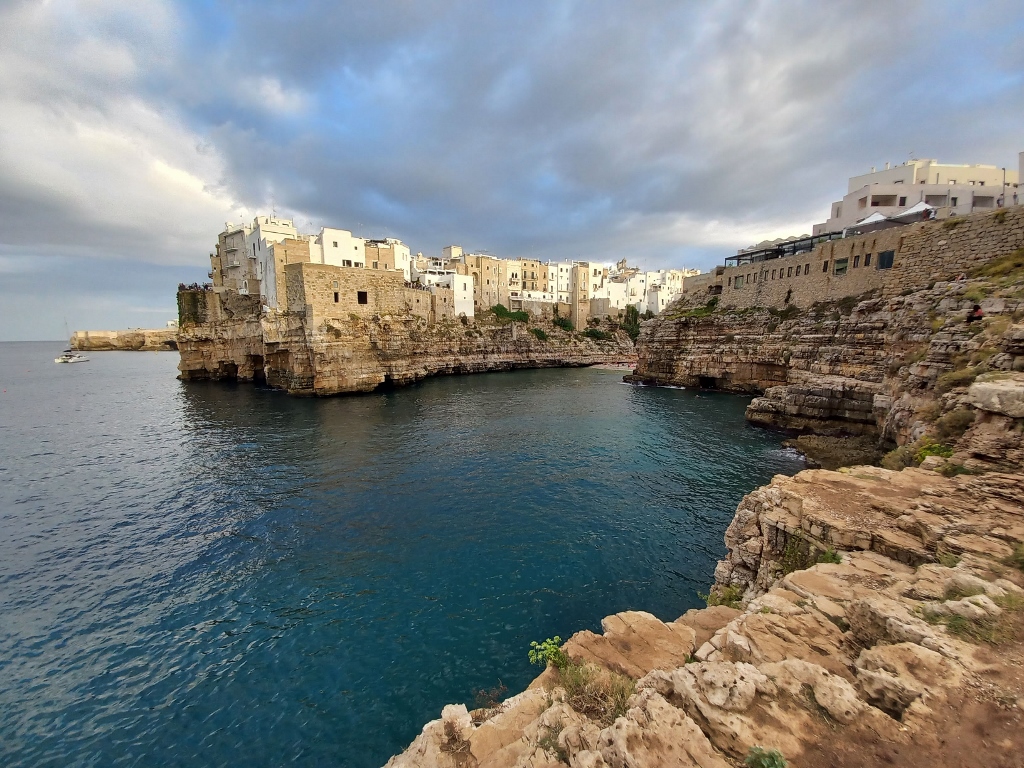 Polignano a Mare
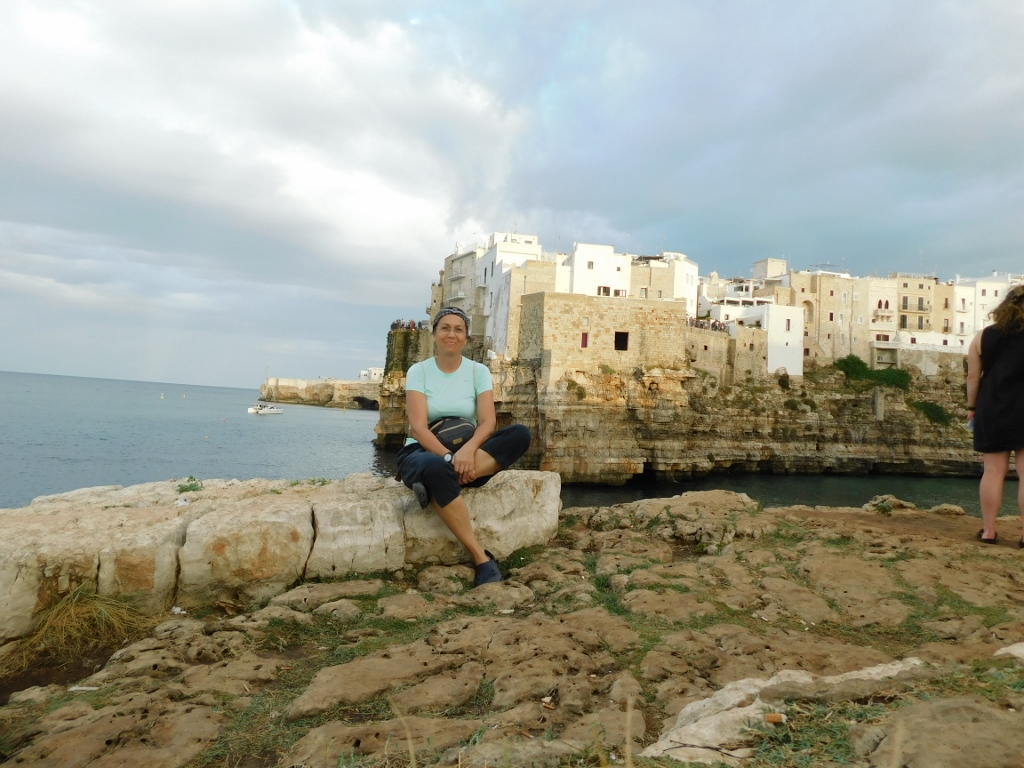 Me in Polignano a Mare
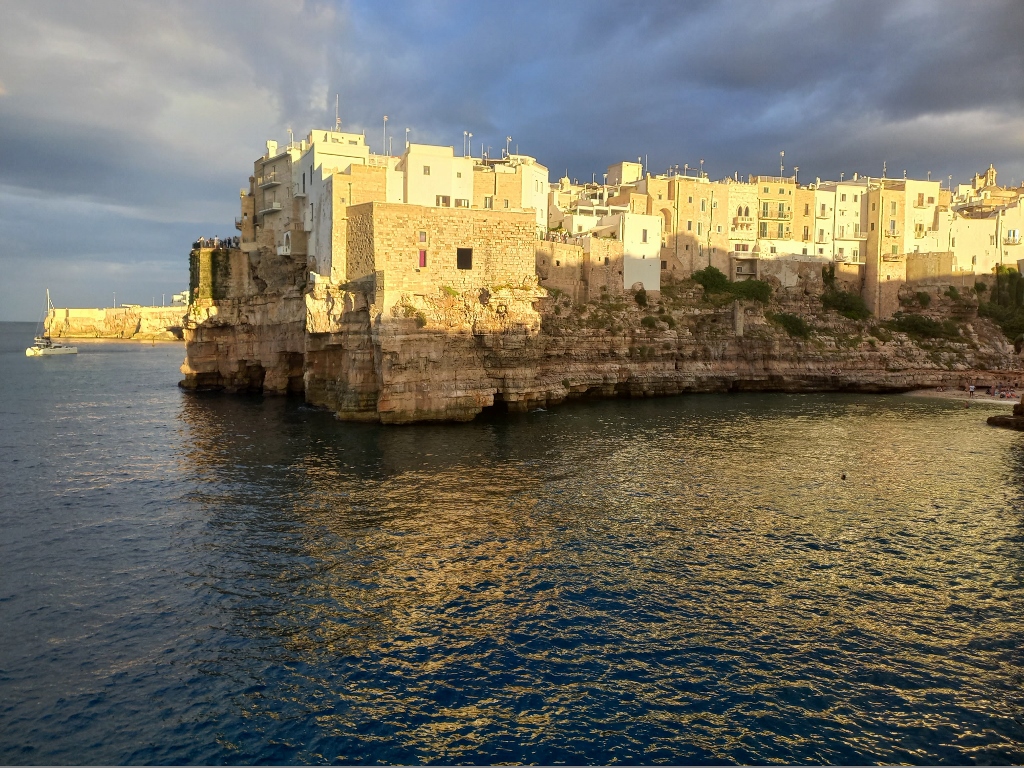 Polignano a Mare
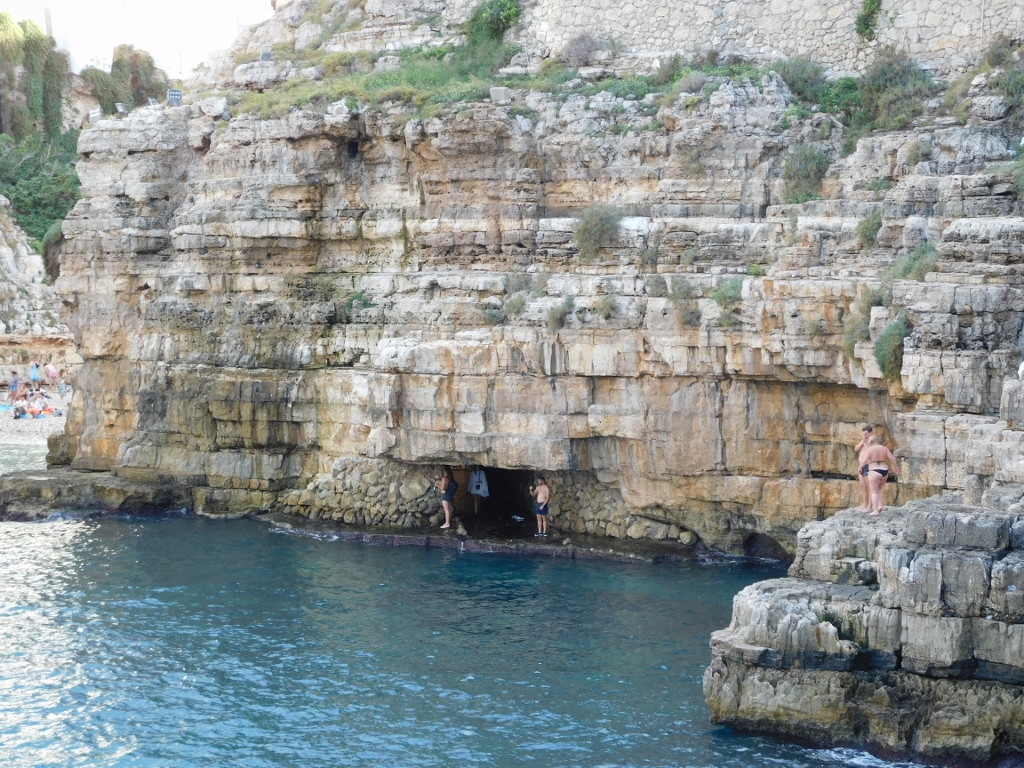 Polignano a Mare, a detail
All that singing made me thirsty, so I headed back to the plateau and sat down at a café.
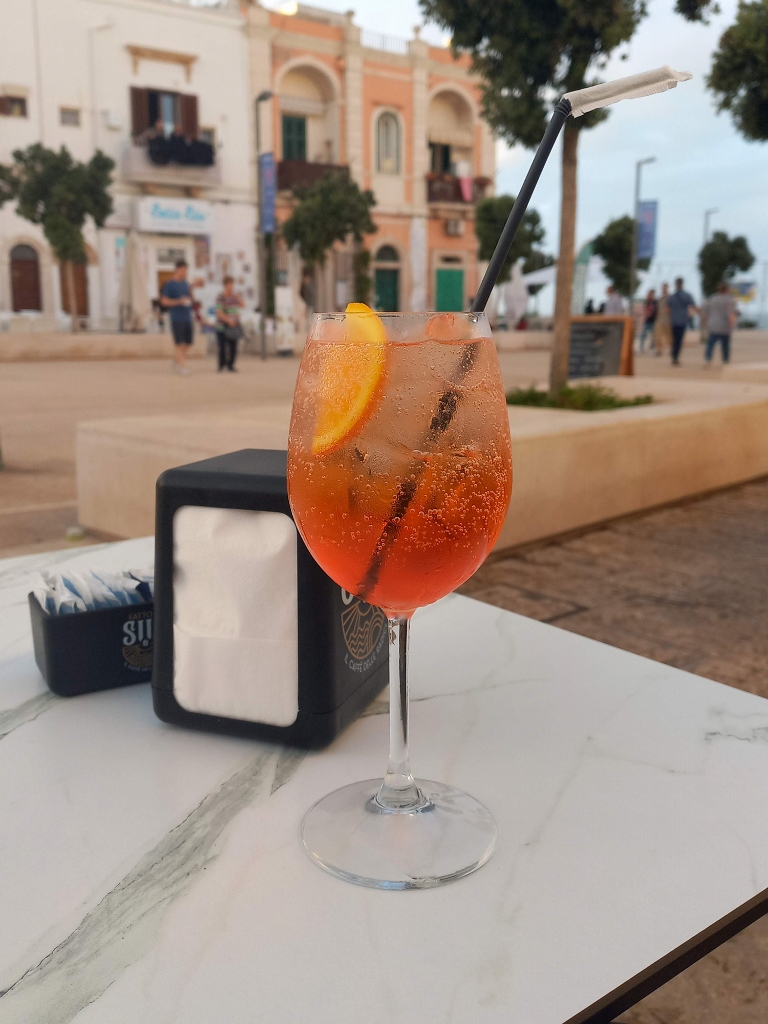 Polignano a Mare
After a lovely break, I headed back towards the historic centre of Polignano a Mare and in the next picture, you can see the bridge that crosses the gorge with the beach.
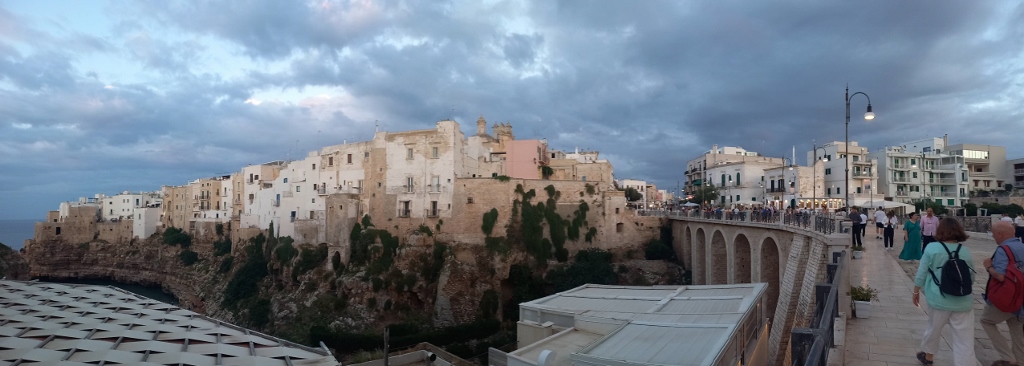 Polignano a Mare
By now, the day was drawing to a close and the colours were different, which also inspired me to capture the moment.
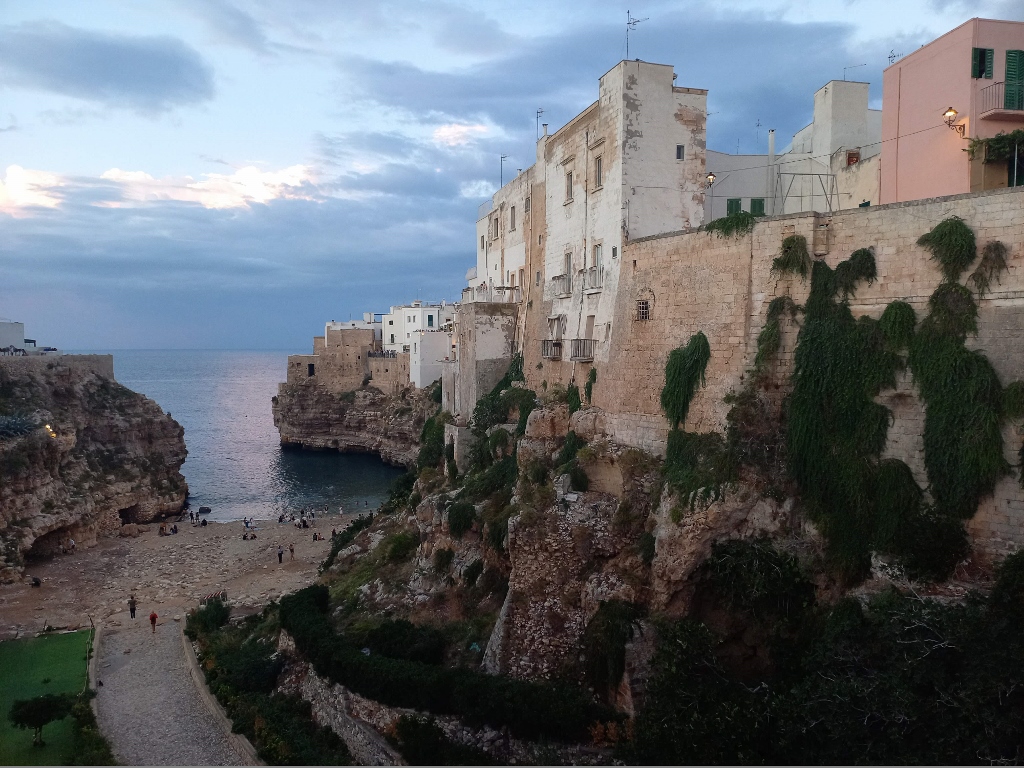 Polignano a Mare
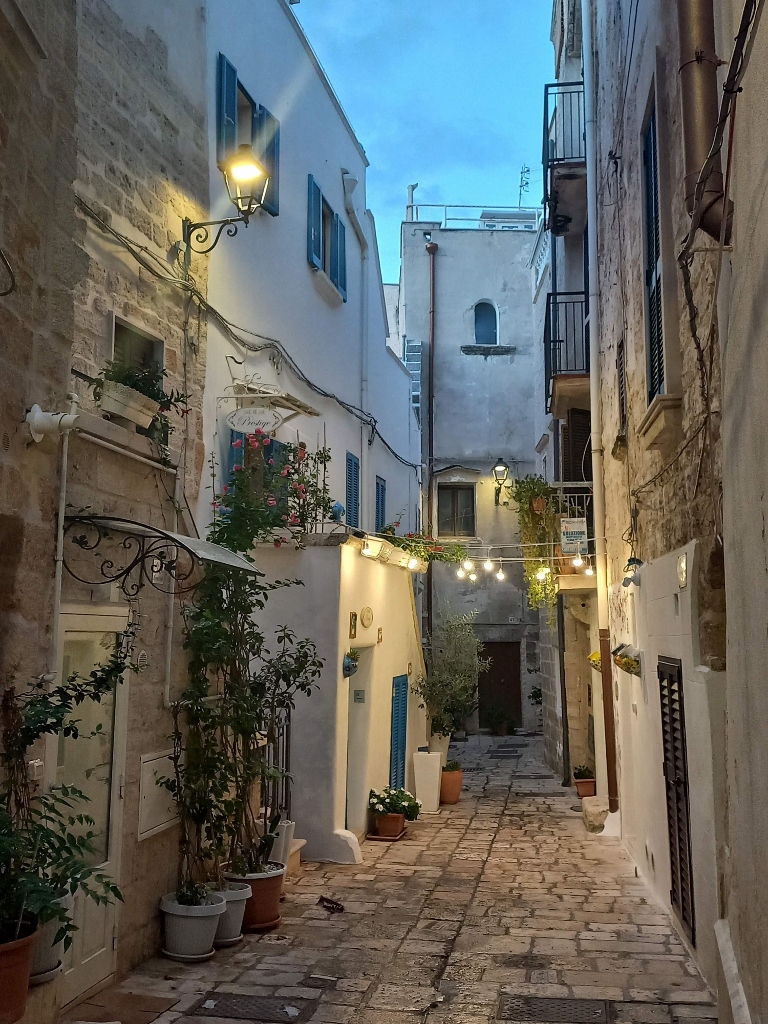
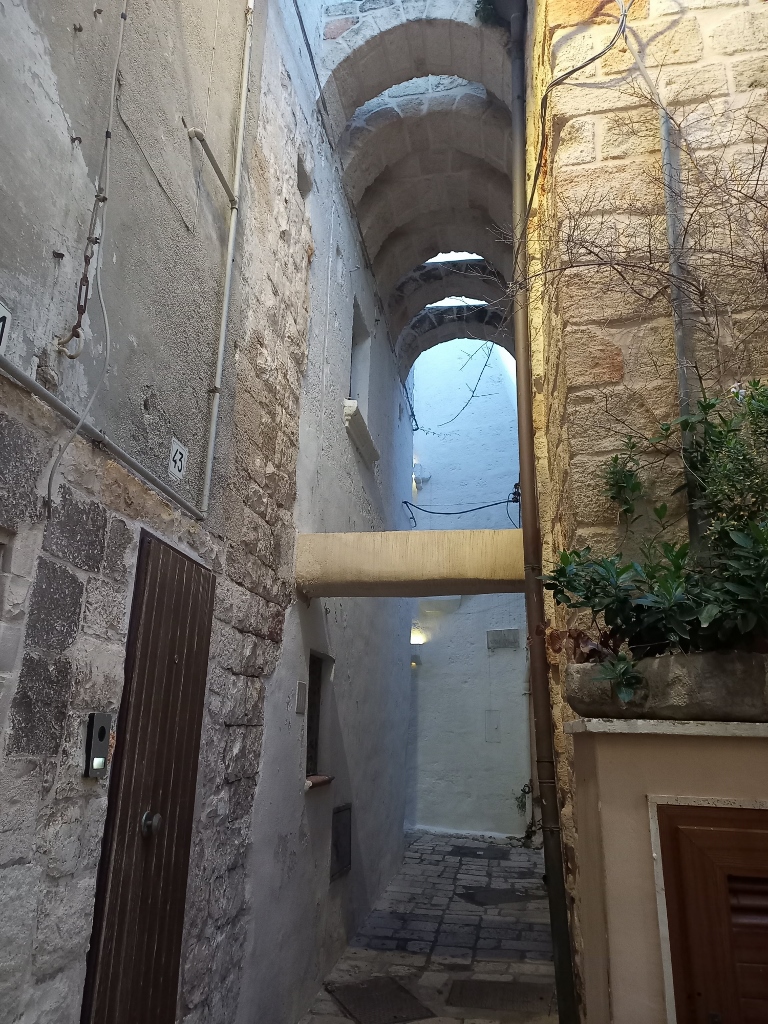
I once again wandered into the old part of town, mainly to visit the church, but along the way, I took photos of various details. Some of them already had the evening lights turned on.
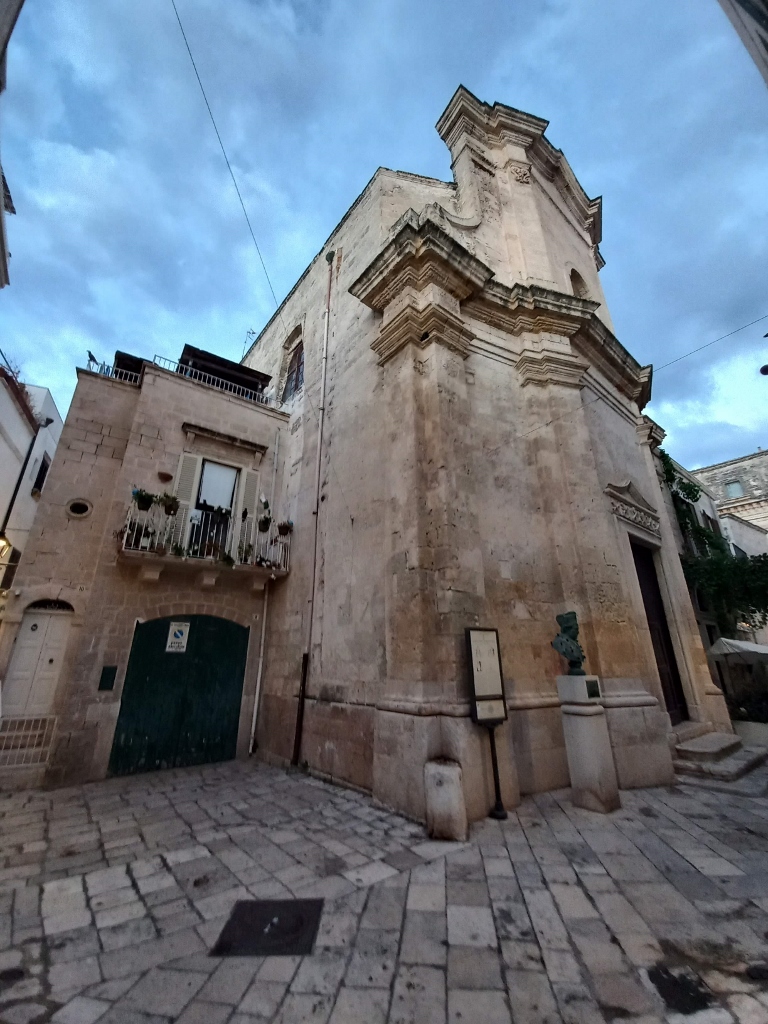 Polignano a Mare
 Polignano a Mare
 Polignano a Mare
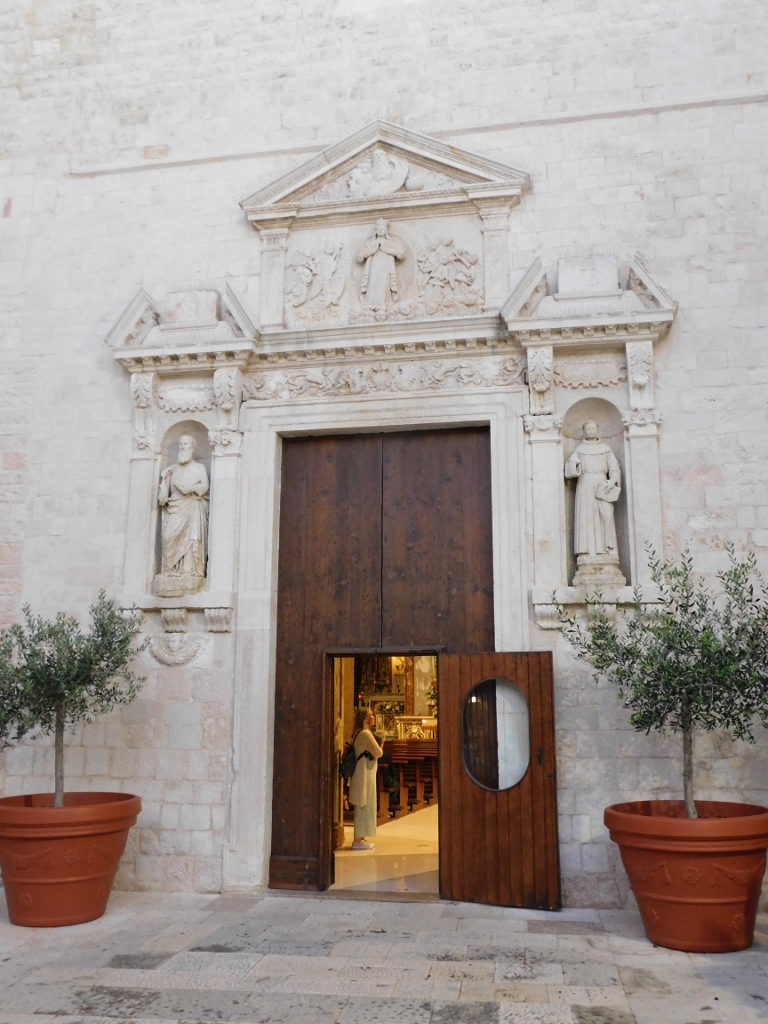
I made my way back to Piazza Vittorio Emanuele II and now I could finally enter the church.
 Polignano a Mare
 Polignano a Mare
I’ve already mentioned that it is the Church of Saint Mary of the Assumption.
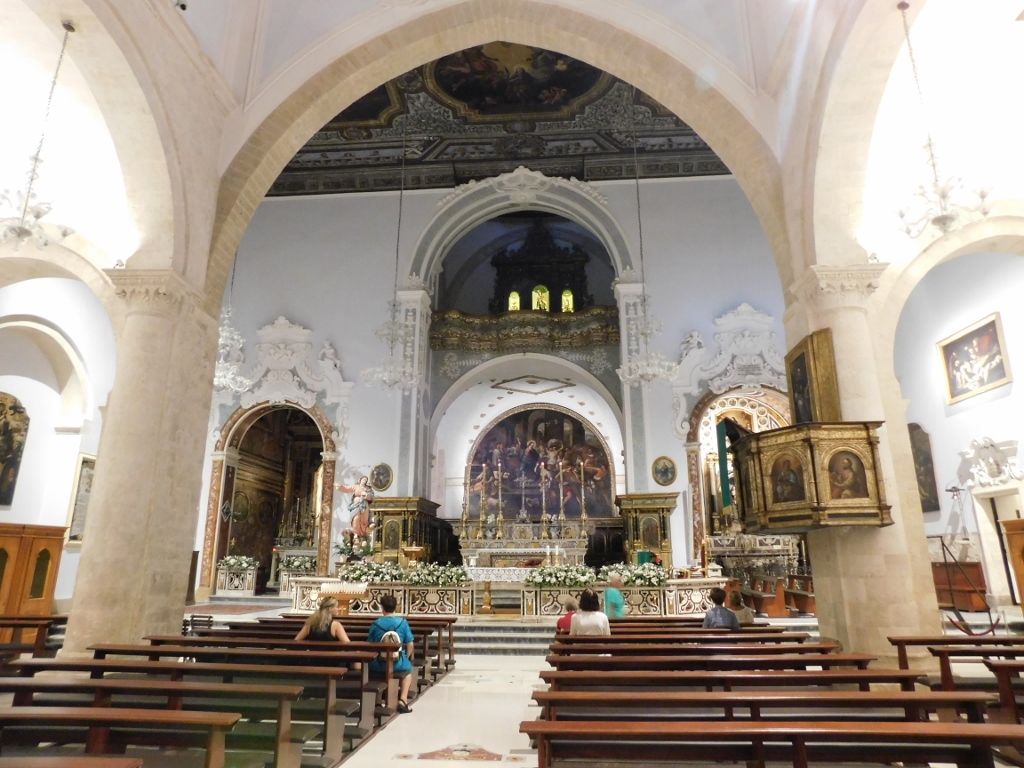 Polignano a Mare
After visiting the church, I left the old part of the town once again and headed towards the train station.
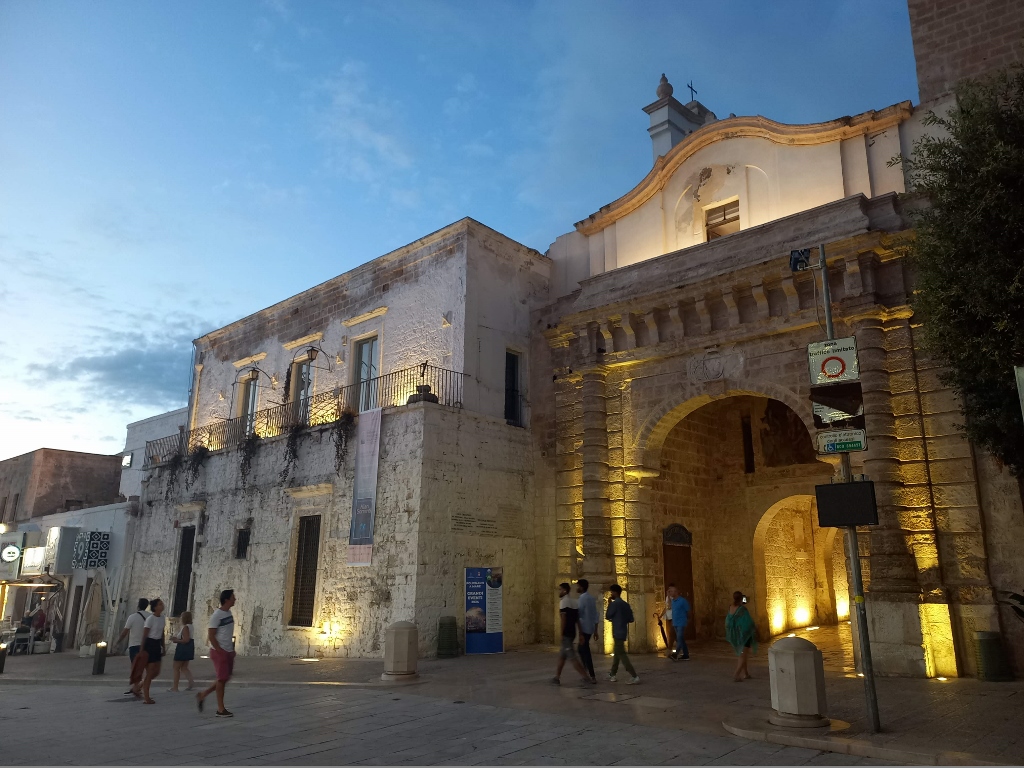 Polignano a Mare
Soon, I was back in Bari and since I had rented a flat near the train station, everything went smoothly and easily. I even had some leftovers from the focaccia barese I had for lunch, so I ate that and didn’t go out that evening. Besides, I needed to rest well because the next day I was starting my journey through Apulia.