I have to thank my friends Irena and Igor for this trip. These are the friends I already mentioned when we explored part of Fruška Gora together (see: https://www.svudapodji.com/en/fruska-gora/). A few years ago, they also told me that several times they had visited Mount Kosmaj, about 50–60 km south of Belgrade, and I really liked the sound of it, so we started planning to go there together someday. In August 2025, I finally cleared my schedule, while a perfect Saturday came along with sunny but not too hot weather, so I suggested we went. I didn’t even have to work hard to convince them – the plan was set within minutes.
The idea was to go by my car to the Tresije Monastery, take a walk around Mount Kosmaj, and then stop for lunch. Of course, I “took advantage” of the fact that we were using my car and told them we would “have to” stop by a few cultural monuments along the way.
Naturally, they didn’t object. They may not be as devoted to hunting down cultural monuments in Serbia as I am, but they’re both passionate travellers around the world, so they’re always up for following my ideas – and I’m grateful for their trust.
And I didn’t even go overboard this time. I wanted us to visit two cultural monuments first, then go on our planned nature walk, and eventually stop by two more cultural monuments on the way home.
Here’s a map showing all the places we ended up visiting:
We took the motorway towards Niš, then exited at the Mladenovac turnoff and continued on to the village of Nemenikuće near Sopot. This is where the Old House of the Žujović Family, which was the first immovable cultural property on my list, is located.
Even though I had already marked the location of the house on my map before the trip, once we were on site, it turned out we had to search for it a bit. First, we found a convenient spot to leave the car (I asked a woman in one of the houses by the road if I could park in front of their gate since that was the only available space, and I didn’t feel like returning by car uphill some hundred metres). Then we set off according to my map to look for the old house, but it wasn’t very visible from the road. I even thought it might be some dilapidated building that didn’t match the description, but looked old enough. Luckily, Irena spotted the actual house through the trees.
However, getting to it wasn’t so simple.
We reached the gate leading to the property and it was clear we first had to pass by a newer house and only then, behind it, was the old one. But no one was in the yard and I didn’t feel comfortable entering the property without announcing ourselves to someone.
So I walked a bit uphill, where there is a meadow, and just beyond it was another house whose owners were outside. I greeted them and explained what we were looking for and the man very kindly said he would call his neighbour, which he did. So the arrangement was that we would now return to the gate and enter in order to visit the old house.
To make it a bit clearer what kind of layout of buildings and meadows I’m talking about, here’s a photo taken from that elevated spot where I stood. The Old House of the Žujović Family can be seen behind the fence on the right side of the photo.
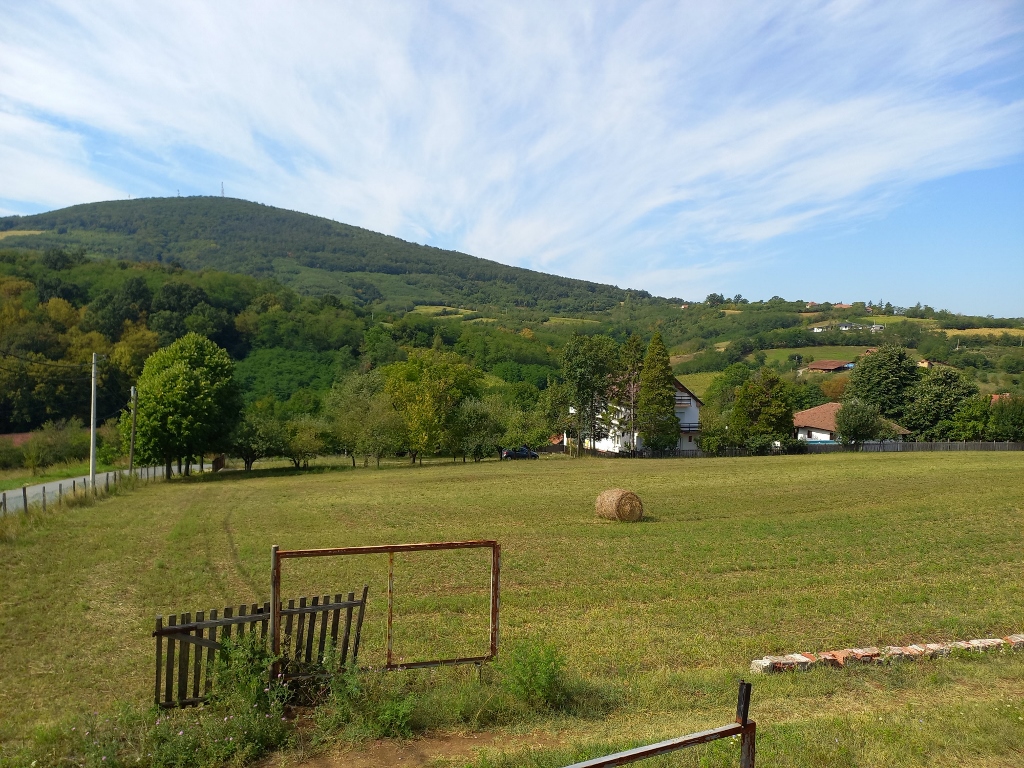 View at the Old House of the Žujović Family and Mount Kosmaj
The hosts, members of the Žujović family, welcomed us very warmly. We all exchanged greetings and then the head of the family led us through a beautifully maintained yard to the old house, which was built in 1827.
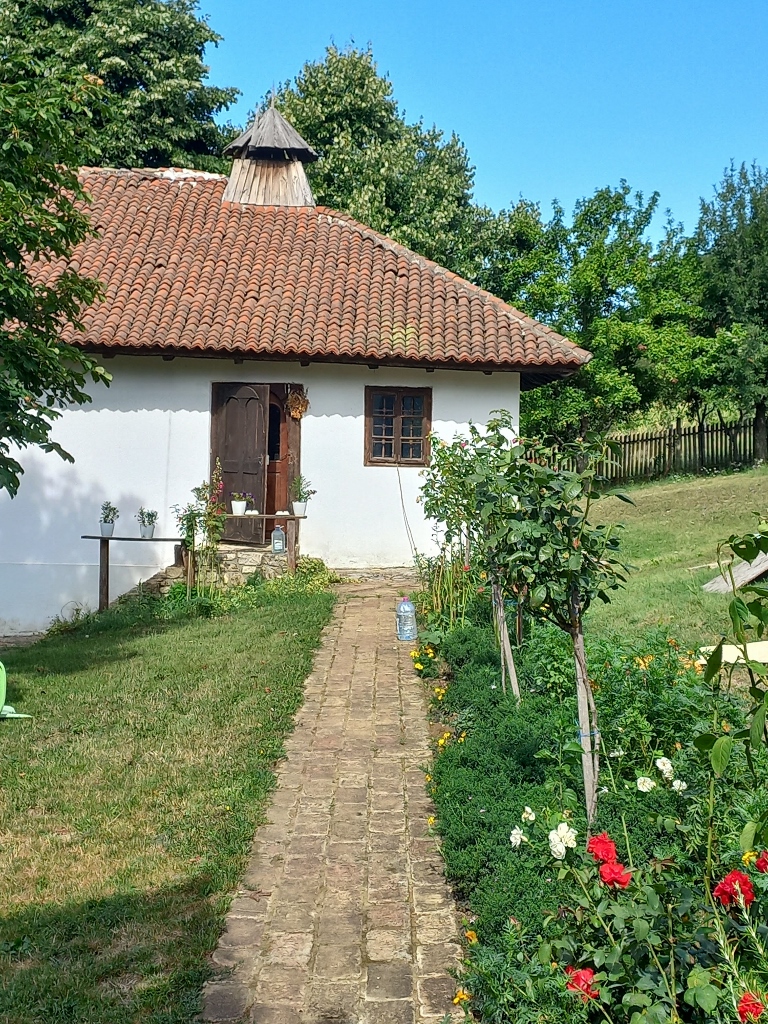 Old House of the Žujović Family
The house consists of a basement and foundations made of rubble stone, and an upper floor built using a half-timber construction with wattle and daub infill. The floor plan is rectangular (10 x 7 m), and the four-sided roof, covered with traditional ceramic Monk and Nun roof tiles (ćeramida), features wide eaves on all sides. At the top, there's a beautifully crafted chimney that crowns the structure.
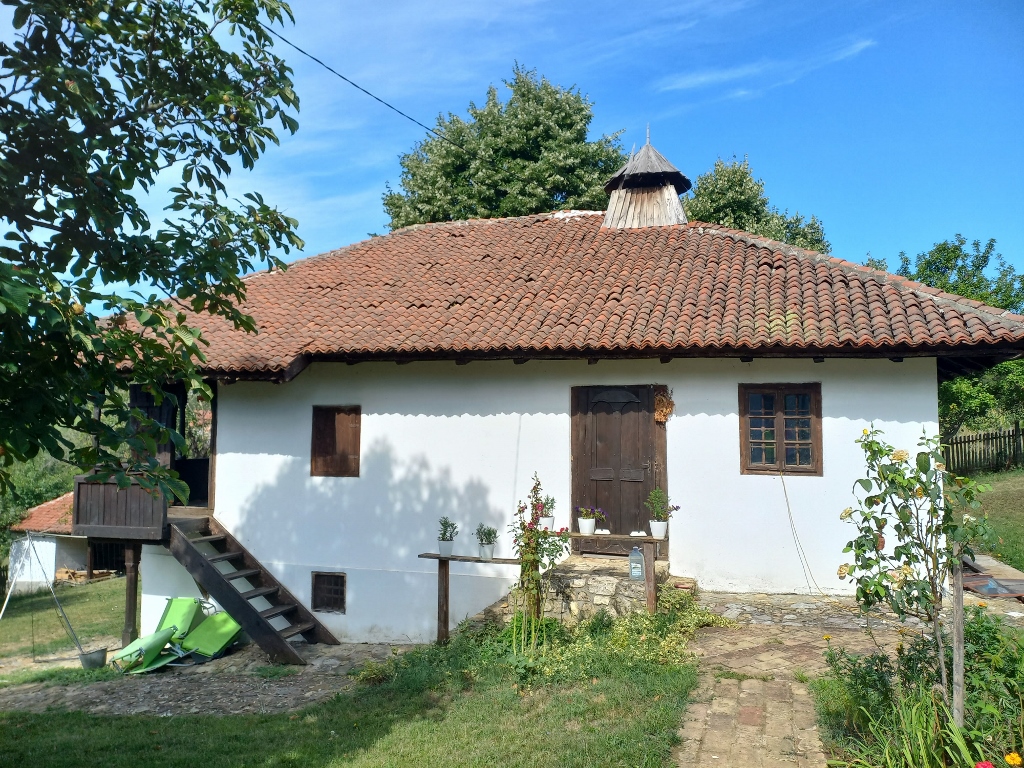 Old House of the Žujović Family
The host told us that the house had been reconstructed and based on what I had also read, during the works, the experts were able to determine that some modifications had been made over time. Still, the building remains an authentic example of the Balkan architectural style. Some parts are original, while others have been replaced, and the host took us through the residential section, which consists of four rooms.
He kept apologising for the interior not being “tidier,” but it was clear, since no one currently lives there, that the space is still being prepared for habitation. That didn’t really matter to me; I was more focused on the details, like the impressive woodwork, including the windows with their wooden grilles and shutters.
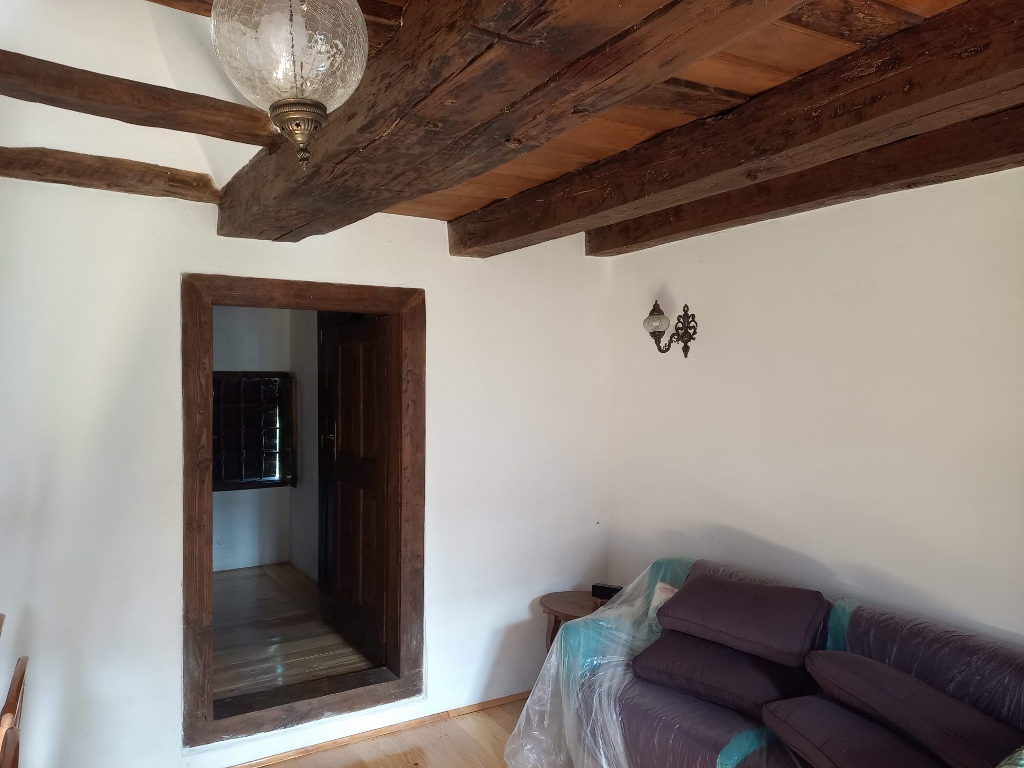 Old House of the Žujović Family, a detail
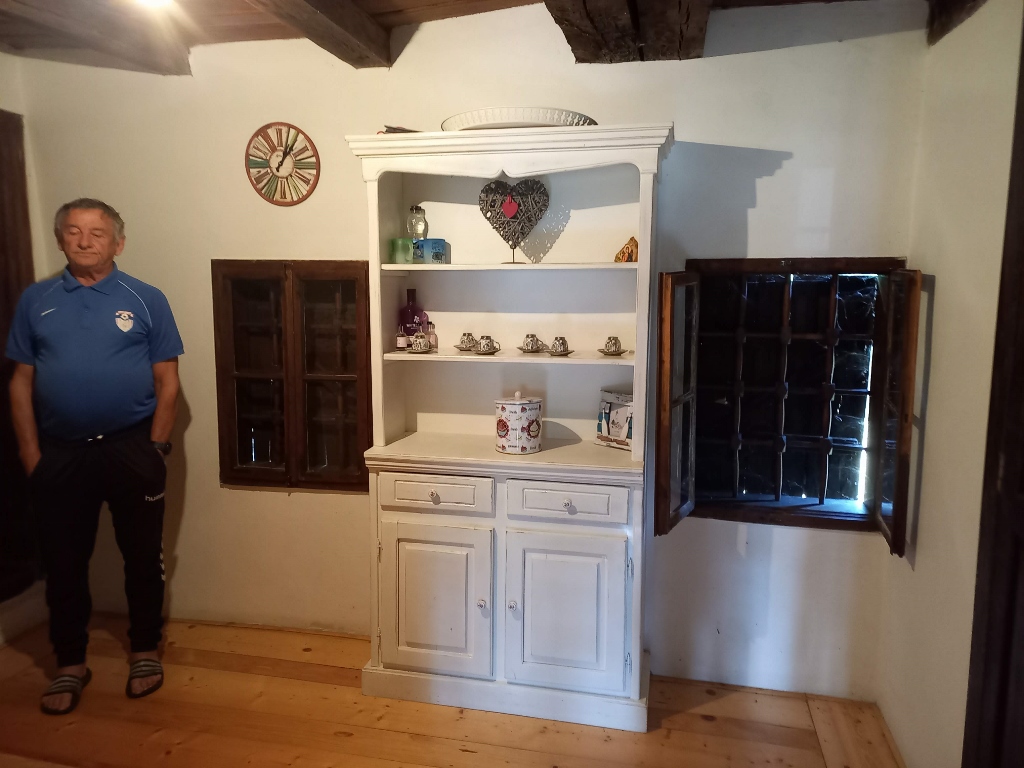 Mr. Žujović in his old family house
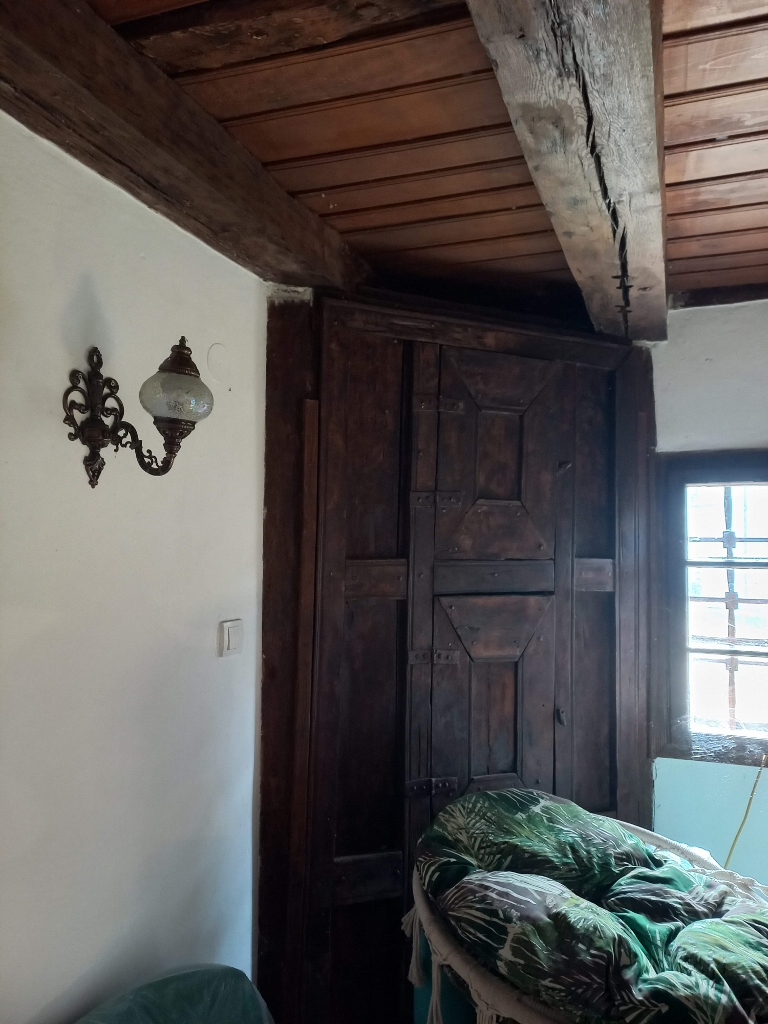 Old House of the Žujović Family, a detail
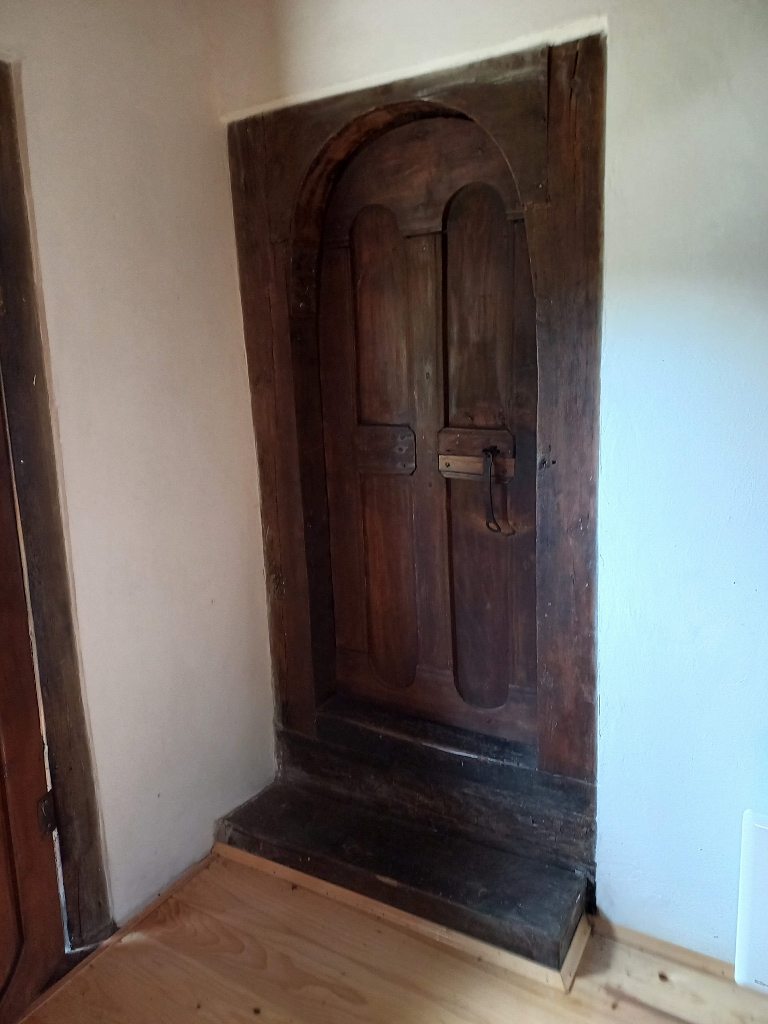 Old House of the Žujović Family, a detail
In the entrance room, there is also a chimney with sloping sides (wider at the base and narrowing toward the top), so I assumed, which the host confirmed, that there was once an open hearth there. It's believed that it was later replaced with a newer, semi-enclosed type, but in any case, a beam still remains across the wider lower part of the chimney, where a cooking cauldron was likely once hung over an open fire. Today, the hosts have placed beautiful decorations there.
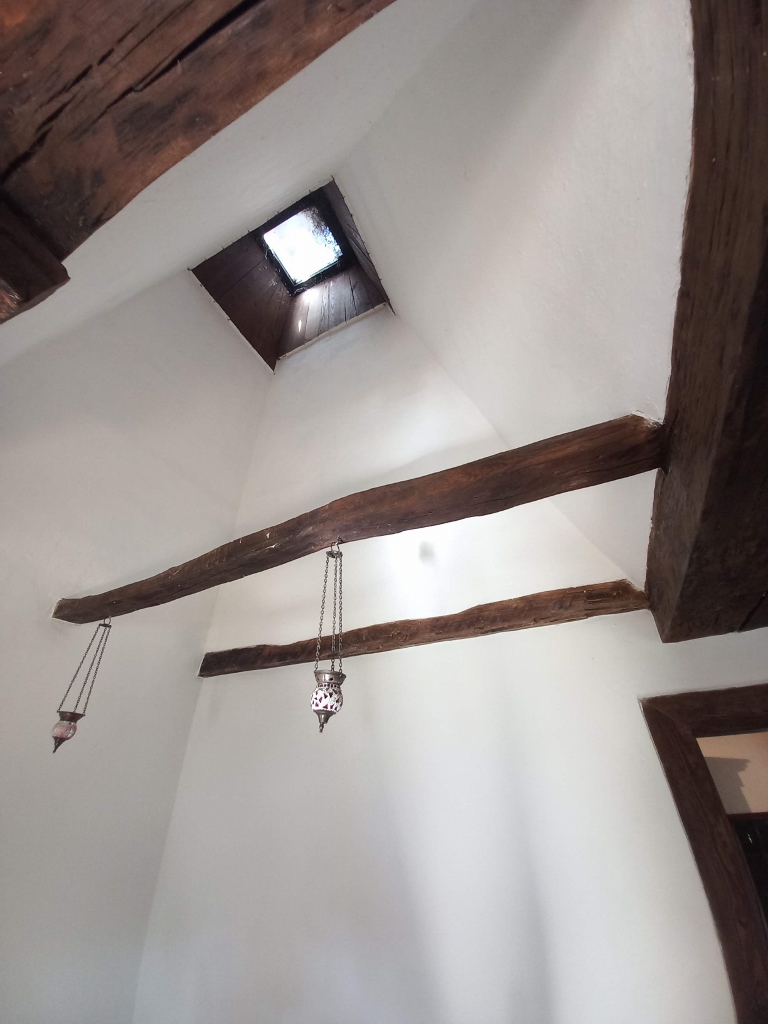 Old House of the Žujović Family, a detail
On the southern side of the house, there is a porch elevated on pillars, representing a variation of a chardak or, as we would more likely call it today, a balcony. The porch is accessed via an external staircase, while the fence is made of vertically placed wooden planks set within a wooden frame.
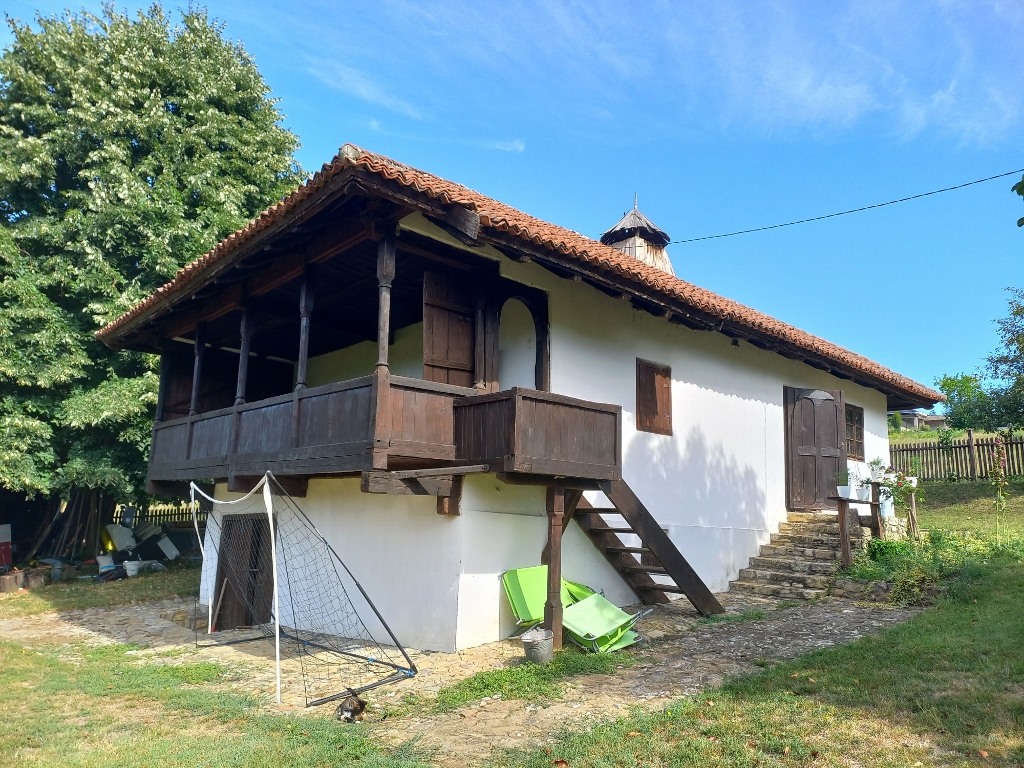 Old House of the Žujović Family
In addition to offering a better view of these details, the next few photos clearly show the ceramic roof tiles (ćeramida), the beautiful chimney, as well as features of the eaves, the door leading to the porch, the wooden plank fence, and the supporting pillars.
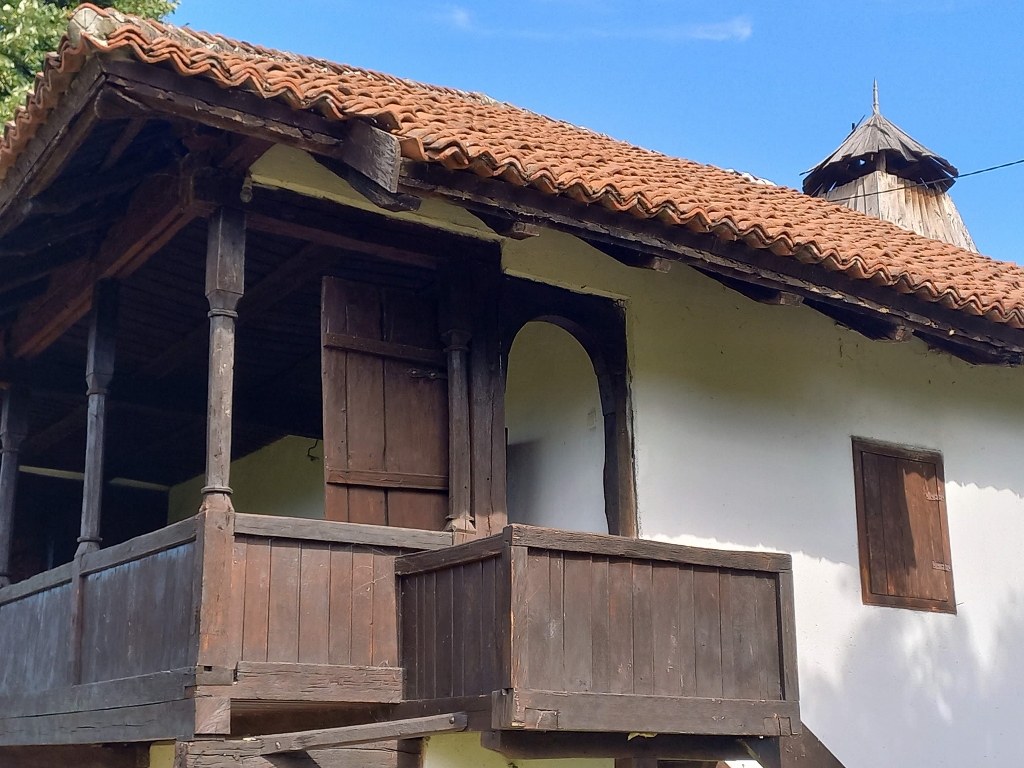 Old House of the Žujović Family, a detail
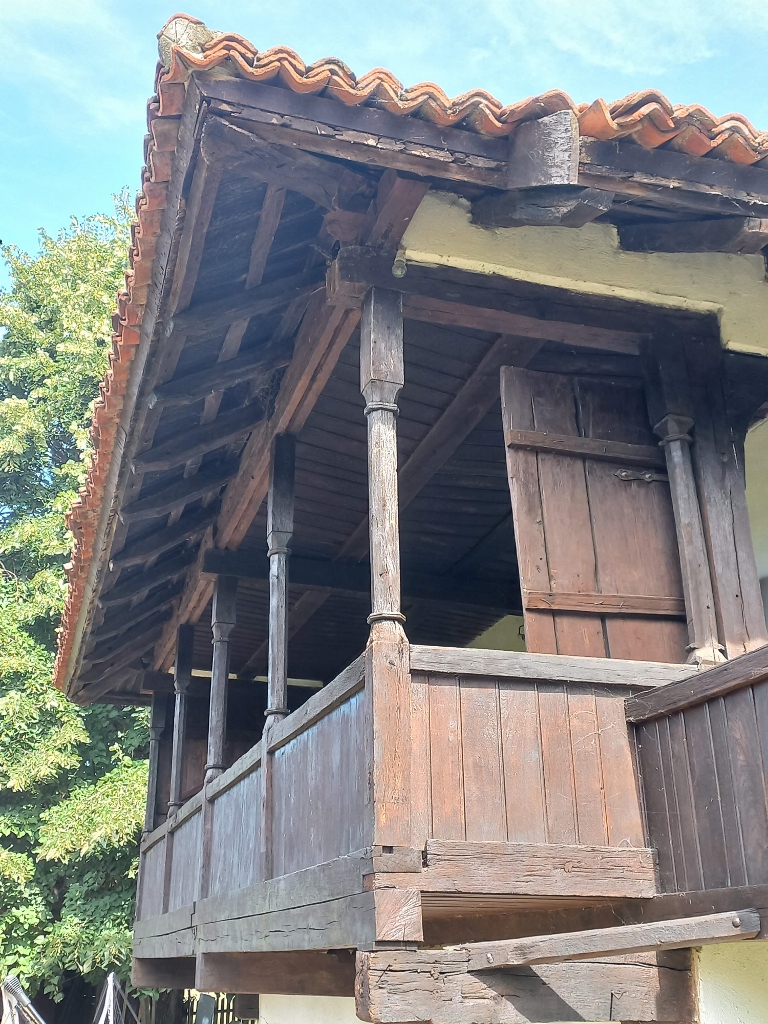 Old House of the Žujović Family, a detail
Here, too, I had to take a peek, so I climbed onto the porch and took a few photos.
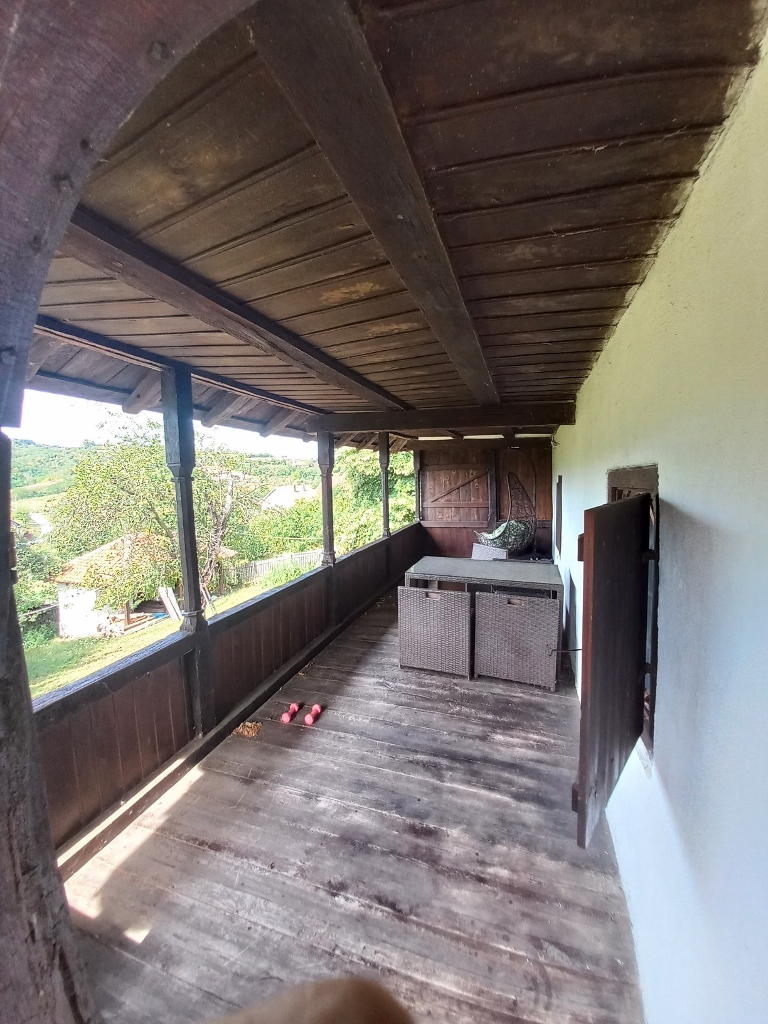 Old House of the Žujović Family, a detail
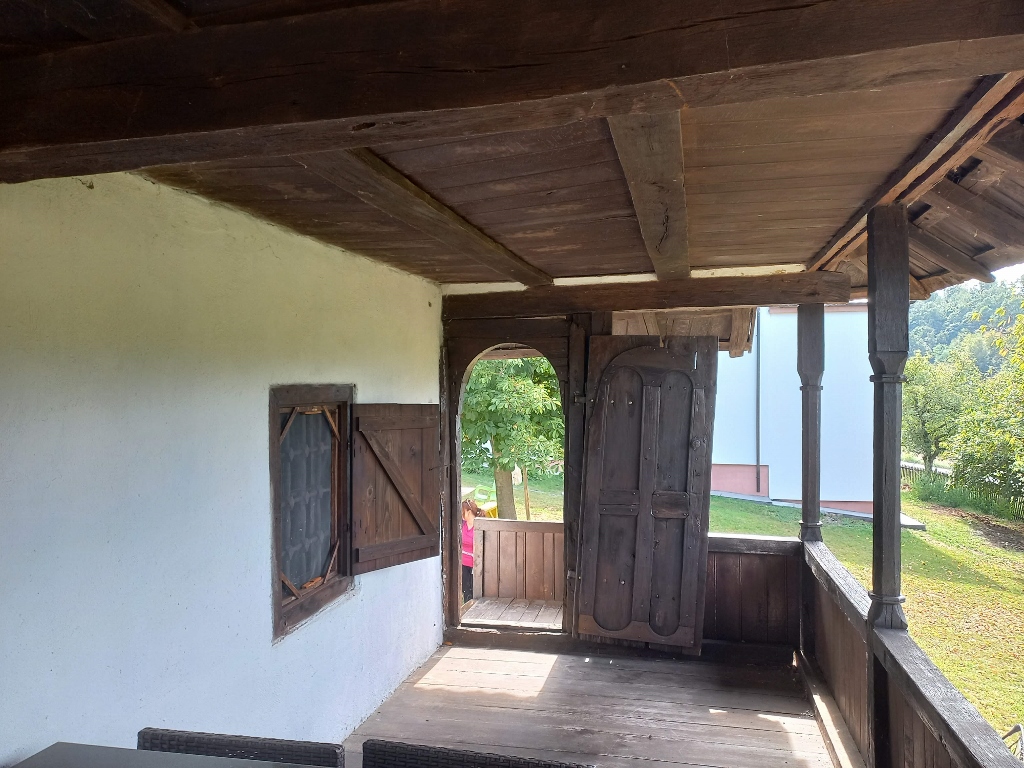 Old House of the Žujović Family, a detail
I especially liked the house’s position and the beautiful view from the porch.
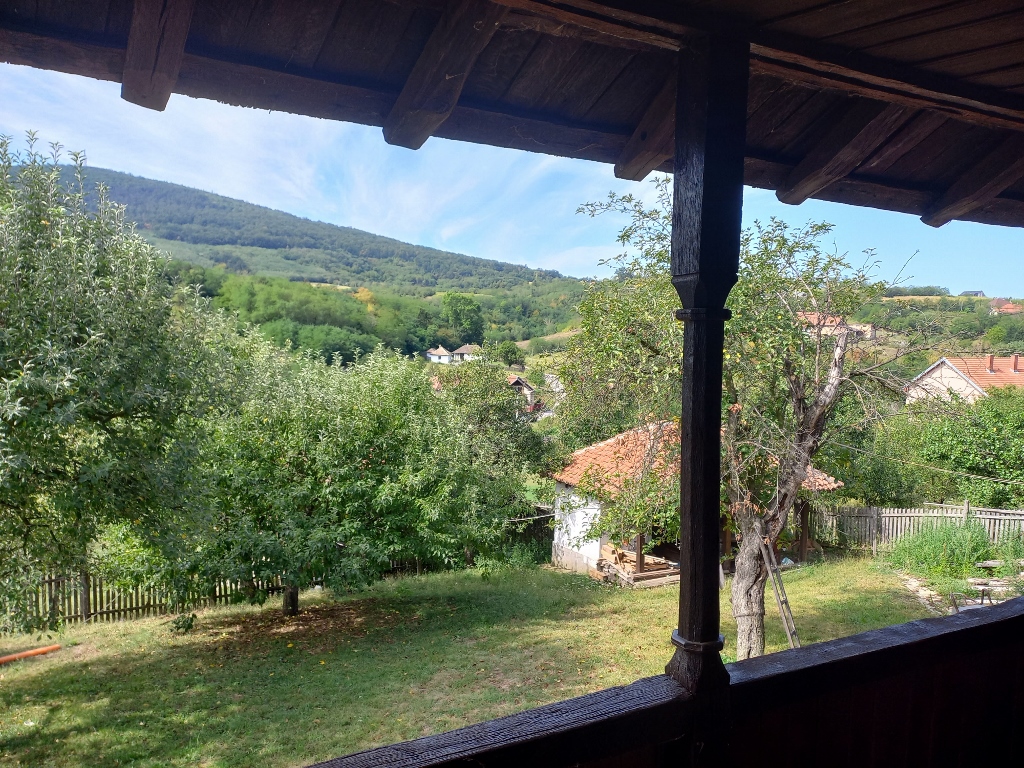 Old House of the Žujović Family, a detail
Then our wonderful host took us down to the basement, where you can clearly see how the foundations and the basement walls are made of rubble stone, while wooden pillars support the upper floor.
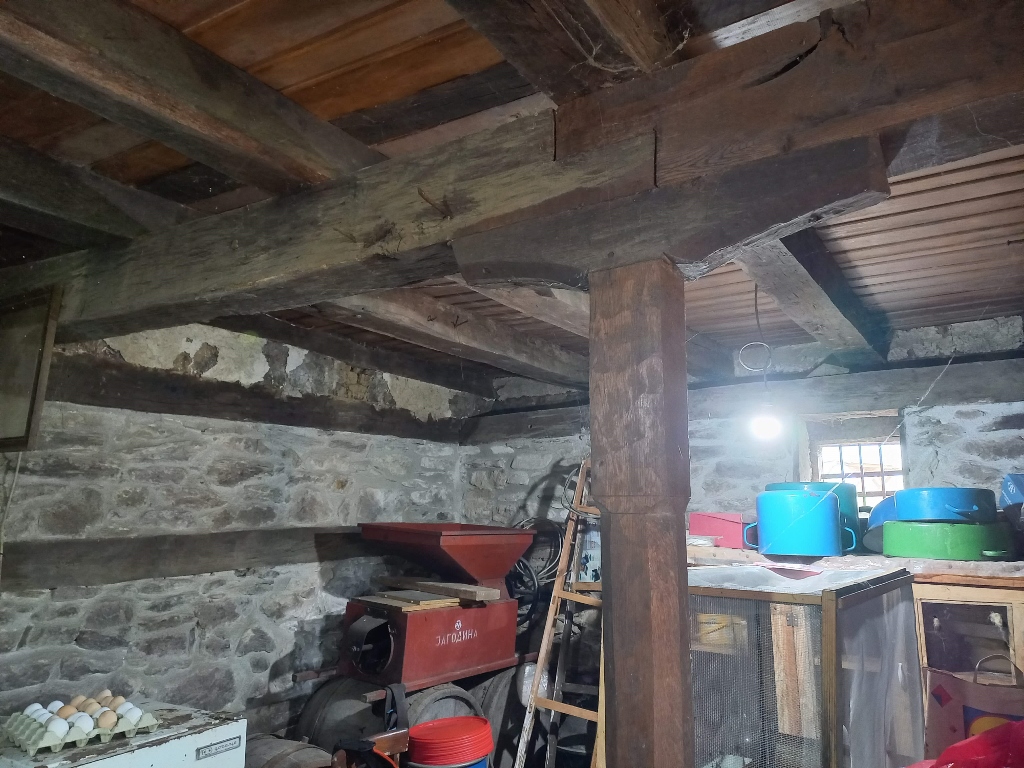 Old House of the Žujović Family, a detail
While Irena and Igor chatted a bit more with the host and played with the cats, I took the opportunity to capture this beautiful place on camera.
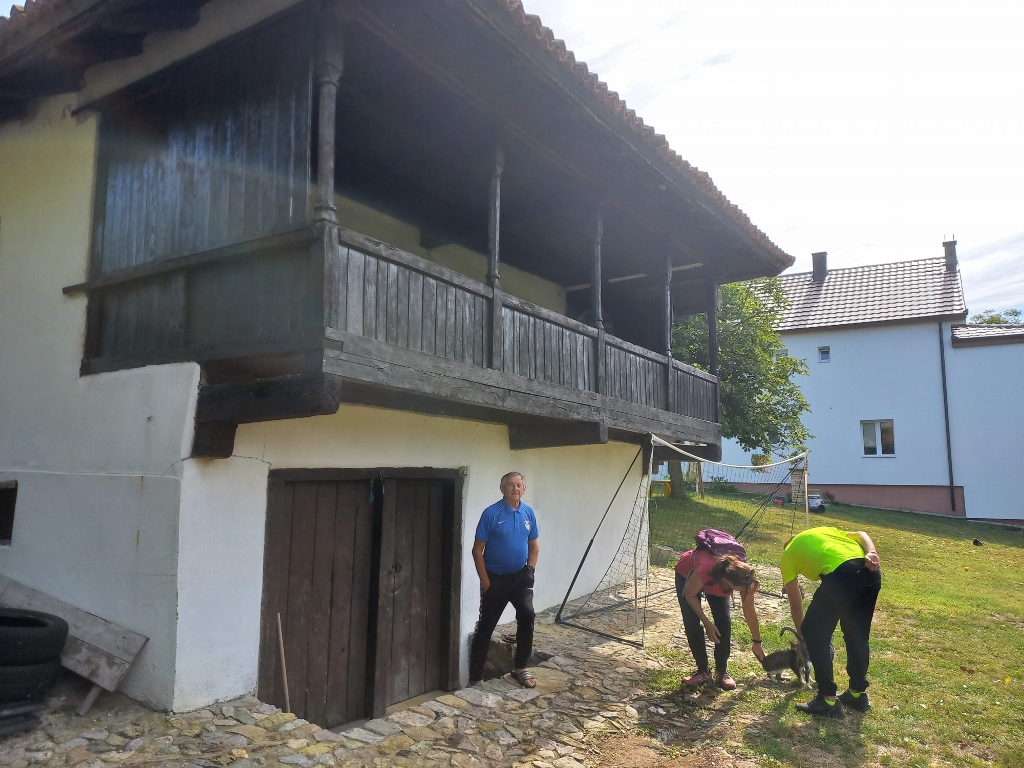 Old House of the Žujović Family
In conclusion, due to its construction method and materials, as well as the organisation of the interior space, this house, typical for the Belgrade area in the second half of the 19th century, represents an exceptionally successful example of vernacular architecture. Because of all this, it has also been declared a cultural monument of great importance.
However, as if it weren’t enough that they welcomed us and showed us around the old family house, our hosts also offered us coffee, which we politely declined as we still had other plans. Then they told us they had something we couldn’t refuse – their grapes growing some 30 m away. I think it was some of the sweetest grapes I’ve ever eaten in my life, though maybe it was just my perfect “zen moment.”
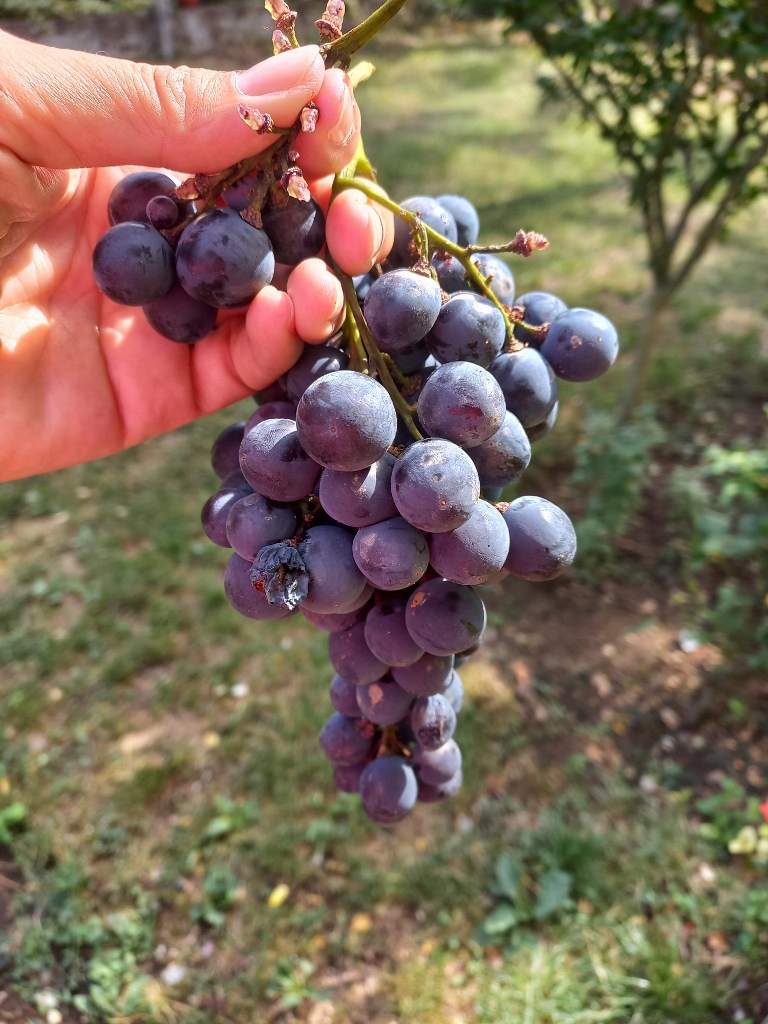 Hospitality at the Žujović family is boundless
After saying goodbye to our hosts, we drove to the nearby Kastaljan Monastery, which represents an immovable cultural property.
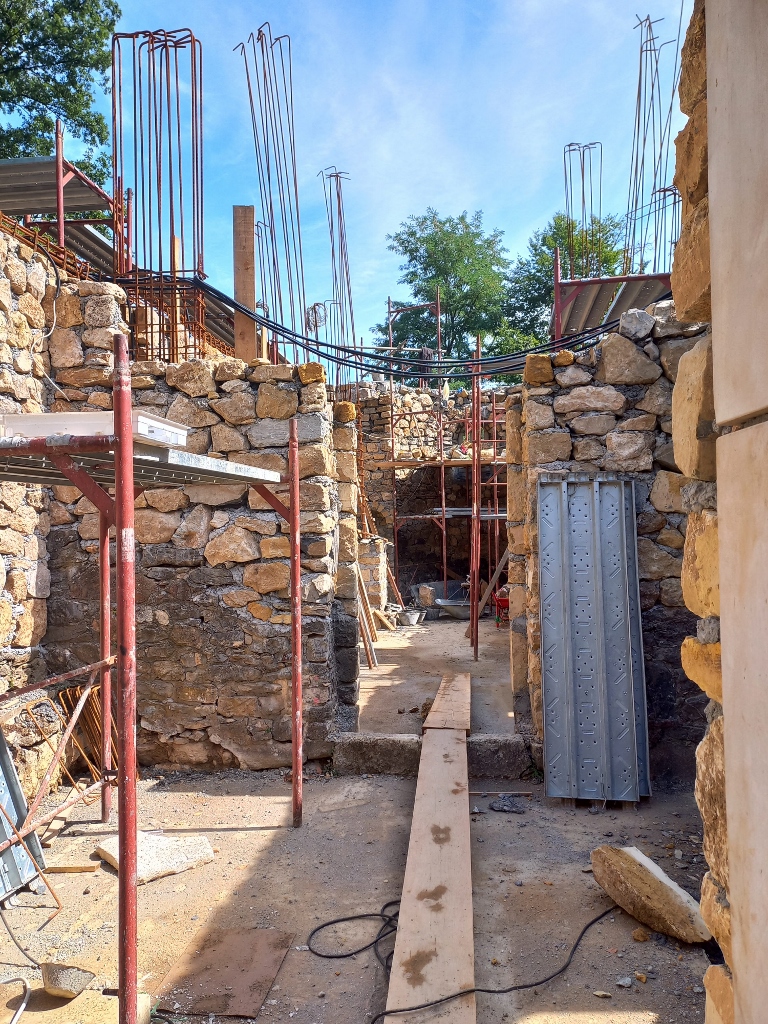
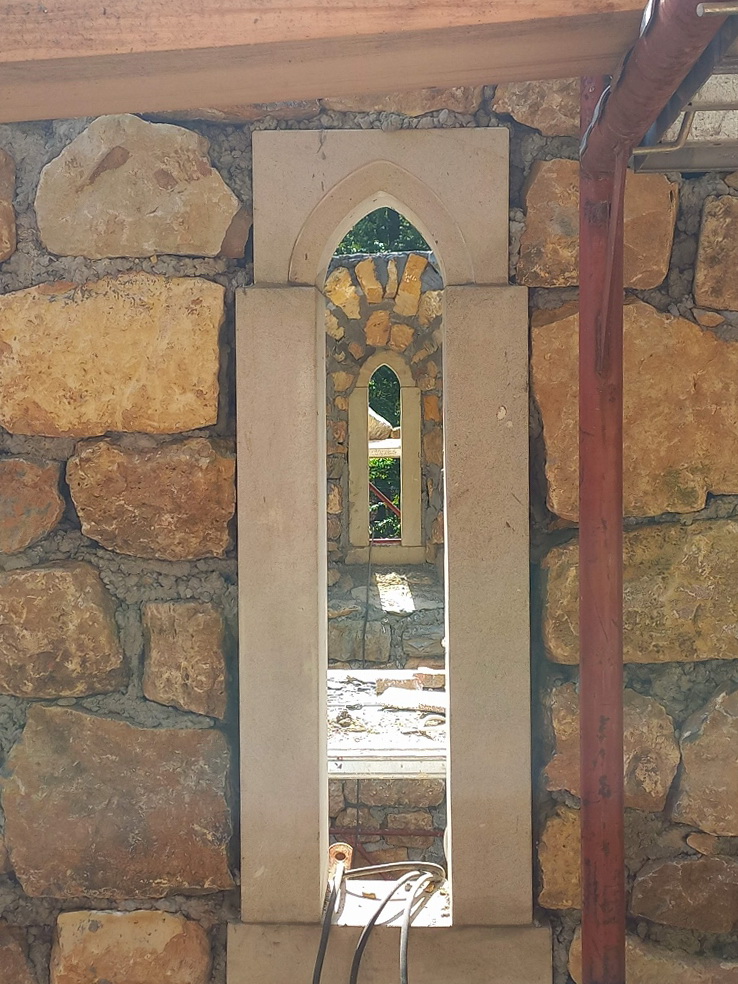
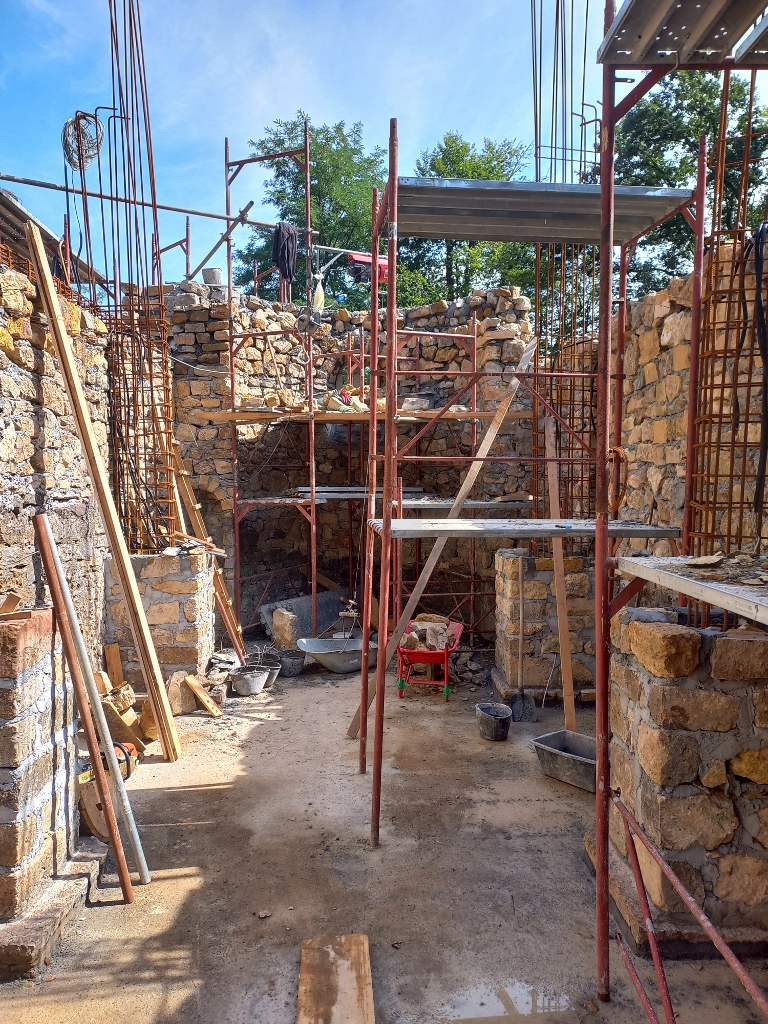
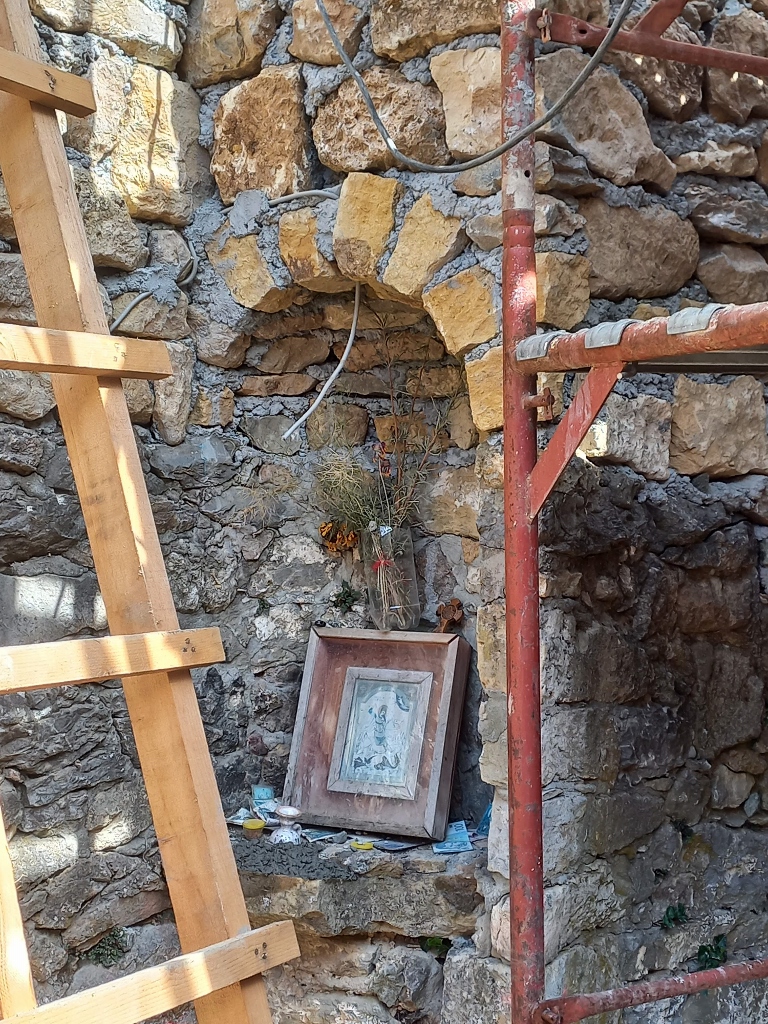
My materials mentioned the remains of the monastery complex, but when we arrived, we encountered a completely unexpected situation: the monastery was undergoing restoration.
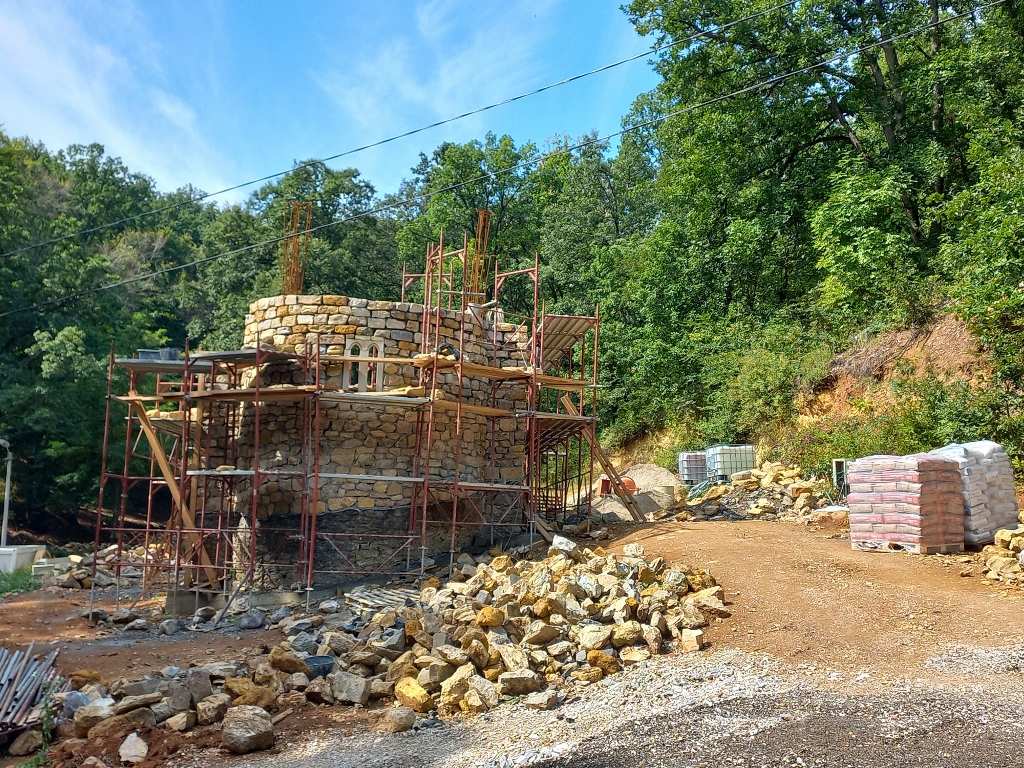 Kastaljan Monastery in August 2025
It is believed that the original monastery dedicated to St. George was built in the 14th century on the foundations of a Roman castrum from the 2nd or 3rd century, and the church was constructed in the style of the Raška architectural school. The church was restored in the 15th century when Despot Stefan Lazarević added a dome. By the way, Despot Stefan Lazarević was also the founder of the Pavlovac Monastery, which is located on the slopes of Kosmaj as well (see: https://www.svudapodji.com/en/south-of-belgrade/).
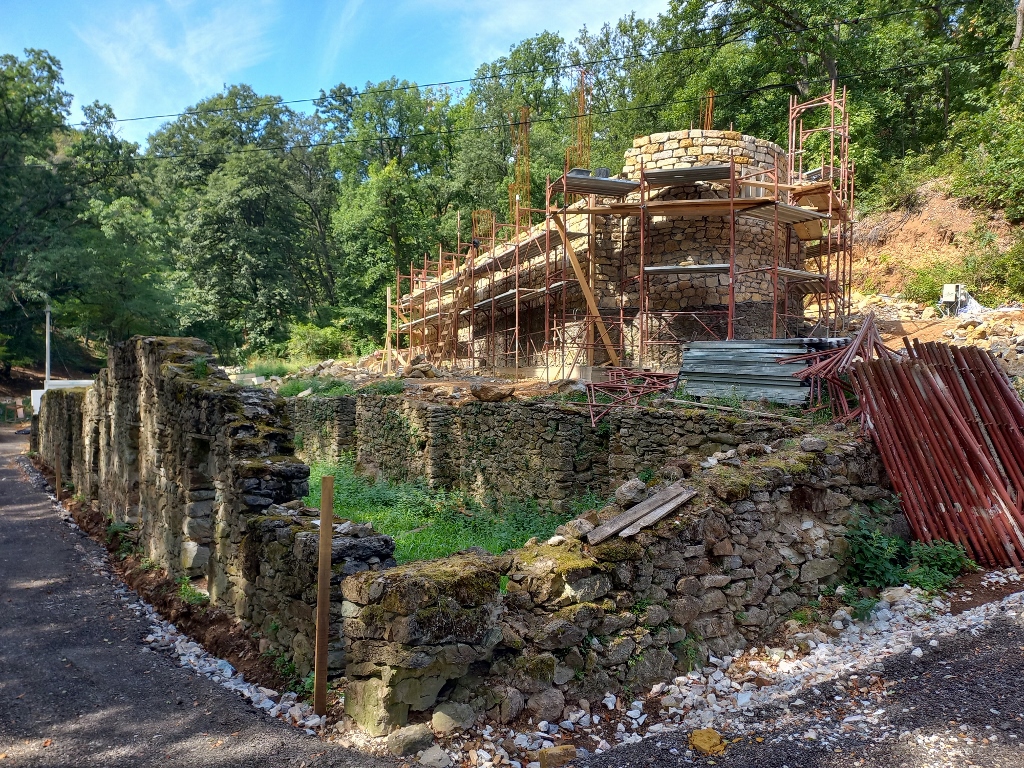 Kastaljan Monastery in August 2025
As for the Kastaljan Monastery, it was destroyed at the end of the 17th century and over time was completely buried, but was literally excavated in the late 1960s and early 1970s.
Meanwhile, the area around the Kastaljan Monastery was the starting point of a decisive counterattack at the end of 1914 during the famous Battle of Kolubara (World War I), which is also mentioned in the travelogue I linked above.
The church (12.5 x 6 m) is the oldest part of the monastery complex, which also included a refectory, a dormitory and a necropolis. The refectory (18 x 5.5 m) dates back to the 15th century, while the dormitory is somewhat younger. Both buildings had a ground floor and an upper floor.
So, in August 2025, as previously planned, restoration work on the monastery was underway. When we arrived, the workers were on a break, sitting at one of the wooden picnic tables on a small clearing near the monastery. We greeted them, then ventured among the restored monastery remains and took a look around.
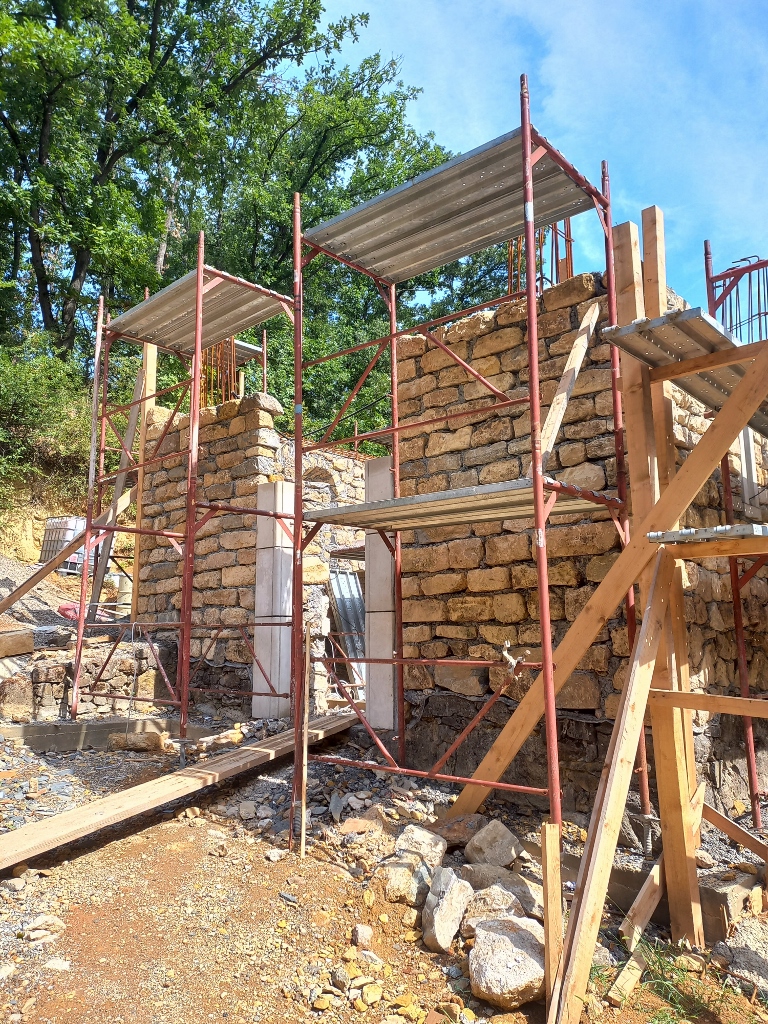 Kastaljan Monastery in August 2025, a detail
 Kastaljan Monastery in August 2025, a detail
 Kastaljan Monastery in August 2025, a detail
 Kastaljan Monastery in August 2025, a detail
 Kastaljan Monastery in August 2025, a detail
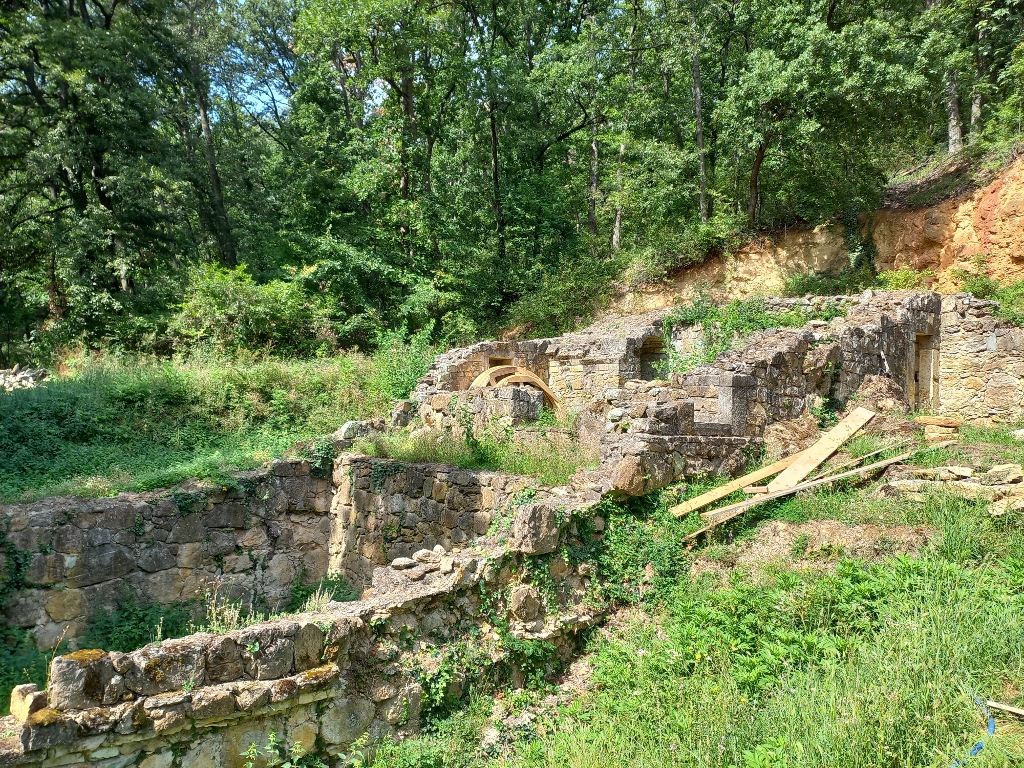 Kastaljan Monastery in August 2025, a detail
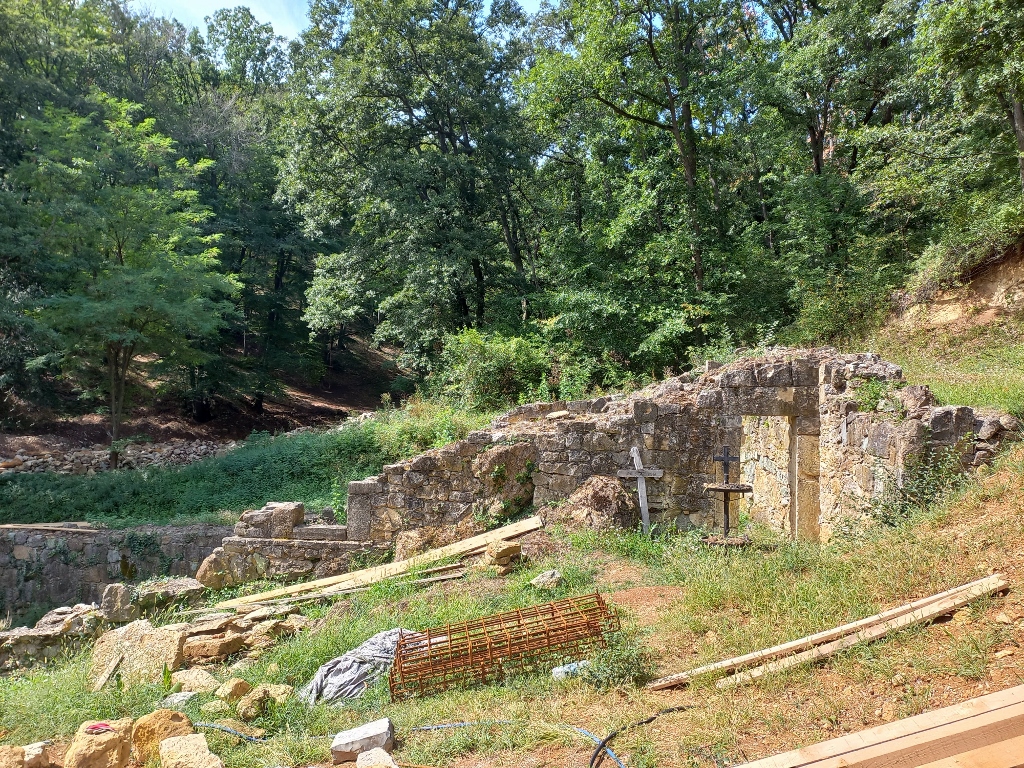 Kastaljan Monastery in August 2025, a detail
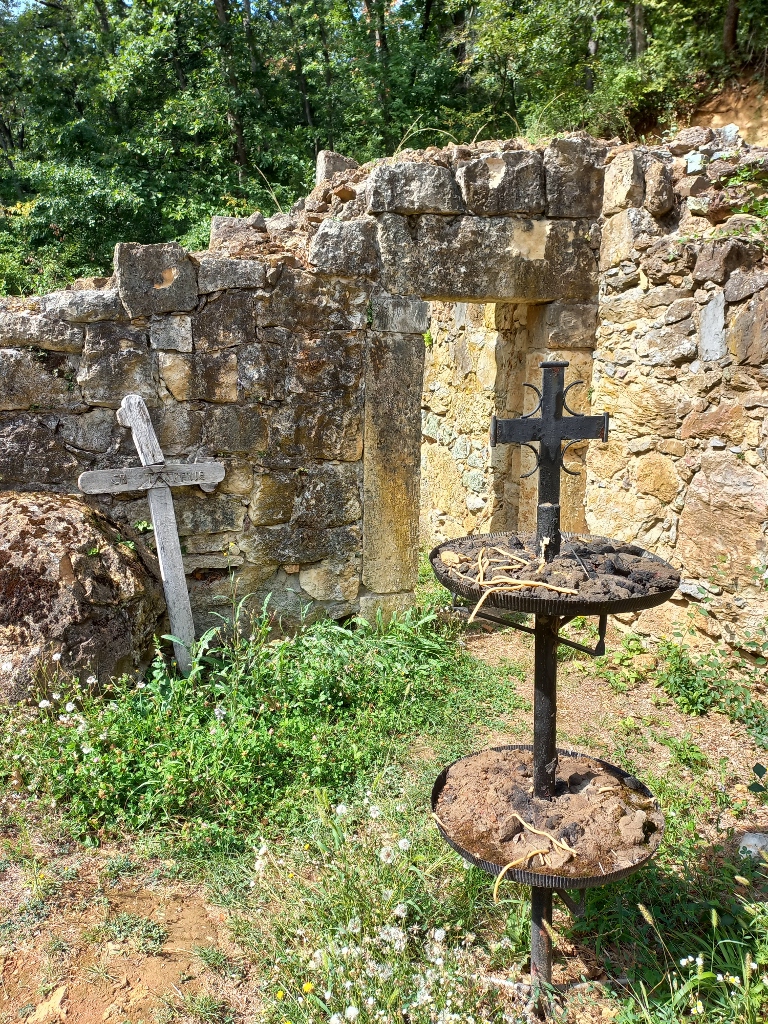 Kastaljan Monastery in August 2025, a detail
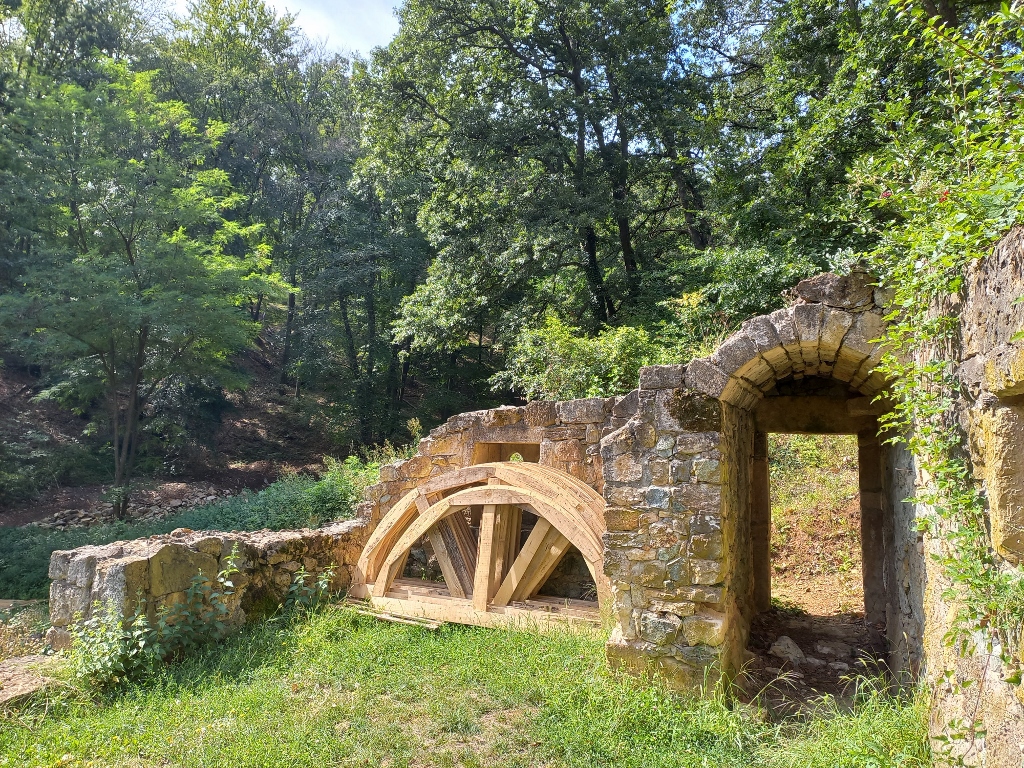 Kastaljan Monastery in August 2025, a detail
As we were heading back towards the main road after visiting Kastaljan Monastery, I stopped briefly to capture the surroundings (Mount Kosmaj was behind me).
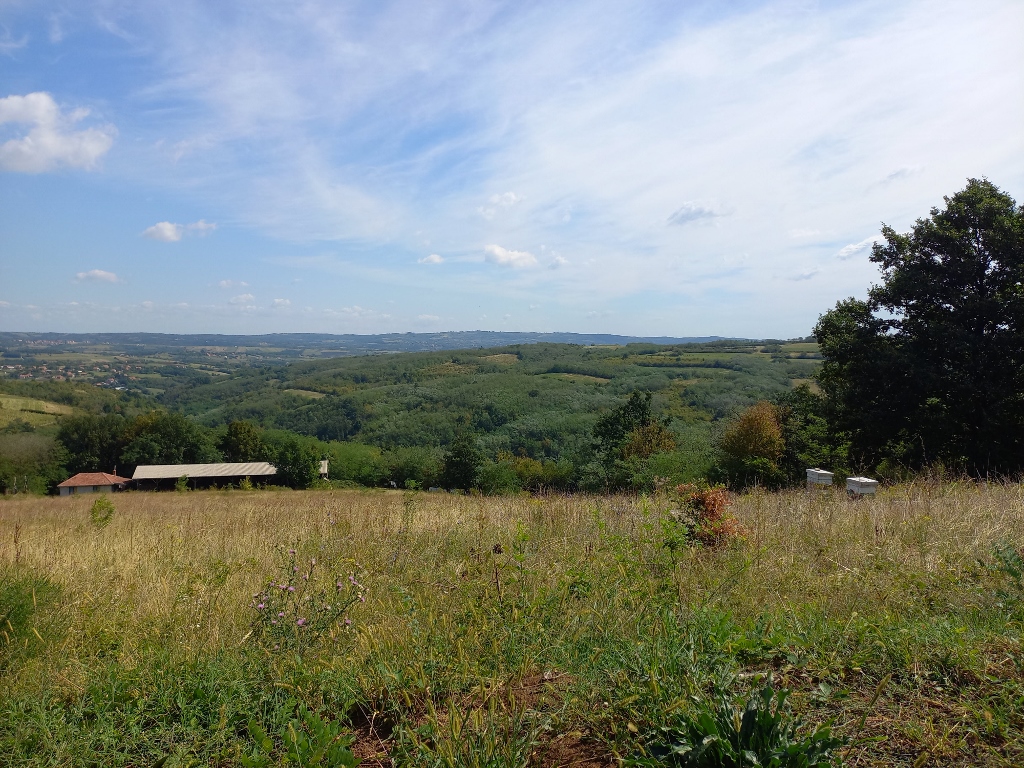 Landscapes to the east of Mount Kosmaj
We then drove to a spacious parking lot near the Tresije Monastery and visited the monastery church, planning to continue on foot to the summit of Kosmaj after the visit.
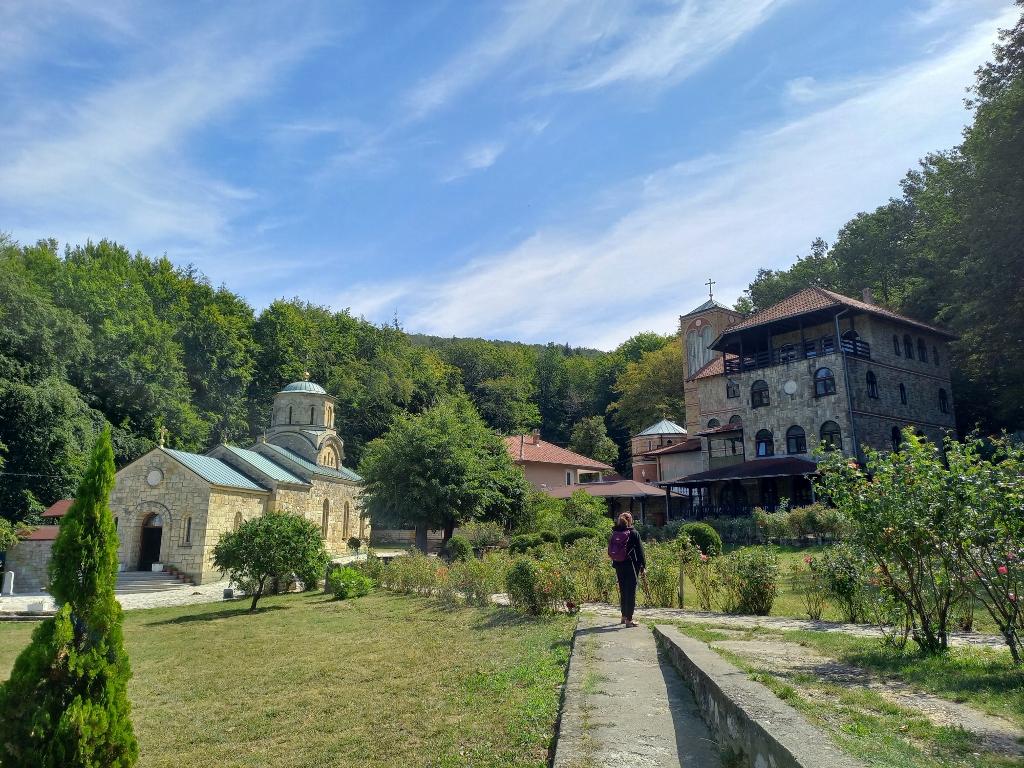 Tresije Monastery
The monastery, dedicated to the holy archangels Michael and Gabriel, was founded in 1309 during the reign of King Dragutin or, more accurately, Stefan Dragutin Nemanjić (circa 1252–1316). It takes its name, Tresije, from the stream that springs nearby.
Throughout its existence, the monastery was destroyed and rebuilt multiple times, but fell into disrepair during the 18th century. Restoration of the ruins began in 1936, with the most recent renovations carried out at the end of the 20th century, including the construction of a new lodging.
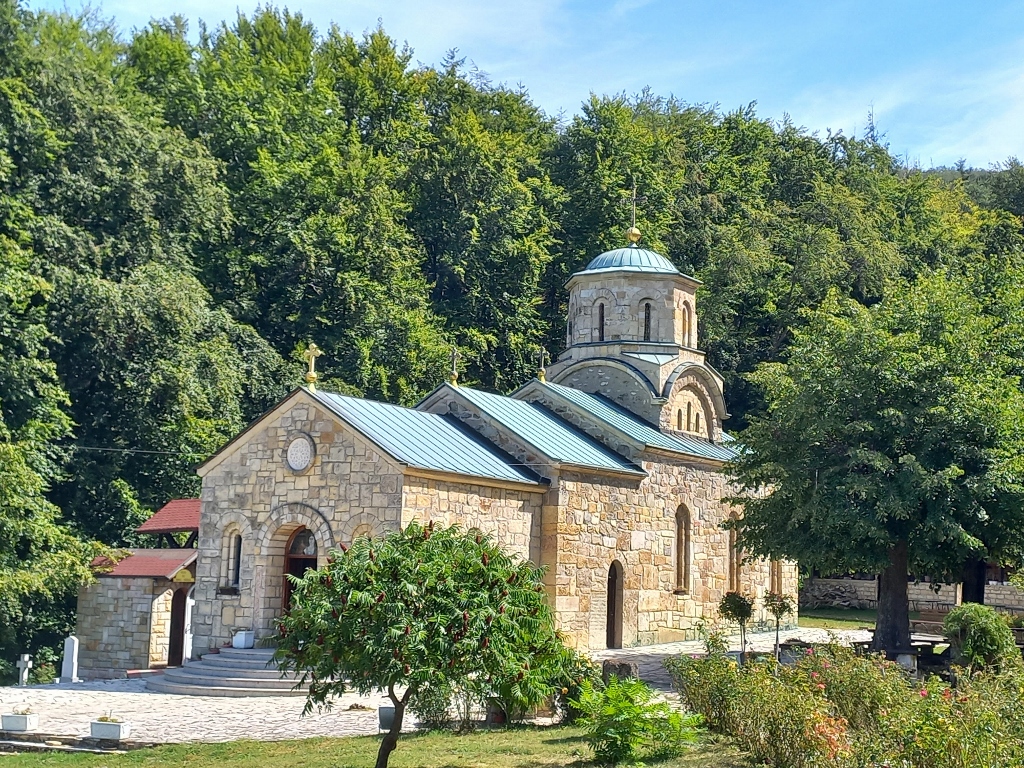 Tresije Monastery
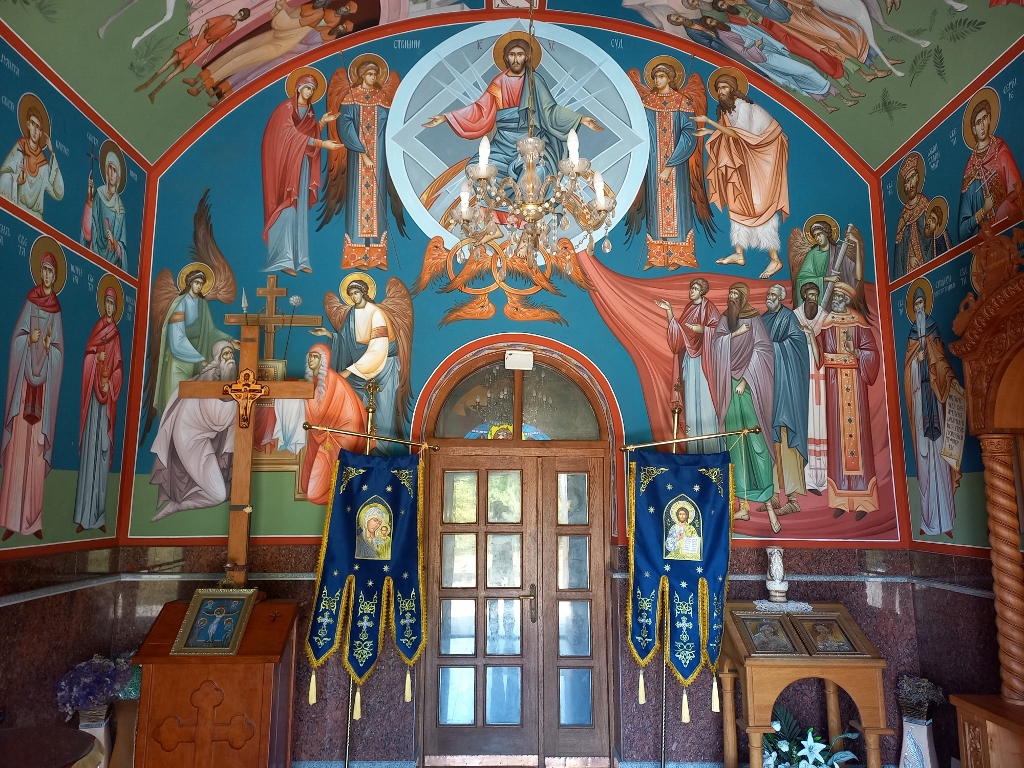 Tresije Monastery’s church, a detail
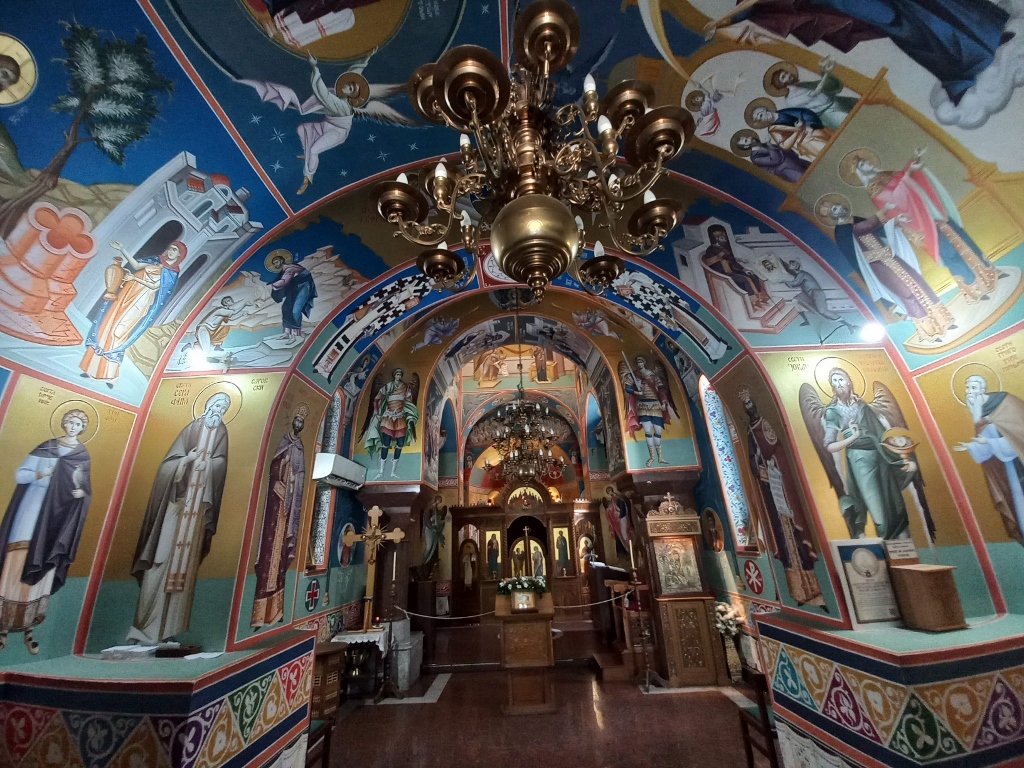 Tresije Monastery’s church, a detail
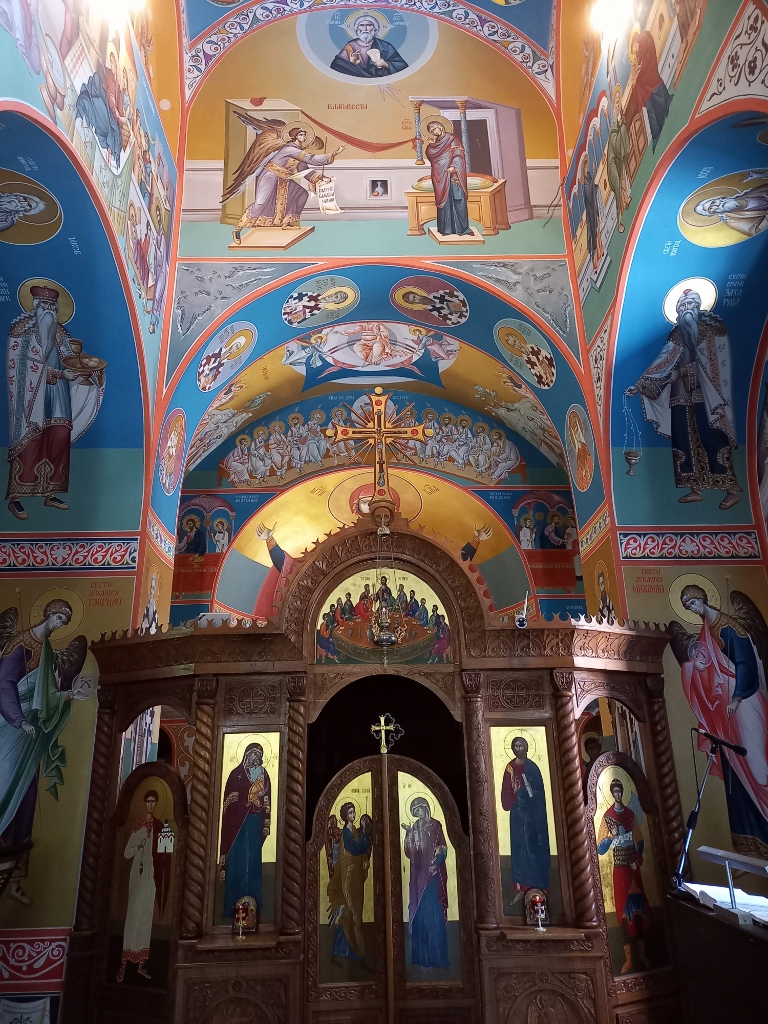 Tresije Monastery’s church, a detail
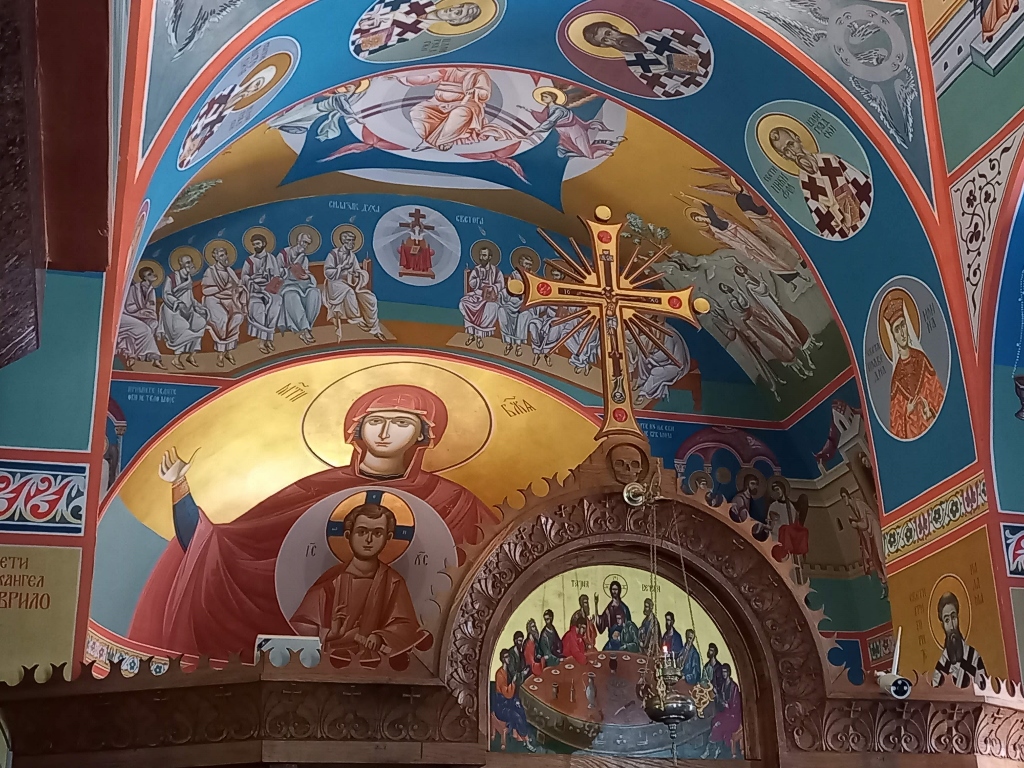 Tresije Monastery’s church, a detail
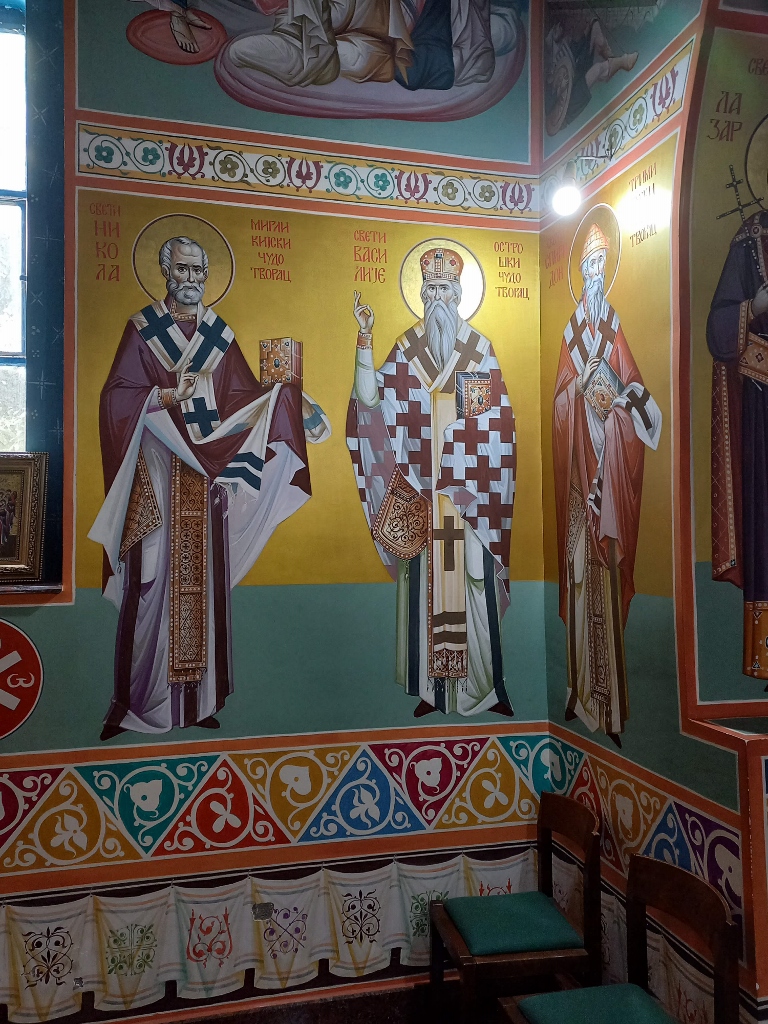 Tresije Monastery’s church, a detail
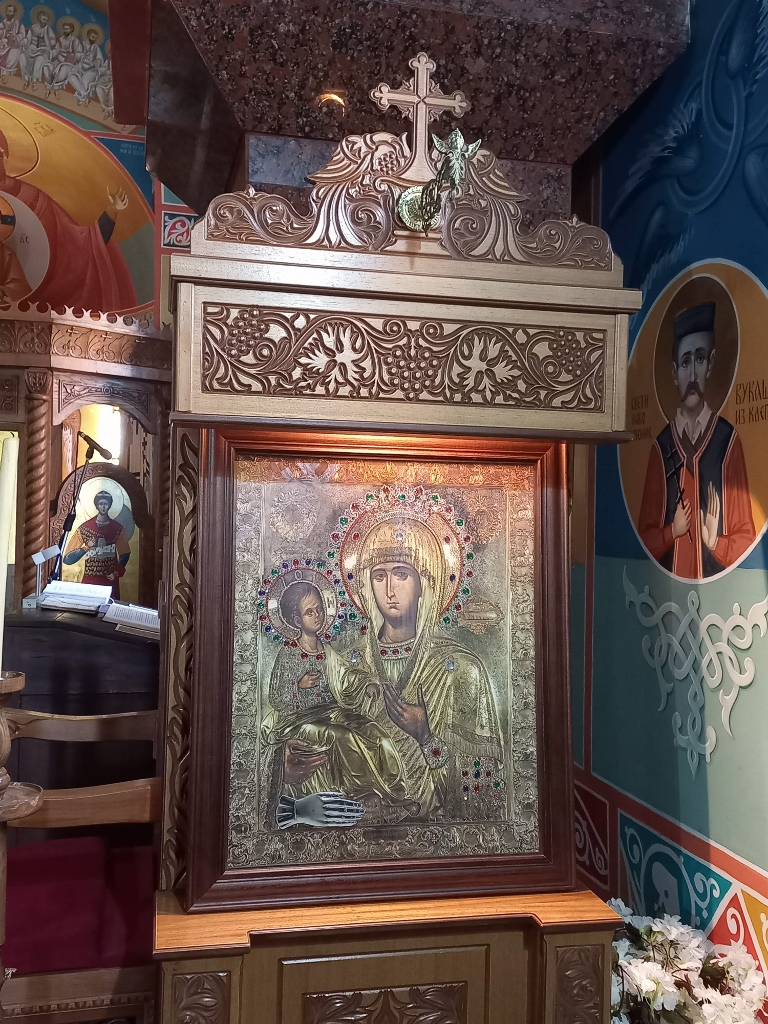 Tresije Monastery’s church, a detail
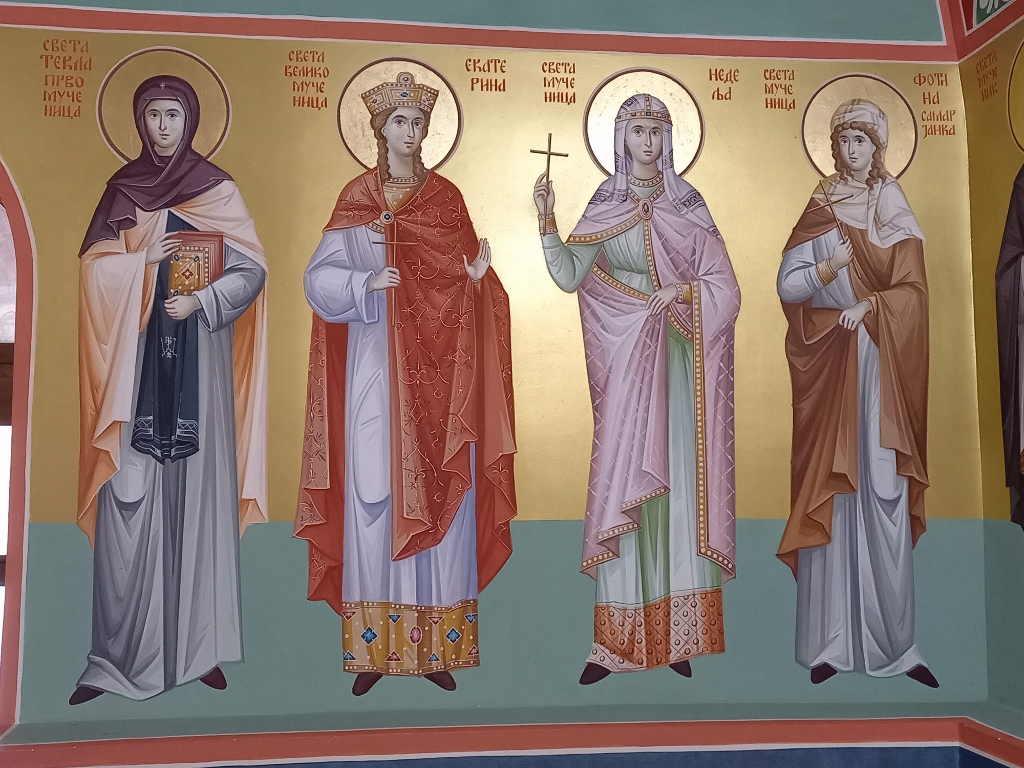 Tresije Monastery’s church, a detail
Right behind the monastery begins one of the many hiking trails on Kosmaj, which, at 626 m above sea level, is the second lowest mountain in Šumadija after Avala (511 m). Still, it’s a very beautiful mountain and, in my opinion, its beauty comes from the trees that cover almost the entire Kosmaj (70%). The forests are mainly beech, oak, and partly coniferous. The rest of Kosmaj’s area consists of gentle grassy slopes, as well as orchards and fields at its foot.
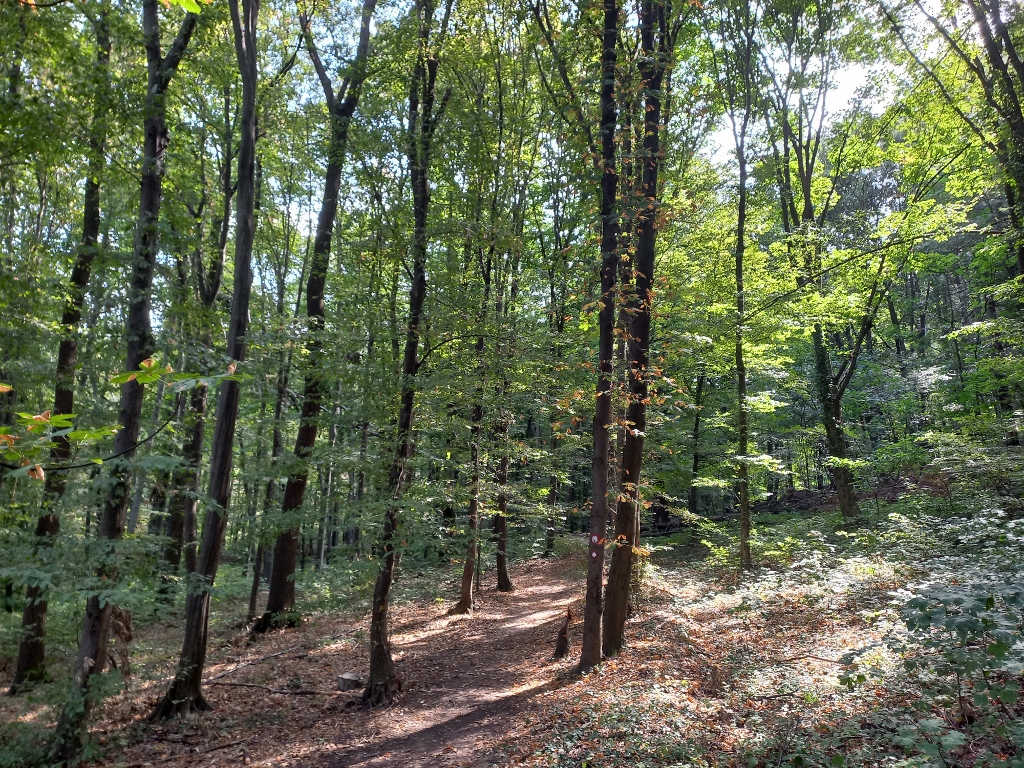 Mount Kosmaj, a detail
Precisely because of its beauty and natural wealth, Kosmaj is protected as an area of exceptional characteristics. Wolves once lived on Kosmaj, but they have long since disappeared. Now, there are hares, roe deer, foxes, and various birds, as well as a wide variety of mushrooms, some edible, some medicinal, and some deadly poisonous. We didn’t focus on the animals or mushrooms, though; we simply walked diligently through the forest.
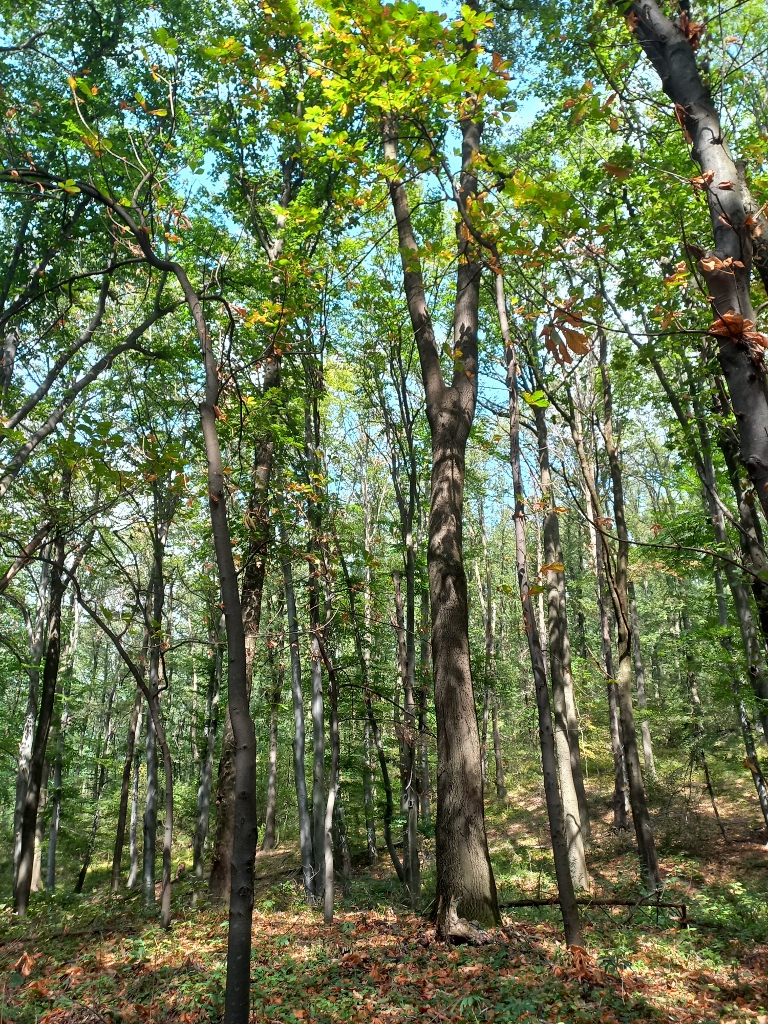 Mount Kosmaj, a detail
We then reached the mountain pass where the main road across the mountain intersects with several paths running along the main ridge, which stretches southwest to northeast. There, we sat down at a wooden picnic table to take a short break and chatted a bit with a couple of people working as attendants.
Namely, on the plateau at the summit, structures had been set up for a music festival founded just a year earlier. So, we came across the second festival (2025), which this year lasted for two days and included not only musical performances, but also various outdoor activities and a bazaar selling products from Kosmaj and its surroundings. (I have read about all of this, though I only saw the music stage.) What I particularly liked was the festival’s name, KoZmaj, a very clever play on words. “K’o zmaj” (like a dragon) is a common expression in Serbian used when somebody is doing something extremely well.
We, however, were interested in hiking along the mountain top, so we first headed towards a monument. It’s possible to drive around the area on a circular road, but we decided to take the wide paved trail on foot.
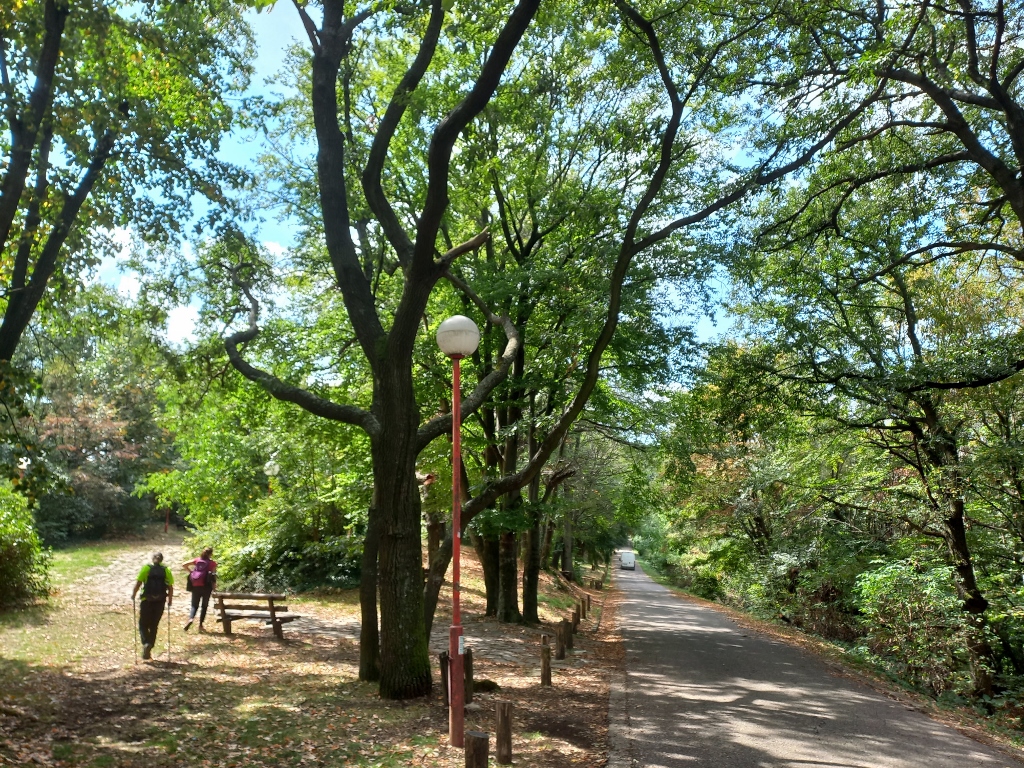 Mount Kosmaj, a detail
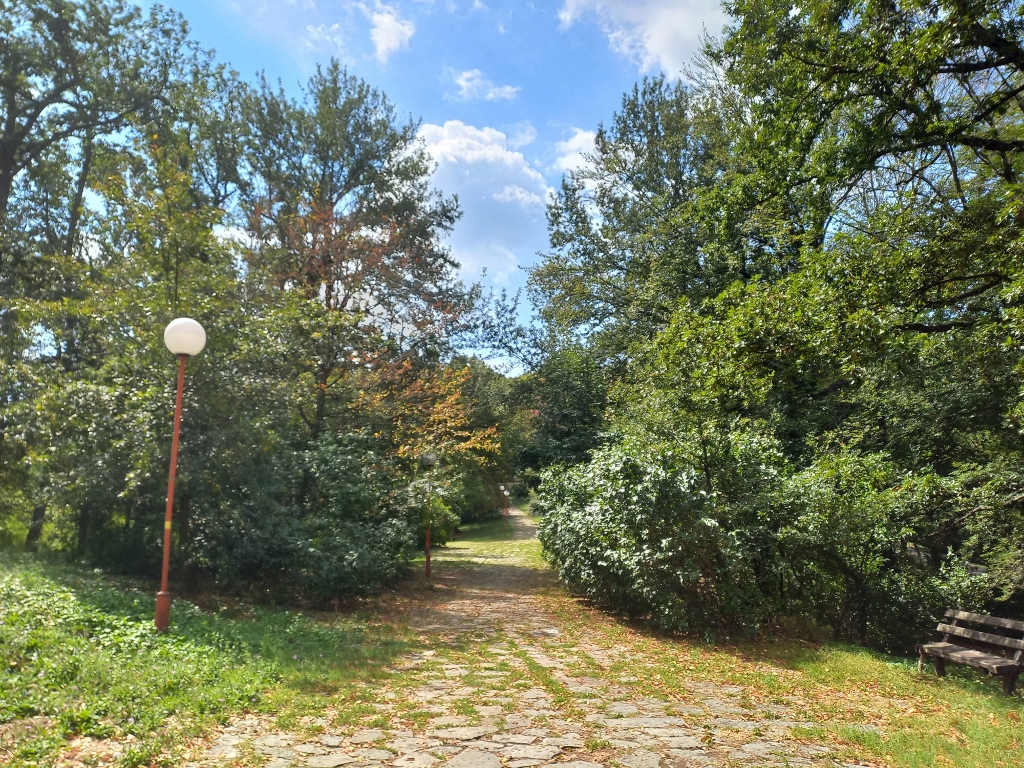 Mount Kosmaj, a detail
Namely, the Monument to the Kosmaj Partisan Detachment was erected on Mali Vis, one of the three peaks of Kosmaj, in 1971. Since this detachment operated here throughout World War II, it was fitting that Tito himself came here in 1945 to deliver words that were later inscribed on one of the smaller monuments.
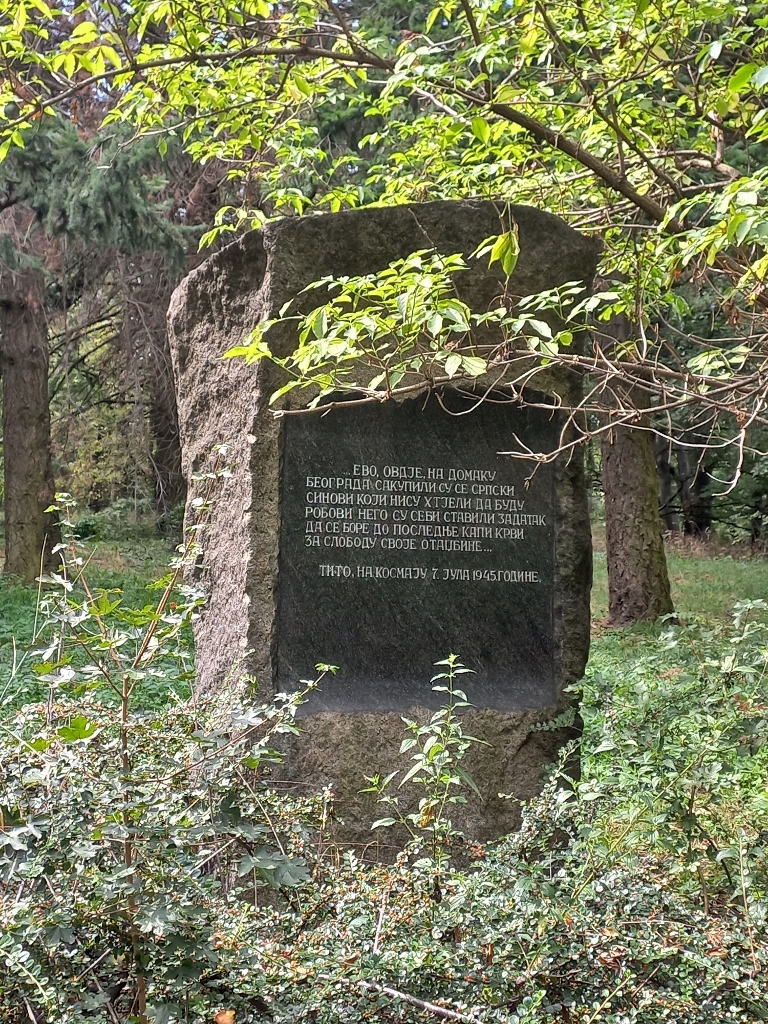 Mount Kosmaj, a detail
The Monument to the Kosmaj Partisan Detachment is located about 500 m from that mountain pass and begins to come into view through the tree canopy. This wide paved path was built specifically to provide access to the monument.
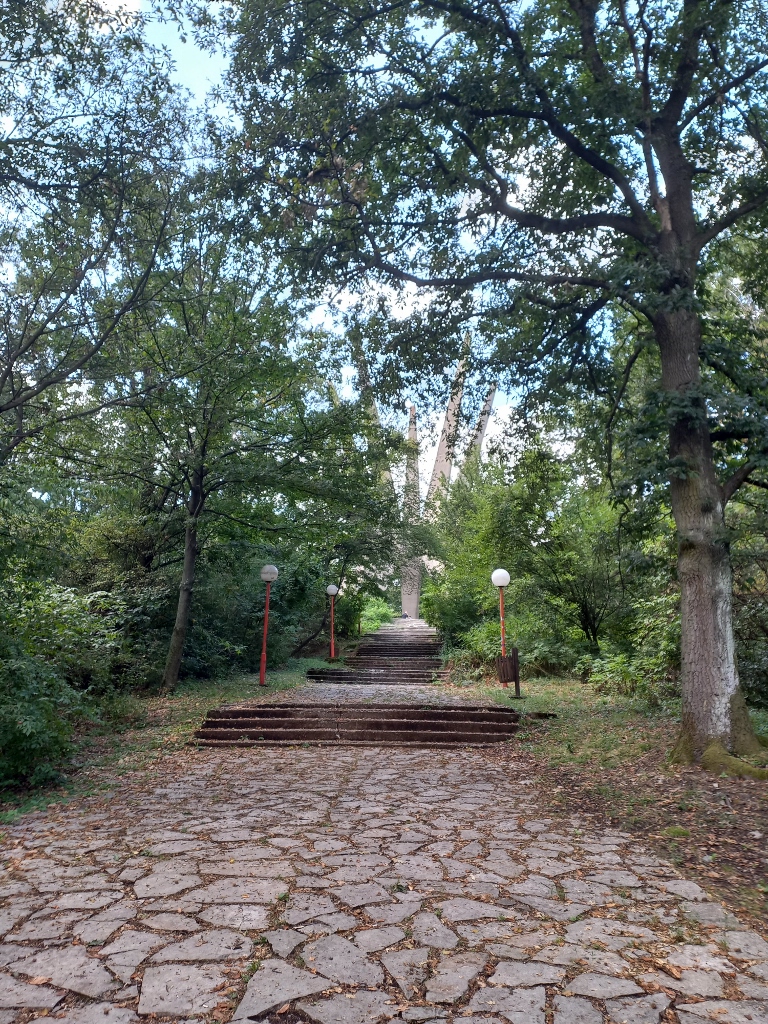 Mount Kosmaj, a detail
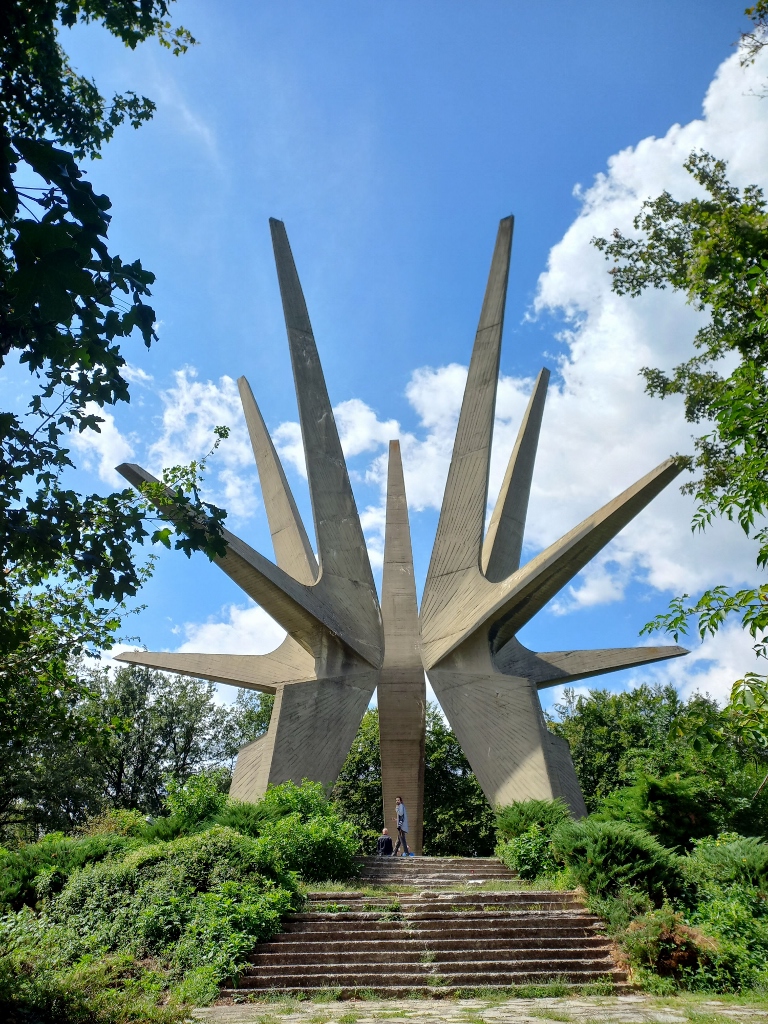 Monument to the Kosmaj Partisan Detachment
As I’ve mentioned, the monument was erected in 1971, and with its imposing size (it has an 18-m diameter base and stands at 30 m tall), it is nowadays one of the symbols of this mountain. It consists of five concrete arms that symbolise the “spark of freedom and uprising.”
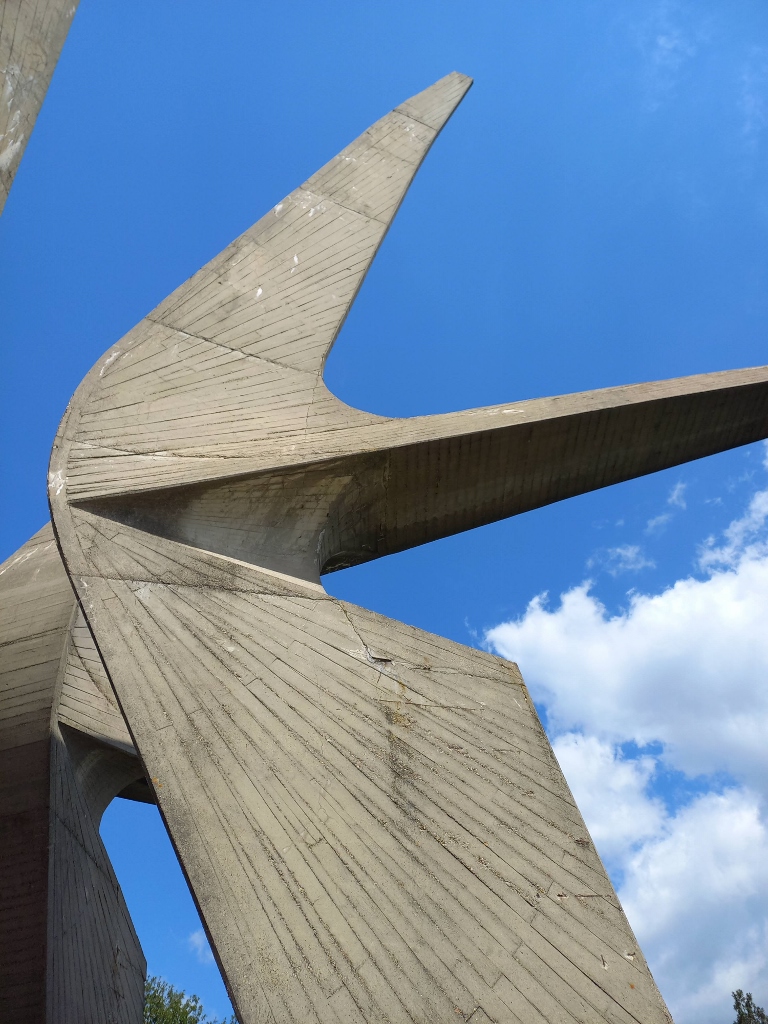 Monument to the Kosmaj Partisan Detachment, a detail
On the ground in the centre, between the pillars, there is a circular pedestal that symbolises the eternal flame.
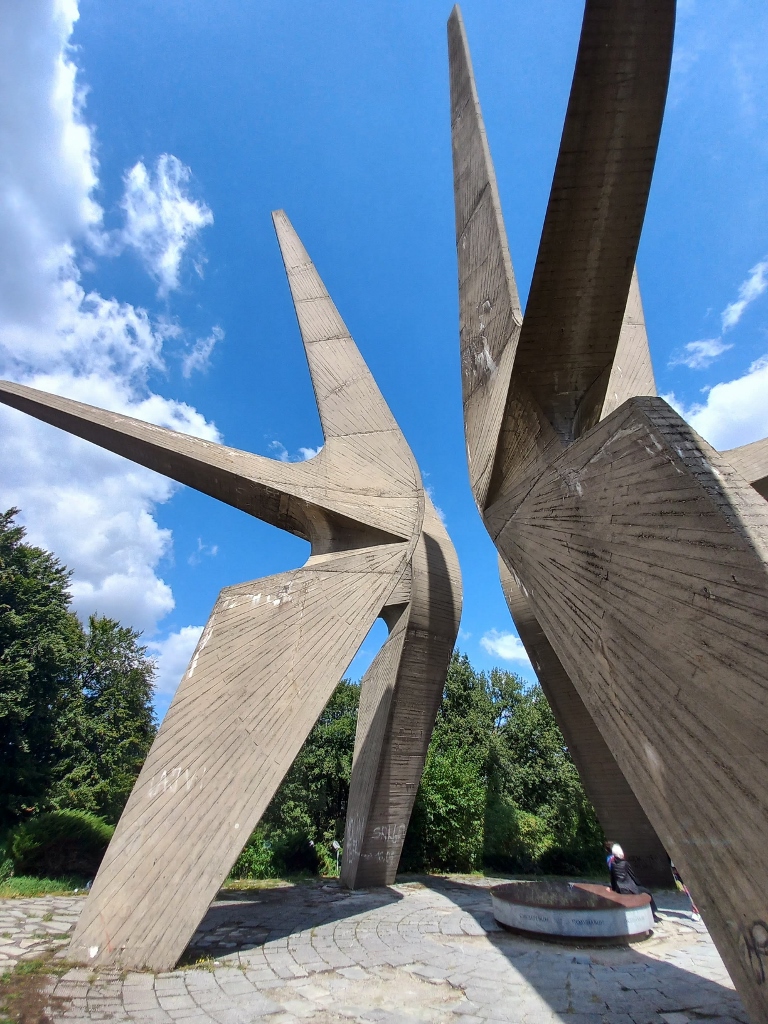 Monument to the Kosmaj Partisan Detachment
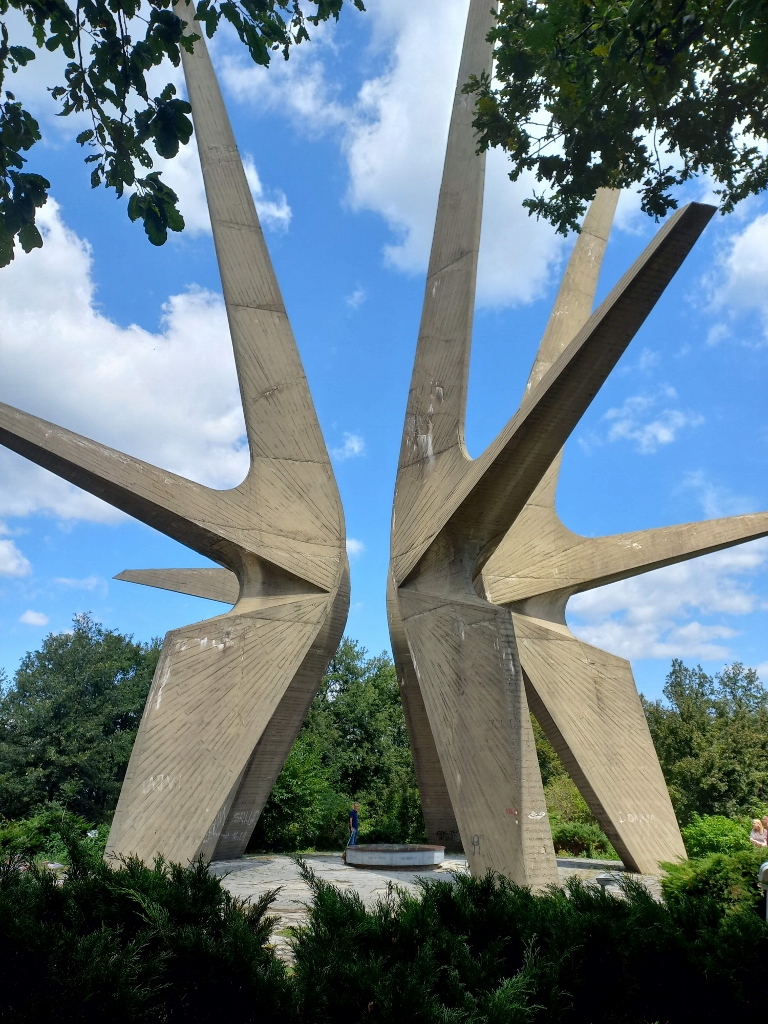 Monument to the Kosmaj Partisan Detachment
After touring around the Monument to the Kosmaj Partisan Detachment, we returned to the mountain pass, crossed the main road, and started heading in the opposite direction along the mountain ridge.
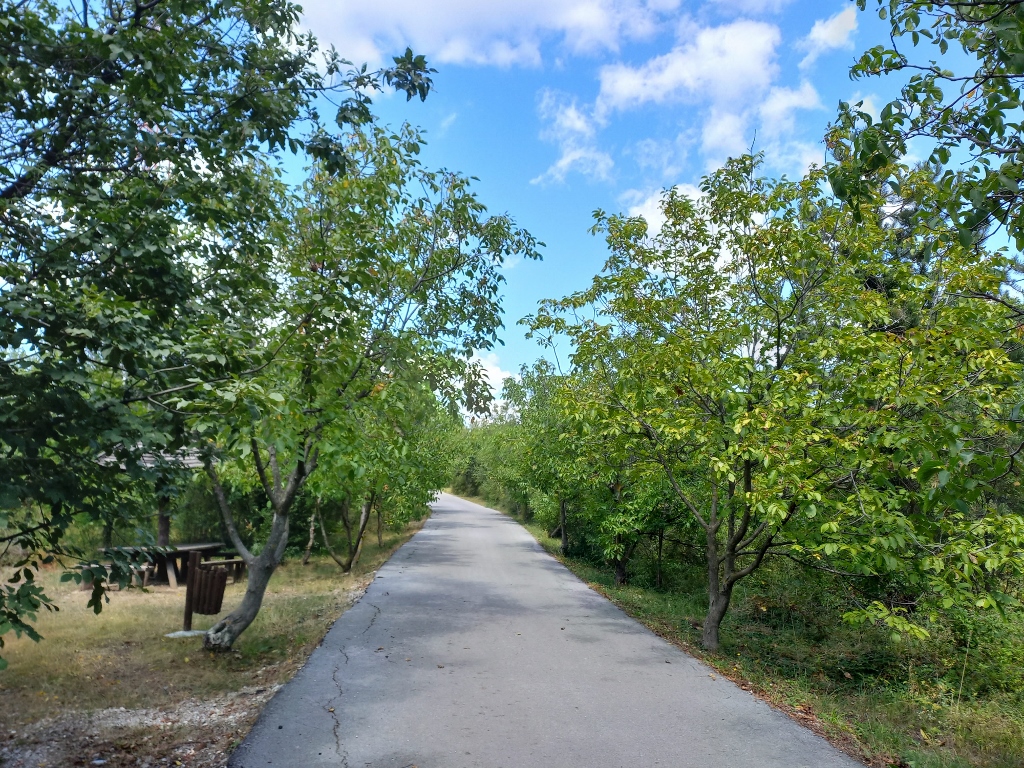 Mount Kosmaj, a detail
Along the way, I remembered to take a photo of one of the many wooden picnic tables scattered across the mountain wherever space allows.
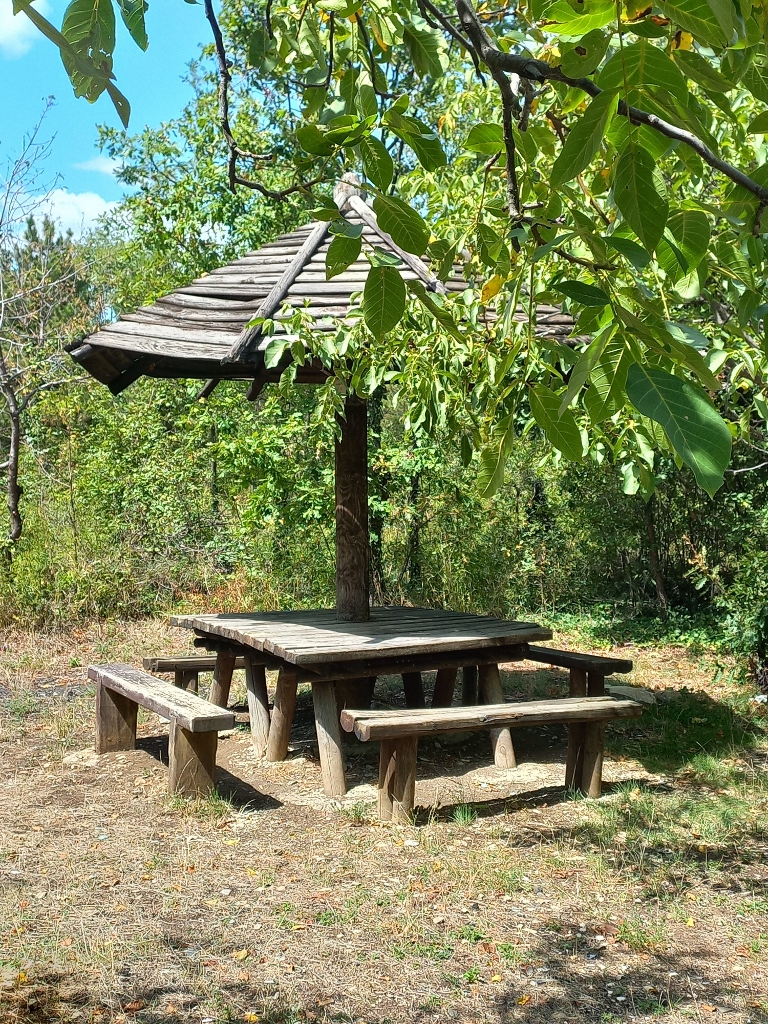 Mount Kosmaj, a detail
This path leads to an observation deck, but it was closed during our visit because it wasn’t safe. Irena and Igor had already been there and told me the view (to the north) is outstanding. I hope the observation deck will be repaired so I can come back here again.
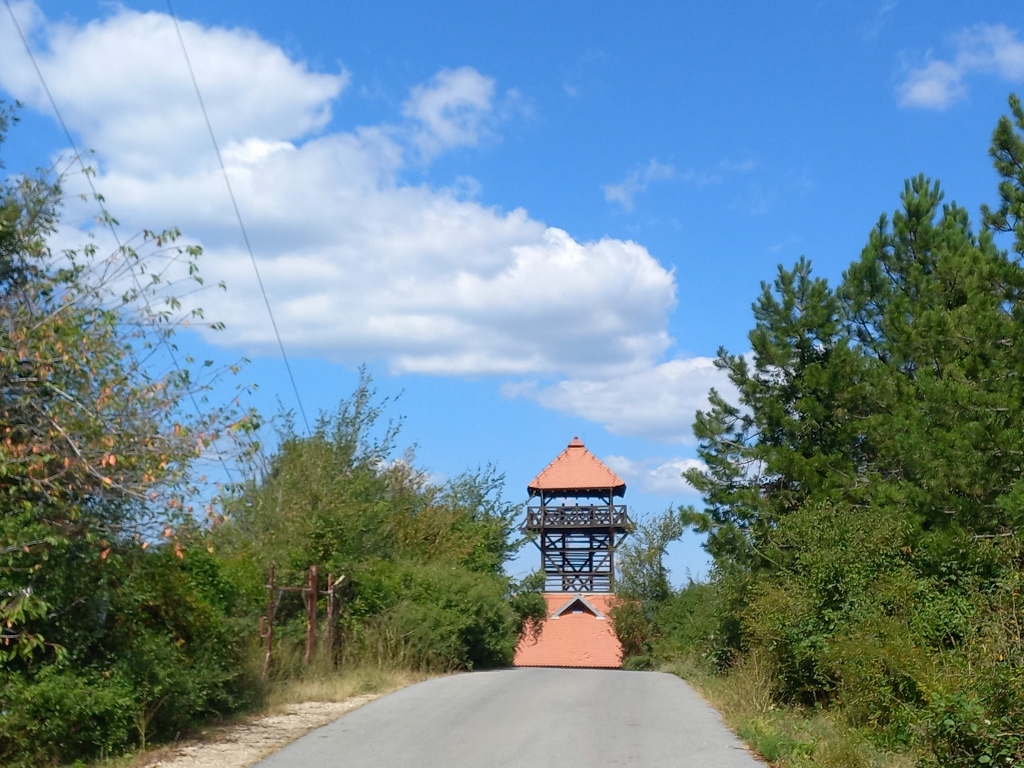 Kosmaj observation deck
From here, we set off along a forest trail, following a signpost. Along the way, I spotted a very interesting beetle – electric blue in colour. It was a type of dung beetle, most likely Anoplotrupes stercorosus.
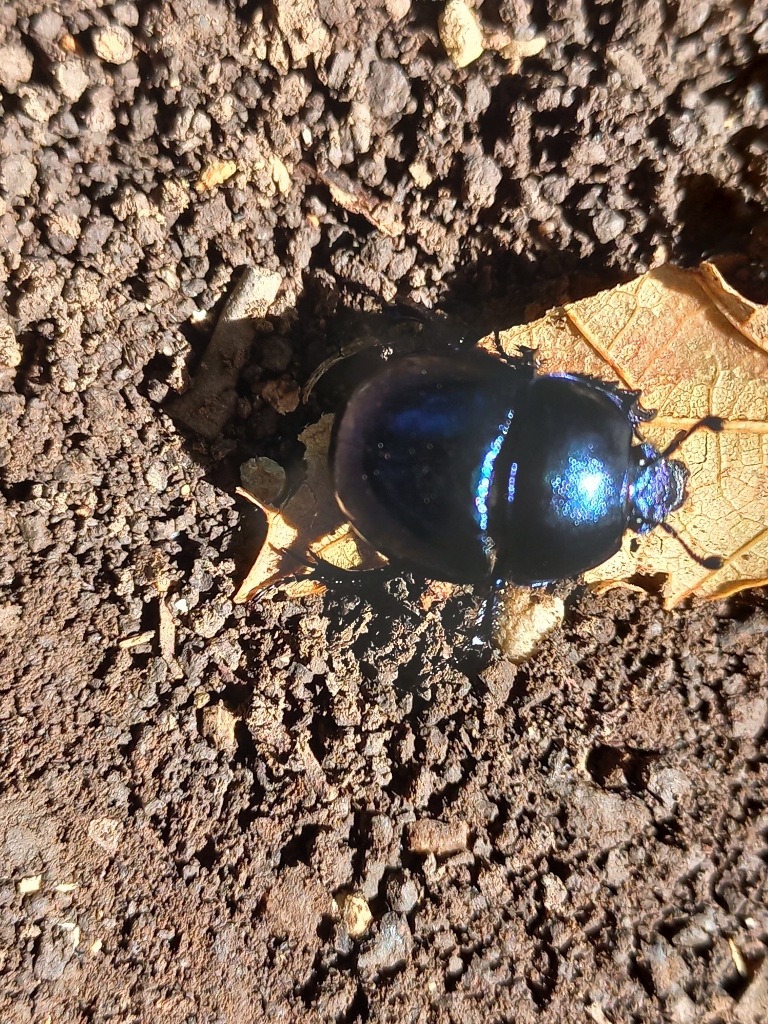 Dung beetle
After a few hundred metres, that trail led us to another monument – the Memorial Ossuary at Beli Kamen.
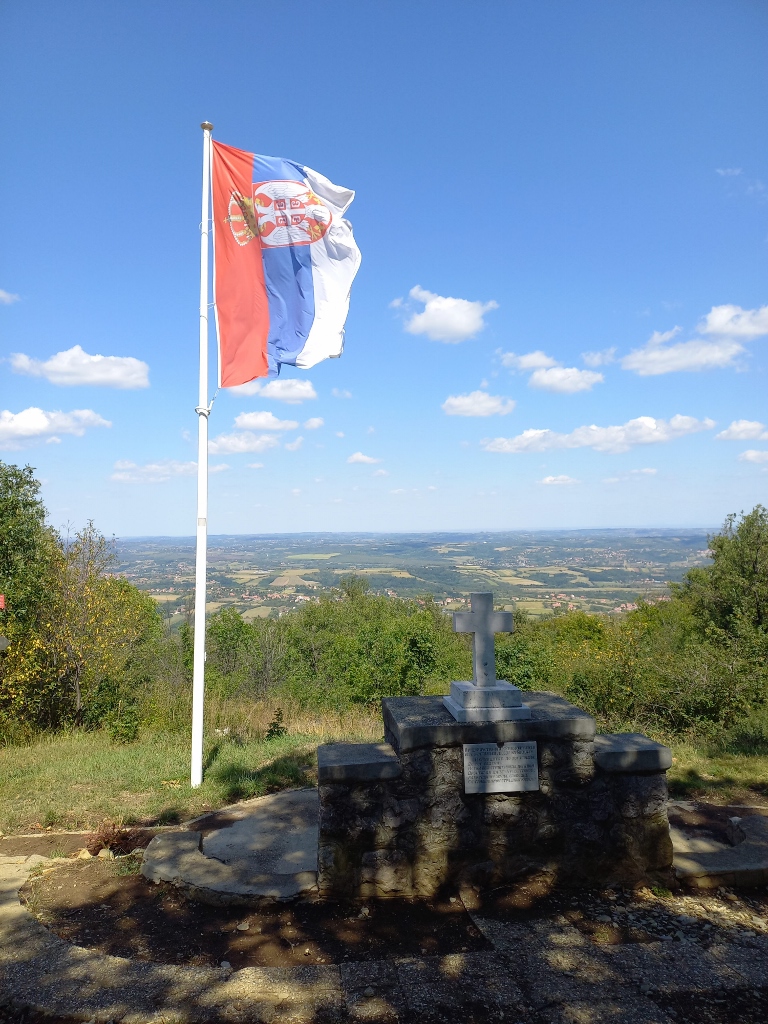 Memorial Ossuary at Beli Kamen
After the fall of Belgrade in 1914 (World War I), a new defensive line was established on Kosmaj, where the advance of the Austro-Hungarian army was halted. Fierce battles took place here in November 1914, followed by the Kolubara Battle and the liberation of Belgrade in 1914. Many Serbian soldiers died here and this memorial ossuary preserves the memory of their sacrifice.
From this plateau, where the memorial ossuary stands, there is a beautiful view to the north, and in the next photo, Mount Avala can be seen in the distance on the left side.
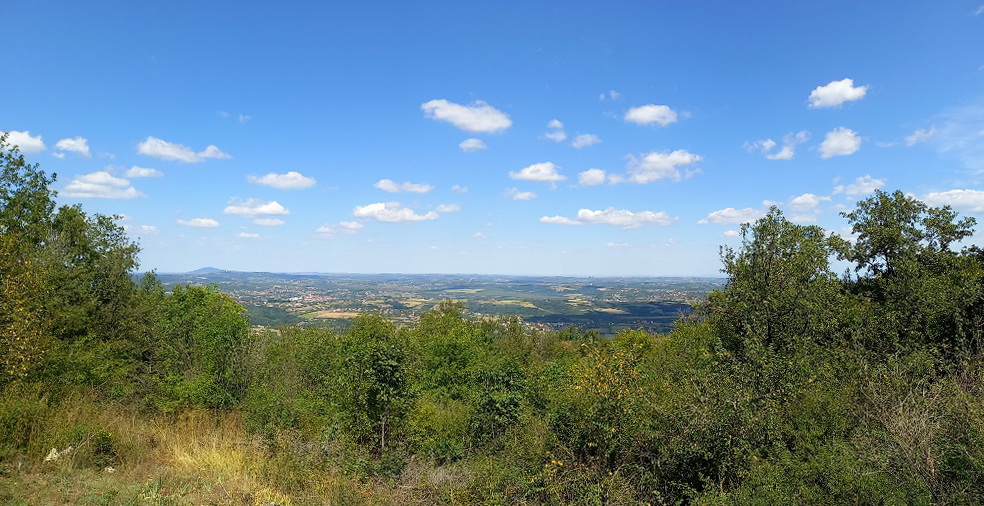 View from the plateau in front of the Memorial Ossuary at Beli Kamen
After a brief stop at the memorial ossuary, we continued along one of the trails winding through the forest. Kosmaj has numerous trails that are very well marked and there are also nicely made signposts. We noticed that night hikes are possible here, while the longest trail is the “Despotova staza” (Despot’s Trail), which is specially marked with a blue circle around the usual red-and-white mark.
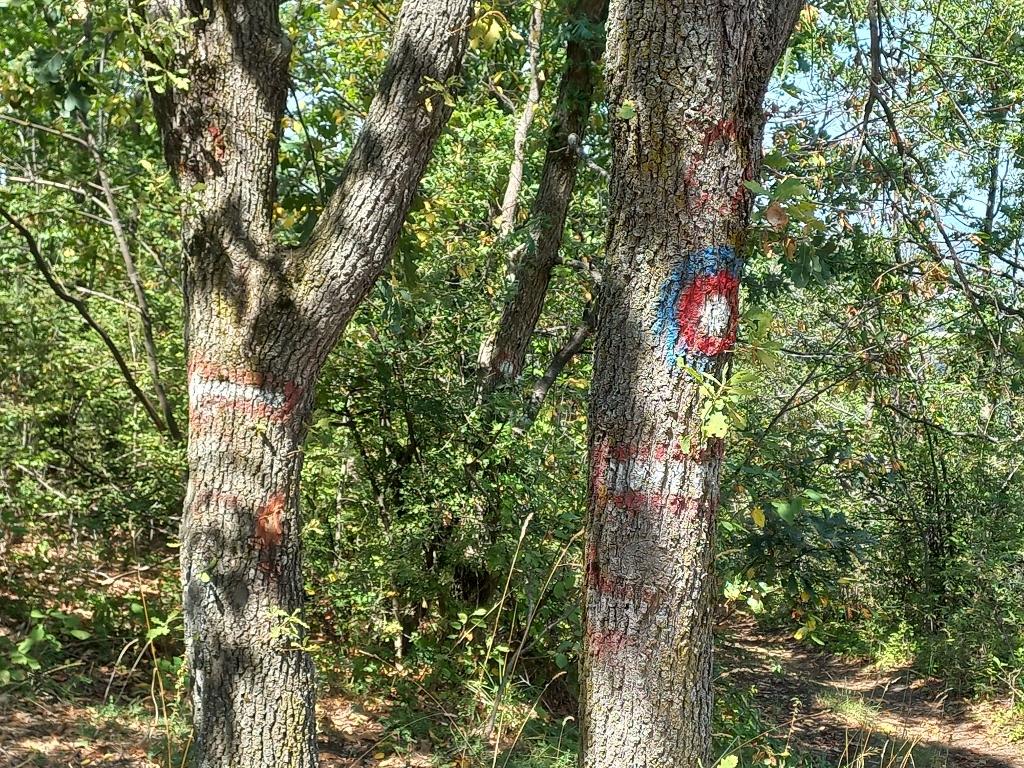 Mount Kosmaj, a detail
The walk through Kosmaj was extremely pleasant and at one point I remembered it would be a nice thing to take a selfie.
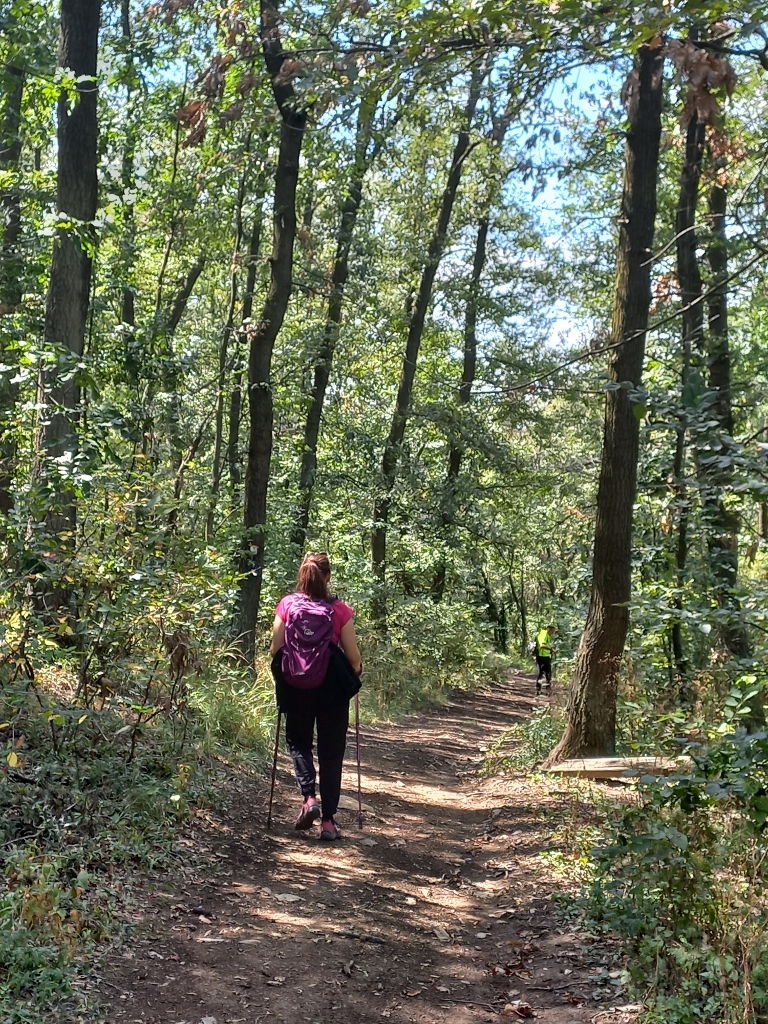 Hiking on Mount Kosmaj
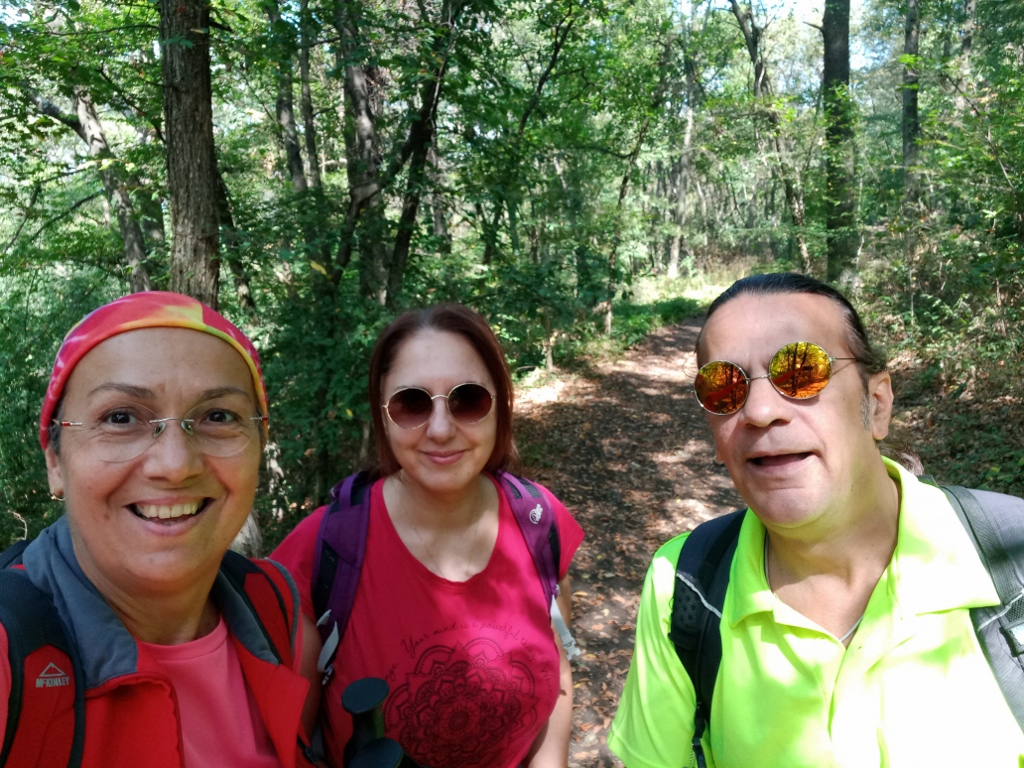 Selfie with Irena and Igor
Along the way, we occasionally spotted some interesting details. For example, the plant bladder cherry (Physalis alkekengi).
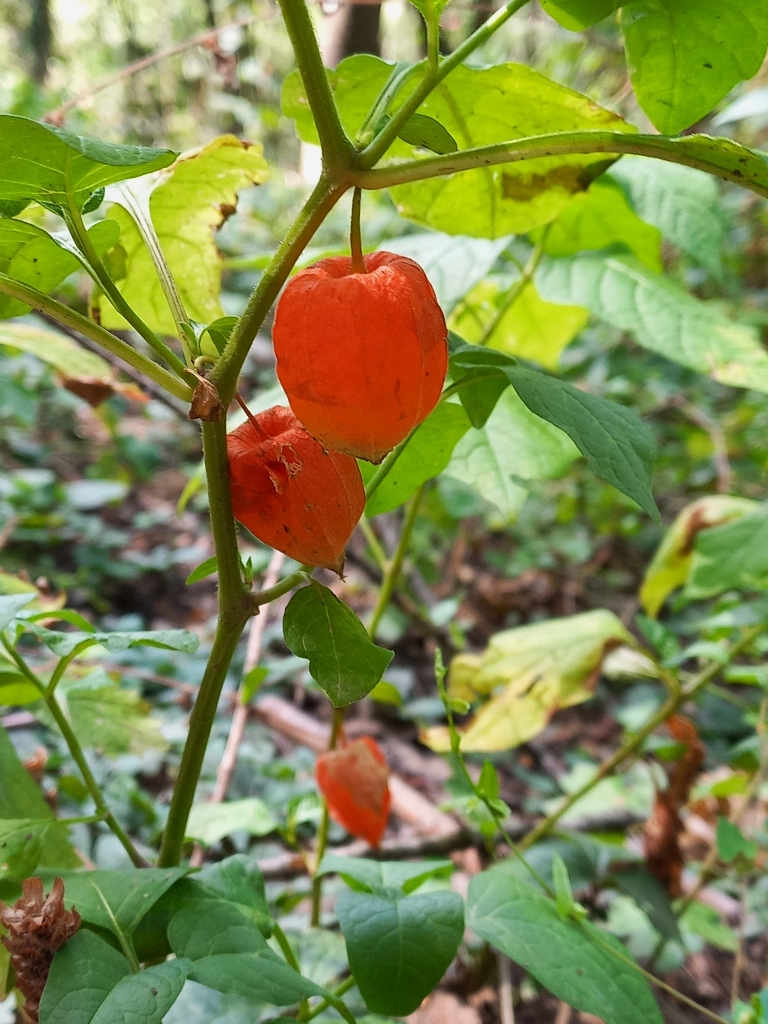 Bladder cherry
There was also something very special to capture on video. It was a group of young dung beetles, practically a whole nursery, and I’m not sure which animal left them their “toy.”
A little further on, we reached a clearing obviously designed for picnics and barbecues, judging by the stone-enclosed barbecue areas.
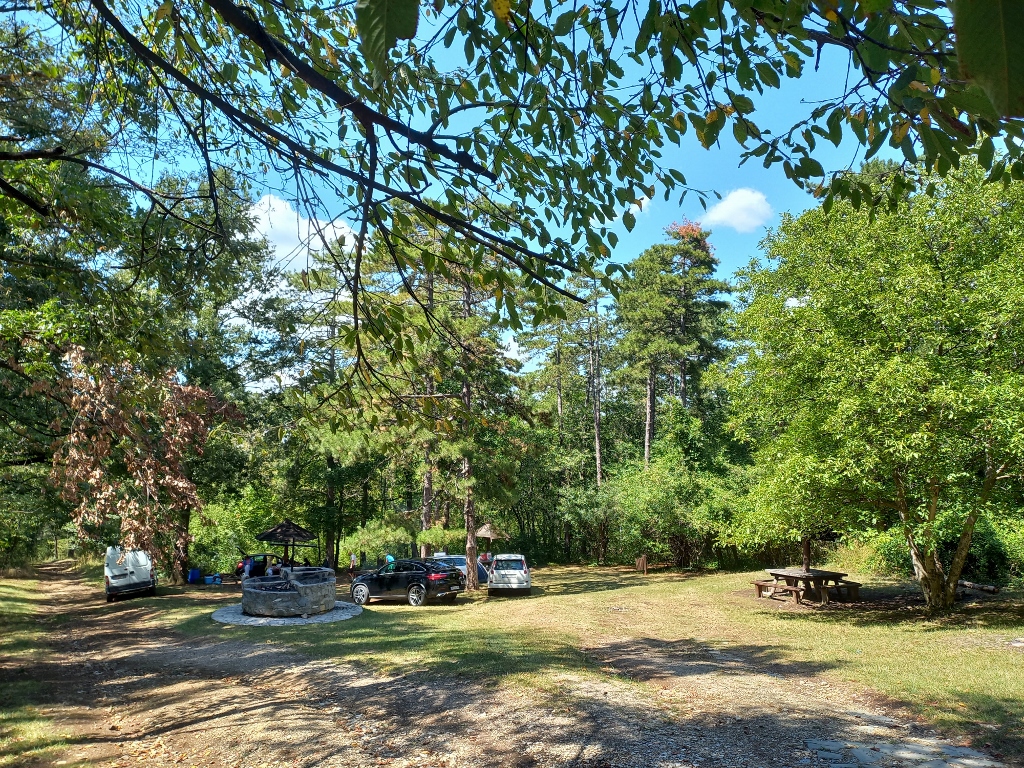 Mount Kosmaj, a detail
This time, the menu offered something completely different and we even received an invitation to come back in a couple of hours. We thanked them for the invitation, but had other plans.
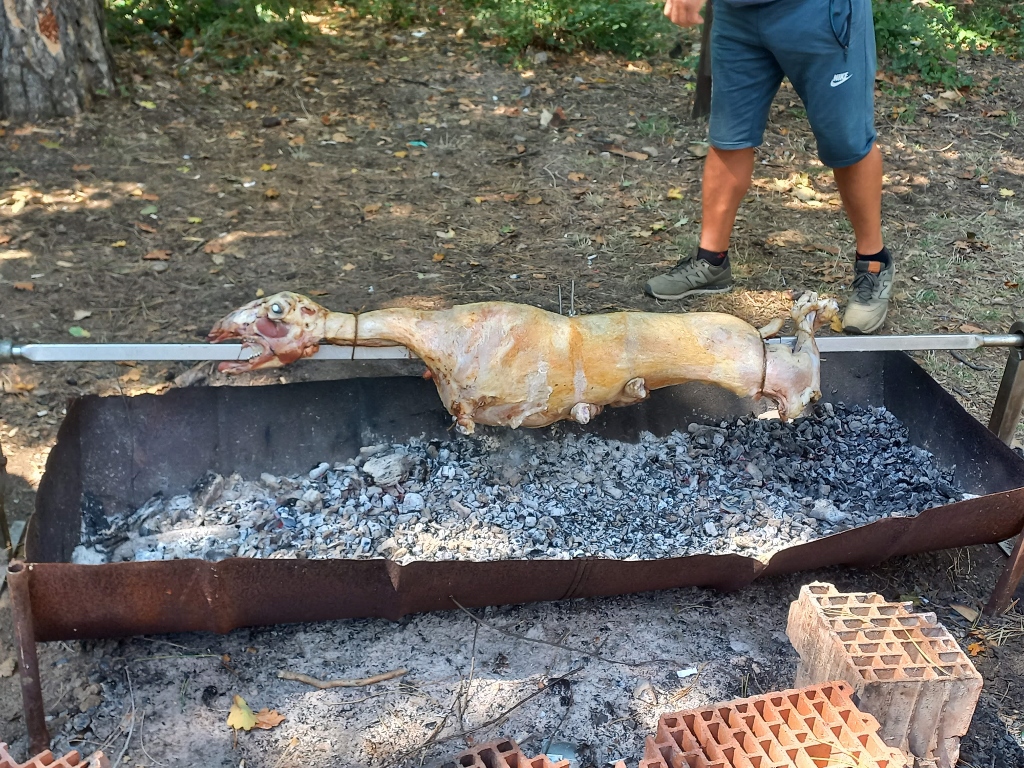 Mount Kosmaj, a detail
That meant returning to the Tresije Monastery, while I took advantage of the return trip to take photos of the back of the monastery, as well as the beautiful space visible from the front.
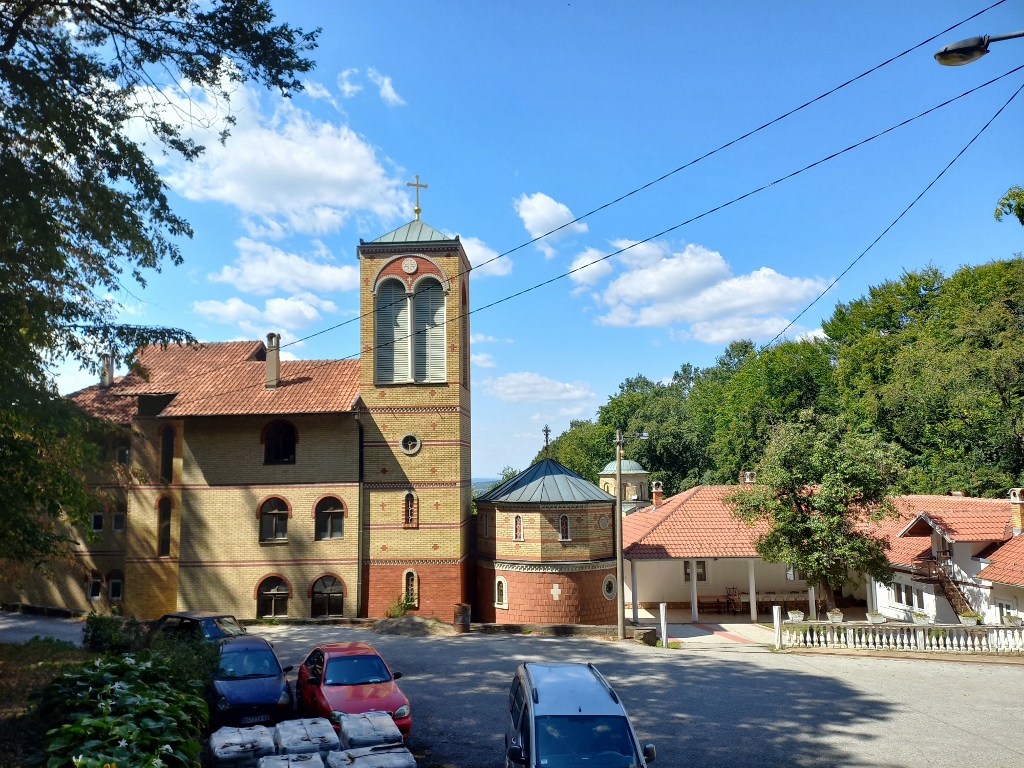 Tresije Monastery
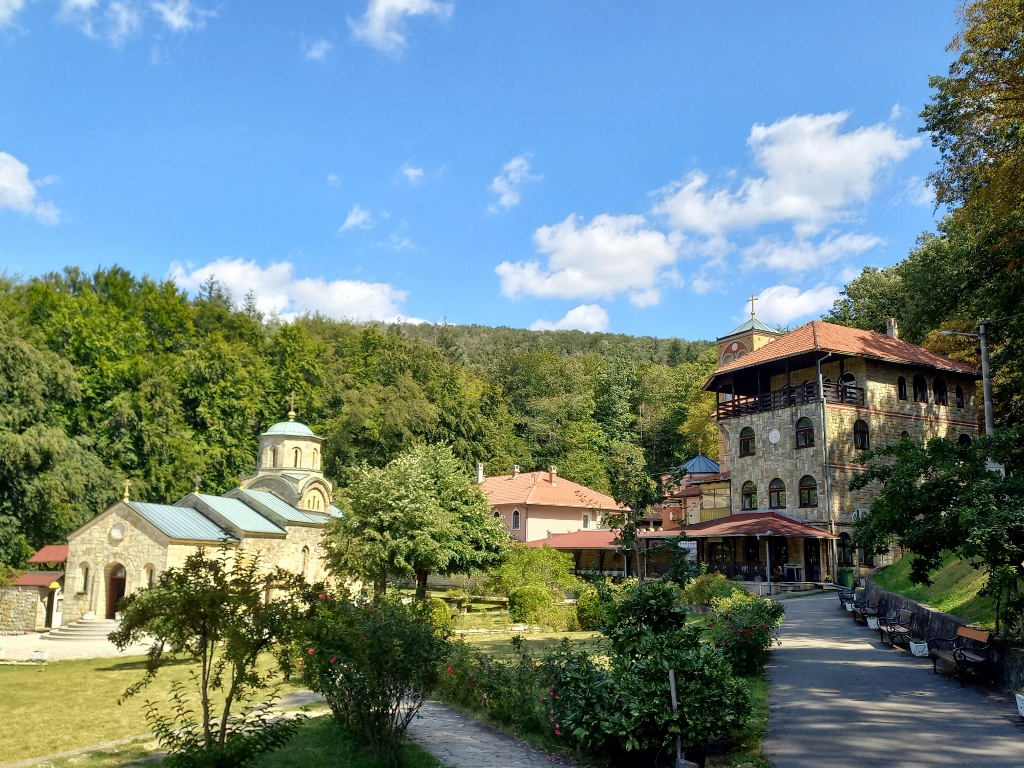 Tresije Monastery
Now the three of us went for lunch, which was a quite pleasant experience, and afterwards we headed back to Belgrade, but via a different route that included visiting two more cultural monuments. That’s how we arrived in Sopot, an urban settlement and one of Belgrade’s municipalities.
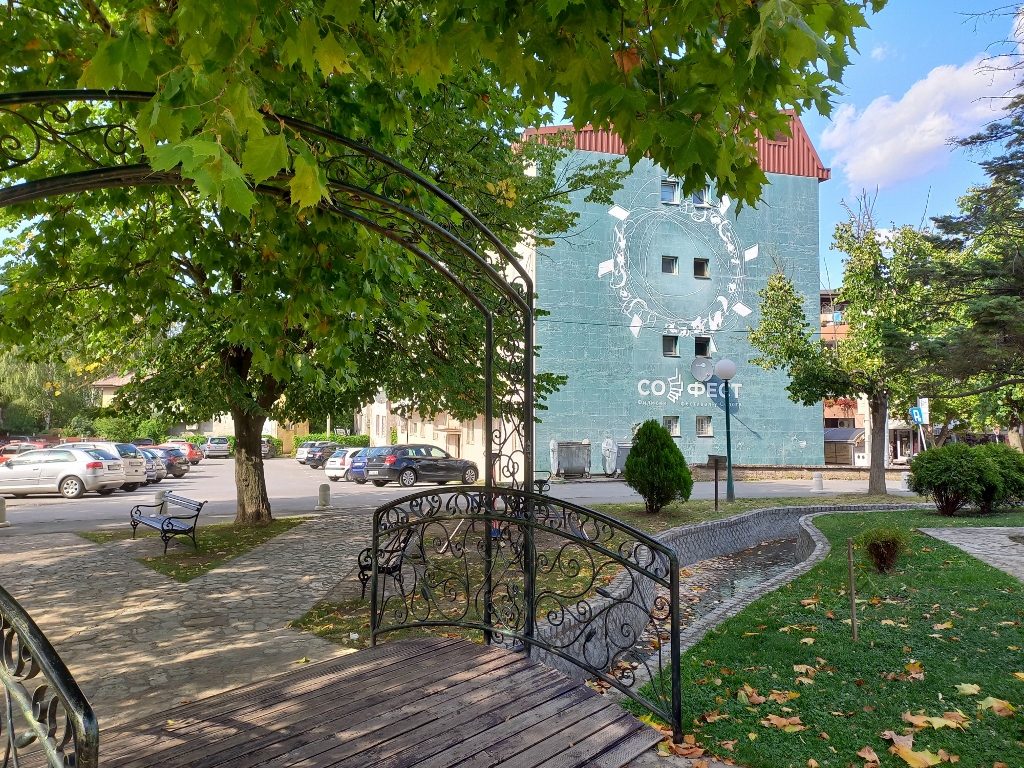 Sopot, a detail
In the very centre stands the Old Khan in Sopot.
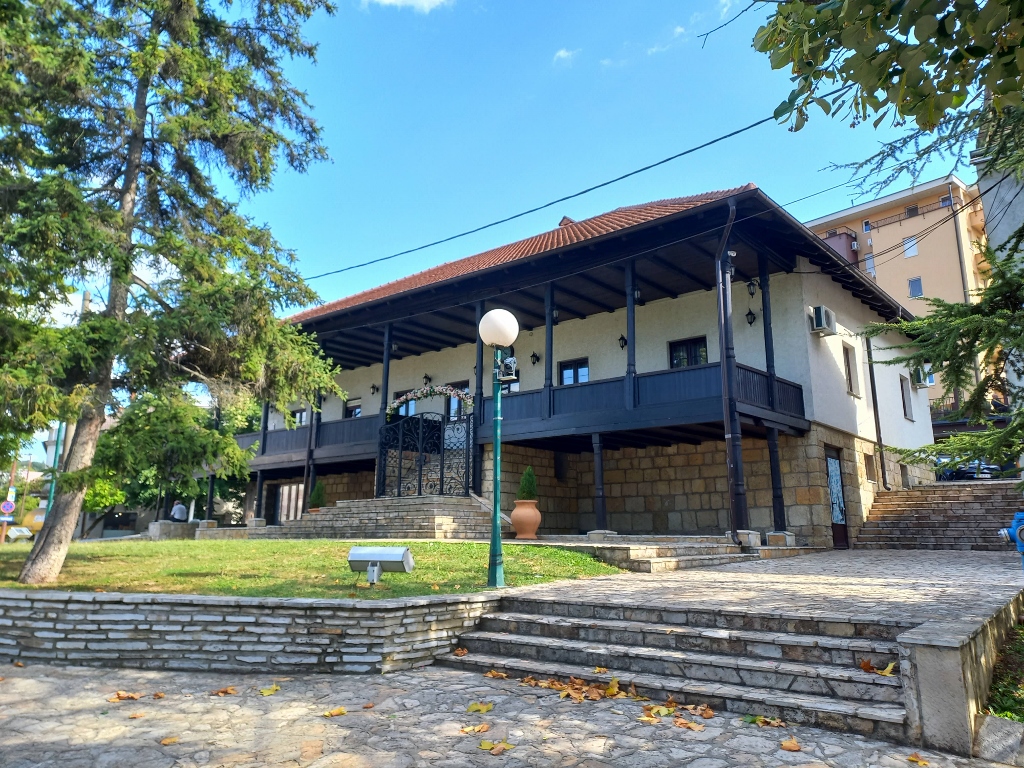 Old Khan in Sopot
The khan is a type of caravanserai, a place once used to accommodate travellers, merchants, and caravans. In other words, it was a hotel on the road from Kragujevac to Belgrade. Today, it is an immovable cultural property of great significance.
This khan was built in 1838 on the foundations of an older structure from the 18th century. As Serbia gradually freed itself from the Ottomans and underwent social and economic development, a settlement formed around this khan in the second half of the 19th century, which is today’s Sopot.
The foundations and basement are made of hewn stone, while the upper floor is constructed with a half-timbered system filled with adobe. The layout is rectangular, while the roof is four-sided with large eaves covered with ceramic Monk and Nun roof tiles (ćeramida). Particularly notable is the wooden porch that runs along the entire length of the northern side of the khan.
In the past, the upper floor housed a tavern, kitchen, auxiliary rooms, as well as lodging rooms separated from other spaces by a corridor.
Although it appears the building has been recently renovated, I didn’t get the impression it is currently in use. However, I saw a sign on one of the upper-floor doors that reads "Heritage Collection," so I assume some kind of museum will open here sooner or later.
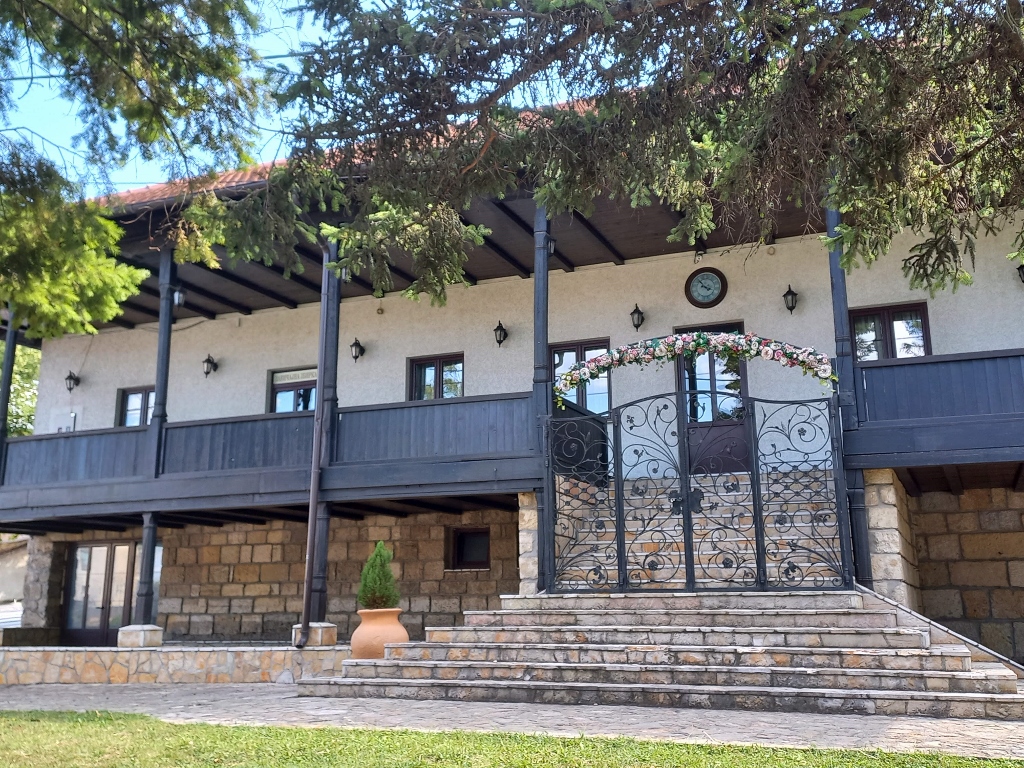 Old Khan in Sopot
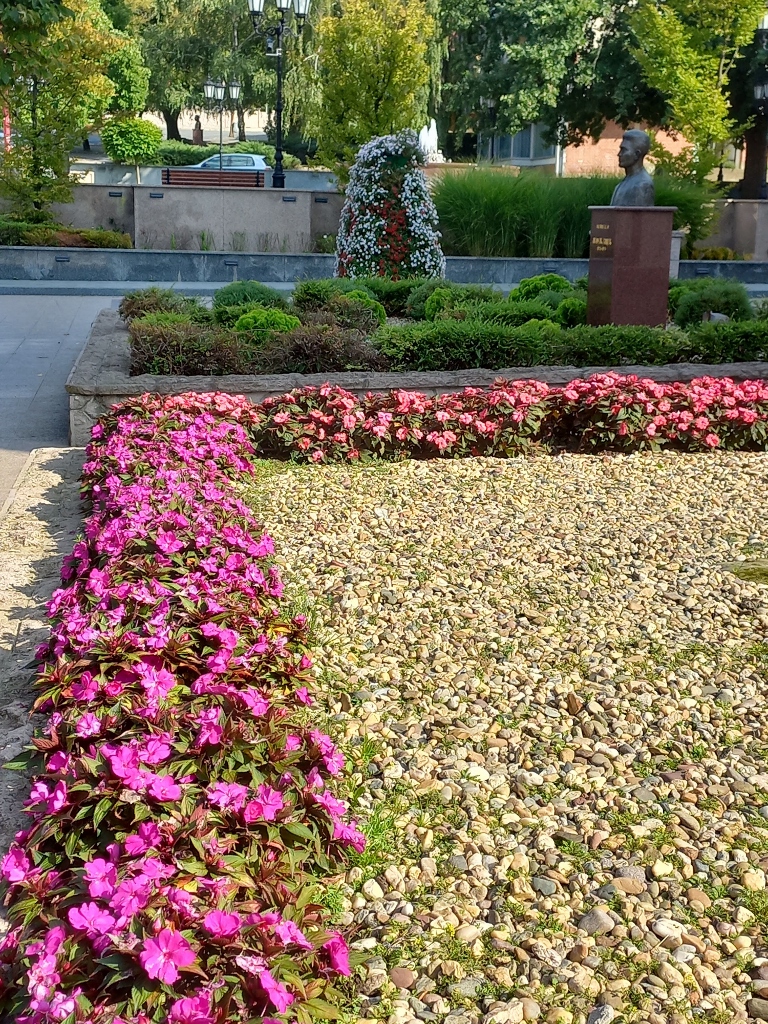
The centre of Sopot appeared to us as an exceptionally well-maintained place, so we took a short walk there. You can see a multitude of beautifully kept flowers, as well as many monuments erected for different people and on various occasions. There is a monument to a former member of parliament who died in World War I, as well as monuments dedicated to the People's Heroes from World War II. For those unfamiliar, these are people who particularly distinguished themselves during the war on the side of the partisans and communists.
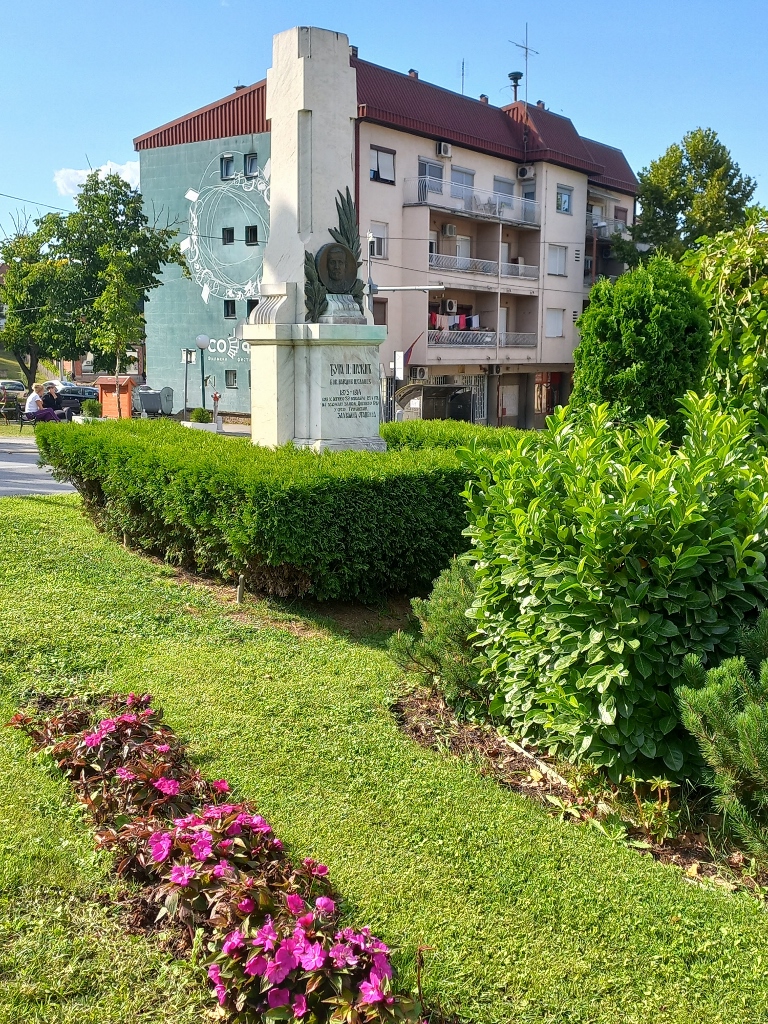 Sopot, a detail
But there is also a beautiful municipal building, on the side of which is the entrance to the Court Unit in Sopot of the Municipal Court in Mladenovac. A plaque is placed there stating that in 1827, in the village of Rogača, municipality of Sopot, by the decree of Prince Miloš, the Court of the Belgrade Nahiye was established: "... Since it was too far for people from the entire Belgrade Nahiye to go to Belgrade for court, ..." (Vuk Karadžić).
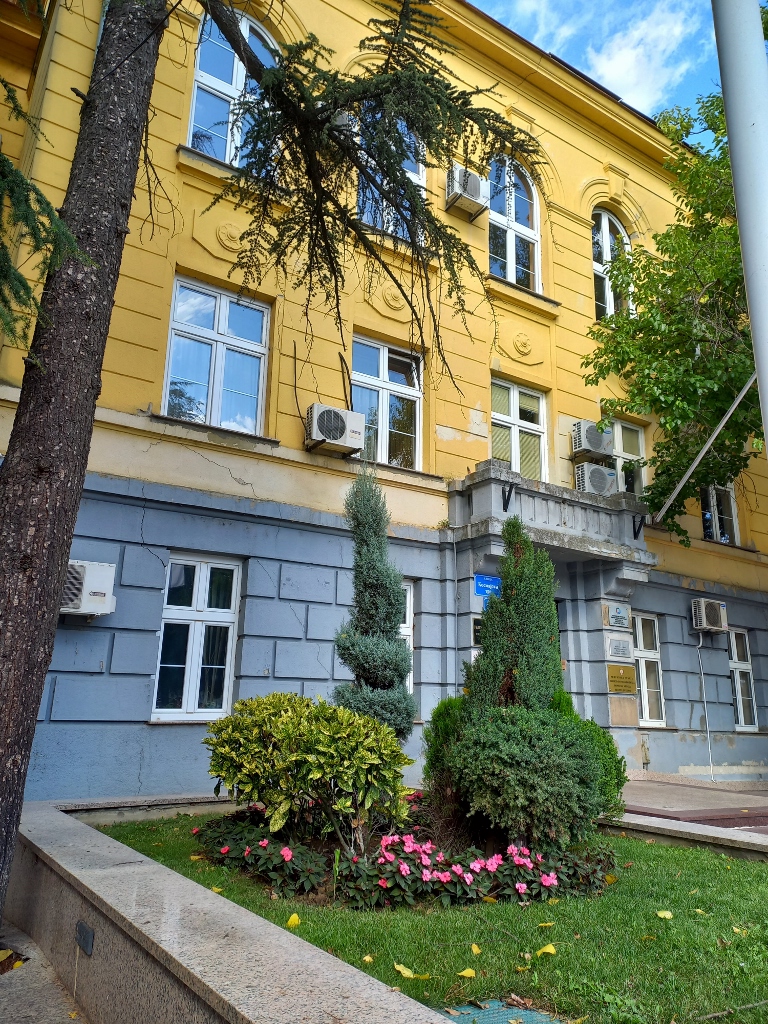 Sopot, a detail
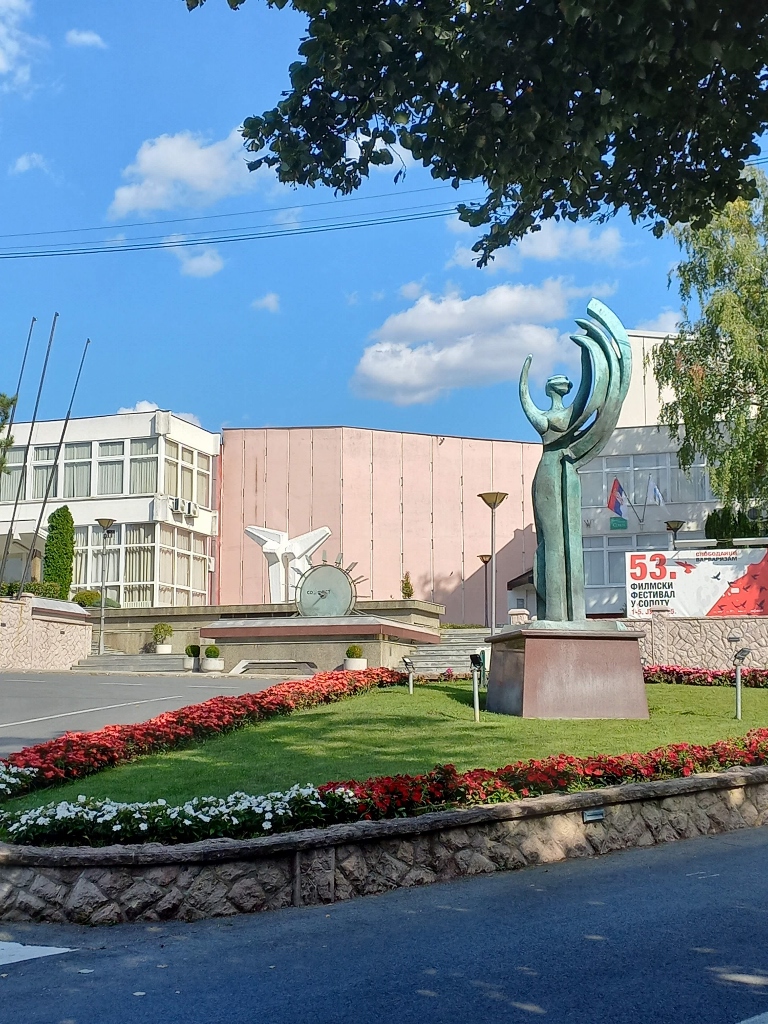
Right across from the municipality building is a modern fountain and from there we continued to walk gently uphill, seeing beautifully maintained green and flowered areas, as well as monuments everywhere.
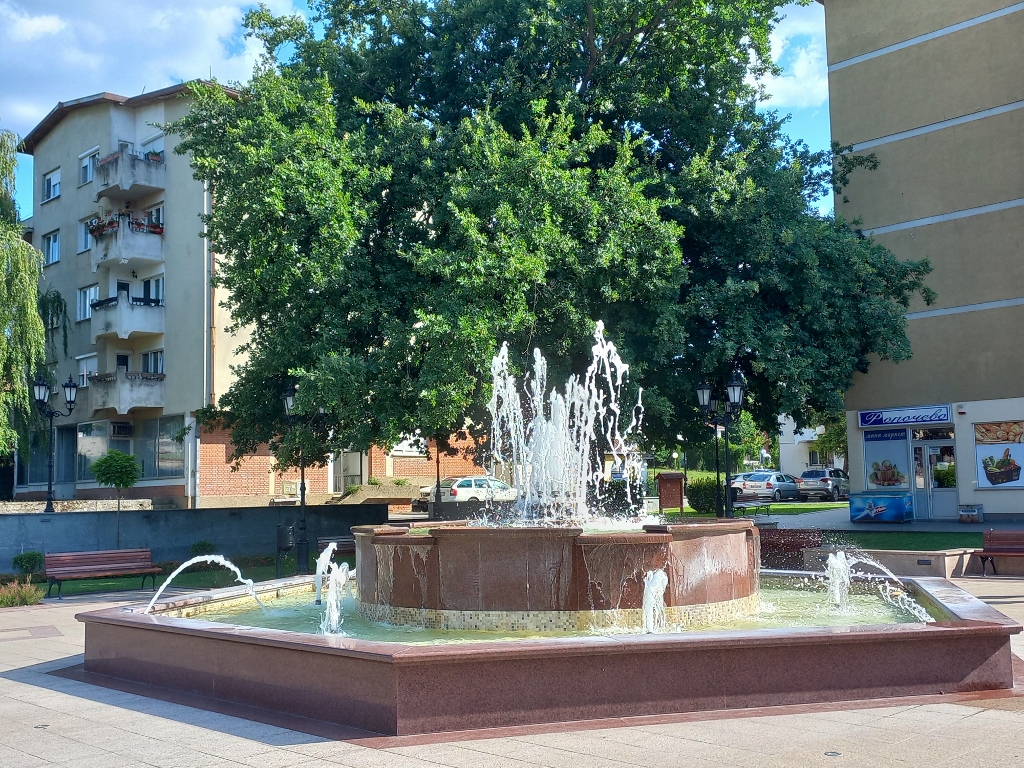 Sopot, a detail
 Sopot, a detail
 Sopot, a detail
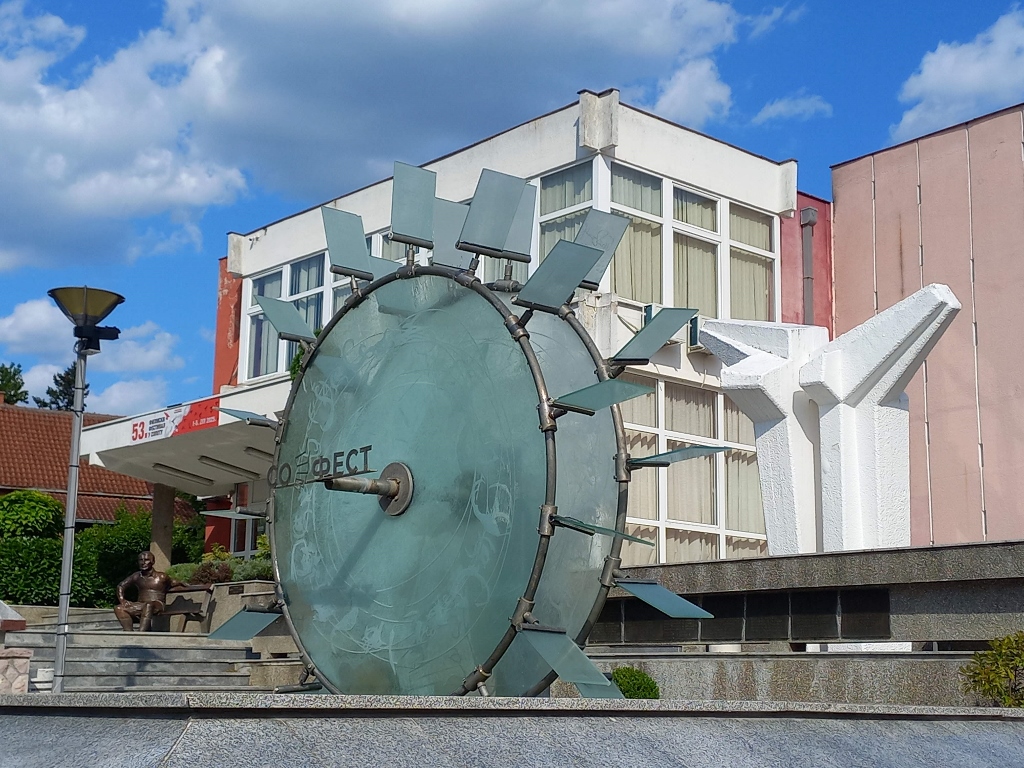
At the top of the slope is the Sopot Cultural Centre, where, among other things, since 1972, the Sopot Film Festival, SOFEST, has been held annually, showcasing domestic films (formerly Yugoslav, now Serbian) in its competition programme.
In front of the Cultural Centre, there is a fountain with two wheels turning in opposite directions, as well as several other monuments.
 Sopot, a detail
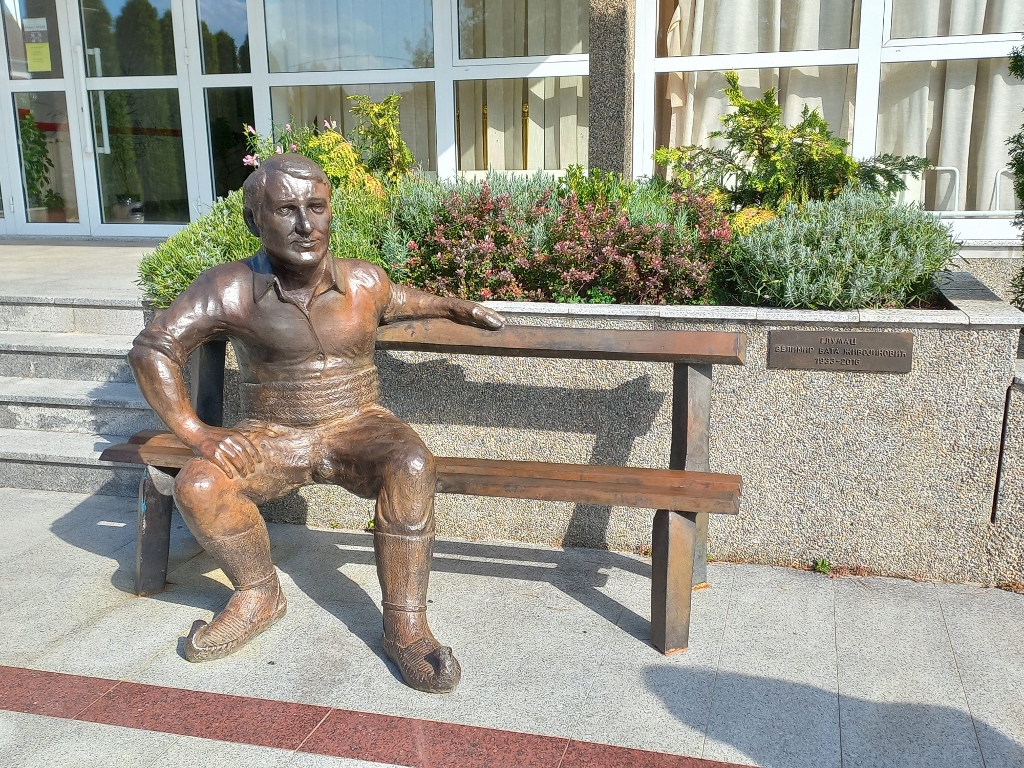
I would especially highlight the monument to Velimir Bata Živojinović (1933–2016), the famous Serbian (and Yugoslav) actor that can already be seen in the previous photo (to the left of the wheel). Bata Živojinović was, of course, extremely well-known throughout all of Yugoslavia, but it is particularly interesting that due to his role in the film Valter brani Sarajevo ("Walter Defends Sarajevo"), he was also extremely popular in – China. So much so that there was once a beer there called "Walter" with a label depicting Bata Živojinović in the role of Walter.
 Sopot, a detail
I think the monument isn’t well done (it doesn’t look like Bata Živojinović at all), but oh well. It’s there, so I just wanted to mention it.
After this short walk, we returned to the car and then drove to the village of Popović, where there is another cultural monument – the Old Primary School in Popović.
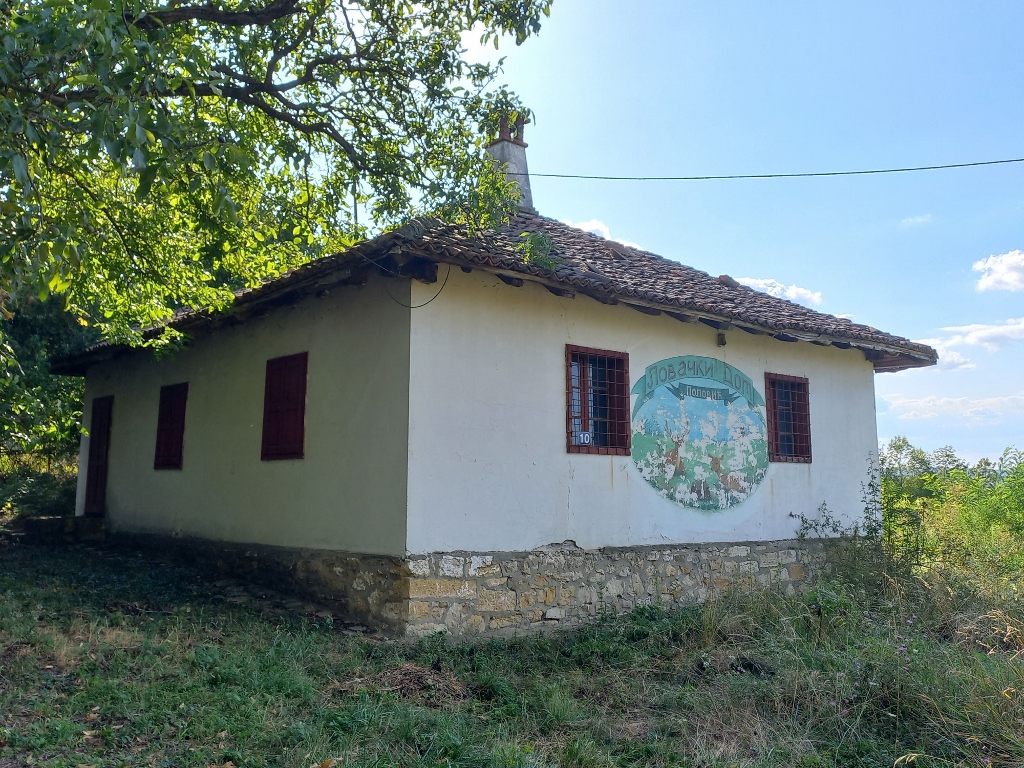 Old Primary School in Popović
This school was built in 1867 and architecturally belongs to the type of Šumadija wooden houses (čatmara), which were built throughout this region during the 19th century, thus representing a good example of traditional vernacular architecture.
As I started visiting various cultural monuments in Serbia, I realised that 19th-century primary schools appear quite often, each in different states of preservation today. At first, this puzzled me, but later I understood that building schools during the 19th century was extremely important due to both the necessity and the desire of national leaders to raise the level of education and enlightenment among the people, who had lived for nearly 500 years under Ottoman rule as rayah (non-Muslim subjects).
At that time, literacy among Serbs was nurtured mainly in monasteries and, for example, our famous Prince Miloš is often said to have been illiterate. The fact is that he came from a poor family and was not formally educated, but he later learned to sign his name and could read and write simple texts. On the other hand, this did not limit him at all; he was extremely wise and insightful, probably the most skilled politician we ever had, and he used scribes, which was common practice, so he could “get by.”
But to return to the primary school building – it included classrooms and a teacher’s flat, which was once common practice. Based on the inscription on the old primary school building, Irena, Igor and I concluded that it now houses a Hunting Lodge.
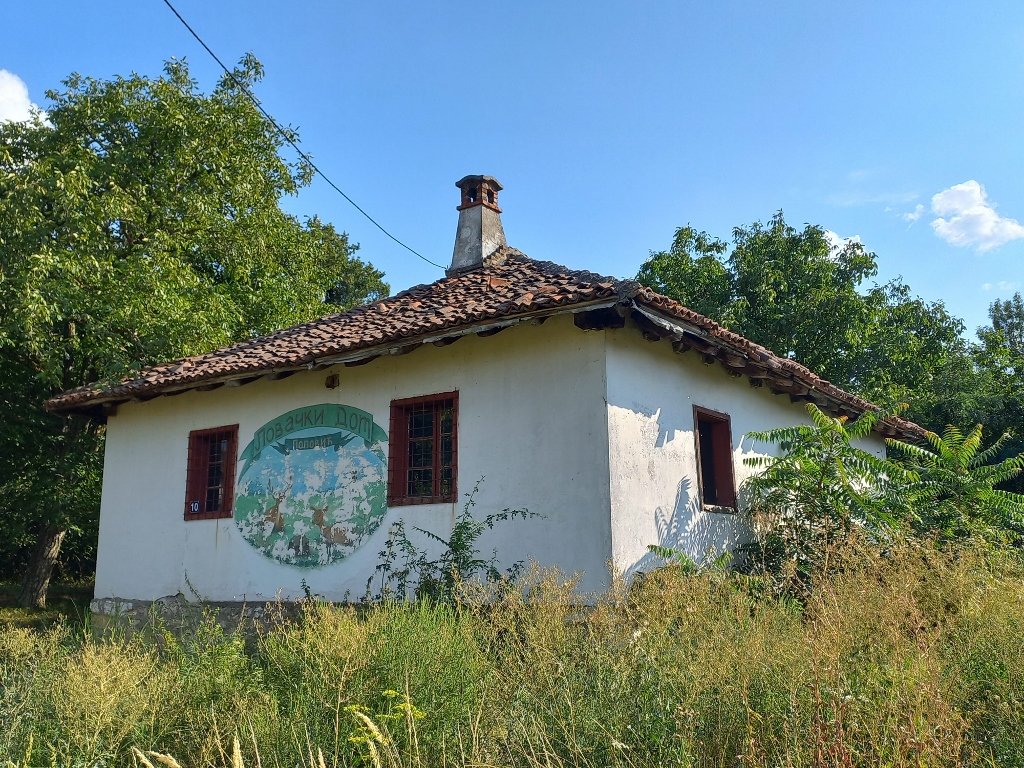 Old Primary School in Popović
In the yard, there is also another, younger building (from the late 19th century), but without architectural or ethnographic value, and although it forms a unified ensemble with the old primary school building, I didn’t take any pictures of it. However, there was a very picturesque well there.
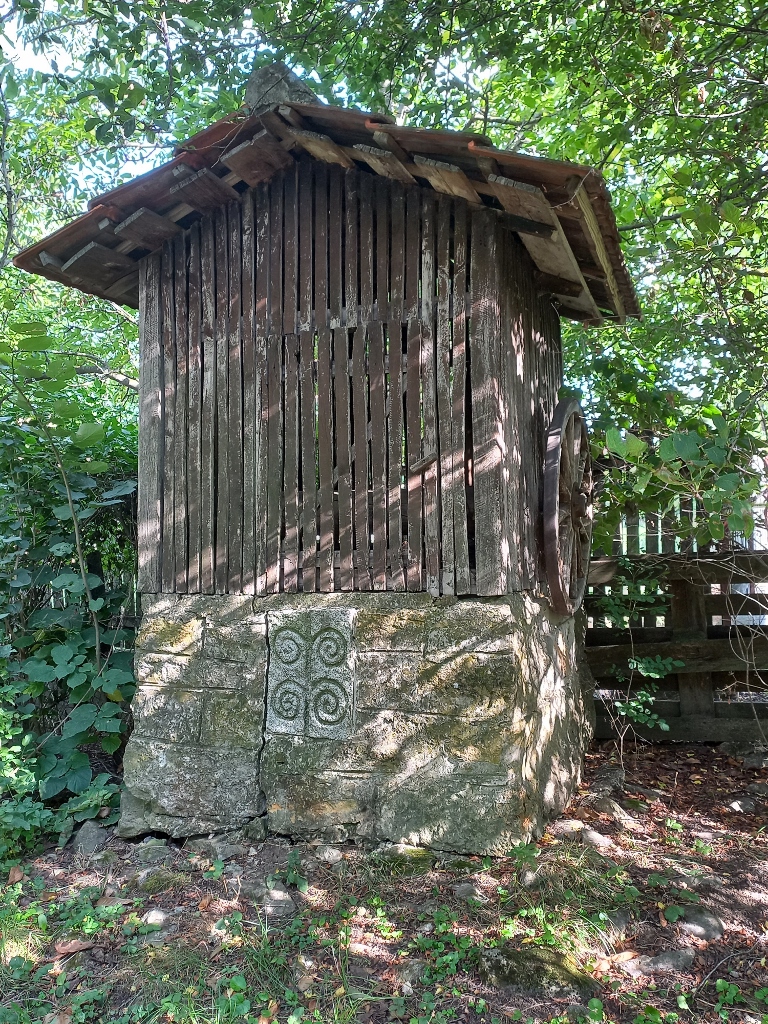 Old Primary School in Popović, a detail
And so we finished our tour of the cultural monuments in the immediate vicinity of Kosmaj, where we had a wonderful walk.
All that was left was to get into the car and so we returned to Belgrade relatively quickly, each to their own home.
I was extremely satisfied with the trip, everything I saw and experienced, and especially with the wonderful company of my dear friends.