This is another story about a summer vacation from earlier times. In 2012, I had already long stopped going on a proper European summer holiday, meaning somewhere by the sea in July or August. There’s nothing appealing to me about that. That’s when there are big crowds and intense heat, and I don’t like that combination. Somehow I got used to spending those months best and most comfortably at home in Belgrade.
However, during that period I often spent time with a woman who was somewhat younger than me, but not nearly as independent as I am. From the beginning of that year, she kept mentioning how a friend she used to go on vacation with had gotten married, so now she didn’t have anyone to go with, and she spoke about it with such longing and sadness in her voice that at one point I said I would go with her if that suited her. I think she felt relieved, because she had a typical job, so it was important for her to make good use of her annual leave and for her that meant going to the seaside in July or August – and not alone.
Since I was already making a significant compromise with my own wishes and needs, I told her to handle the organisation and choose the destination, which she did. So in July 2012, we went to Sicily, to a place called Cefalù.
It turned out that she had chosen a hotel at the end of a bay west of the town and that was perfectly fine, although it required quite a descent to reach the beach and then a climb back up later. But that part isn’t really very important for this story.
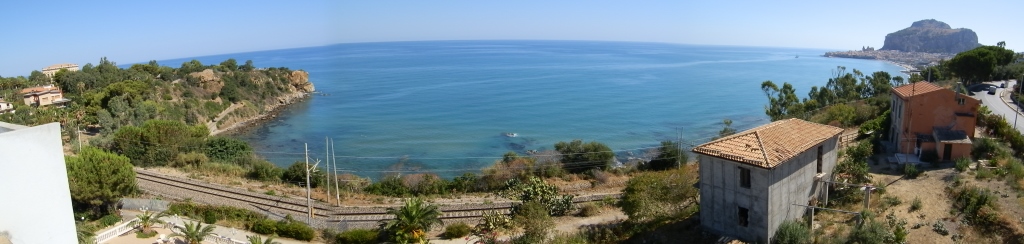 Cefalù
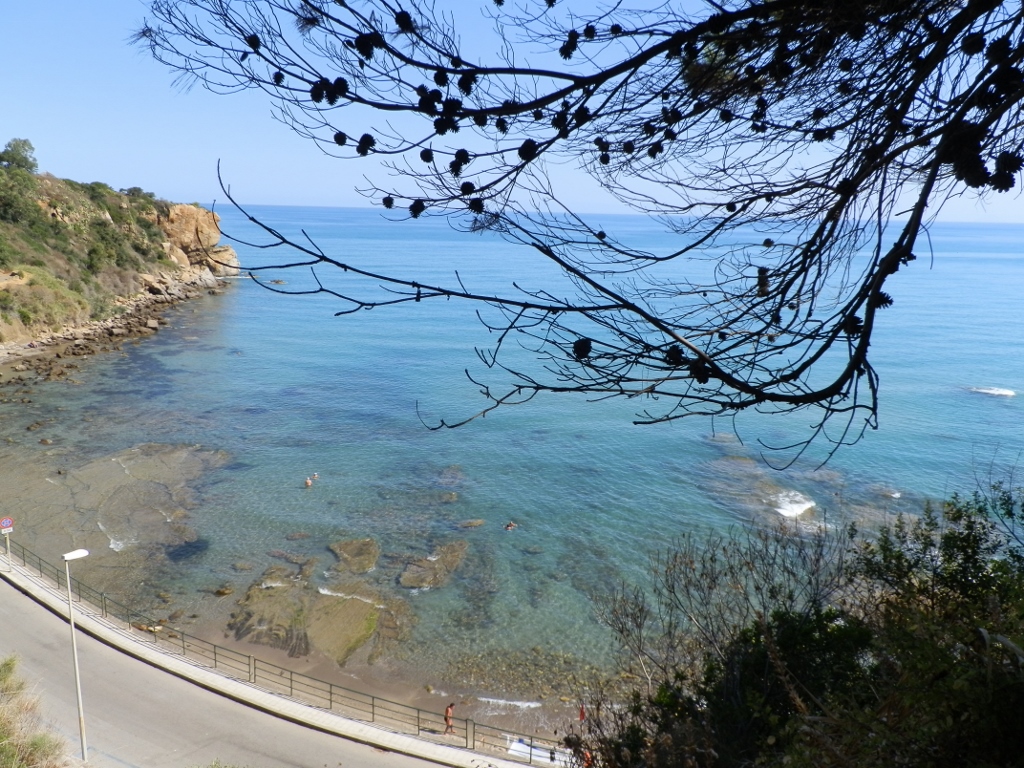 Cefalù, a detail
What is much more important is that I used that vacation for some quite pleasant trips and visits to certain parts of Sicily. Here is also a map showing all the places I went to during that trip:
Still, to begin with, let me show how from the direction of our hotel there was a wonderful view of Cefalù at any time of day, while I will write about the town itself later on.
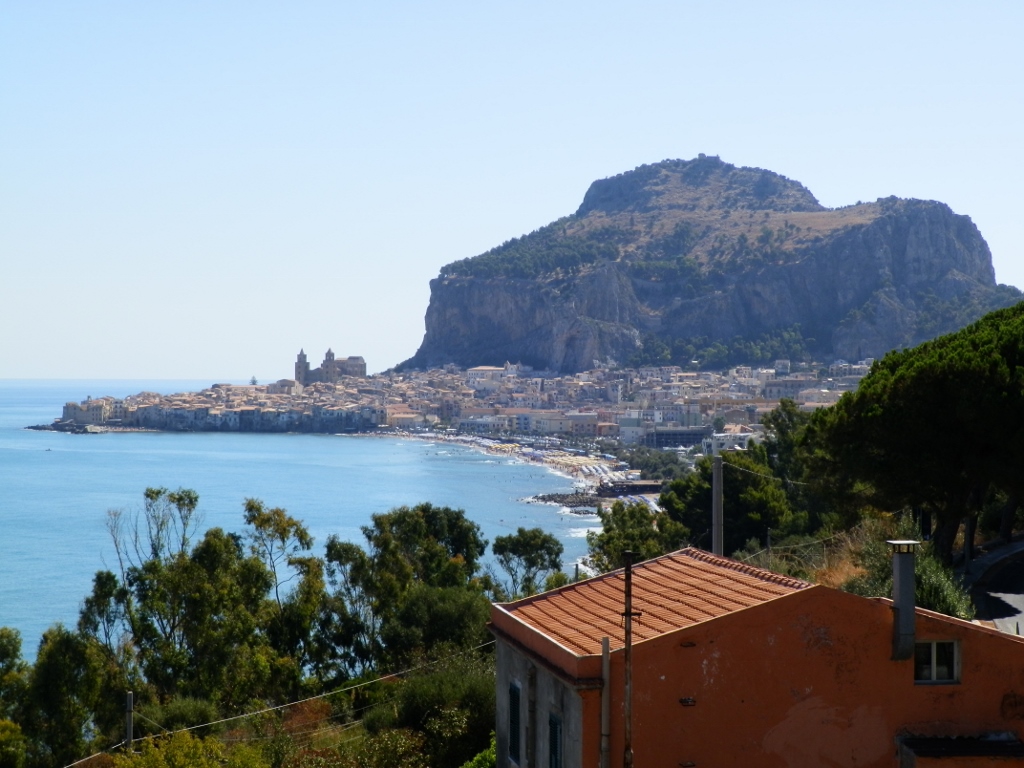 Cefalù
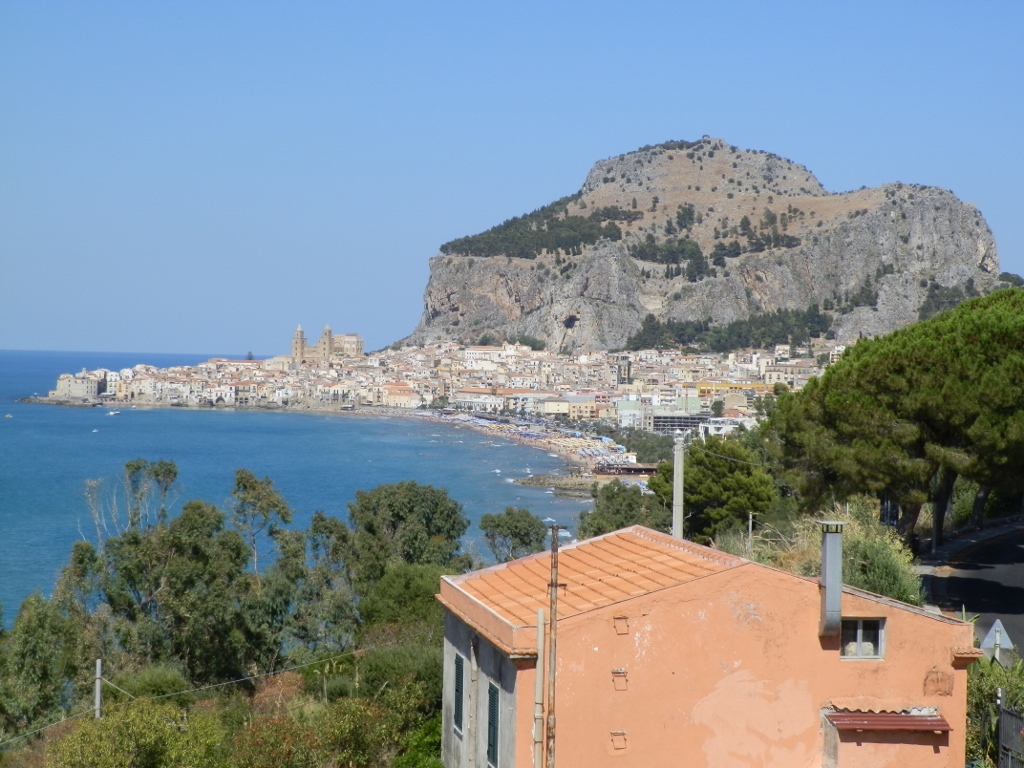 Cefalù
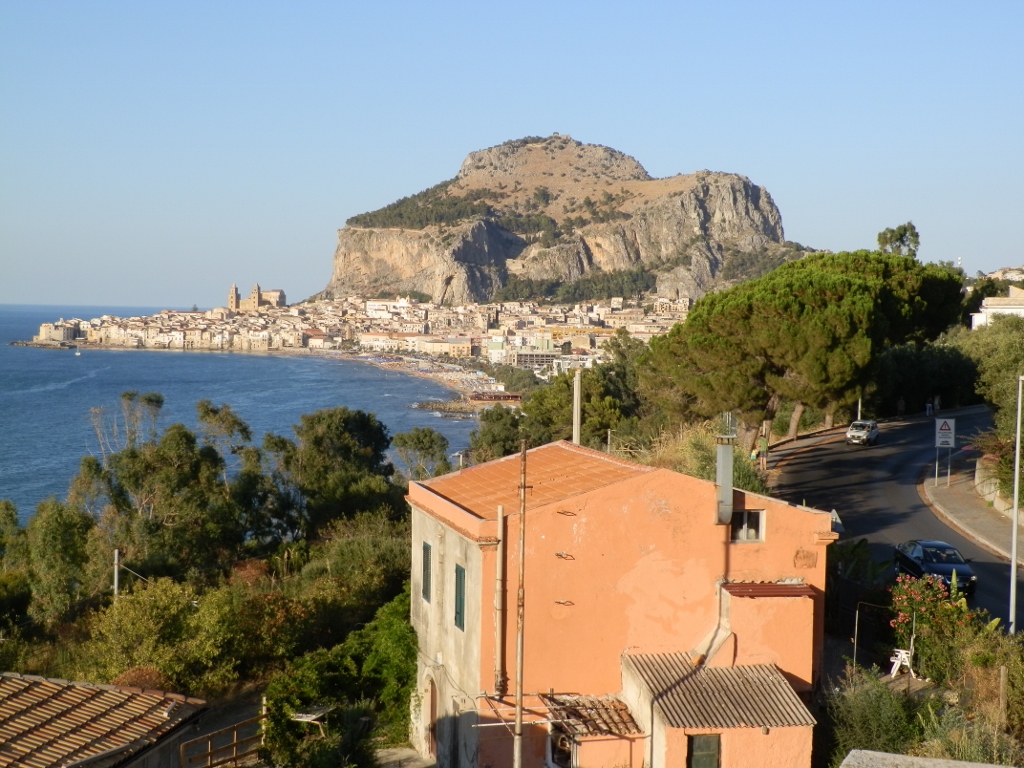 Cefalù
I could even zoom in on the town centre with my camera, but I also photographed it while walking towards it along the promenade that follows the coastline.
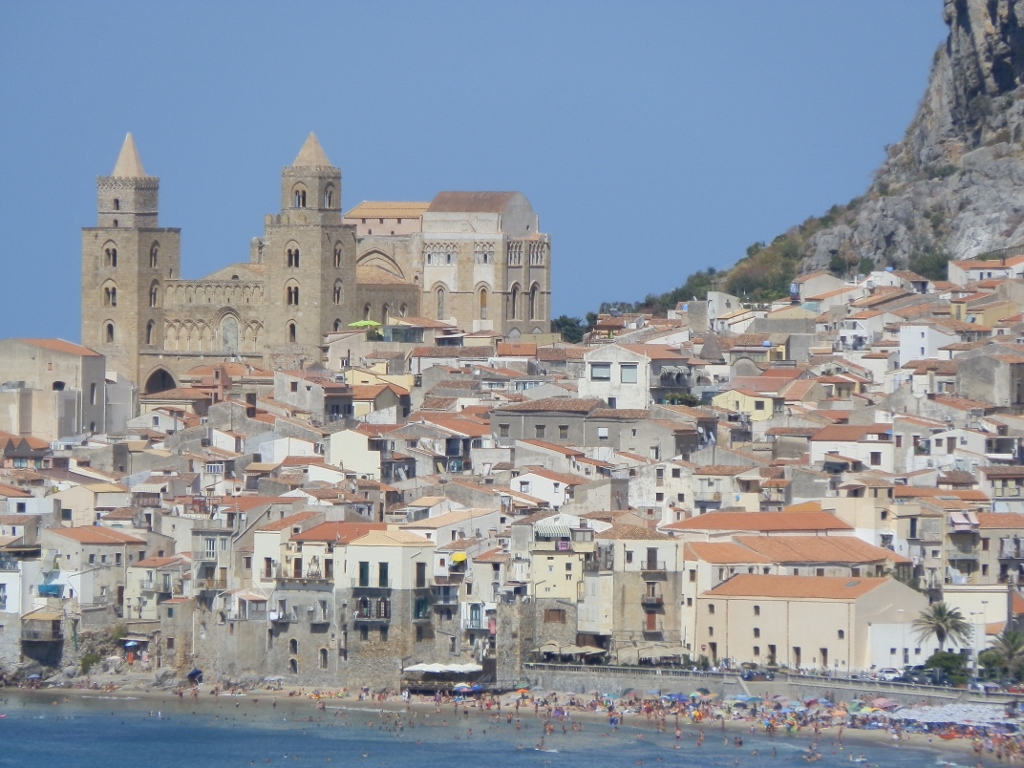 Cefalù
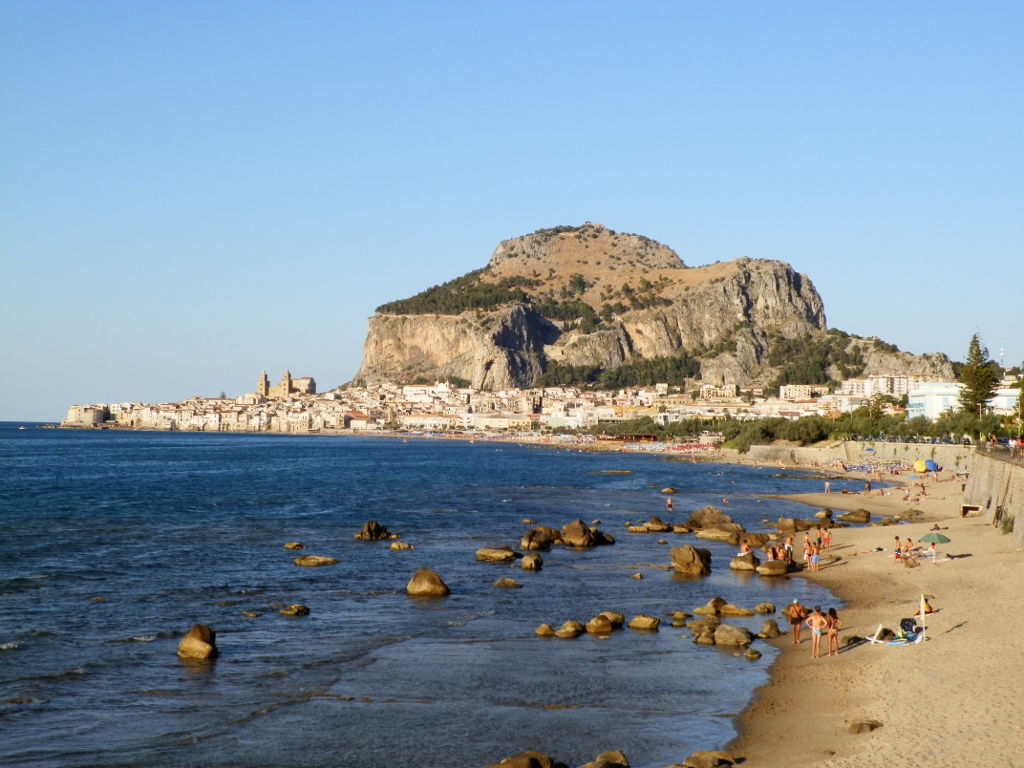 Cefalù
One of the very popular excursions in Sicily includes a visit to a village called Savoca. The village is located in the north-eastern part of the island, on the slopes of steep hills not far from the coast.
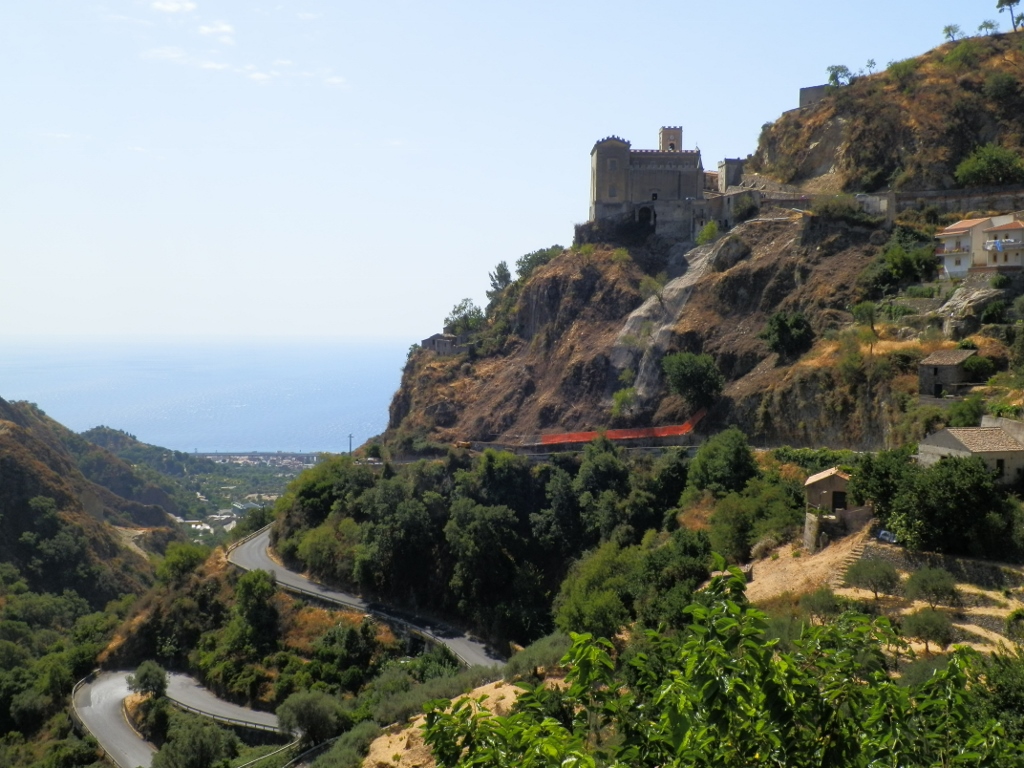 Savoca
Although it is a completely quiet village, it gained worldwide fame as the location where the famous film “The Godfather” was shot, with Savoca portrayed as the home of the Corleone family.
In fact, the Corleone family from the novel and film The Godfather got its name from the real Sicilian town of Corleone (in western Sicily, south of Palermo), known for its historical ties to the mafia and strong family traditions. However, the actual film scenes were not shot there, but right here in the small village of Savoca, which is visually more authentic and picturesque. Key scenes were filmed in Savoca, including the wedding at the Church of St. Nicholas and the conversations at Bar Vitelli.
It was precisely that bar that I photographed upon arriving in Savoca and we later returned there, like true tourists, to have a cup of coffee.
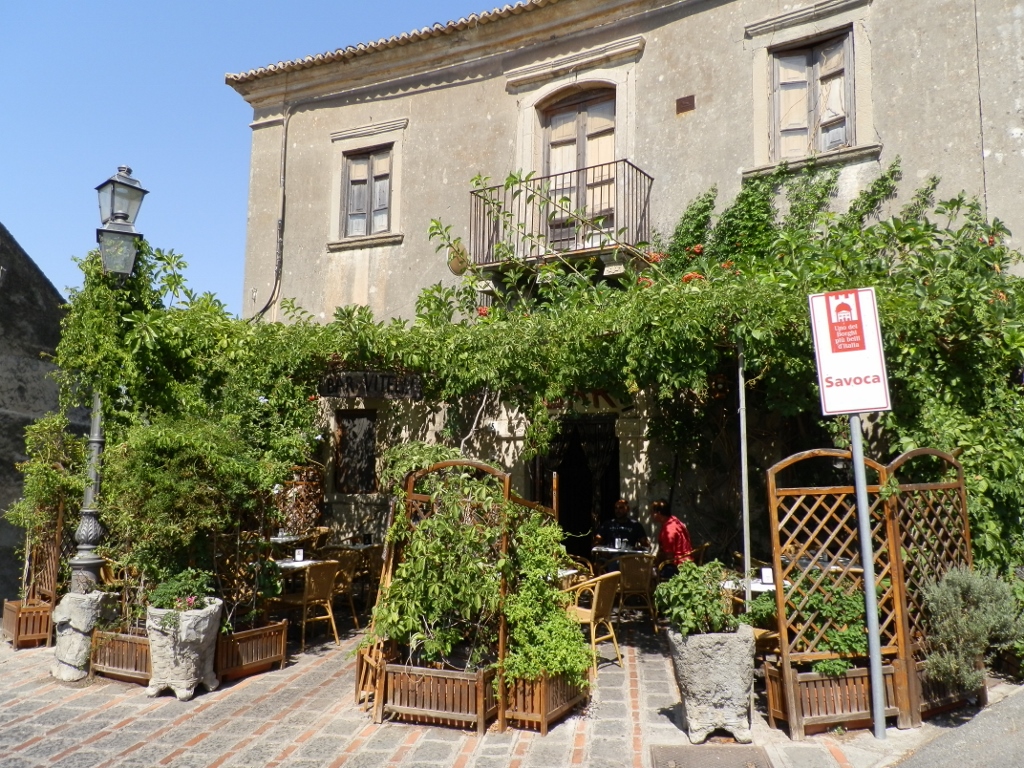 Savoca, a detail
The bar is located at the main square that also has a spacious terrace or platform offering a nice view of the surroundings.
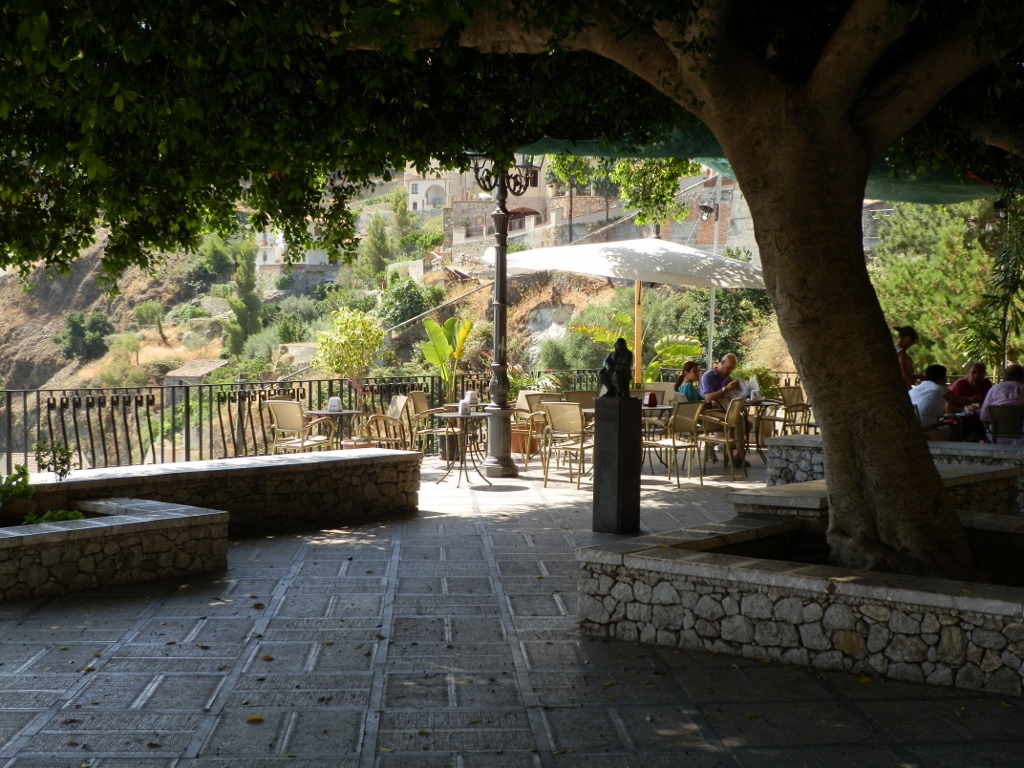 Savoca, a detail
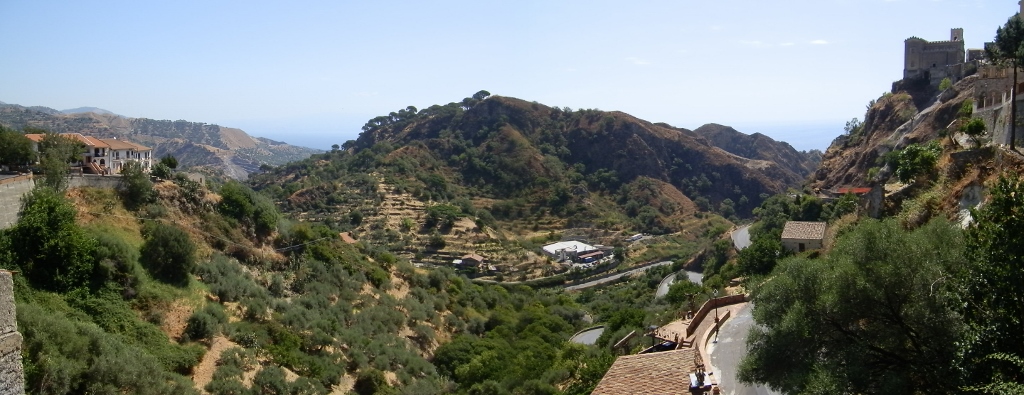 Savoca, a detail
With the other members of the group, including (by chance) a friend of mine from university who was there with her husband, as well as a wonderful woman I had worked with professionally for several years, who was there with her daughter, I set off on a leisurely walk towards the Church of St. Nicholas. Along the way, I also photographed young caper buds, as well as other plants and the surroundings.
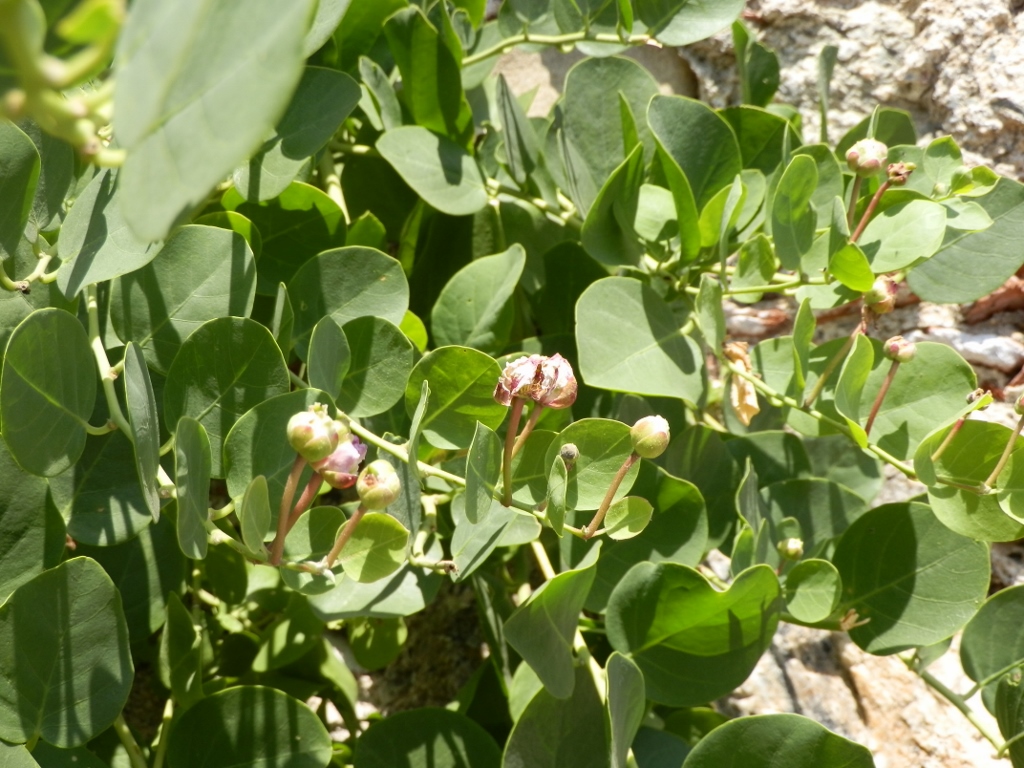 Savoca, a detail
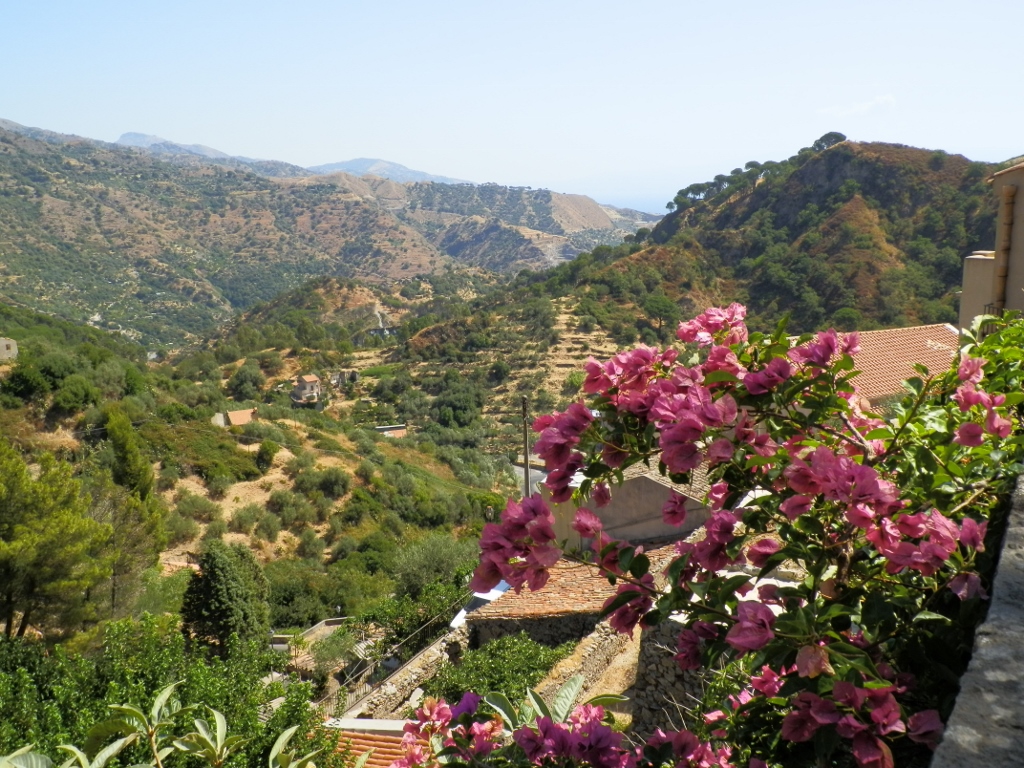 Savoca, a detail
The Church of St. Nicholas is the main church in the village of Savoca and an example of typical Sicilian Baroque architecture, with simple yet elegant facades and a bell tower.
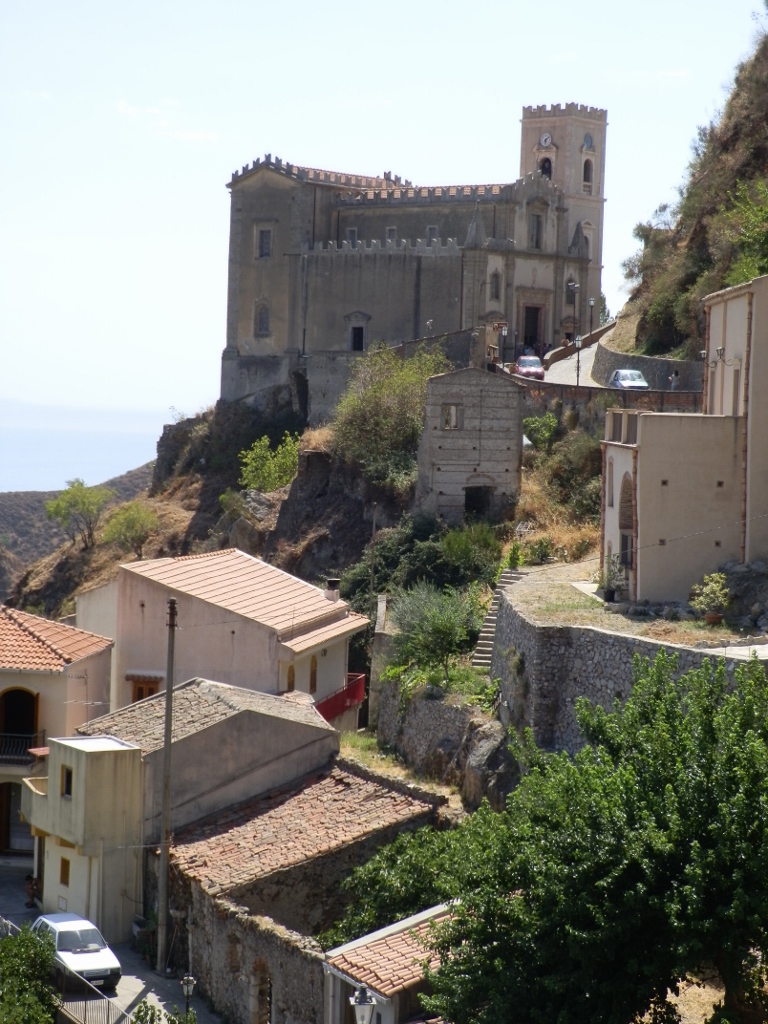 Savoca, a detail
Its construction began as early as the 13th century, but over time the church was renovated multiple times, especially at the end of the 15th century and the beginning of the 18th century, hence the Baroque influence. The church is situated in an exposed position above a deep ravine and is notable for its walls with merlons on the parapet, giving it a fortress-like appearance.
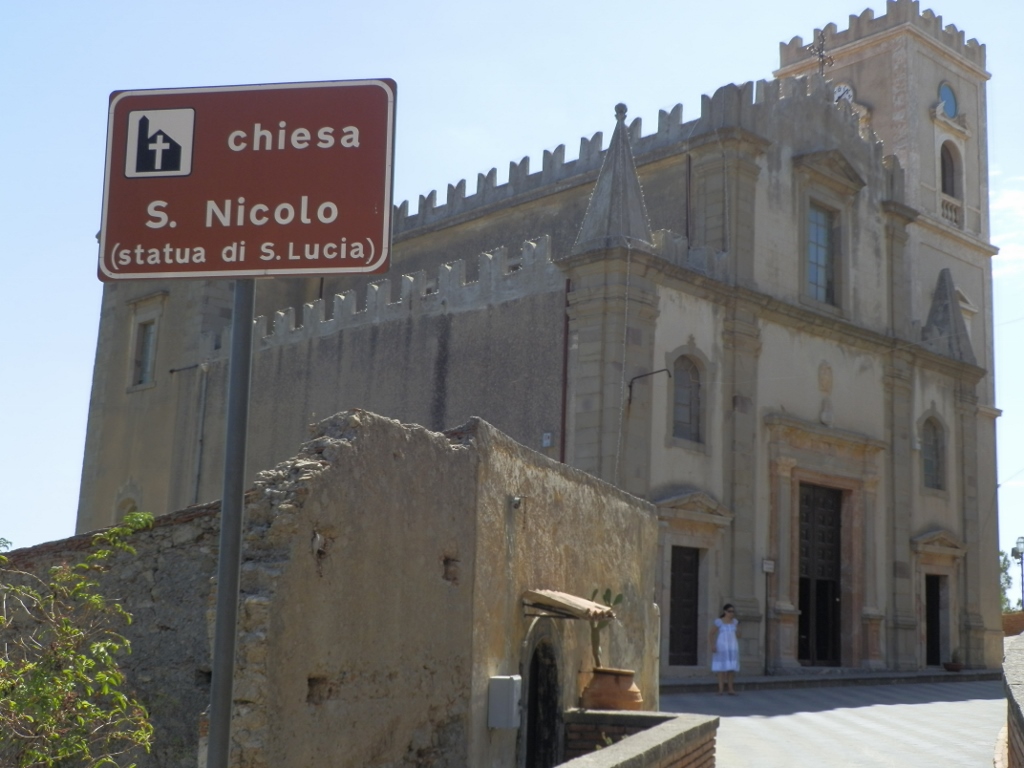 Savoca, a detail
The interior is divided into three naves and the church houses numerous valuable liturgical objects, including a statue of Saint Lucy from Syracuse dating back to 1666, which is particularly revered.
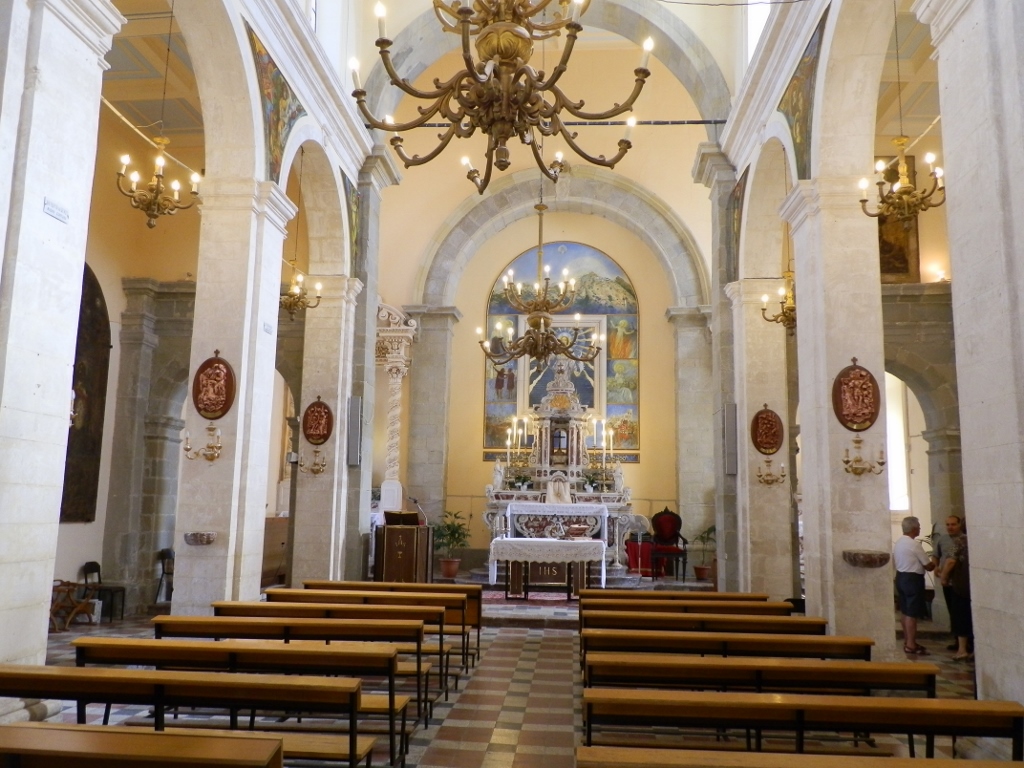 Savoca, a detail
Although the top of the hill where the Church of St. Nicholas stands has the remains of an old fortress, I wasn’t interested in going all the way up there. I just climbed a little up the street in order to photograph the church from another angle.
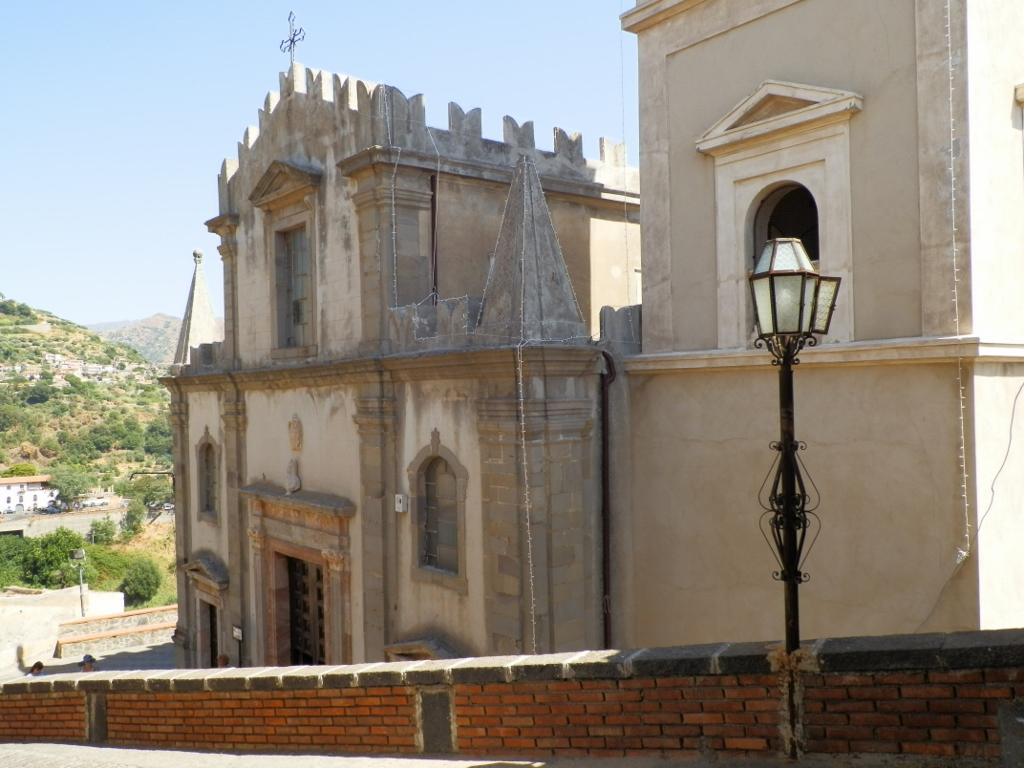 Savoca, a detail
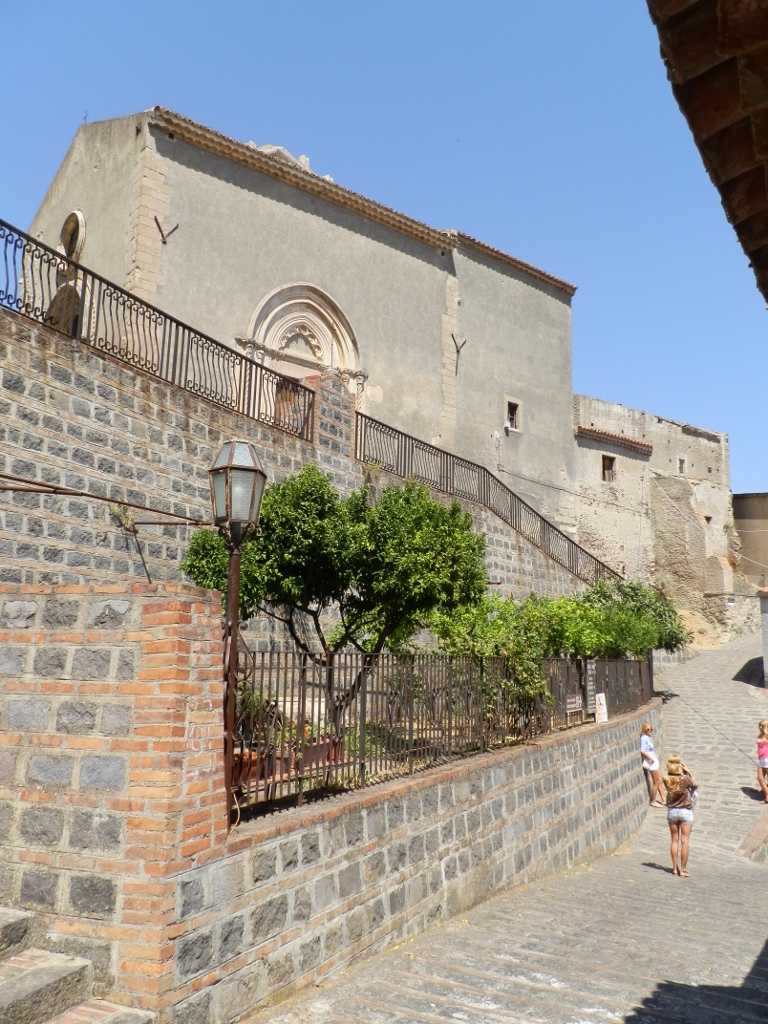
I started heading back towards the coach and along the way I also photographed the Church of St. Michael, considered one of the oldest in Savoca, with the first mentions dating back to the 13th century.
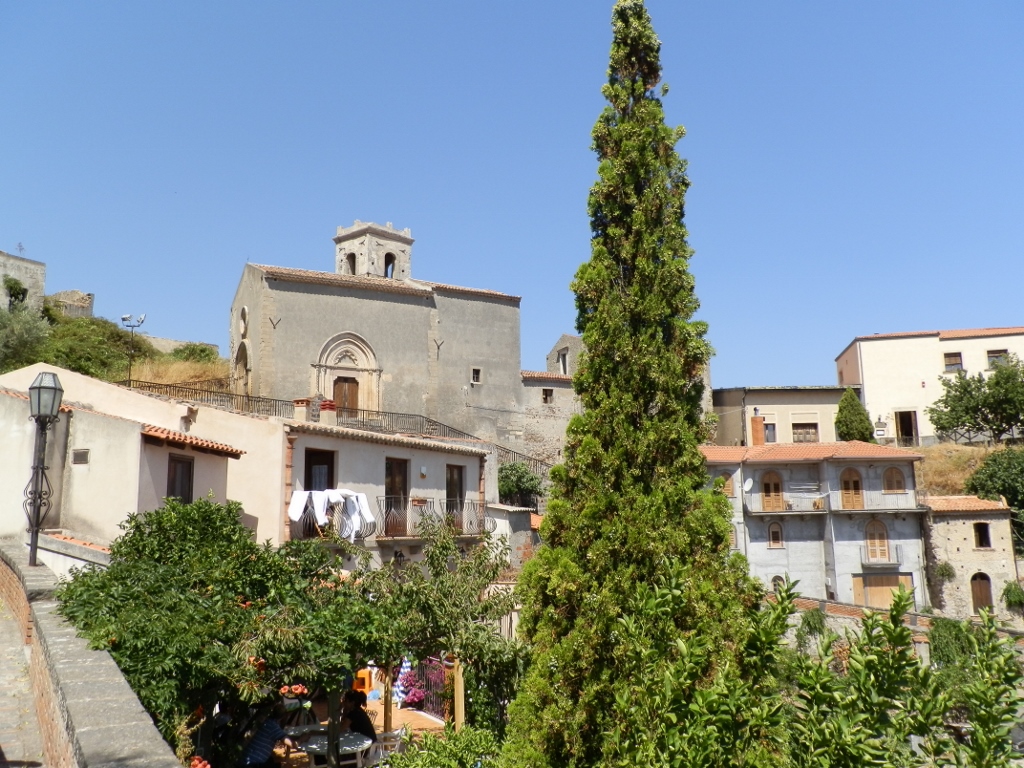 Savoca, a detail
This church has also been renovated multiple times, which can be seen in its appearance. At the time of my visit, the Church of St. Michael was closed, but it was restored and reopened in 2020.
 Savoca, a detail
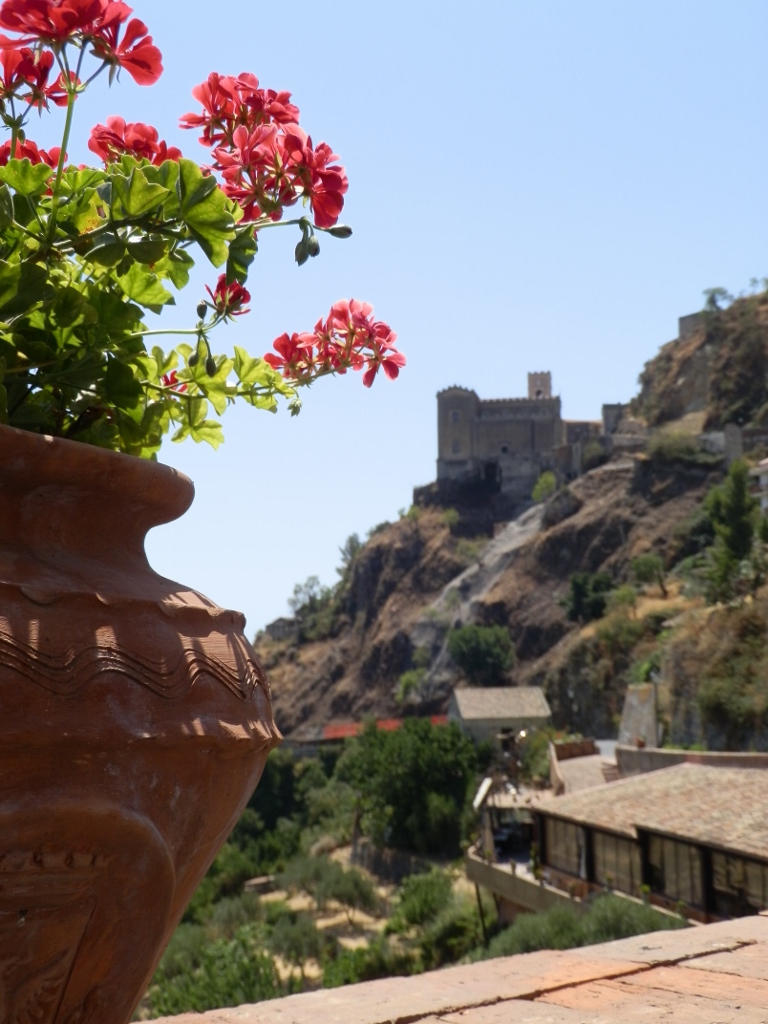
I still had a few photos to take and a coffee to enjoy at Bar Vitelli, and then I could leave the village of Savoca together with the group I had been on this excursion with.
 Savoca, a detail
The next destination on this excursion was the town of Taormina, whose historic centre is located in north-eastern Sicily, on a hill above the coast. After getting off the coach, we set out to walk through the town centre, but before that, I photographed the wonderful view from a nearby park.
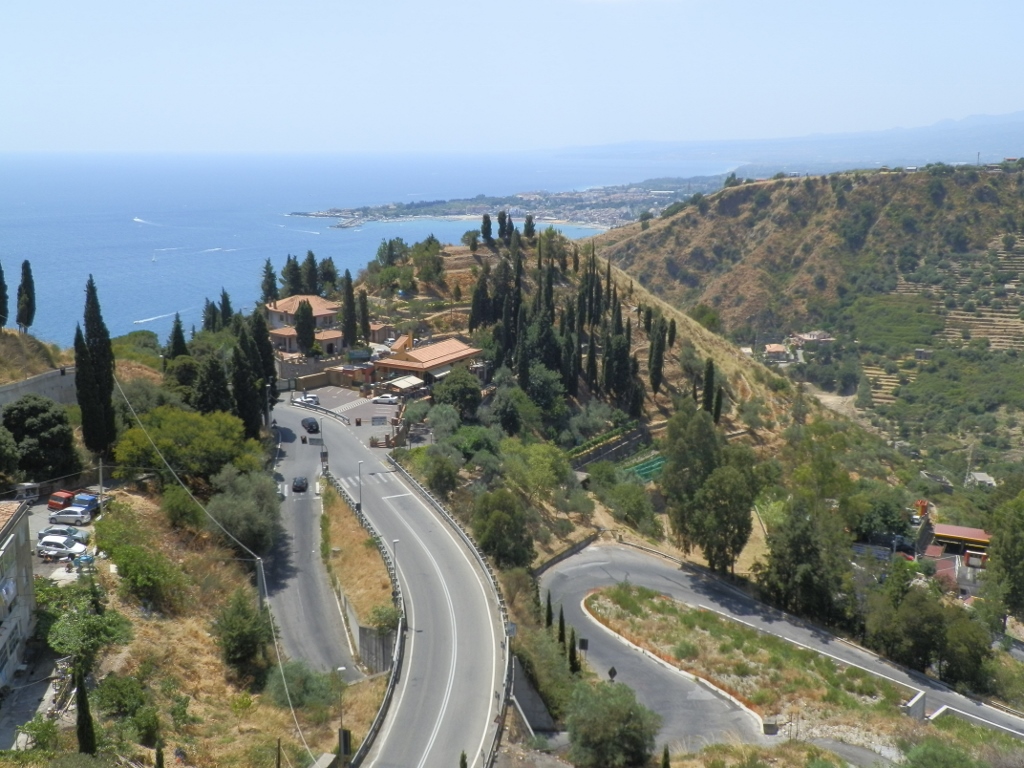 Taormina, a detail
From here, I could also see Mount Etna, which we visited later.
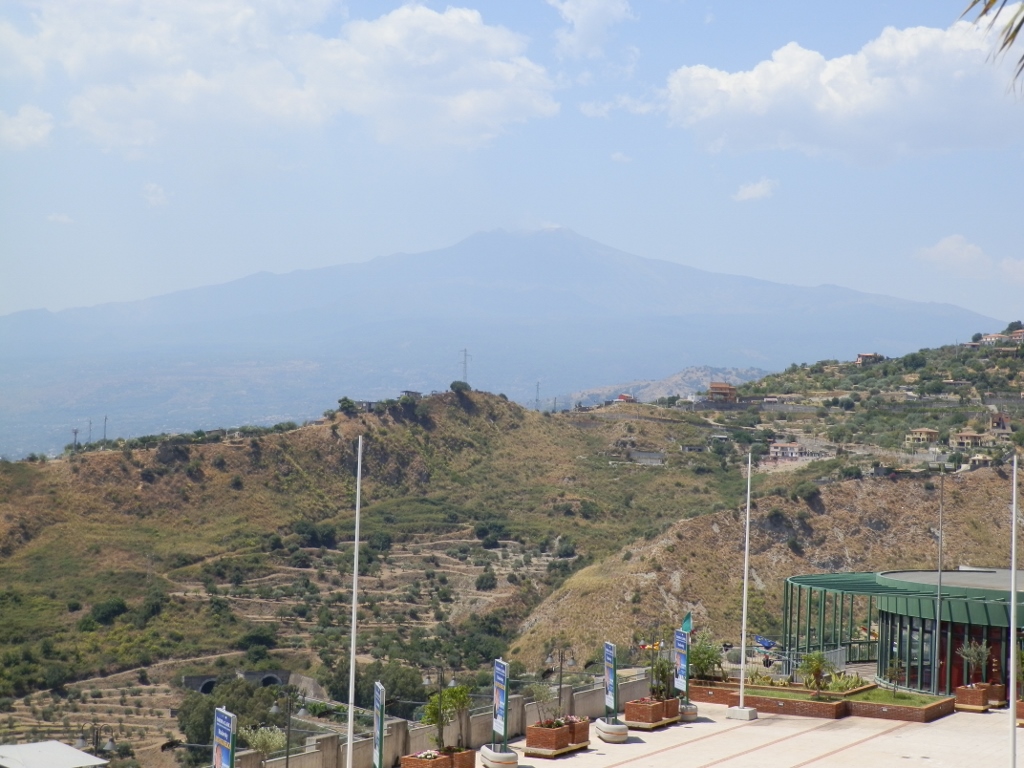 View at Mount Etna from Taormina
For now, we headed towards the main pedestrian street, Corso Umberto I, which stretches between two city gates, Porta Catania and Porta Messina. Before reaching the area between the gates, I could see from the street the top of the rocky hill above the town where the remains of the Saracen Castle (Castello Saraceno) are located. It is a medieval citadel dating back to the period of Arab and Norman rule in Sicily, roughly between the 9th and 12th centuries. Today, only partial remains of the stone walls and towers are visible.
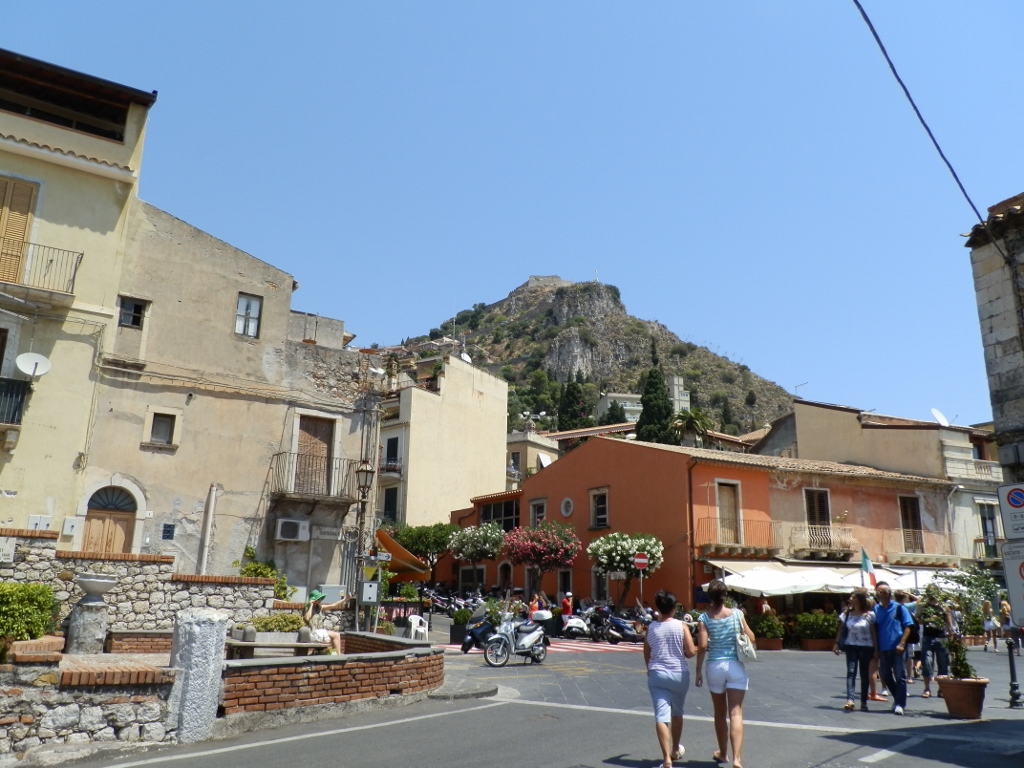 Taormina, a detail
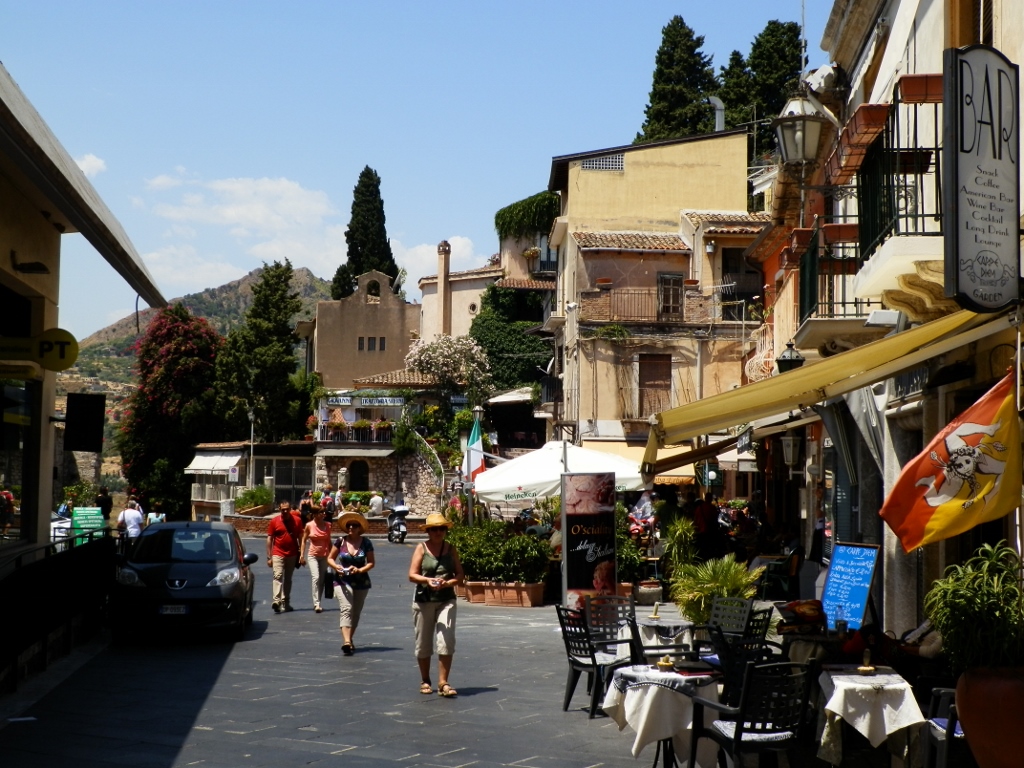 Taormina, a detail
Nearby was also Porta Catania, but first, let me say a few words about the town itself.
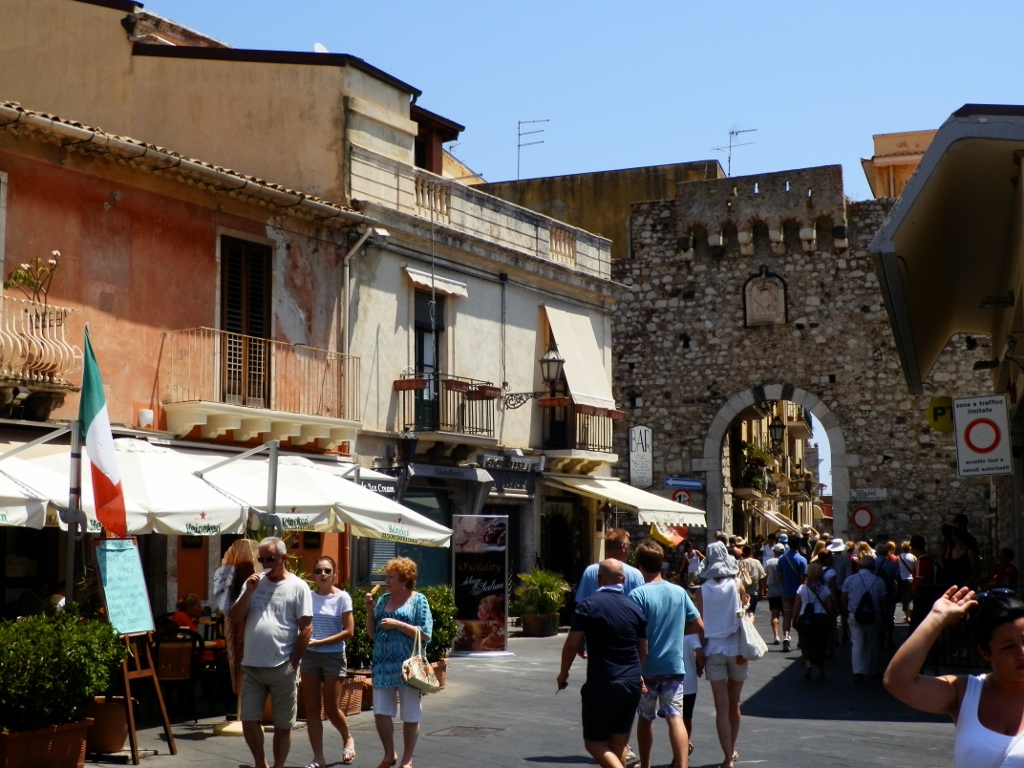 Taormina, a detail
Taormina is a picturesque town on the eastern coast of Sicily, perched on a cliff with spectacular views of the Ionian Sea and Mount Etna. Its history begins in the 4th century BCE, when it was founded by the ancient Greeks. During the Greek period, a thriving trade and cultural community developed, while the first theatre was also built in that period. Later it was transformed into the famous ancient theatre the remains of which can still be seen in the eastern part of the town. Afterwards, the town was ruled by the Romans, Byzantines, Arabs, Normans and Spaniards, all of whom left their mark, whether through buildings or influence on culture, agriculture and more.
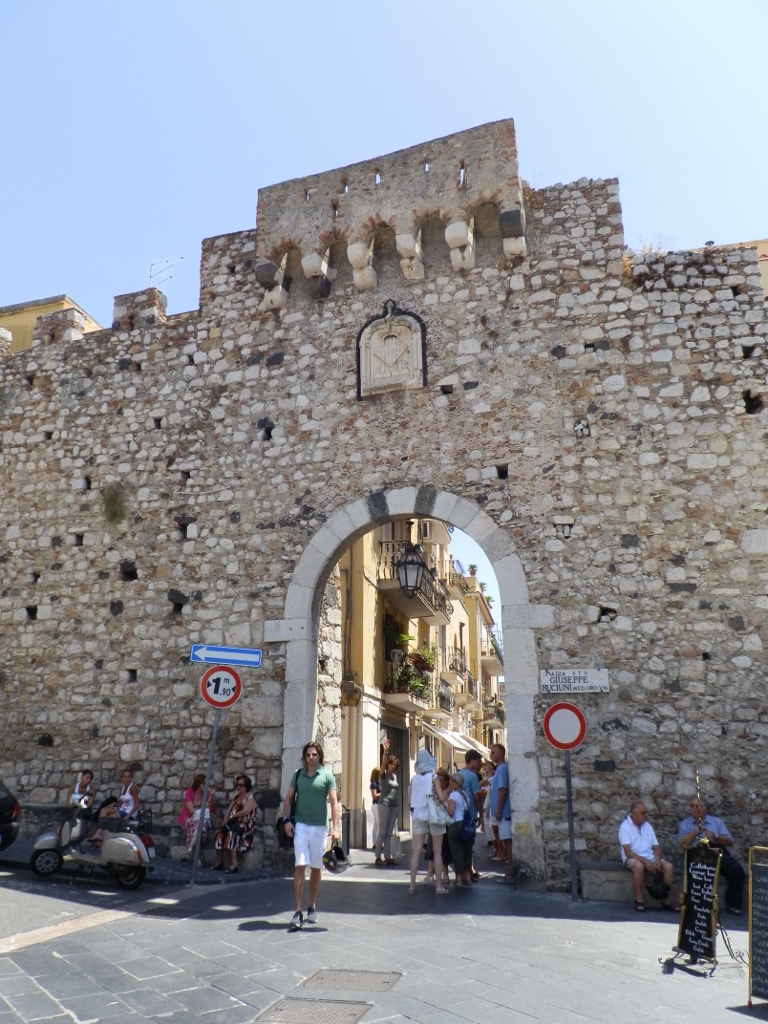
Like most tourist excursions organised in the summer, this one, despite its advantages, also had its limitations, primarily in terms of the limited time. We were given a couple of hours here, which also included time for lunch. In other words, for me, this meant a relatively superficial visit to the town centre and a walk along the pedestrian street Corso Umberto I starting from Porta Catania, without going to the Ancient Theatre or examining details.
 Taormina, a detail
Porta Catania is one of the main gates of the old town of Taormina, located at the western end of the pedestrian street Corso Umberto I. It once served as the entrance to the town for travellers coming from the direction of Catania, hence the name. The gate dates back to the medieval period and is an important historical and architectural feature of Taormina. Today, it is a popular spot for photographs and a starting point for exploring the old part of the town.
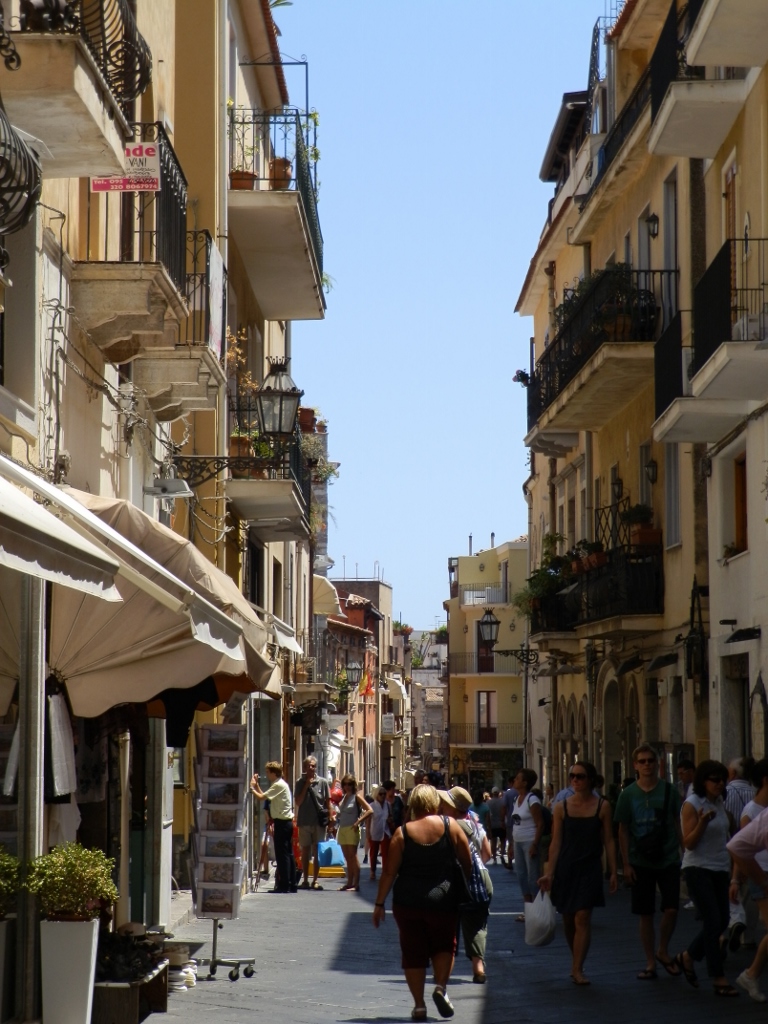 Taormina, a detail
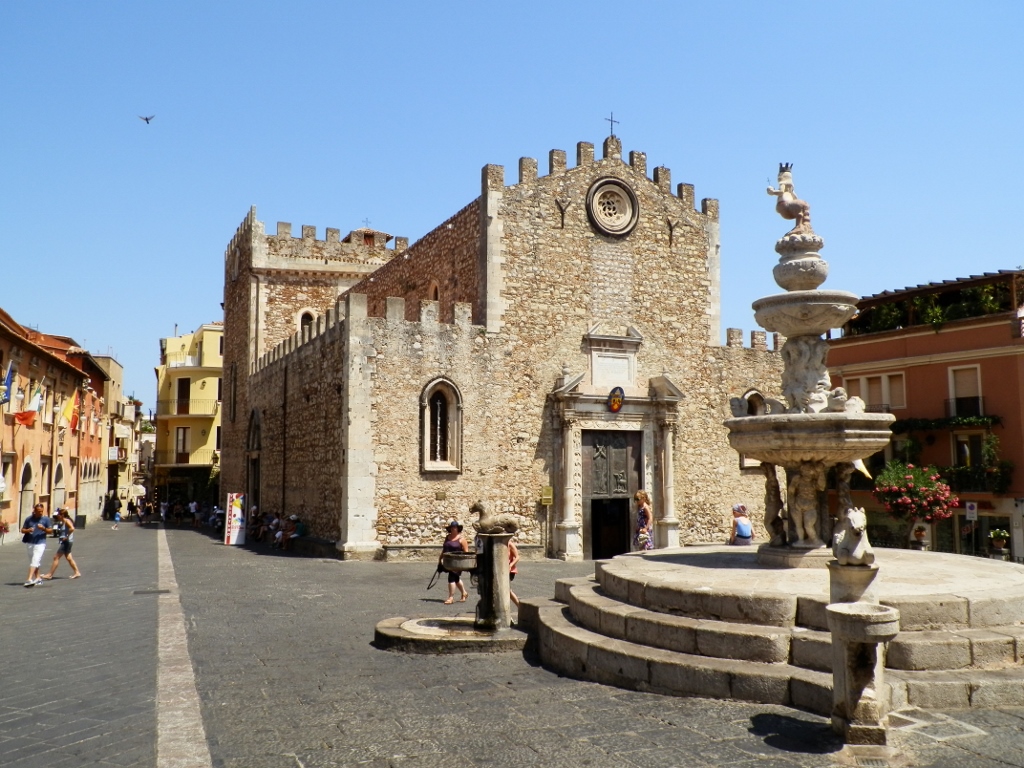
Soon I reached Piazza del Duomo, where the cathedral (the word “duomo” in Italian literally means cathedral) is located. It is dedicated to Saint Nicholas, the patron saint of travellers and sailors, which was important for a town situated on the coast and along trade routes.
 Taormina, a detail
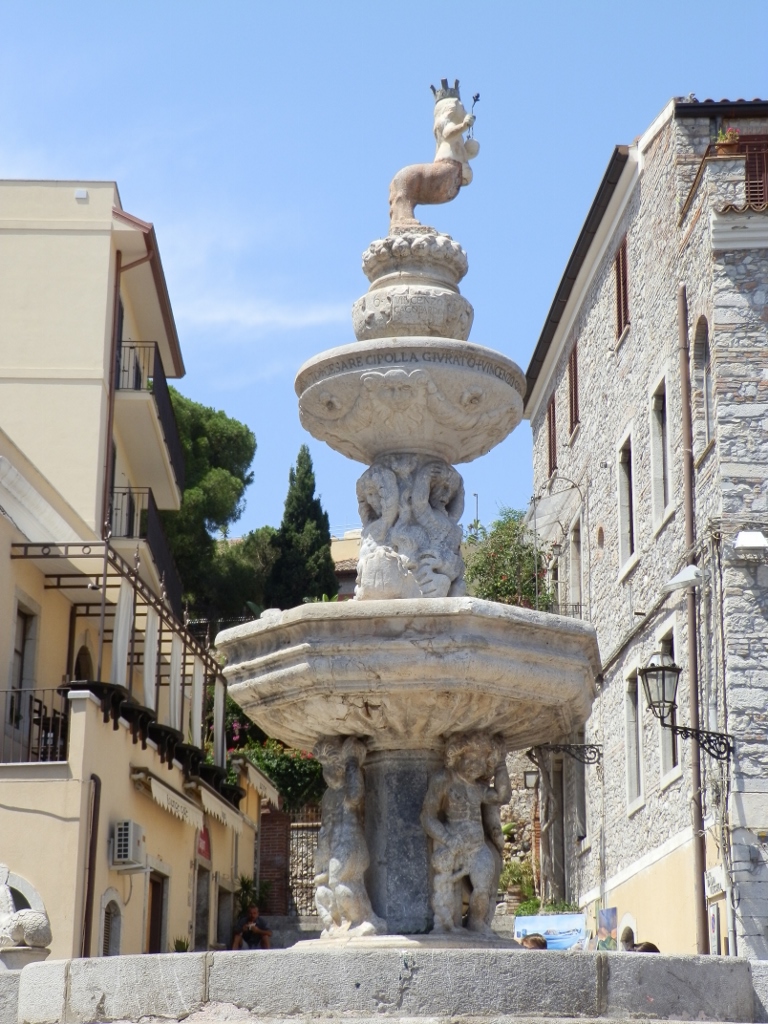
Among other things, the square also features the Fontana di Piazza Duomo, built in 1635 in the Baroque style. It consists of two basins with the carved names of four city officials who commissioned its construction, and it is also adorned with numerous decorative elements.
 Taormina, a detail
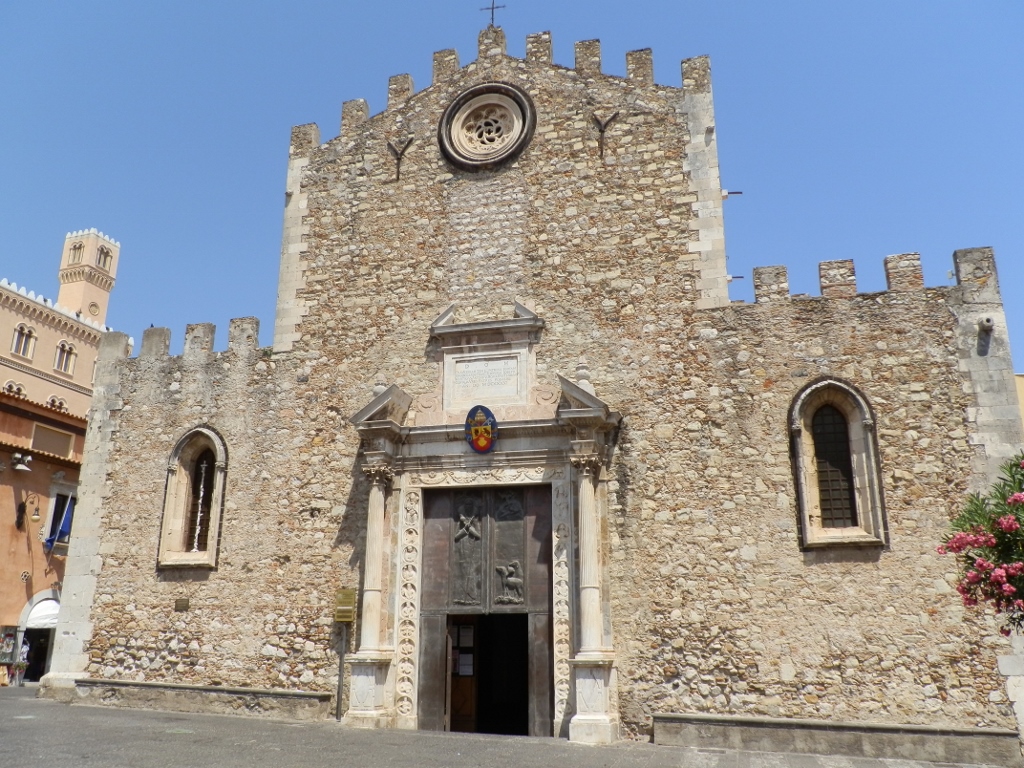
As for the Cathedral of Saint Nicholas, it was built in the 13th century on the site of an earlier church and over time underwent several reconstructions, especially after earthquakes and other damage. The cathedral’s façade is simple yet elegant, with details characteristic of the medieval Norman style.
 Taormina, a detail
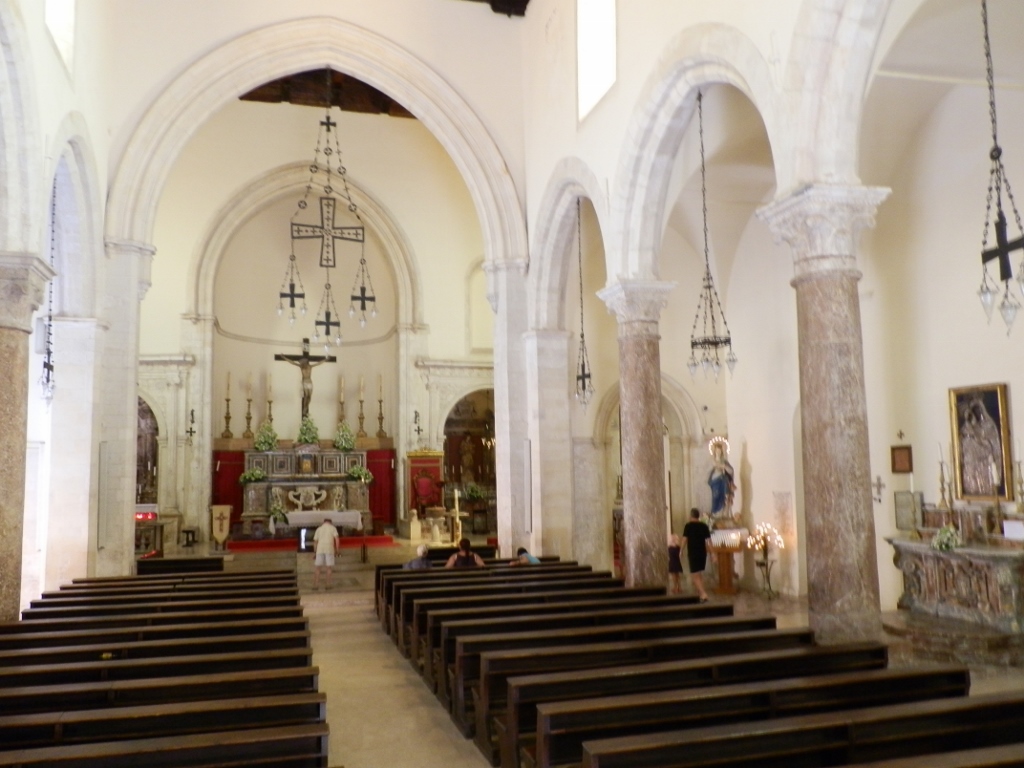
The interior contains altars and artworks from various periods, including frescoes and sculptures.
 Taormina, a detail
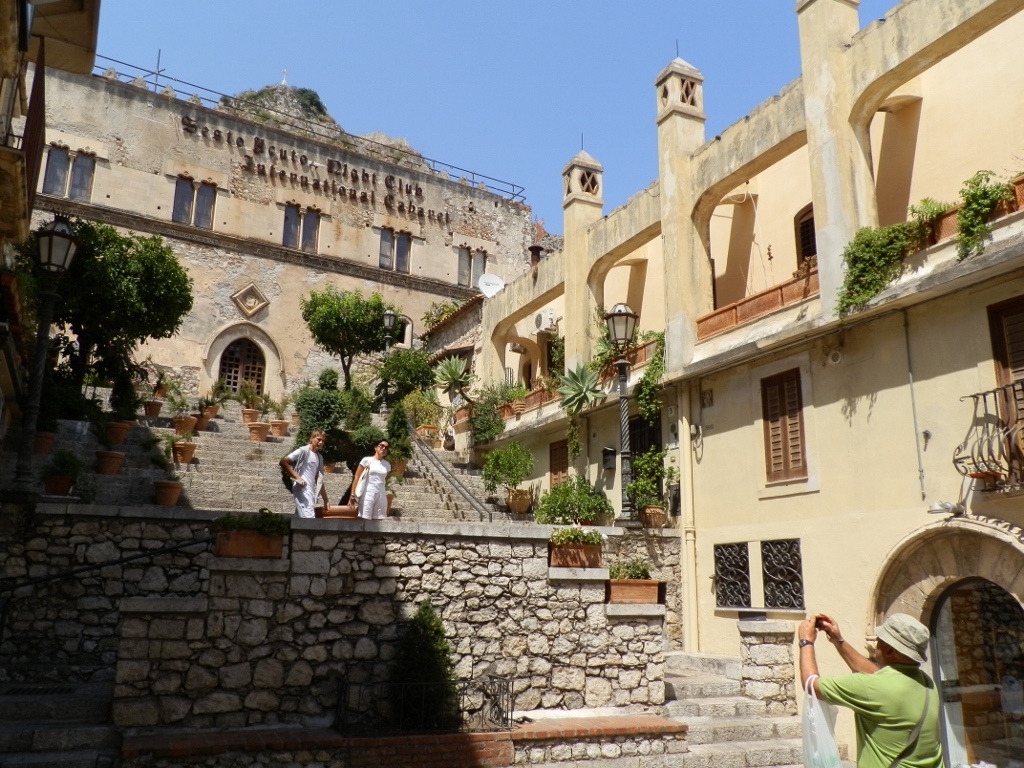
Continuing along the main pedestrian street, I also saw the Ciampoli Palace from the early 15th century, which belonged to a wealthy noble family whose name the building bears. In the 20th century, the palace changed purposes, while at the time of my visit, it housed a nightclub! Fortunately, that was later corrected and today it is used for exhibitions, cultural events and temporary museum displays.
 Taormina, a detail
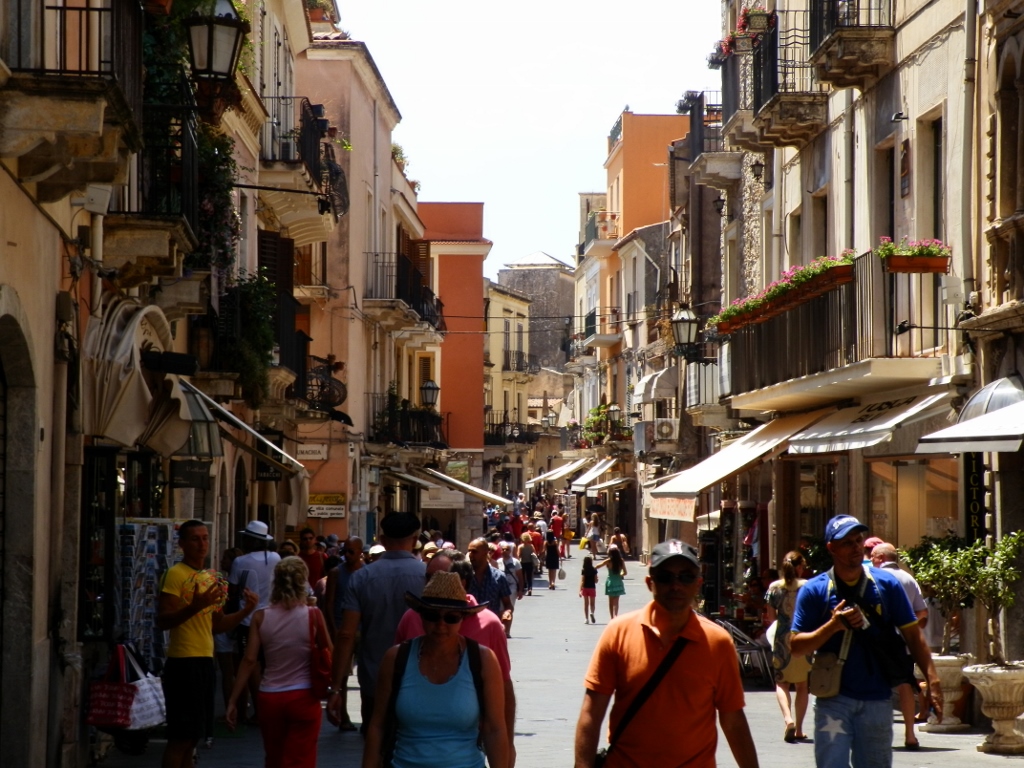
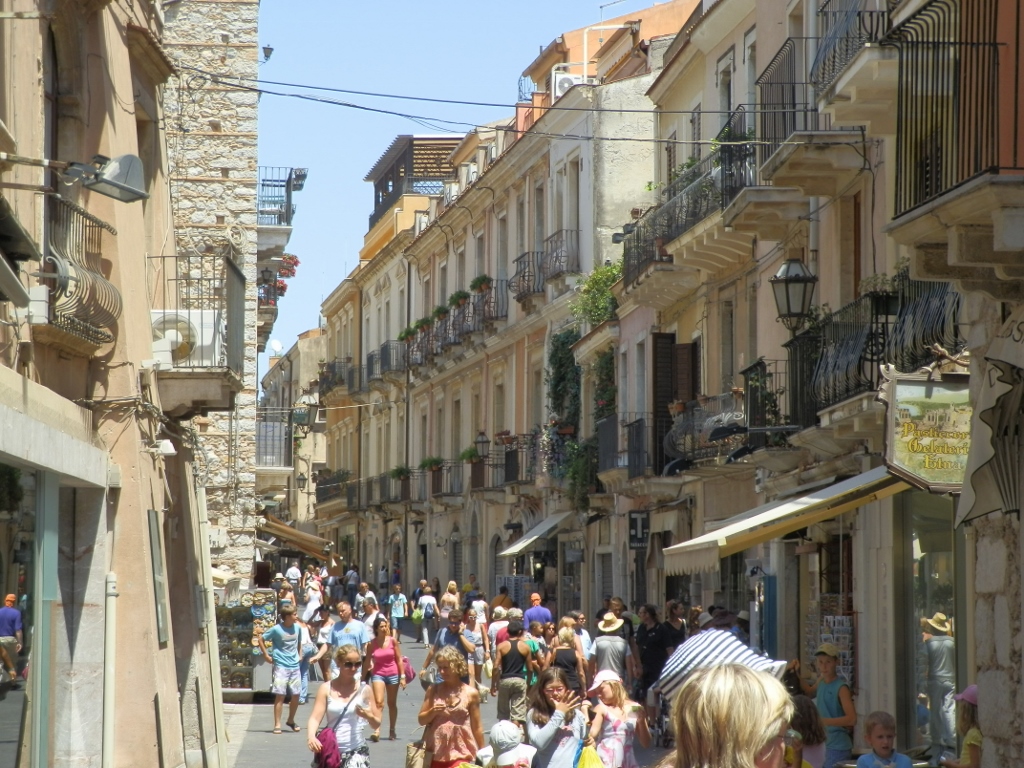
Further leisurely strolling along the pedestrian street was a very pleasant experience, but that’s how it is in Italy.
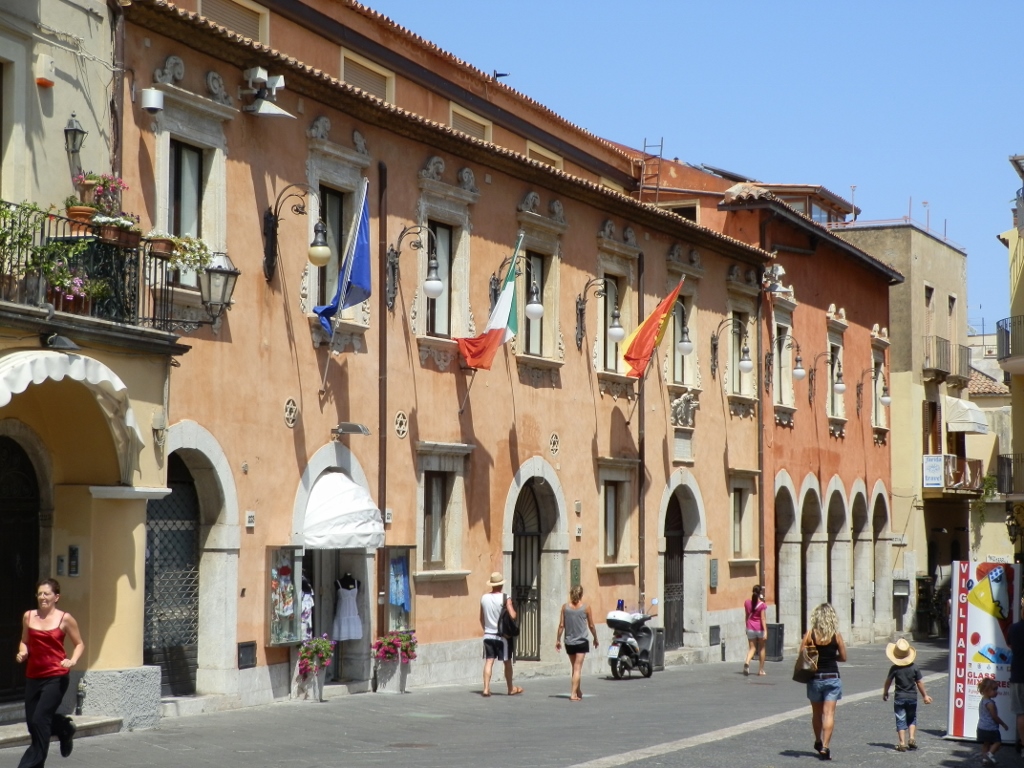 Taormina, a detail
The distance between Porta Catania and Porta Messina is about 800 m, so it’s still relatively quick to reach the other gate.
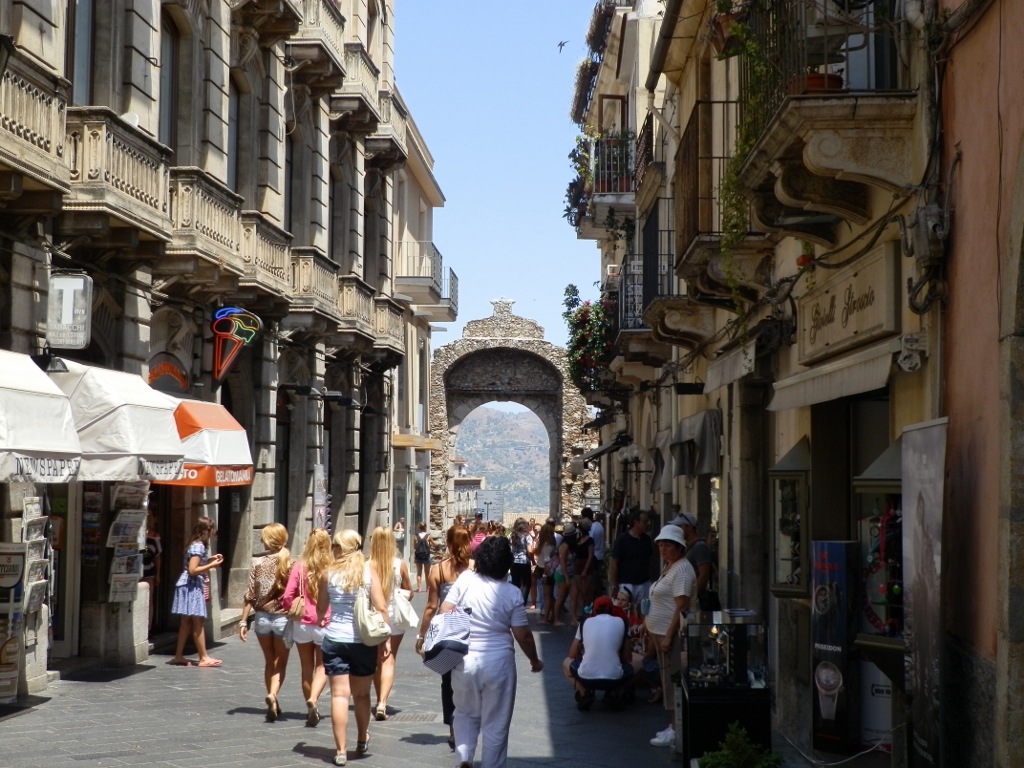 Taormina, a detail
Porta Messina, as I have mentioned earlier, was one of the main gates of the town and is located in the northern part of the historic centre, in the direction of the city of Messina. Its current form dates back to 1808 and although it was once part of the defensive walls, today’s structure primarily reflects this 19th-century renovation rather than the medieval fortification elements. I photographed it only from one side because of the position of the sun.
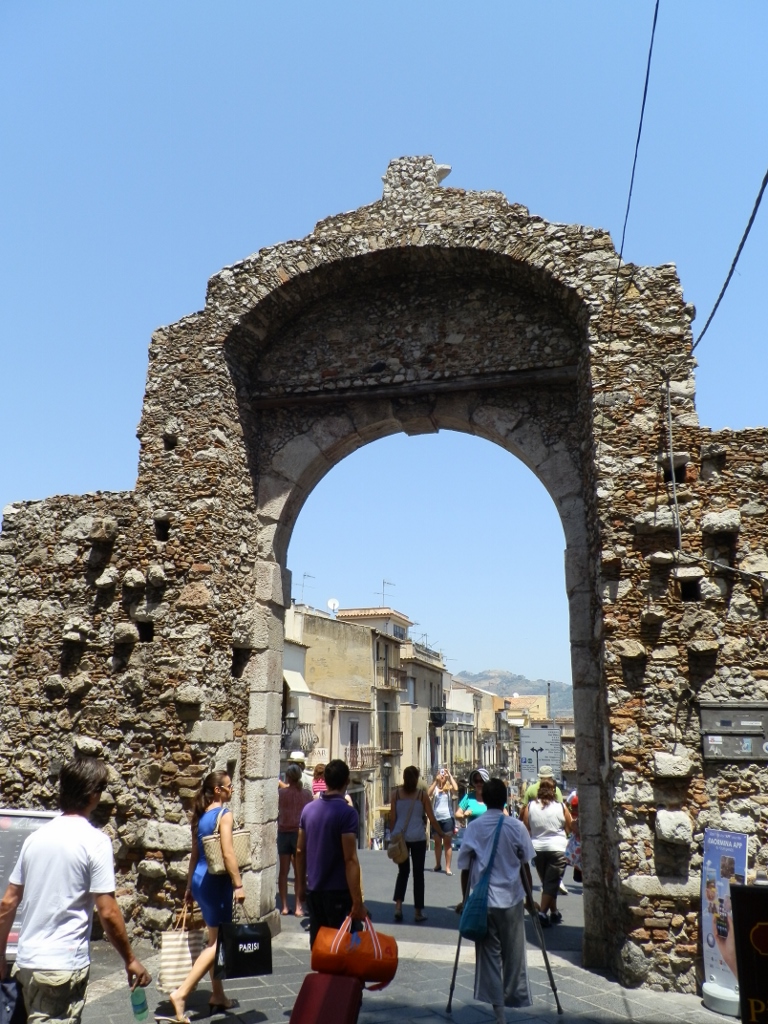 Taormina, a detail
From here, I headed back along the same route I had taken, but this time I paid a little more attention to some of the buildings and interesting sites that I had previously just passed by.
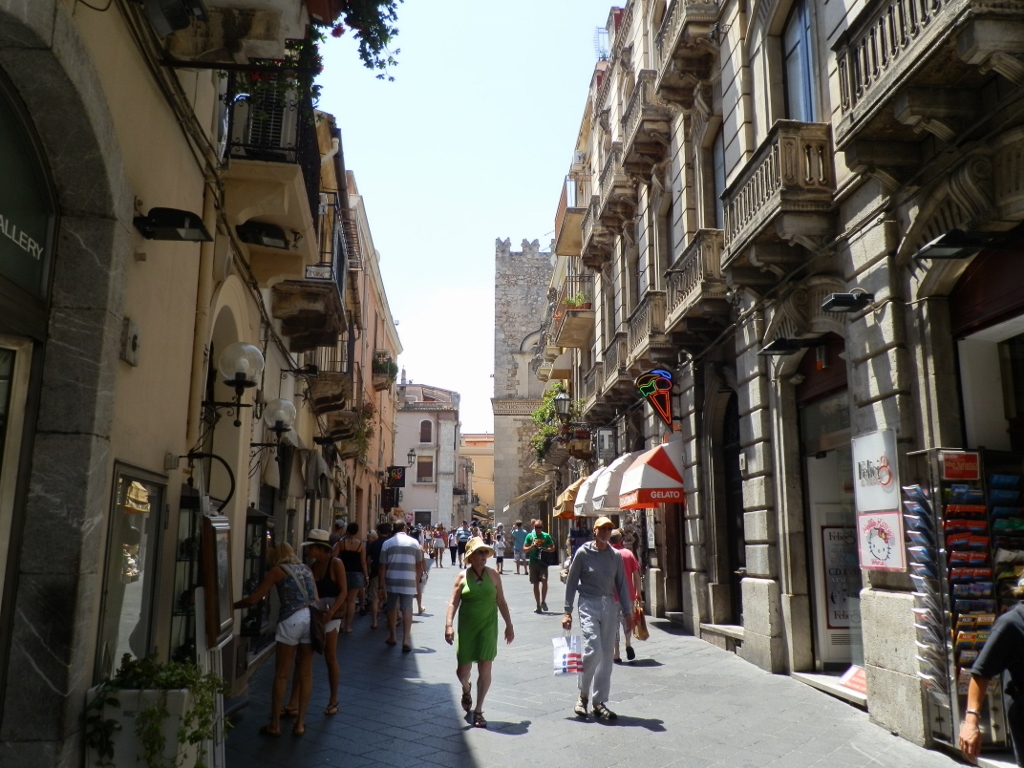 Taormina, a detail
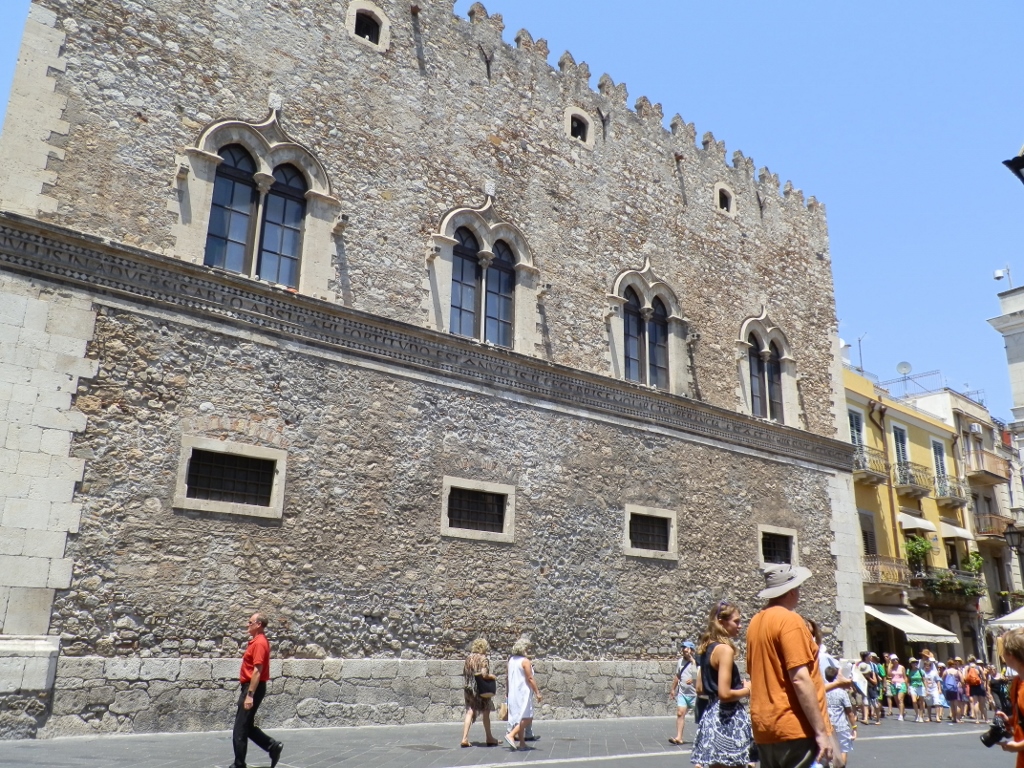
That’s how I came to the Corvaia Palace.
 Taormina, a detail
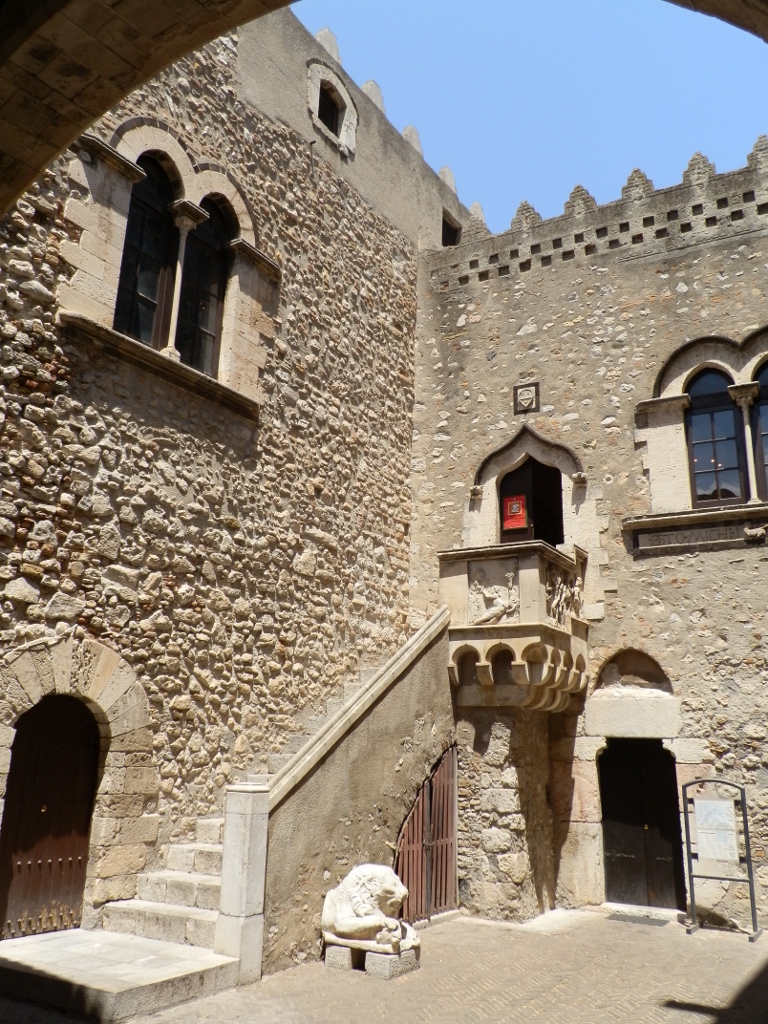
It is one of the most significant medieval buildings in Taormina. The oldest part of the palace, a square tower, dates back to the 10th century and was built during the Arab period, while later sections were added in the 13th and 15th centuries in the Norman and Gothic-Catalan styles, so these different styles are clearly visible. The palace is named after the noble Corvaja/Corvaia family, who owned it in a later period. Today, it houses the Taormina Tourist Information Centre, while the space is also used for exhibitions and cultural events. The palace’s courtyard is exceptionally beautiful.
 Taormina, a detail
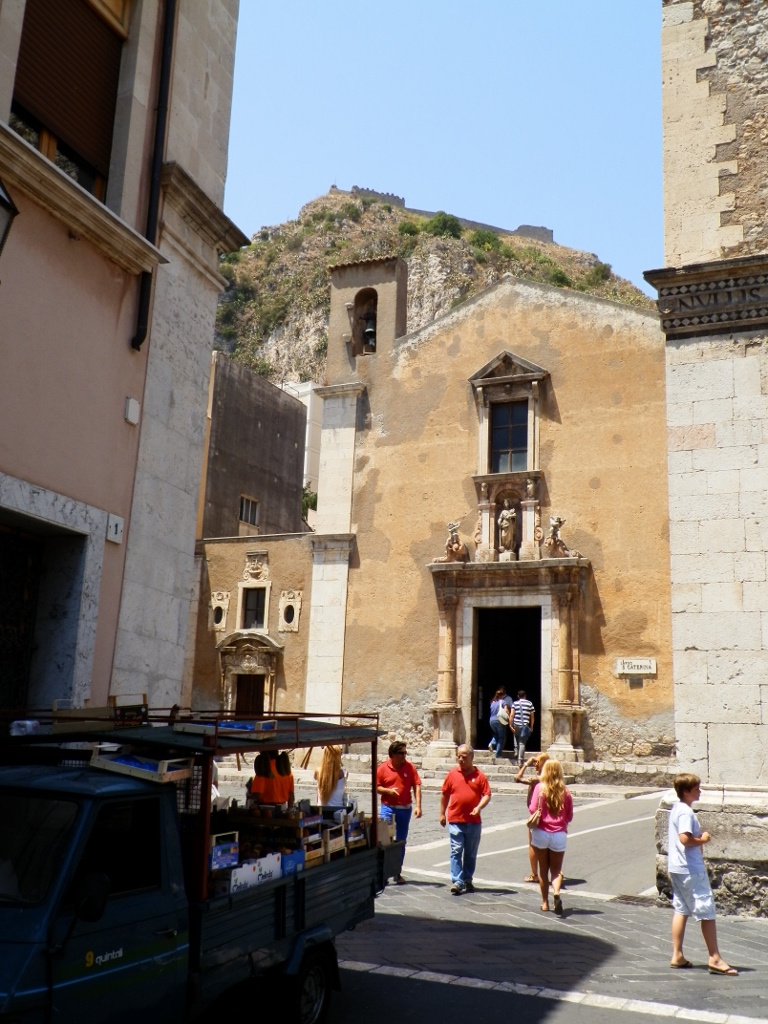
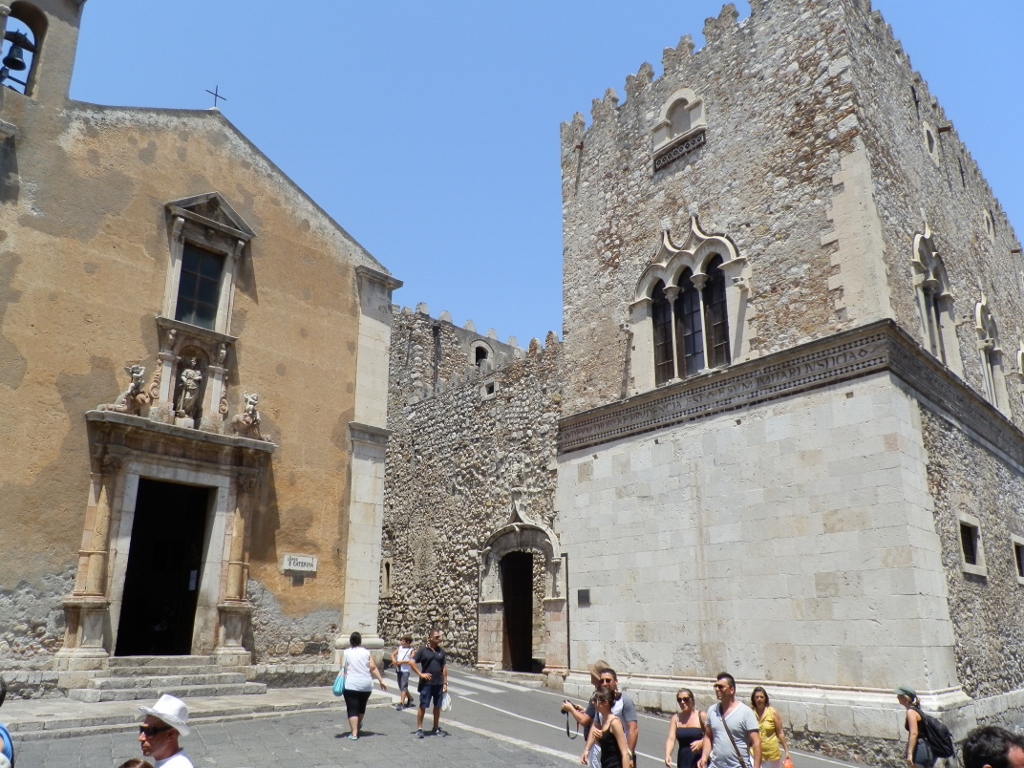
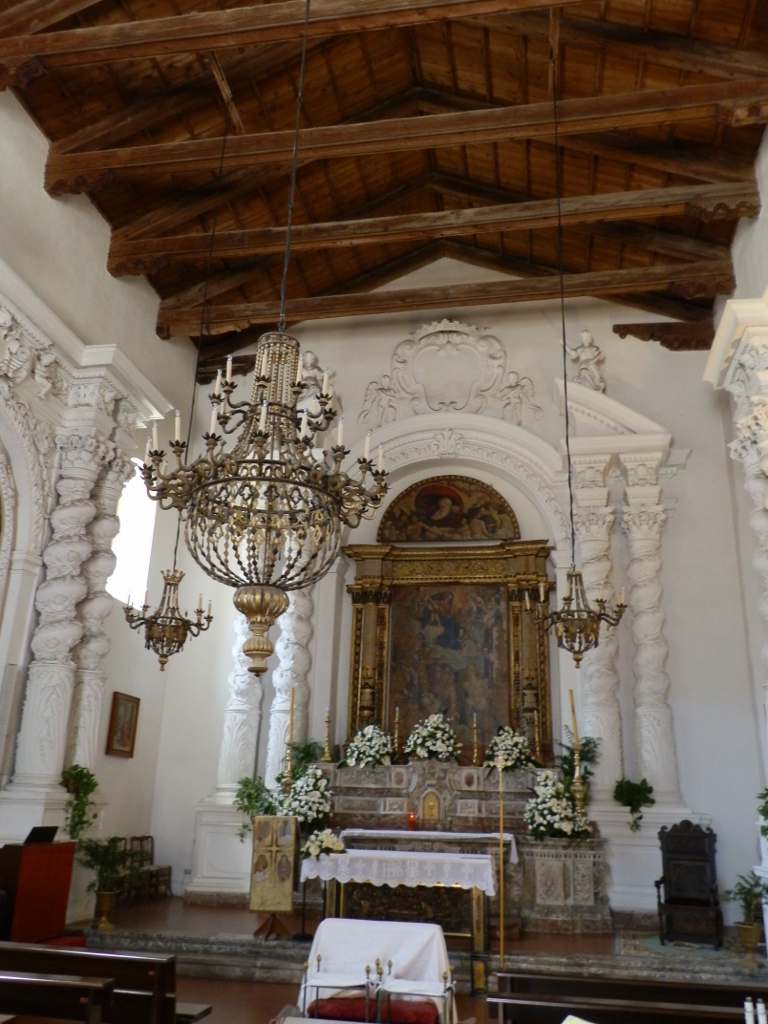
Right next to the Corvaia Palace is the Church of Saint Catherine of Alexandria.
 Taormina, a detail
This is a Baroque church built in the first half of the 17th century on the remains of a Roman odeon, which in turn had been constructed on the foundations of an ancient Greek temple.
 Taormina, a detail
The façade is decorated with a portal made of pink Taormina marble featuring a statue of Saint Catherine from 1705, while inside there is also an older marble statue from 1493, originating from an earlier church located outside the city walls.
 Taormina, a detail
From this part of the town, where the Church of Saint Catherine of Alexandria and the Corvaia Palace are located, a street name Via Teatro Greco leads southeast and about 400 m further are the remains of the Ancient Theatre.
 Taormina, a detail
This theatre is an exceptionally well-preserved example of Greco-Roman architecture. It was built in the 3rd century BCE during the Greek period, while later the Romans expanded it and adapted it for gladiatorial combat. It is especially important because of its spectacular location: from the stage, there is a view of Mount Etna and the Ionian Sea, making it one of the most beautifully situated ancient theatres in the world. However, as I’ve mentioned before, I did not go to visit this theatre because I felt I didn’t have enough time.
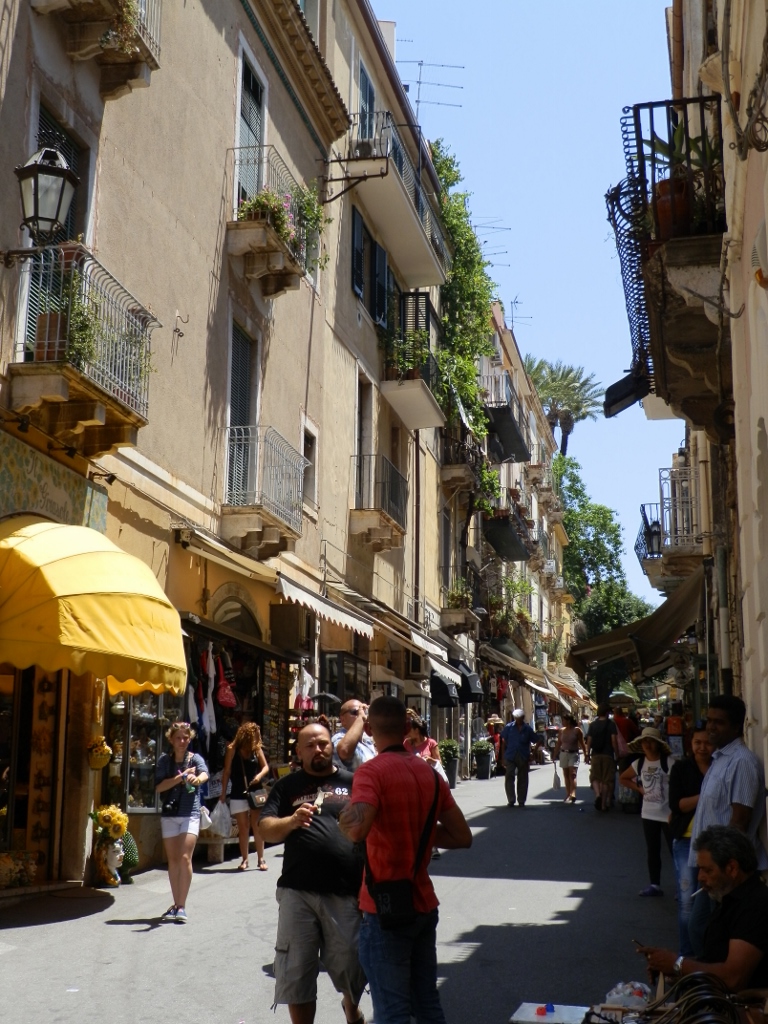
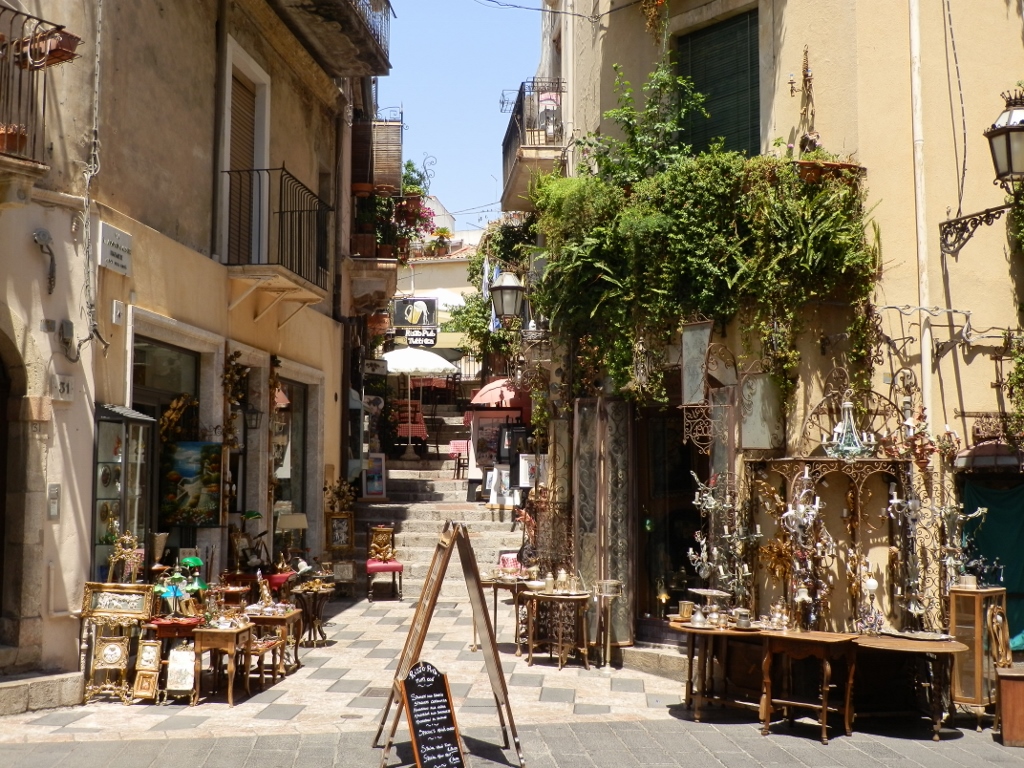
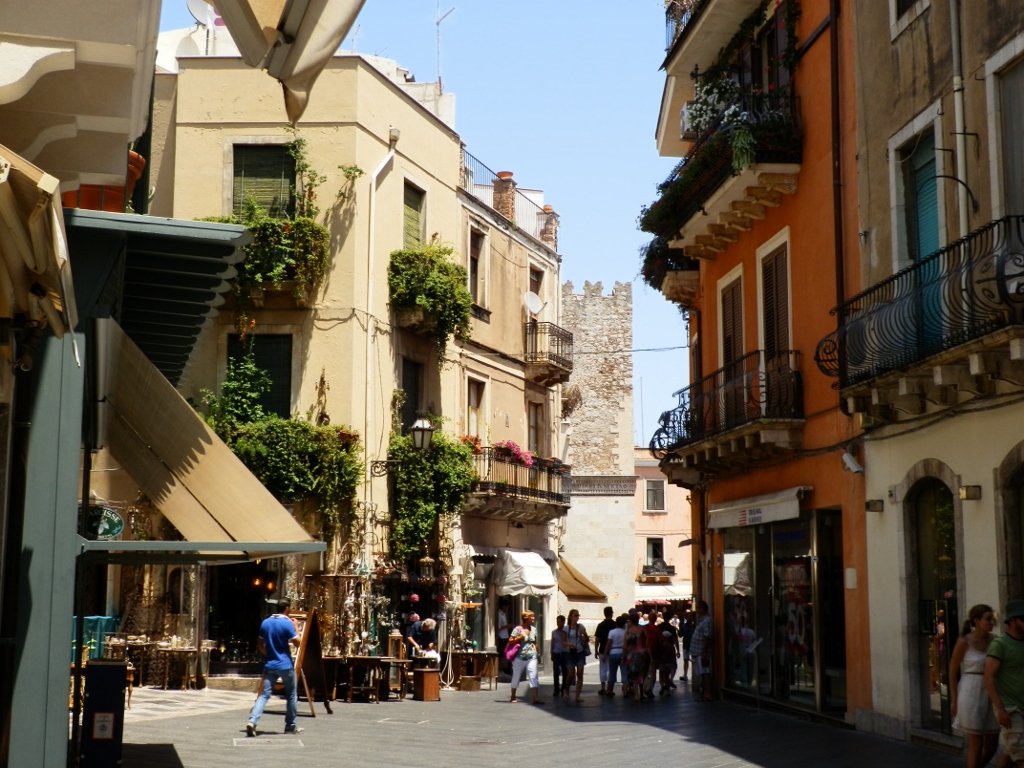
With that limitation in mind, I preferred to stroll leisurely through the picturesque centre of Taormina.
 Taormina, a detail
 Taormina, a detail
 Taormina, a detail
 Taormina, a detail
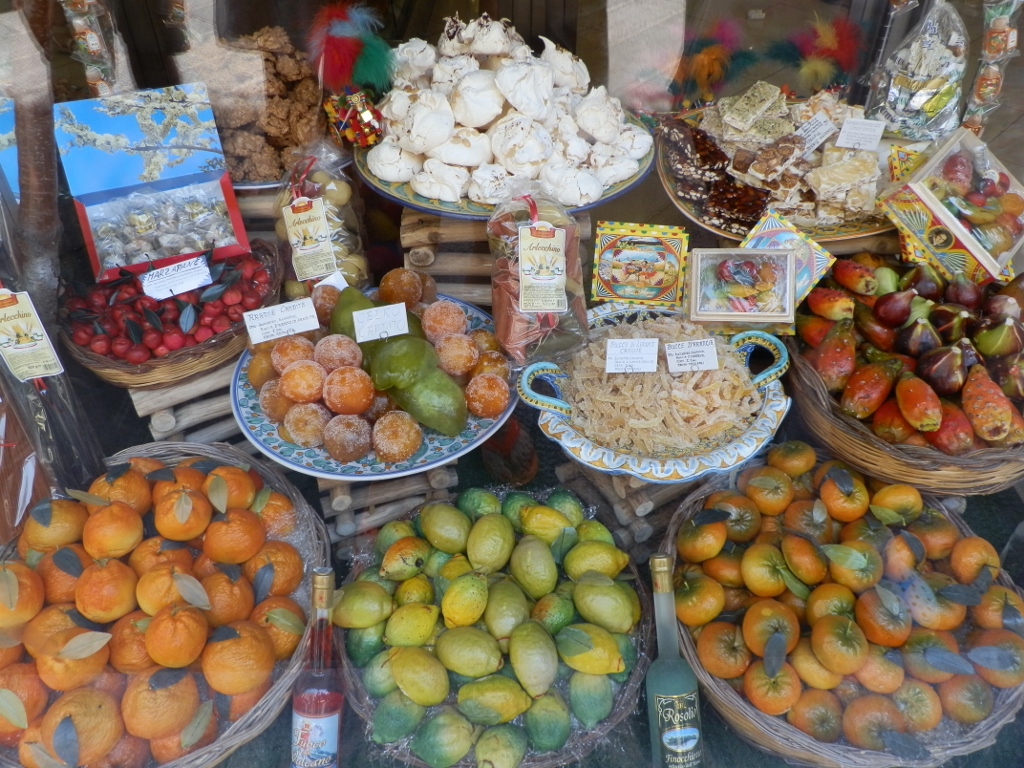
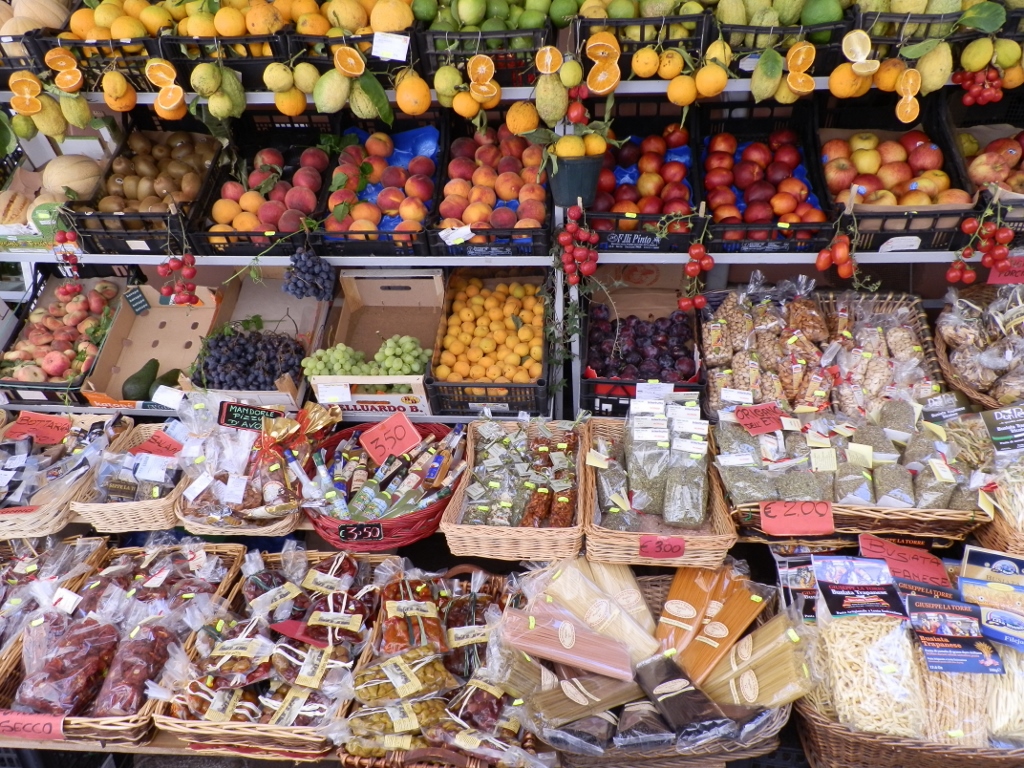
Among other things, Sicily is famous for candied fruit and marzipan “fruit,” and alongside fresh fruit, spices and various other small items, these can be seen in numerous shops primarily aimed at tourists.
 Taormina, a detail
 Taormina, a detail
If a visitor looks more closely, they can also see numerous picturesque details and decorations on and around the buildings.
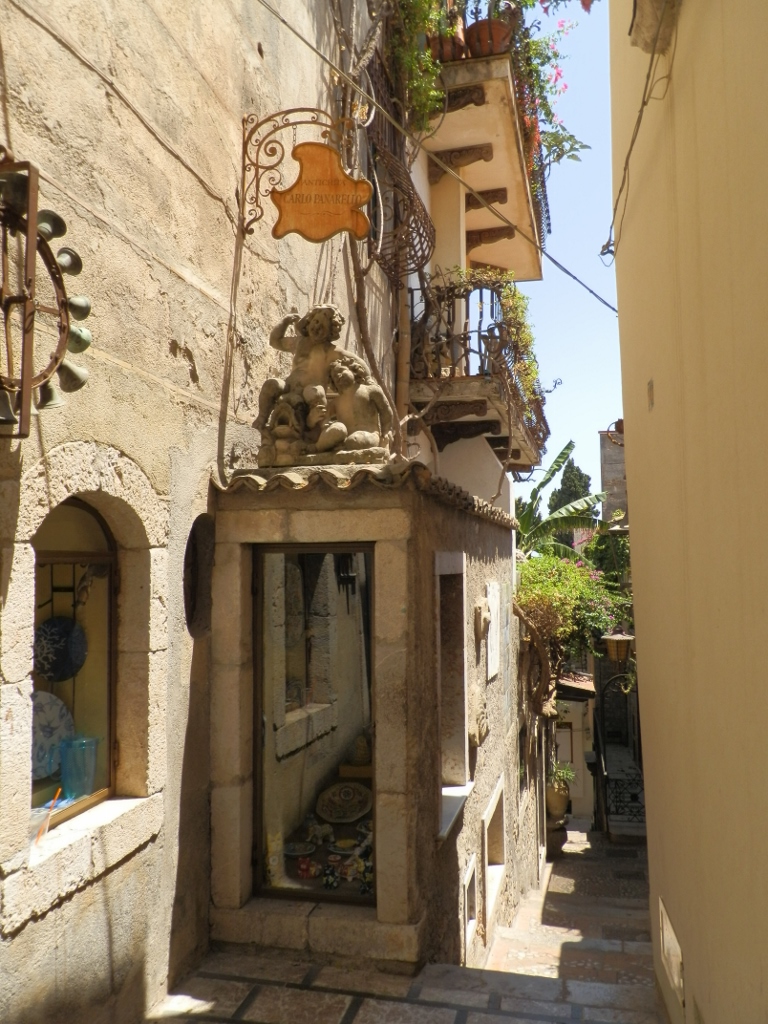 Taormina, a detail
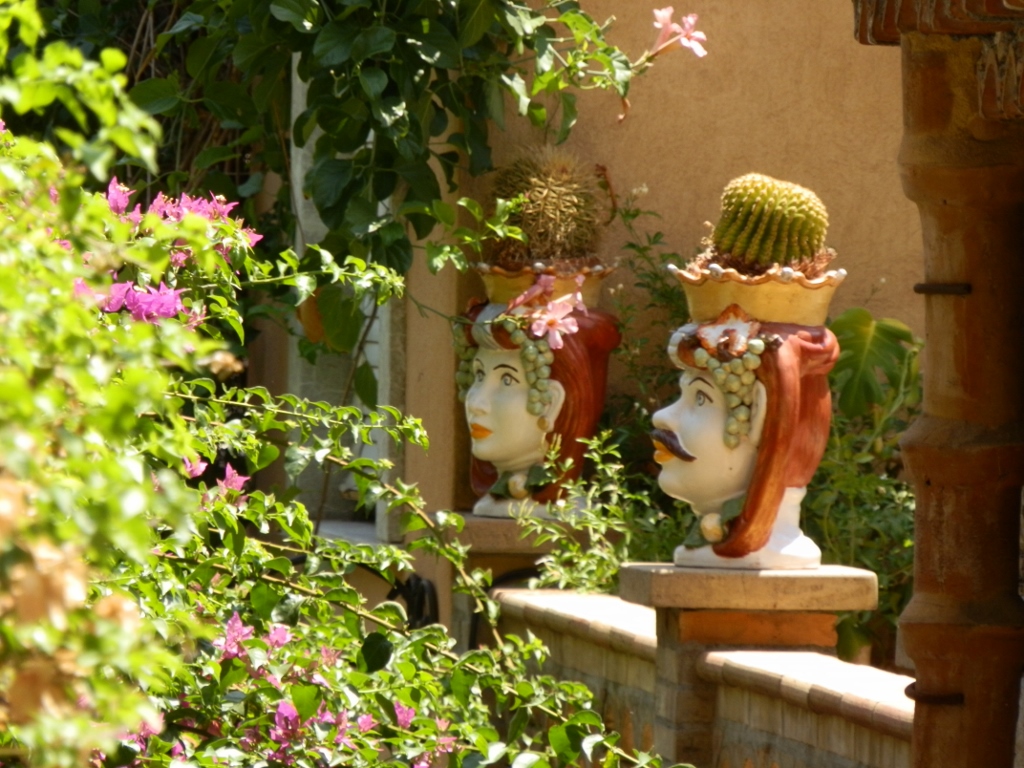 Taormina, a detail
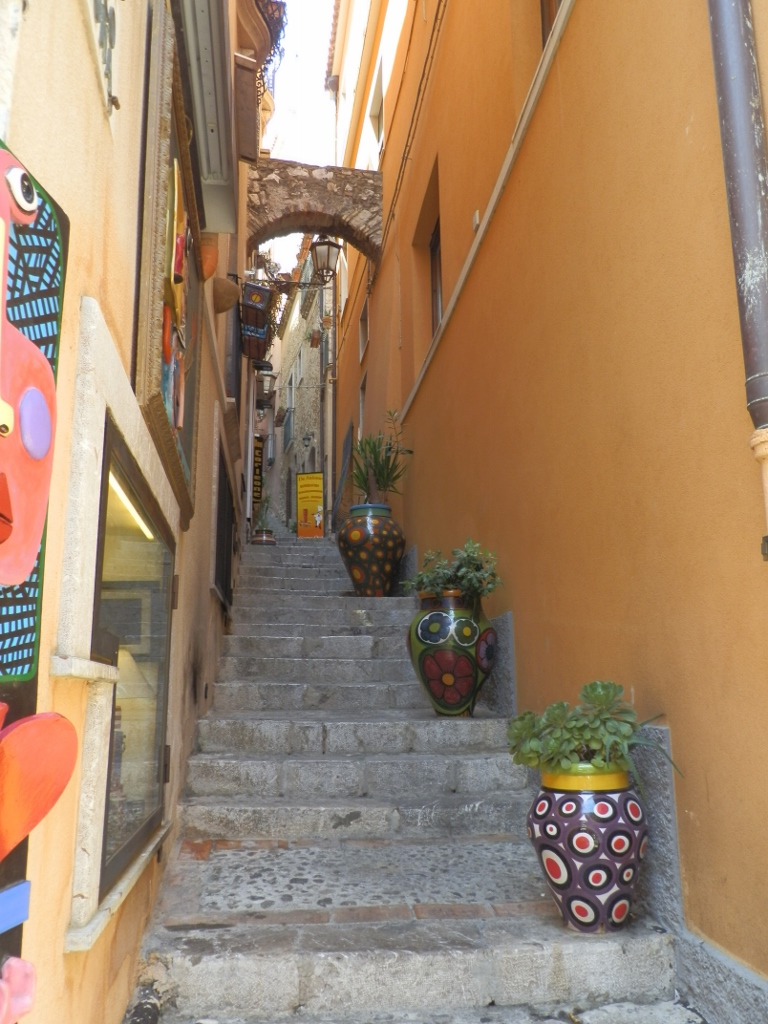 Taormina, a detail
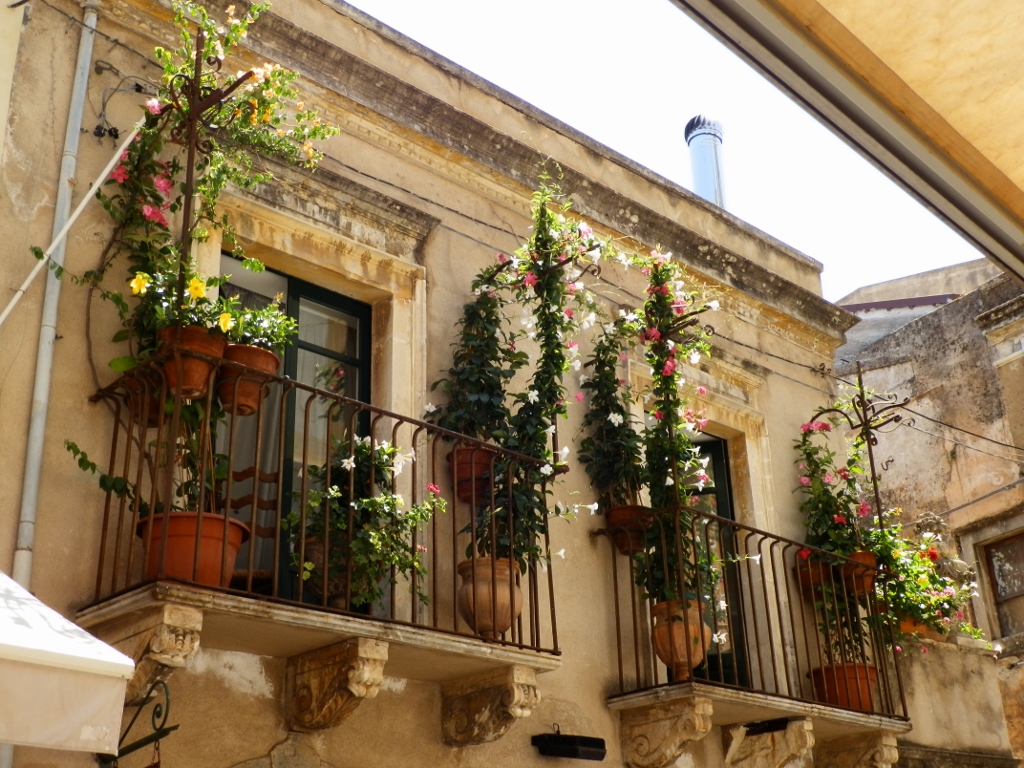 Taormina, a detail
And there is also Vicolo Stretto, a narrow alley considered the tightest in the historic centre. At its narrowest point, it is only about 40–50 cm wide, allowing just one person to pass through at a time. The street, of course, has no historical significance, though it is a typical example of medieval urban structure with very narrow passages between houses and it is certainly interesting for photography.
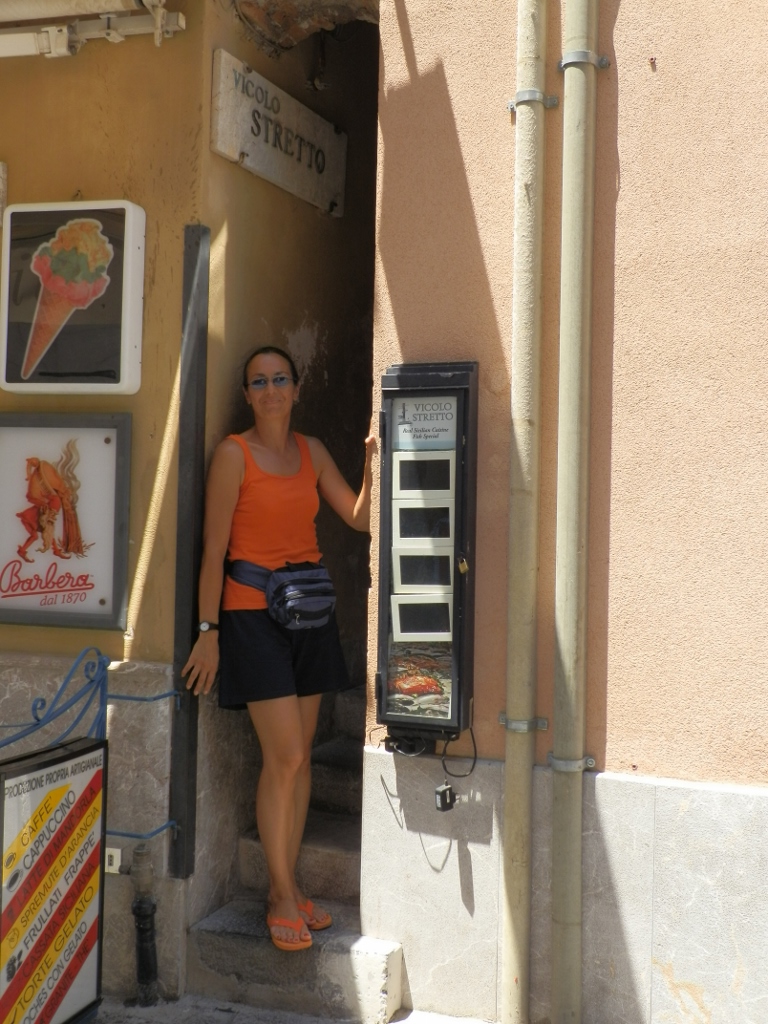 In Taormina in 2012
Eventually I also arrived at Piazza IX Aprile or the 9th of April Square.
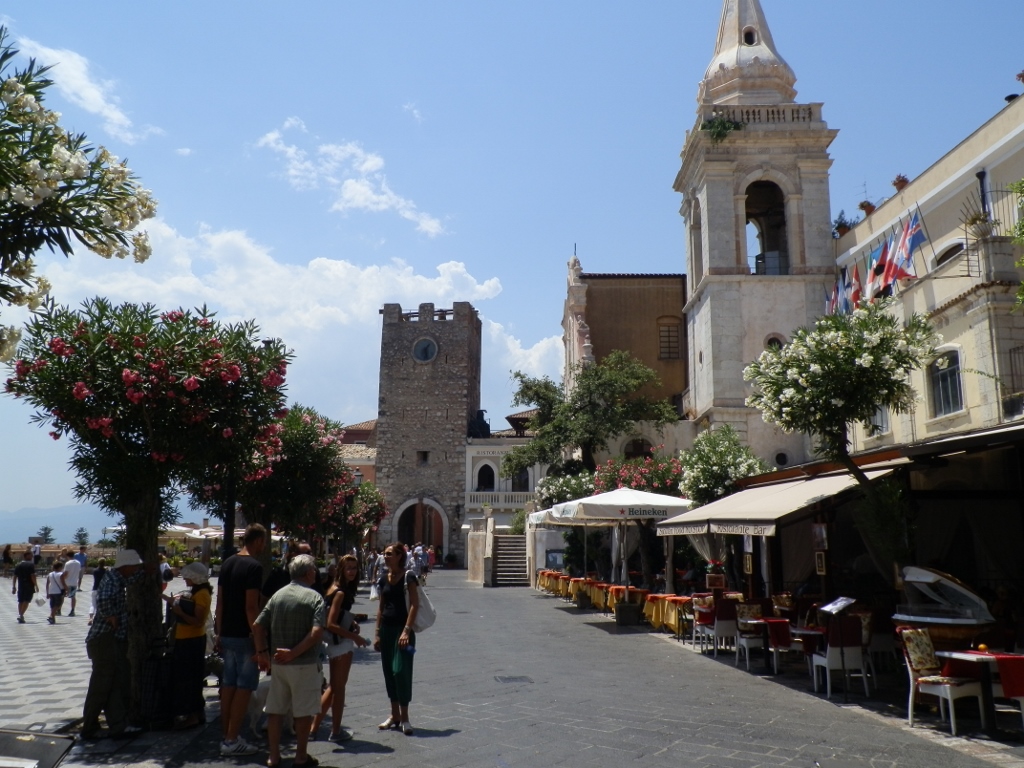 Taormina, a detail
 Taormina, a detail
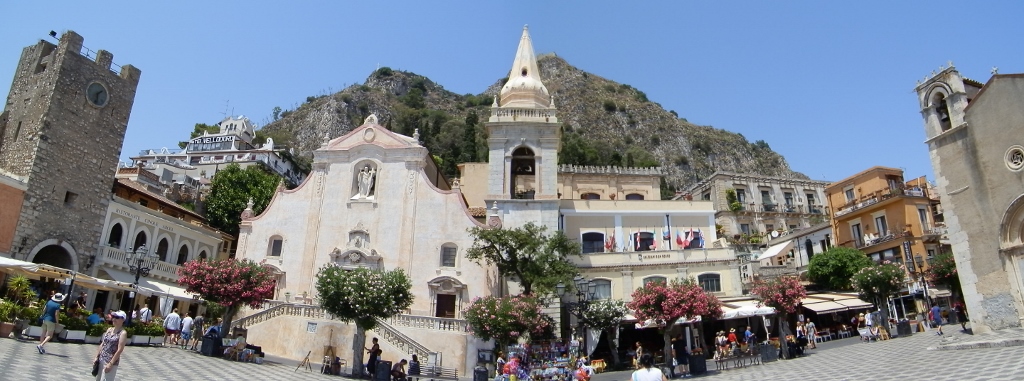
The square got its name from the date, 9 April, 1860, when, during a mass at the cathedral, news spread that Garibaldi had arrived in Sicily, symbolically linking it to Italian unification.
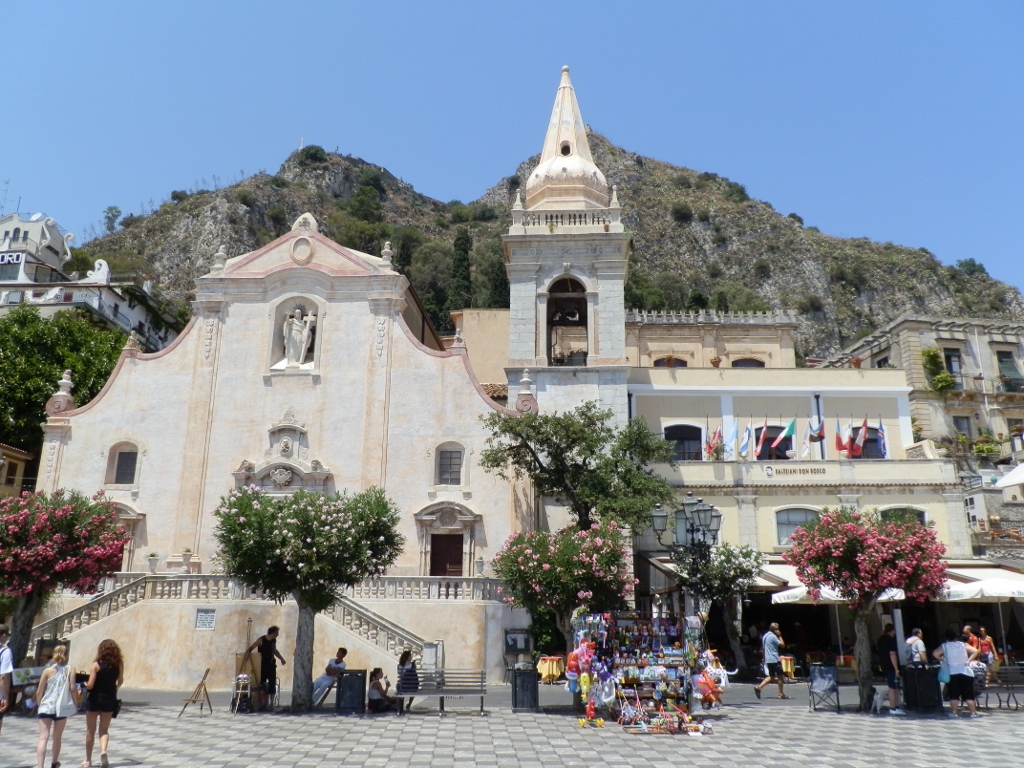
On the square, you can see the Clock Tower, built in the 13th century as part of the city walls, with the clock added later. Along the pedestrian street, there is also the Baroque Church of St. Joseph, with an elegant façade and staircase, constructed at the end of the 17th and beginning of the 18th century.
 Taormina, a detail
The square also includes the Church of Saint Augustine of Hippo, dating from the 13th century, which today houses the city library.
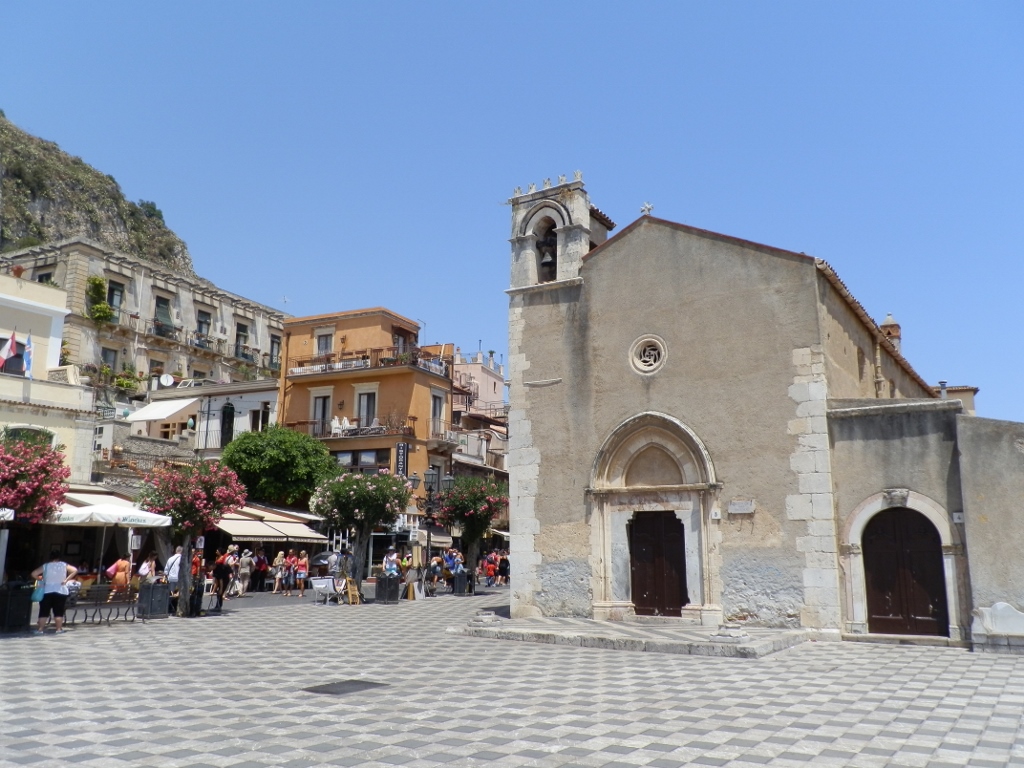 Taormina, a detail
By now, it was getting quite hot, so my friend and I enjoyed retreating into the shady streets of Taormina, and we also needed to find a place to sit down and have lunch.
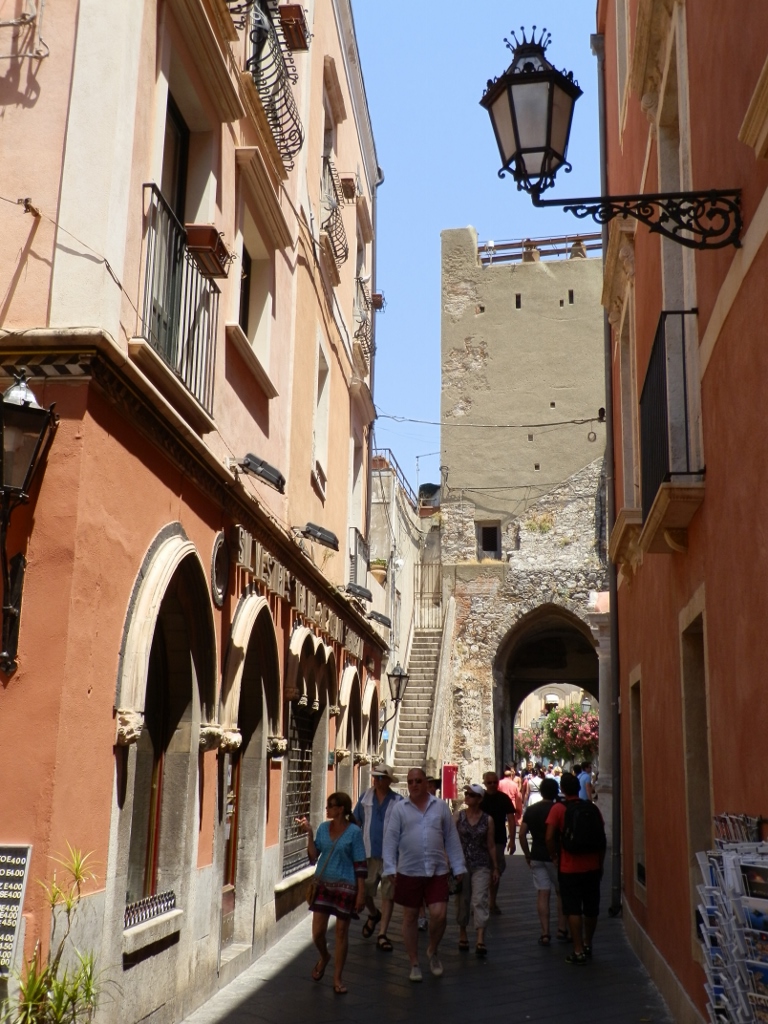 Taormina, a detail
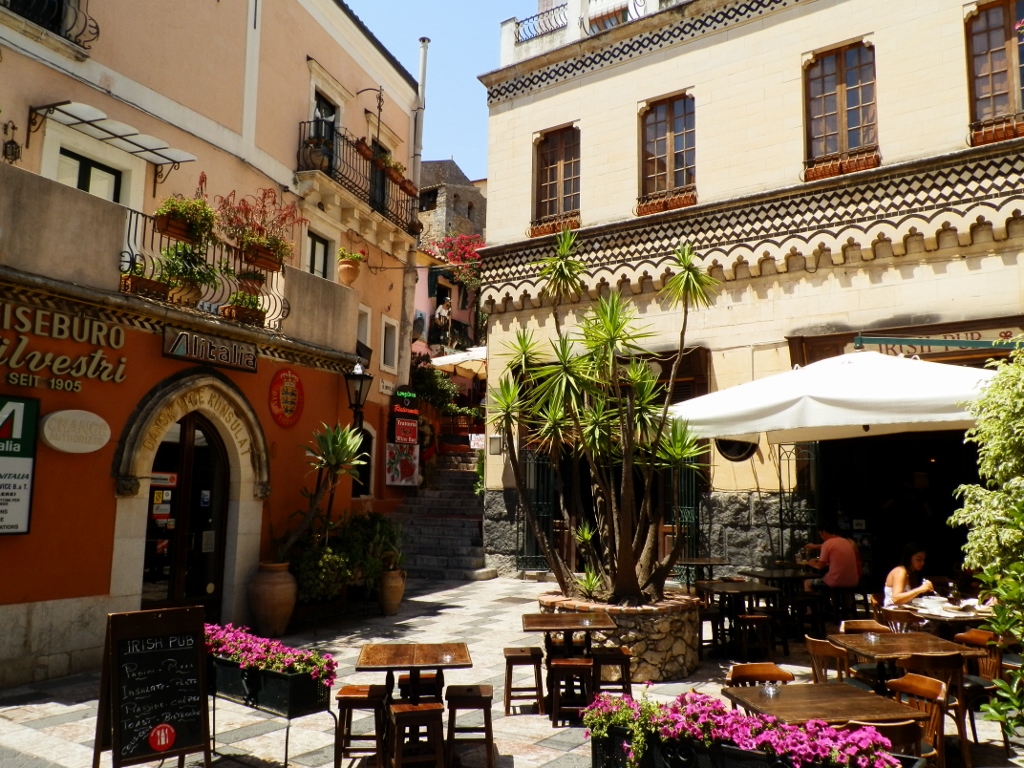 Taormina, a detail
When I travel in Italy, I usually like to eat pizza. Besides pizza being an extraordinary phenomenon in life and the universe, the main reason is that I simply cannot make it well at home. The secret isn’t so much in the recipe, the flour or the toppings, but primarily in the oven. I really can’t deal with installing a special pizza oven in my flat just to indulge in this treat a couple of times a year. More than that would certainly be a bad idea, as I would end up weighing over 200 kilos. But when I travel in Italy, since I usually walk a lot, I consider it perfectly fine to enjoy all the delights this dish has to offer.
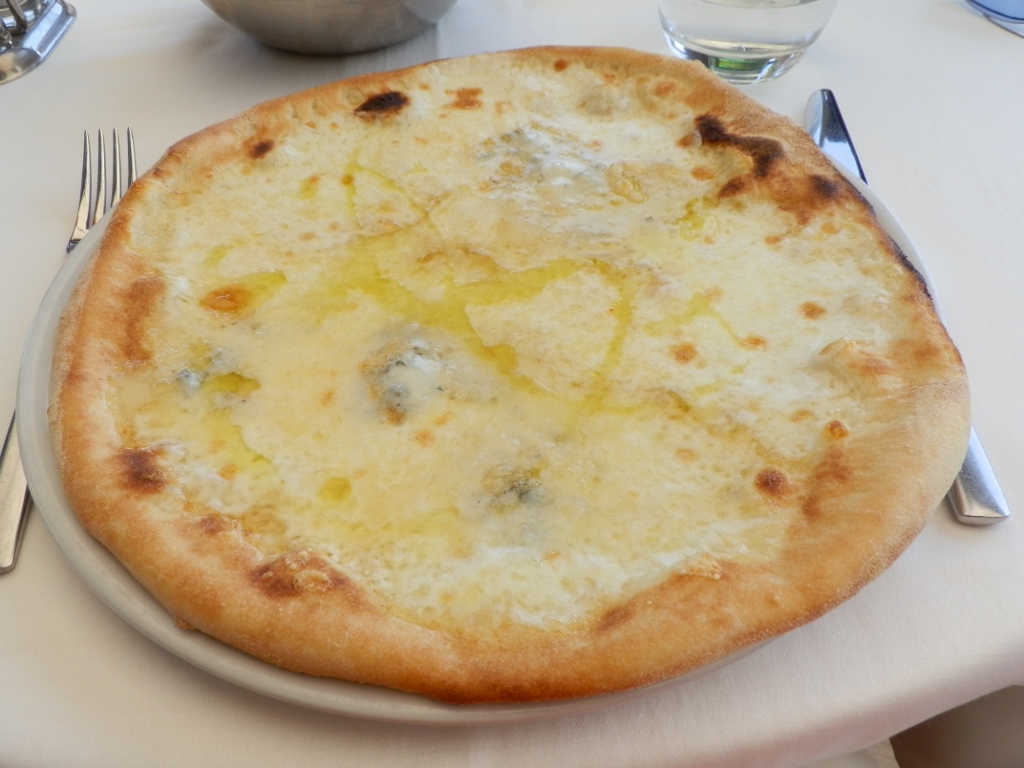 Taormina, a detail
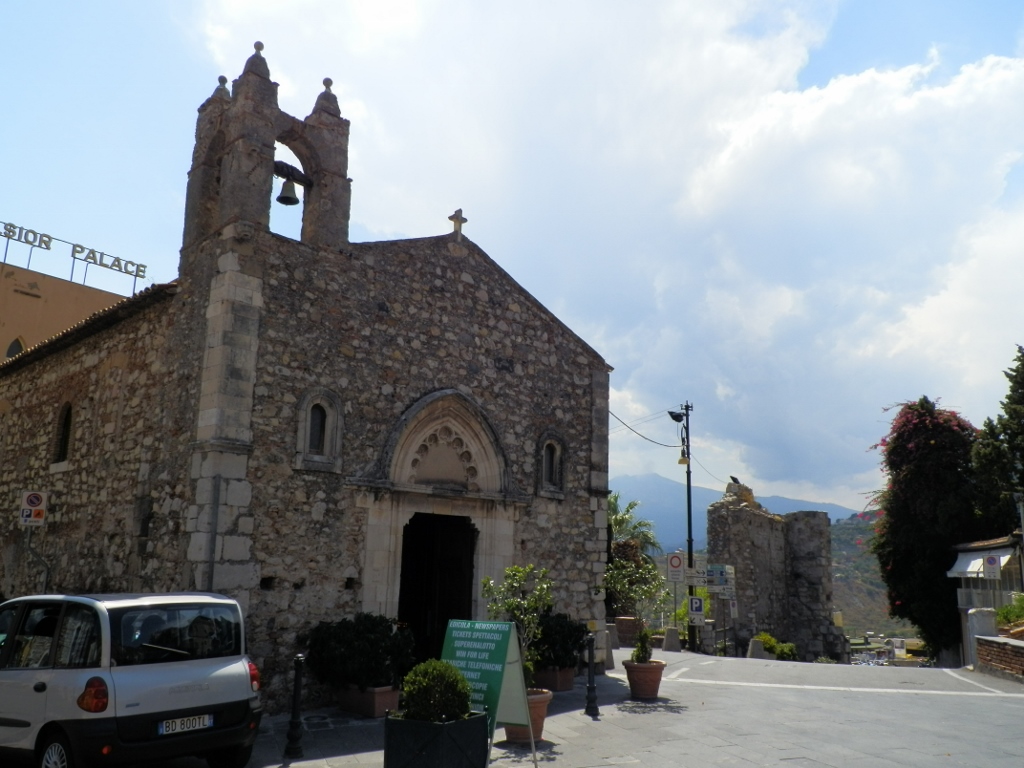
After a wonderful lunch, on the way back to the coach continuing our excursion, I passed by the small Church of St. Anthony the Great from the 14th century, which over time lost its original function and today is open to visitors as a cultural space.
 Taormina, a detail
And now it was time to head to Mount Etna.